












Gjør som tusenvis av andre bokelskere
Abonner på vårt nyhetsbrev og få rabatter og inspirasjon til din neste leseopplevelse.
Ved å abonnere godtar du vår personvernerklæring.Du kan når som helst melde deg av våre nyhetsbrev.

In Wonder as a New Starting Point for Theological Anthropology: Opened by the World, José Francisco Morales Torres constructs a new theological anthropology that begins with wonder. He contends that the visceral experience of wonder is an opening up of the human by an excess that saturates the world. This opened-by-ness points to a transforming receptivity as the basis of the person and to an extravagant Generosity that grounds all creation. Thus, wonder, which is grounded in generous Excess, is not only a gift but a demand: it calls for a liberative praxis that resist the forces that flatten the fullness of life into what is 'useful' and profitable and that reduce the limitless worth of fellow humans to mere commodities to be exploited and exchanged at the altar of the idolatrous 'Market'. Wonder reveals a primordial receptivity in the human person, which demands of us an ethic of sustainability that does not reduce the other to commodity, a vulnerability that risks being opened by the other, a commitment to solidarity and liberation that resist the forces of an insatiable, idolatrous Market that seeks "only to steal and kill and destroy."
To reduce recidivism, our system should focus on rehabilitation, not punishment, through education availability, therapy, employment programs, reentry initiatives, faith-based instruction, and social capital provided by family and friends.
This edited collection explores how creativity and creative practice can enhance research in military studies, and shed new light on military power and militarised cultures.
Bob Dylan and the Spheres of Existence shows that existential questions lie at the heart of Bob Dylan's songwriting-a point that will developed with the help of renowned Danish philosopher Søren Kierkegaard. One of the focal points of Kierkegaard's authorship is the journey towards authentic selfhood. Famously, he thematizes this journey in terms of existential "spheres"-the aesthetic, the ethical, and the religious. Whereas the aesthetic involves a preference for immediacy, the ethical has to do with achieving a sense of personal identity by way of living for enduring commitments and values. Yet, higher than both of these stages is the religious, which initially concerns the immanent human quest for eternal life but, for Kierkegaard, ultimately comes to rest in God's transcendent self-revelation in Jesus Christ. This book argues that Kierkegaard's theory can help us deepen our understanding of and relation to Dylan's art. Just as Kierkegaard presupposes existential "movement" and transformation, so is Dylan celebrated for his shifting personae and philosophical variance. But this is not mere aesthetic dabbling on Dylan's part. On the contrary, his diverse "masks" and voices encourage his audience to engage the worldview being presented, albeit in such a way that religious faith is identified as humanity's source of ultimate meaning.
This book examines the origins of defense alliances in the Middle East from 1945 to 1955. In particular, the author analyzes the Baghdad Pact and its effectiveness for regional members.
53rd Man tells the inspiring stories of the often-overlooked players trying to make it in the NFL¿the men who are essentially 53rd on rosters of 53¿who toil in obscurity in the hopes of seeing their professional football dreams come true.
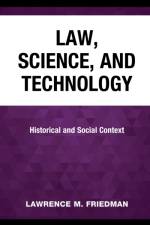
Through a series of historical analyses, Friedman explores the relationship between the legal system and the development of modern science and technology.
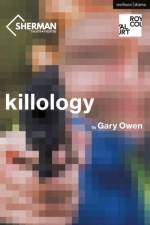
In Killology, players are rewarded for torturing victims, scoring points for "creativity".But Killology isn't sick. In fact it's marketed by its millionaire creator as a deeply moral experience. Because yes, you can live out your darkest fantasies, but you don't escape their consequences.Out on the streets, not everybody agrees with him."There is an instinctive revulsion against taking a human life. And that revulsion can be conquered."
In Donald Trump's Digital Diplomacy and Its Impact on US Foreign Policy Towards the Middle East, Ahmed Y. Zohny develops a well-blended mix of history and political science, supplemented by content analysis and critical discourse analysis of Trump's statements and tweets. Americans are primarily interested in the domestic implications of Trump's presidency, whereas people around the globe are more interested in his foreign policy's implications. Both remain puzzled by Trump's mixed messaging, his tendency to change his mind and make decisions on the impulse of the moment. The findings indicate that, by scuttling U.S. adherence to the Iran Accord, Trump has guaranteed its collapse, and contributed to an already volatile Middle East. Trump recognition of Jerusalem as the capital of Israel brought an international crisis. Under international law and countless decisions by the UN, the final status of Jerusalem should be decided by negotiation, not unilateral action by the United States or Israel. The Abraham Peace Accord with the four normalizing relations agreements which were signed between Israel and the United Arab Emirates, Bahrain, Sudan, and Morocco mark a new and important shift in the Middle East geopolitics, it can be considered as a success for Trump's foreign policy.
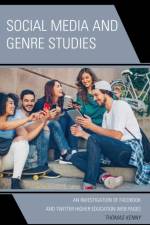
This book investigates whether Facebook and Twitter have become a genre of media for higher education institutions. Thomas Kenny has conducted a mixed-methods study using a combination of content analysis and interviews with social media employees to explore the purpose, form, and functionality of these web pages. Ultimately, Kenny argues that while institutional web pages on Facebook and Twitter do constitute a genre, each is a separate and distinct platform that works differently with varying goals, structure, and effectiveness associated with them. Scholars of communication, information studies, media studies, journalism, and higher education will find this book of particular interest.
Writing well is very important in order for teenagers to be successful in high school and college. Beyond school, many teens write to be creative or to express themselves. This book is an accessible guide to help teens improve all aspects of their writing skills, from writing a research paper to writing for fun.
This book addresses Judaism and Orthodox Christianity, and particularly their points of similarity and difference, congruence and conflict. The city of Jerusalem stands at the heart of both these age-old faiths, but today it is a divided city in which Jews and Orthodox Christians seem to find themselves on opposite sides of history. Must this story be one of continuing conflict, or is there scope for reconciliation and common effort? How do religions that cherish tradition face up to the challenges of a rapidly changing world? What place can they offer to women? Can they welcome lesbian and gay adherents? How do their traditional resources help them to face climate change and other environmental issues? How have they responded to the COVID pandemic? What contribution can they make to current debates about subjects like euthanasia and assisted dying? In seventeen chapters by expert theologians and historians this book examines central issues of common concern. The focus is on dialogue and deepened knowledge. The authors dispel some widely held misconceptions and identify a good deal of common ground. In this way the book aims to lay foundations for future engagement between the two religions.
Cooper shows how the reaction to slavery unveiled the characteristics of freedom and established the foundation for the human rights movement. The book demonstrates how the legacy of slavery continues to shape individual identity as well as the nature of state power to exercise discipline and control over its citizens.
In 1417 a bishop was kidnapped and held in a remote castle in Bohemia where he was forced to consecrate to the priesthood as many as 100 candidates. These priests belonged to the heretical movement of Hussite reformers. Though well-known amongst specialists, this unprecedented episode has never been systematically examined with a view to understanding if the coerced ordinations were lawful. Issues around legitimacy raise numerous questions and the narrative is situated at the compelling intersection of medieval heresy, theology, and canon law. The notion of kidnapping a bishop and forcing him to perform religious functions, consonant with the will of his tormentors, is arresting. More puzzling, the agents of coercion continued to value aspects of a faith they appeared to reject. They had no intention of practicing obedience to the Roman Church, its hierarchy or laws. The modern reader may be perplexed to learn that those responsible for the abduction believed a Roman prelate was necessary as an imprimatur of legitimation if their own religious practices were to survive. The episode, unique in medieval European history, presents an intellectual thriller.
Traditionally Belarus has always had a special status in Russiäs foreign policy. Russiäs approach towards a key political and military ally and a ¿Slavic brother¿ was always an indicator of how Russia would see the optimal relationships with other countries of the post-Soviet space. At this moment Belarus-Russia relations are evolving in unexpected ways. The two interconnected crises ¿ the Belarusian mass protests of 2020 and Russiäs invasion of Ukraine ¿ have had a profound impact on the Belarusian regime and society, the regional security and Russian policy towards Belarus. This book explores the ongoing development of Belarus-Russia relations and discusses the future of the relationship. This edited volume reviews the state of the relationship and underlines key emergent trends of Belarus¿s and Russiäs policies towards each other to identify new mechanisms and practices as they shape into a new model. The book is comprised of in-depth empirical contributions in a range of interdisciplinary perspectives on cooperation in political, economic, security, media, and societal domains within a broader regional context.
This book addresses the issue of religion as a propagandistic tool and examines how to identify and dispel deceptive religious tactics in order to distinguish between religious beliefs and ulterior political motives.
This study is a collection of elopement advertisements printed in newspapers throughout British North America.
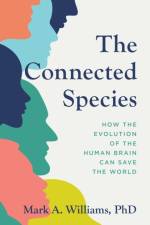
Argues that by understanding human connection, we can work together towards a less divided, more sustainable, future.
In this book, the author, Harry Anastasiou, explains previously unaddressed historical outcomes resulting from the combined impact of the September 11, 2001 attacks and the United States' subsequent Global War on Terror. While expounding on the finer details of the decades-long interaction between militant jihadism and the Global War on Terror, the analysis explores two contrasting narratives: that of bellicose nationalism and that of peace and democracy. As central drivers in the historical evolution of America, their contrasting influences shaped policy, political culture and strategic approaches in both the domestic and international arenas. Throughout the post-9/11 era, mainstream America underwent significant cultural and political shifts away from the narrative of peace and democracy as it tilted towards bellicose nationalism. Focusing primarily on the presidency of George W. Bush, the book explores how nationalism harmed the rule of law, human rights and democracy, both domestically and internationally. Viewing war as a regime, rather than as a means to promote democracy, the author conducts a reality-based demythologization of war, demonstrating how costly and counterproductive it has been. In this light, he questions the historical efficacy of war as well as the way nationalism both generates and glorifies war.
In Pedro Juan Gutiérrez's Dirty Realism: Reinventing Cuban Spaces, Lori Oxford conducts a series of close readings that expound on Gutiérrez's interpretation of life and reality in the spaces of the Special Period throughout the five works that make up his Ciclo Centro Habana Cycle (1998-2003). Gutiérrez's settings oscillate between the utopian, the dystopian, and the heterotopian in unexpected fashion, often revealing his protagonists' surprising affinity for the latter two. In her examination of Gutiérrez's use of these interwoven -topian spaces, Oxford shows how the three spaces, although apparently contradictory, have managed to coexist in Cuba and demonstrates how they are all reflected in Gutiérrez's fiction, often simultaneously, just as they exist in Cuba's reality.
Abonner på vårt nyhetsbrev og få rabatter og inspirasjon til din neste leseopplevelse.
Ved å abonnere godtar du vår personvernerklæring.