






















Gjør som tusenvis av andre bokelskere
Abonner på vårt nyhetsbrev og få rabatter og inspirasjon til din neste leseopplevelse.
Ved å abonnere godtar du vår personvernerklæring.Du kan når som helst melde deg av våre nyhetsbrev.

Build Me the Evidence features innovative thinking from leaders across policy, philanthropy, research, and practice on how to build a stronger, more equitable data and evidence ecosystem.
Next Generation Evidence features innovative thinking from leaders across policy, philanthropy, research, and practice on how to build a stronger, more equitable data and evidence ecosystem.
If China's space ambitions continue unchallenged, America will be seriously economically and militarily disadvantaged. This book provides a comprehensive strategy to secure U.S. primacy in the space domain.From Moon landings to plans for asteroid mining, China is beginning to exploit space to achieve its great power ambitions. Its strategy could, over time, severely and adversely impact U.S. economic and military security. The United States needs to structure its approach to space to ensure that it can meet or surpass PRC timelines. Authors Richard M. Harrison and Peter A. Garretson, both from the American Foreign Policy Council, review the literature on Chinese space ambitions and assess U.S. space-related initiatives across the government, military, and private sector to understand the maturity of technology available to support space initiatives. Their first-hand research and findings are supplemented by interviews with industry experts, corporate space leaders, and government and military officials. The Next Space Race describes and seeks to influence the development of American space policy to ensure the U.S. industrial base is ready to meet or surpass PRC milestones, empower and clarify the mission of the newly minted Space Force, provide guidance to NASA and other federal agencies, and incentivize private sector companies to contribute to ensuring American space primacy.
'A masterful writer' - RAYMOND CARVEROver the course of four celebrated works of fiction and almost forty years, Richard Ford has crafted an ambitious, incisive and singular view of American life as lived. Unconstrained, astute, provocative, often laugh-out-loud funny, Frank Bascombe is, here, once more our guide to the great American midway.Now in the twilight of life, a man who has occupied many colourful lives - sportswriter, father, husband, ex-husband, friend, real estate agent - Bascombe finds himself in the most sorrowing role of all; caregiver to his son, Paul, diagnosed with ALS. On a shared winter's odyssey to Mount Rushmore, Frank in typical Bascombe fashion faces down the mortality that is assured each of us, and in doing so confronts what happiness might signify at the end of days.In this memorable novel, Richard Ford puts on display the prose, wit and intelligence that make him one of the world's most acclaimed living writers. Be Mine is a profound, funny, poignant love letter to our beleaguered world.'One of the finest achievements of modern American fiction' The Independent
Dark Forces at Work examines the role of race, class, gender, religion, and the economy as they are portrayed in, and help construct, horror narratives across a range of films and eras. These larger social forces not only create the context for our cinematic horrors, but serve as connective tissue between fantasy and lived reality, as well.While several of the essays focus on "name" horror films such as IT, Get Out, Hellraiser, and Don't Breathe, the collection also features essays focused on horror films produced in Asia, Europe, and Latin America, and on American classic thrillers such as Alfred Hitchcock's Psycho. Key social issues addressed include the war on terror, poverty, the housing crisis, and the Time's Up movement. The volume grounds its analysis in the films, rather than theory, in order to explore the ways in which institutions, identities, and ideologies work within the horror genre.
In Balanced Wonder, Jan B. W. Pedersen digs deep into the alluring topic of wonder, in dialogue with Neo-Aristotelian philosophers, arguing that the experience of wonder, when balanced, serves as a strong contributor to human flourishing.
A broad range of cultural works produced in traditional and modern African communities shows a fundamental preoccupation with the concepts of communal solidarity and hospitality in societies driven by humanistic ideals. African Cultural Production and the Rhetoric of Humanism is an inaugural attempt to focus exclusively and extensively on the question of humanism in African art and culture.This collection brings together scholars from different disciplines who deftly examine the deployment of various forms of artistic production such as oral and written literatures, paintings, and cartoons to articulate an Afrocentric humanist discourse. The contributors argue that the artists, in their representation of civil wars, massive corruption, poverty, abuse of human rights, and other dehumanizing features of post-independence Africa, call for a return to the traditional African vision of humanism that is relentlessly being eroded by the realities of postcolonial nationhood.
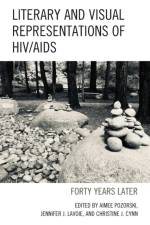
Literary and Visual Representations of HIV/AIDS: Forty Years Later explores how film and literature about the HIV/AIDS crisis expand upon the issues generated by the epidemic. Looking at media from the 1980s to today, the representations of HIV/AIDS and their political ramifications shift across time.
This edited volume examines how and where gay men of color find "home" and what kind of home they find, how they make sense of race and sexuality, and how their experiences reflect what it means to be "raced" and "sexed" in America. The contributors argue both racially and sexually marginalized groups all confront levels of racism and heterosexism that is practiced by the larger ethnic and sexual communities that use white heterosexuality as the "norm" to which all others are compared. They further argue that despite different constructions of race and ethnicity, there are similar themes for racialized groups that need to be explored.
This text explores Martin Heidegger's thinking in response to Nietzsche's philosophy: beginning with the problem of European nihilism, moving toward a period of transition situated in-between classical and post-Cartesian ontology.
The 2020 election cycle saw not only a polarizing president run for re-election amidst a global pandemic, but also record levels of spending on campaigns for the White House and for Congress. In this volume, experts examine a wide range of topics about the financing of campaigns in 2020 and place the election in broader historical context.
This book is an insightful, thought-provoking study of one of the world's most important courts. There is no doubt that the European Court Justice has had a transformative effect on EU Law, but not without controversy. This book explores these criticisms, asking if concerns over judicial activism, unconventional interpretative methods, conflicts with national courts and over-reach are justified. Drawing on the expertise of leading commentators in their sectors, its ambitious scope explores the question from across the spectrum of EU Law. Its analysis includes the political dimension, giving the fullest understanding of the environment in which the Court and its judgments have operated.
This book shows that connected histories of decolonization and globalization are found in the everyday activities of individuals as much as they are histories of states, institutions and formal organizations. Viewing decolonization through non-state activist practices, and setting anti-colonial solidarity in the context of contemporary global peace movements, it argues that seemingly marginal histories can illuminate aspects of the end of empire that are not readily apparent in studies centered on state diplomacy and nationalist movements. Taking the work of anti-apartheid pioneer and British churchman Michael Scott as a starting point, Skinner explores connected global histories of anti-nuclear peace campaigns, anti-colonialism and decolonization to illuminate new perspectives on the end of empire and the Cold War. Studying an ambitious scheme to irrigate the Kalahari Desert, a failed attempt to infiltrate the French atom bomb test site in southern Algeria, and a mass march across the border between Tanganyika and Northern Rhodesia that never took place, these examples provide valuable insights into the interactions between local and global scales of historical experience. In presenting these histories in this manner, this book demonstrates how global and transnational histories can challenge and disrupt, rather than reinforce hierarchies of power and privileges. In doing so, it also contributes to ongoing debates surrounding the nature of decolonization as a historical phenomenon by focusing on the practices of activism that shaped - and were shaped by - the political and intellectual structures of decolonization.
This volume examines the relationship between states and organized crime. It seeks to add to the theoretical literature for analyzing the criminalization of the state. The volume also explores the nature of organized crime in countries throughout the Americas from Central America to the Southern Cone.
A careful reading of Plato's works show that Thrasymachus and Callicles, his famous immoralists, are unselfconsciously devoted to virtue as they see it. They thereby offer surprising support for the view that people are not simply self-interested, and they cast light on the beliefs and hopes we all have of justice.
This book is for early childhood educators committed to learning about gender [in]justice as a foundation for creating gender affirming environments for everyone including transgender and gender expansive children. The authors engage in contemporary thinking about gender acknowledging its complexity, intersectionality and diversity.
By bringing together philosophers whose work on political philosophy, intellectual history and world philosophies push the boundaries of conventional scholarship, this collaborative collection opens up space in political philosophy for new approaches.Each contribution responds to the challenges James Tully raises for comparative political thought. Arranged around Tully's opening chapter, contributors demonstrate the value of critical dialogue and point to the different attempts cultures make to understand their experiences. Through the use of methods from various disciplines and culture, each interlocutor exemplifies the transformative power of genuine democratic dialogue across philosophical traditions. Together they call for a radical reorientation of conceptual and intellectual readings from intellectual history including the Afro-modern political tradition, Indigenous philosophies and the lived experiences of societies in Asia. This is an urgent methodological provocation for anyone interested in the ethical, conceptual and political challenges of comparative political thought today.
Come and Read is a unique volume that both introduces numerous interpretive approaches to the Bible and includes examples in action with contributions from top scholars in the field. The book takes up three different passages throughout John's Gospel-John 1:1-18, John 10, and John 20-and sets four different approaches to each passage side-by-side. The three selected texts move readers through the Gospel story and represent the three major sub-genres featured in the Gospel. John's Prologue (1:1-18) is written in poetic style; John 10 represents a major discourse; and John 20 takes the form of dramatic narrative prose. Each section of the book includes readings on the focus passage from the same four interpretive perspectives: intertextual, sociocultural, rhetorical, and narrative. These approaches are broadly conceived to showcase varieties present even within approaches and how these ways of reading are connected to and benefit from one another. Overall, this book provides insight into current interpretive practices on the Gospel of John, and the rest of the Bible. It demonstrates how to use these methods effectively, illustrating not only the value of using a variety of approaches for interpretation, but also how methods impact the interpretations rendered.
This book presents an original theory of the just price, and it is a welcome addition to scholarship on a radically underdeveloped field. This work reassesses the age-old idea that there is a just price of things, one that goes beyond the Scholastic tradition of the just price and its exclusive concern with commutative justice. There is more to just price theory than the concern for keeping equality of value between goods exchanged. Modern concerns over efficiency, autonomy, and distributive justice, can also find a place within a theory of the just price. The book:- Presents a new approach to just price theory through a broad analysis of different values and the incorporation of those conceptions into a wider normative framework- Argues that these different values ground varied conceptions of the just price, and- Promotes a virtue-based approach to price justification as an adequate framework for meeting the challenges that stem from each conceptionPerfect for scholars and students in the fields of jurisprudence, philosophy of private law, contract law, and political theory, this book makes a significant contribution to legal theory and the emerging field of the philosophy of economics.
This edited volume is a collection of empirical scholarship that focuses on curriculum as knowledge connected to the Latinx diaspora from three perspectives: content/subject matter; goals, objectives, and purposes; and experiences. In an effort to fill a void in scholarship in curriculum studies/theory for/from Latinx perspectives, this book is a beginning toward answering two important questions: first, what is the significance of the presence and absence of Latinx curriculum theorizing? And second, in what ways is Latinx curriculum theorizing connected to curriculum, as a general concept, schools' purposes, goals, and objectives and curriculum as autobiographical? This book opens a door into understanding curriculum for/from an important population in U.S. society.
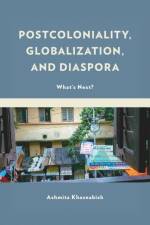
Postcoloniality, Globalization, and Diaspora: What's Next? looks forward within the field of postcolonial studies and goes beyond the notion of hybridity and postcolonial reason beyond just portraying it. This volume offers a futuristic vision going beyond the common paradigms of postcolonility, diaspora, and globalization, speculating a framework beyond master-slave dialectic. This new paradigm locates a humanitarian space purifying ego through various forms: writing, philosophizing, and theorizing new ideas. Authors focus on writers from Mauritius to India.
'Combating' irregular migration is one of the key challenges to migration management at EU level. This book addresses one of the most pressing structural problems regarding the EU's return policy: the low return rate of irregularly staying migrants.In this regard the EU Return Directive obliges Member States to issue a return decision, yet only 40% of such decisions are enforced annually. Moreover, despite the political and legal efforts, the EU is not making any significant progress in enforcing the rules it has laid down in the Return Directive. The legislation of EU Member States may, however, serve as a source for possible solutions to 'combat' the problem of irregularly staying migrants. It is for this reason that the book compares the system of regularisations in Austria, Germany and Spain. Regularisations constitute an effective alternative to returns because they terminate the irregular residence of migrants, not through deportation, but rather by granting a right of residence. Regularisation is therefore understood as each legal decision that awards legal residency to irregularly staying migrants. As is shown by the examination and comparison of regularisations in Austria, Germany and Spain, differentiated systems of regularisation exist at national level. However, EU regularisations supplementing the present return policy would be more effective at 'combating' irregular migration at EU level.
The diffusion of English and the increasing mediatisation of our globalised world have significant impacts on our perceptions of language and culture. Beginning with an overview of how the conceptualisation of language is currently debated in sociolinguistics and related fields, this book highlights the need for a new perspective on language mobility. Through examining the use of English on German radio morning shows, the book explores the dynamics of language use in times of accelerated globalisation and provides insights into how the media operate within the global flows of messages and linguistic resources that characterise our mediatised societies. In doing so, it demonstrates how combining the different perspectives of a sociolinguistics of mobility and contact linguistics allows for a thorough investigation of language practices in society, and advances the theoretical and practical approaches to the study of language mobility as a result.
Abonner på vårt nyhetsbrev og få rabatter og inspirasjon til din neste leseopplevelse.
Ved å abonnere godtar du vår personvernerklæring.