


























Gjør som tusenvis av andre bokelskere
Abonner på vårt nyhetsbrev og få rabatter og inspirasjon til din neste leseopplevelse.
Ved å abonnere godtar du vår personvernerklæring.Du kan når som helst melde deg av våre nyhetsbrev.

This book, based on new research, sheds light on the history of the Social Democrat Hnchakian Party, a major Armenian revolutionary party that operated in the Ottoman Empire, Turkish Republic, Russia, Persia and throughout the global Armenian diaspora. Divided into sections which cover the origins, ideology, and regional history of the SDHP, the book situates the history of the Hnchaks within debates around socialism, populism, and nationalism in the 19th and 20th centuries. The SDHP was not only an Armenian party but had a global Marxist outlook, and scholars in this volume bring to bear expertise in a wide range of histories and languages including Russian, Turkish, Persian and Latin American to trace the emergence and role this influential party played from their split with the Armenian Revolutionary Federation and the events of the Armenian genocide to the formation of the first Armenian Republic and then Soviet Armenia. Putting the Hnchaks in context as one of many nationalist radical groups to emerge in Eurasia in the late 19th century, the book is an important contribution to Armenian historiography as well as that of transnational revolutionary movements in general.
This handbook promotes a comprehensive strategy founded on evidence-based programming for juvenile justice systems to adopt or enhance their current system. The comprehensive strategy is supported strongly by the broad research base that is now available. This strategy recognizes, first, that a relatively small proportion of the juveniles who initially enter the juvenile justice system will prove to be serious, violent, or chronic offenders, but that group accounts for a large proportion of the overall amount of delinquency. An important component of a comprehensive evidence-based juvenile justice system, therefore, is distinguishing these offenders from others and focusing attention and resources on that smaller group. Second, a comprehensive strategy recognizes that serious, violent, or chronic delinquency emerges along developmental pathways that progress from less to more serious profiles of offending. Priority must be given to interrupting these offender careers by calibrating the level of supervision and control of the juveniles' behavior to their level of risk. The third major component of a comprehensive strategy, therefore, is effective intervention programs that are capable of reducing the recidivism of those juveniles at risk for further delinquency. The Comprehensive Strategy for Serious, Violent, and Chronic Juvenile Offenders is an administrative framework that supports a continuum of services that parallel the development of offender careers. This framework emphasizes evidence-based programming specifically on recidivism reduction, and supports protocols for developing comprehensive treatment plans that match effective services with offender treatment needs along the life-course of delinquent careers, as they move from intake onward, to probation, community programs, confinement, and reentry. Juvenile justice systems will benefit from incorporation of a comprehensive strategy as provided in the handbook.
Narratives of Storytelling Across Cultures demonstrates how meaning found within interpersonal communication is not universal across all cultures. Miscommunication can occur when the foundations of cultural meaning within stories, as told socially and within media, vary among different cultures. Positioned within the communication and media field, this book connects issues of societal tension and political battles to media portrayals, social communication events, and power dynamics that result when people with different meanings systems attempt to negotiate "truth" among their competing narratives. After establishing the theoretical foundation of the book, contributors provide specific case studies that demonstrate underlying cultural components and complexities that lead to these issues. Tony R. DeMars and Gabriel Tait have assembled contributors with research, experience, and understanding of intercultural communication challenges in different social groups, allowing the book to take on a broader scope of intercultural communication. Scholars of communication, conflict resolution, political science, sociology, and media studies will find this book particularly useful.
This book examines the rise of social media, the increase of public employees being fired for inappropriate behavior on social media, and subsequent litigation being adjudicated through the federal and state court systems.
This book examines the history of southern public libraries' development from 1898-1963. It analyzes their role in institutionalizing segregation, their complex and protracted efforts to integrate these institutions, and their post-integration attempts to deal with the consequences of having practiced segregation.
This book presents an ethnographic portrait of transnational Japanese-Brazilian labor migrants and their families as they navigate life between Japan and Brazil. The author pays particular attention to gender, generation, and class, and to structures besides work such as family, education, and religion.
A beautifully repackaged edition of Sarah Raven's Garden Cookbook - a modern classic celebrating fresh ideas, inspiration and deliciously simple recipes for eating seasonally.Taking us through the year in six seasonal chunks of two months each, Sarah Raven highlights the best vegetables, fruit and herbs grown in the UK. For each one, there are hosts of simple yet inspiring recipes - over 450 in all - ranging from Warm broad bean salad to Green mayonnaise; Spinach and Gruyère tart to Mint and pea tip risotto; Sweet potato gratin to Celeriac soufflé; and Basil ice cream to Damson and almond pudding.Sarah Raven's Garden Cookbook offers a practical, colourful and delicious repertoire of ideas that put vegetables, herbs and fruit at the centre of every meal, all year round.
Providing a comprehensive explanation of blockchain, cryptocurrency and the international regulation and challenges that apply, this book introduces the reader to the core topics, including: global regulation of blockchain and cryptoassets; the Internet of Things; the Right to be Forgotten and the right to erasure; environmental, social and governance metrics; smart contracts; initial coin offerings; data protection regulation; Decentralised Autonomous Organisations ('DAOs') and the Metaverse.Written by leading UK experts in cyber law, the Second Edition includes: - fungible and non-fungible cryptoassets ('NFTs')- remedy and tracing strategies- financial hygiene requirements that flow from anti-money laundering - counter-terrorist financing regulations. Explaining the fundamentals of blockchain and cryptocurrency in an accessible and understandable way, and sparking new thinking about how old problems can be solved in new ways, this book is essential reading for anyone wishing to have a wider understanding of this complex and evolving area of law.
While much of this work supports the existing narratives that have dominated Duchampian scholarship for decades, such as his role in the European Dada movement and the philosophical ideas that influenced him, the cutting-edge essays collected in this book push our understanding of Duchamp beyond the limits of existing criticism. Written in the specific context of the 21st century, Duchamp Accelerated: Contemporary Perspectives situates the artist firmly in a global context and highlights the numerous influences - from Marxist philosophy and the writings of Georges Bataille, to travels in Argentina - that shaped his ideas and art. The volume also includes chapters on the Dada collection in Israel and contemporary artwork by Jeff Wall. Actively challenging the dominant narratives that surround Duchamp, these novel approaches aim to 'accelerate' the histories, dialogues, visions and materialisms that define his practice, whilst relating his art and ideas to a multitude of disciplinary and cultural perspectives. The accelerated Duchamp that emerges from this analysis is one who not only speeds up notions of art in relation to cultural and political histories, but one whose practice is actively informing future developments in the worlds of art and material culture today.
Environmental Postcolonialism: A Literary Response is an academic investigation of the environmental repercussions of colonial destruction. This volume addresses the complex interplay between postcolonialism and environmental discourse through literature produced in the ex-colonies. This literature is read from the standpoint of ex-colonies within their human and non-human context. The primary objective of this volume is to scrutinize environmental concerns in the light of postcolonial theory, and so it examines works of art from the twin perspective of eco-criticism and postcolonialism which illuminates and underscores how colonizers destroyed and interfered with both nature and culture. Through discussing the intersecting layers of ecocriticism and postcolonial criticism, the volume gestures to new directions and generates a hopeful vision of a decolonized world.
Now in its sixth edition, Europe Today presents unrivaled coverage of developments in major European countries and across the region. Thoroughly revised and updated-including new chapters on Turkey and the wider European neighborhood to address their growing influence-this is the only work that offers a sustained and unified set of both country case studies and thematic chapters on the European Union. Written by leading scholars from Europe and North America, the book shows a range of perspectives on the process of European integration, the evolution of economic performance, and the reaction to multiculturalism and immigration. Highlighting the impact of the global economic crisis, the COVID-19 pandemic, the Russian war in Ukraine, and the struggle to assert Europe's voice more widely, the contributors provide a pragmatic assessment of what Europeans have accomplished and what challenges they continue to face. Each chapter builds on a foundation of basic political information and explanation to develop distinctive and thought-provoking contributions to current debates. Informative and engaging, this comprehensive text leads readers toward a coherent and informed view of Europe today.
The stories in this book offer strategies and practices for applying systems thinking in education to unleash human energy for the journey of continuous improvement.
The stories in this book offer strategies and practices for applying systems thinking in education to unleash human energy for the journey of continuous improvement.
This book explores the factors that explain incumbent and opposition behavior in electoral authoritarian regimes. It focuses on states in the post-Soviet region and finds variation in the types of manipulation, the formation of opposition coalitions as well as election boycotts.
Narrative Medicine in Hospice Care argues that the models of selfhood and care found in the work of Paul Ricoeur can serve as a framework for clinicians, caregivers, and end-of-life patients regardless of the patients' verbal and cognitive capabilities.
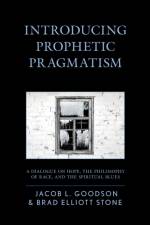
Pragmatism is a philosophical school of thought emphasizing action, practices, and practical reasoning whereas prophecy is an ancient religious concept that requires belief in the reality of God. Although these two concepts seem to not be a natural fit with one another, the authors demonstrate why prophetic pragmatism is "pragmatism at its best."
Published to coincide with the 2016 tercentenary of the birth of Lancelot 'Capability' Brown, arguably Britain's greatest ever landscape gardener, this book is uniquely positioned to put Brown's work into its social context.
Negotiations for the settlement of the Cyprus Question have resumed amidst a pressing geopolitical and economic reality. Greek and Turkish Cypriots, however, have adopted distinct interpretations of the UN designated peace plan for a bi-communal and bi-zonal federation in Cyprus. These interpretations are mainly driven by their underlying security considerations. Peace Building in Cyprus shines new light on conceptual security considerations as behavioural drivers and hindrances to the acceptance of institutional provisions for ethno-federal state building in Cyprus. Adopting a rational actor approach, Pavlos Koktsidis identifies contrasting views on selected institutional provisions, and links them to each community's security perceptions through survey data and leadership assessments. This new primary data reveals the impact of security perceptions on leadership-behaviour patterns - especially the prevalence of fear, uncertainty, and mistrust. Additional attention is paid to the impact of psychological trauma and the lack of cognitive accuracy in decision-making processes. This will be an essential read for students, scholars and policy-makers studying the Cyprus conflict.
Drawing on historical and social science literatures and interviews with current piano teachers, the book explores the contemporary U.S. piano teacher through a social science lens.
Damian Janus draws on his clinical experience to address the relationship between psychopathology and religion. Using clinical vignettes and religious concepts, Janus questions common understandings of mental disorders.
This book engages globalization from an archaeological and long-term perspective by using the case study of the historical interaction between China and East Africa. It raises questions of whether the greater connectivity that has emerged from globalization will lead to homogenization of culture, or the creation of a monoculture.
Images of the devastation wreaked by typhoons, flooding, earthquakes and drought in the Philippines circulate globally as an important part of disaster discourses. This collection seeks to move beyond these simplistic representations of calamity by bringing together a group of Filipino and international scholars from diverse disciplinary backgrounds to grapple with the complex nature of disaster in the Philippines. Firmly grounded in the relationship between disaster and place, the volume's contributors confront the challenges of the Philippine nation's internal heterogeneity of language, ethnicity and class. In doing so, this book seeks to engage the specificities of place amid diversity, and explores two broad but interrelating avenues of investigation through case studies drawn from across the archipelago: How can environmental extremity in the Philippines help us understand disasters? How can disasters help us understand the Philippines?
"Some of [Coward's] most sparkling dialogue ever... This play is about something substantial - the way past relationships come back to haunt us - but it's the gossamer-like nature of the piece, its sheer levity of spirit, that makes it such an enduring achievement" - The TelegraphWhen socialite and novelist Charles Condomine attends a séance hosted by eccentric medium Madame Arcati, he's only hoping to gather material for his next book: he never expected to be haunted by his temperamental ex-wife, Elvira. Can Charles keep this willful spirit at bay, or will his new marriage to his second wife, Ruth, come to an untimely demise?With unforgettable characters, witty dialogue and farcical situations, Blithe Spirit ran for decades on the West End, becoming one of the most well-known plays in the British canon.This new edition is published in Methuen Drama's iconic Modern Classics series to coincide with the 50th anniversary of Coward's death and features a new introduction by Arianne Johnson Quinn.
"Its fusion of passion and mischief remains striking and there is something undeniably heady about its celebration of a kind of sexual liberation that looks a lot like flippancy" - Evening StandardFrom 1930s bohemian Paris to the dizzying heights of Manhattan society, a tempestuous love triangle unravels between a vivacious interior designer, Gilda, playwright Leo and artist Otto - three people unashamedly and passionately in love with each other. But can such a lavish love affair survive the real world?Exploring themes of bisexuality, celebrity, success and self-obsession, Design for Living is a stylish and scandalous comedy, that is often revered as Coward's most controversial and risqué work.This new edition is published in Methuen Drama's iconic Modern Classics series to coincide with the 50th anniversary of Coward's death and features a new introduction by Oliver Soden.
Abonner på vårt nyhetsbrev og få rabatter og inspirasjon til din neste leseopplevelse.
Ved å abonnere godtar du vår personvernerklæring.