
















Gjør som tusenvis av andre bokelskere
Abonner på vårt nyhetsbrev og få rabatter og inspirasjon til din neste leseopplevelse.
Ved å abonnere godtar du vår personvernerklæring.Du kan når som helst melde deg av våre nyhetsbrev.

One queue. 250,000 people. Twenty-four life-changing hours.A young boy wearing a cereal box crown, impatiently dragging his mother behind him.A friendly man in a khaki raincoat, talking about his beloved Leeds United to anyone who will listen.An elderly woman who has lived her life alongside the Queen, and is just hoping she'll make it to the end of the queue to say goodbye.And among them, a British Indian mother and daughter, driven apart by their differences, embarking on a pilgrimage which neither of them yet know will change their lives forever.Full of secrets and surprises, this uplifting novel celebrates not only the remarkable woman who defined an era and a country, but also the diverse and unique people she served for so long.
Redefining the Hypernym Mensch:in in German: Gender, Sexuality, and Personhood examines how the verbalization of `human¿ in gender normative terms results in implicit exclusion. Situated in the tension between traditional rules and progressive language use, this book criticizes the heteronormativity of masculine hypernyms and argues for the adoption of gender-inclusive linguistic practices.
Digital Game Culture in Korea: The Social at Play is a critical ethnographic investigation of media discourses surrounding online game addiction and the sociocultural roles fulfilled by games in everyday life. Florence M. Chee argues that the casting of online games as singularly problematic or addictive largely ignores the socially generative and, at times, pivotally important means of connection among games, players, and the communities they foster. Through focusing on Korea's sociohistorical and technocultural context, this work celebrates and recognizes the foundational role of Korean game culture in shaping global games and play. Scholars of game studies, communication, and technoculture will find this book of particular interest.
This open access book explores the EU regulatory framework to measure in-work poverty and reduce its impact on different groups of workers in the labour market. Its innovative approach links the enhancement of social rights with the full realisation of EU citizenship entitlements and values.For almost two decades, EU countries have experienced rampant inequalities as well as the varied spread of in-work poverty, both around Europe and within national labour markets. Without the realistic prospect of EU citizens earning a decent living, the substantive content of EU citizenship itself could be put in jeopardy. Following an in-depth scrutiny of the main policy options at both EU and national levels to reduce the number of working poor, this invaluable resource provides a theoretical reflection on the role of legislation and socio-fiscal welfare in contemporary labour markets. The eBook editions of this book are available open access under a CC BY-NC-ND 4.0 licence on bloomsburycollections.com.
As teaching is socially, culturally, and politically constructed, it is important that teacher educators committed to social justice attempt to create secure environment where all voices are heard and teacher candidates can inquire into personally and socially challenging topics within a safe and caring classroom culture. Relationships of trust are fundamental to teaching about social justice and to being receptive as learners in such classes. Mindfulness on the part of teacher educators and teacher candidates can go a long way in fostering respect, openness and acceptance in such classes. Together they can lead to teacher educators and candidates thinking deeply about themselves, schools and schooling as they move towards a vision of a more equitable and just society. The teacher educators who have contributed to this volume recognize the challenges of balancing respect for their students with the call to social justice. Their accounts and critical reflections convey how relational and mindful approaches might offer positive avenues to self and shared exploration by teacher candidates and teacher educators alike. Several chapters attend to the challenges for educators as they encounter culturally and linguistically diverse contexts. Others attend to these issues within the complexity of diverse university classrooms in order to guide teacher candidates towards dispositions and practices that help foster inclusion and engage diverse learners and communities. Together, these chapters offer thoughtful approaches to living alongside aspiring teachers as they develop deeper understanding of the concepts of race and diversity, and inclusive approaches to teaching and learning.
In Corporate Responsibility and Human Rights, Jide James-Eluyode highlights key issues concerning the emergence of a normative framework for the human rights of indigenous peoples under international law and depicts its impact on corporate social responsibility practices.
Rape Culture and Religious Studies: Critical and Pedagogical Engagements stages a critical engagement between religious texts and the problem of sexual violence. Rape and other forms of sexual violence are widespread on college and university campuses; they also occur in sacred texts and religious traditions. The volume addresses these difficult intersections as they play out in texts, traditions, and university contexts. The volume gathers contributions from religious studies scholars to engage these questions from a variety of institutional contexts and to offer a constructive assessment of religious texts and traditions.
Questions of whether and when life should end are controversial but are they also partisan? The Chronic Silence of Political Parties in End of Life Policymaking in the United States retraces the legislative history of the right to die movement to examine the impact of the absence of the two major political parties on the diffusion of innovation.
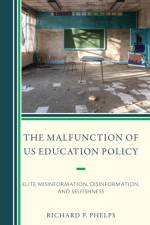
The Malfunction of US Education Policy: Elite Misinformation, Disinformation, and Selfishness biased and inefficient information dissemination that has degraded US education research and policy since the year 2001, when a series of unfortunate disruptions began:¿first, the No Child Left Behind (NCLB) Act and federal imposition of an idiosyncratic and ineffectual testing program;¿second, the "big bang" reorganization of the US education testing industry from a stable, cooperative oligopoly run by psychometricians to a commercially competitive free-for-all with more opportunist and customer-pleasing ambitions; and¿third, the Common Core standards, which mandated homogenous lower content standards onto the still required NCLB testing structure.Billions from the federal government and wealthy foundations have transformed many once-independent national education organizations into "cargo cult" dependents and promoters of the new order, intolerant of divergent points of view. The research and policy brain trust responsible comprised an alliance of convenience among two "citation cartels" of establishment and reform scholars and politicos, and an astonishingly cooperative and un-skeptical group of journalists. It succeeded in focusing attention on their work, while diverting attention away from a much larger universe of others' work (by ignoring, dismissing, or demeaning it) that included a century's worth of mostly experimental scholarship in the fields of psychology and program evaluation.
This volume provides the first in-depth examination of the Frankfurt School's theory of antisemitism and, employing this critical theory, investigates the presence of antisemitism in 20th- and 21st-century politics and society. Critical Theory and the Critique of Antisemitism uncovers how critical theory differs from mainstream socialist or liberal critiques of antisemitism, as it frames its denunciation in the critique of other aspects of modern capitalist society, which traditional theories accept as given or assess in less detail. Amongst others, these include issues of identity, nation, race, and sexuality. In exploring the Frankfurt School's writing on antisemitism therefore, the chapters in this book reveal the connections to other pressing societal issues, such as racism more broadly, patriarchy, and trans rights. Putting the theory to practice, this volume further brings together interdisciplinary scholars and activists, who employ critical theory to scrutinise right- and left-wing manifestations of antisemitism. Using case studies from National Socialism to Blair's New Labour and the 2005 French riots, they develop, in their critique of antisemitism, a critique of capitalism, as the authors ask: why does modern capitalist society seem bound to produce antisemitism? And how do we challenge it? At a time when the rise of populism internationally has brought with it new strains of antisemitism, this is an essential resource that demonstrates not only the persistence of antisemitism today, but the continuing relevance of critical theory and the Frankfurt School.
This volume probes and deciphers the tensions and contradictions that underlie modern European Liberal Catholicism. Beginning with the French revolution and looking at dialogues between European 'public moralists', the book discusses the ways in which liberal Catholics loosened their bonds with religion, all the while relying on it. It reflects on how and why they promoted a post-revolutionary state and society based on religious dogma and morality, and what new liberal order and socio-political and religious models they proposed. Beyond the analysis of the work of these Catholic intellectuals, the question of their conceiving a specific liberal approach through Catholicism is also investigated. More generally, it prompts a vital reappraisal of the political, ideological and philosophical pressures that the religious question caused in the redefinition of Western European post-revolutionary liberalism.
Through a series of arresting vignettes and a collection of nameless characters, Alice Birch examines the language, behaviour and forces that shape women in the 21st century. The play asks what's stopping us from doing something truly radical to change them?Written in response to the provocation that well-behaved women seldom make history, the play is an assault on the language that has fueled violence against women throughout history. Problematic language frequently attached to women is interrogated, from lazy sexist clichés to the conventions around a marriage proposal. Through doing so, the play rails against the conventions of work, sex, motherhood, aging and love. Revolt. She Said. Revolt Again was first performed at the 2014 Midsummer Mischief Festival in Stratford-upon-Avon. It transferred to the Royal Court Upstairs and was more recently produced at New York's Soho Rep.It is published here in a Student Edition alongside commentary and notes by Marissia Fragkou, who locates the play in our contemporary political and cultural context (including second- and third-wave feminism, and the #MeToo movement).
In this book, Bruce Riedel, one of Americäs leading experts on the Middle East, provides a history of US relations with the various entities of north and south Yemen, and the first in-depth review of Americäs role in the deadly Saudi directed war in the Yemens. Three Presidents¿Obama, Trump, and Biden-- have been deeply involved in this conflict. Riedel places this current war in the context of Americäs history of engaging with the Yemens. From President Kennedy¿s handling of a Soviet and Egyptian coup in Yemen in the fall of 1962 to multiple Presidents interaction with the dictator Ali Abdallah Salih who united the Yemens this is a fascinating story with a colorful cast of characters, America and the Yemens will be of interest to readers seeking to have a better understanding of Americäs role in the Middle East and the tragic encounter that has created the worst humanitarian catastrophe in our lives.
Object Lessons is a series of short, beautifully designed books about the hidden lives of ordinary things.For a century, magazines were the authors of culture and taste, of intelligence and policy - until they were overthrown by the voices of the public themselves online. Here is a tribute to all that magazines were, from their origins in London and on Ben Franklin's press; through their boom - enabled by new technologies - as creators of a new media aesthetic and a new mass culture; into their opulent days in advertising-supported conglomerates; and finally to their fall at the hands of the internet. This tale is told through the experience of a magazine founder, the creator of Entertainment Weekly at Time Inc., who was also TV critic at TV Guide and People and finally an executive at Condé Nast trying to shepherd its magazines into the digital age.Object Lessons is published in partnership with an essay series in The Atlantic.
"I don't know what's beyond this minute. But whatever it is it can't be worse than all the minutes that brought us here".Two sisters, one last drink. In the Irish border town of Newry, Chrissy promises her sister Claire that after four cans of lager she will go to the dry house to get sober. Does she mean it this time? One woman's refusal to give up on her sister powers The Dry House, an emotionally searing new family drama about love, loss and the possibility of hope after years of self-destruction.This edition was published to coincide with the world premiere at London's Marylebone Theatre in March 2023.
This open access book delivers a much-needed analysis of the relationship between the EU financial constitution and democracy in the multi-level system.The economic rescue package NextGenerationEU has multiplied the EU's financial volume and thereby raised the question of the state of European integration anew. This open access book 'follows the money' and surveys the financial constitution of European integration from the perspective of law, political economy, and history. Structured into 3 thematic parts, the book focuses on past and present developments of the fiscal structure of the EU as well as potential future outcomes. It raises an array of questions that are answered from different disciplinary perspectives and through the eyes of academia and practice: can underlying design flaws of the European Monetary Union be identified? What about the legality and the economic implications of the innovative policy-making at the EU level in response to the COVID-19 pandemic? Which role do economic crises play as a turning point for European integration? The ebook editions of this book are available open access under a CC BY 4.0 licence on bloomsburycollections.com.
Dialogues with Degas demonstrates the ongoing relevance of Edgar Degas to 20th- and 21st-century ideas and art practices. The first in-depth examination of this major artist's impact on contemporary art, this book charts how contemporary practitioners have used Degas's creativity as a springboard to engage imaginatively and critically with themes of colonialism, gender, race and class. Individual chapters are devoted to different dialogues between Degas's painting, drawing, printmaking, sculpture and art produced from the 1980s to the present. Through close analyses of selected works, Kathryn Brown explores how Degas's technical experiments have been tested and extended in innovative ways. The artists selected for this study have explicitly taken up, developed or challenged Degas's technical and compositional experiments; they include Frank Auerbach, Cecily Brown, Ryan Gander, Maggi Hambling, Damien Hirst, Howard Hodgkin, R.B. Kitaj, Paula Rego, Yinka Shonibare and Cy Twombly. By submitting existing compositions to new technical and imaginative experiments, these artists generate visual palimpsests that make new demands of the viewer and reveal the meanings that accrue to artworks as they circulate within different spatial, temporal and institutional networks. The book overturns familiar conceptions of influence by showing how the art historical canon can be challenged from a position within it and by making the case that a close examination of dialogues with Degas generates a way of writing art history that eschews genealogies. Prioritizing, instead, the analysis of non-linear and conceptual encounters between images generates a new conception of the agency of artworks and of the dialogues they are capable of entertaining with other works. While this study will shed new light on Degas's art and that of his interlocutors, it will also have methodological significance for the writing of art history.
This book critically examines the uses and abuses of heritage, as well as the critical issue of resilience to these abuses, through analysis of a range of case studies from modern-day Turkey. It argues that exercising the right to heritage is of great significance to the cause of social justice and the path to sustainable societies, making the case that social equality is only possible by freely exercising the right to culture. The unique case studies, including the UNESCO World Heritage Sites of Ani and Sur City Walls, Munzur Valley in Tunceli province and Gezi Park in Istanbul, are brought together in a coherent and cohesive way to not only examine patterns and differences in approaches to heritage within these specific contexts, but to serve as models for abuses of heritage across the world. The book's findings are significant for the heritage field in two ways: first, it exposes the discourses used by nation states to manipulate and destroy cultural heritage, promoting both awareness and effective professional approaches to heritage management and preservation. Second, it outlines the ways in which cultural heritage resists such discourses of heritage and identity destruction by reflecting on such questions as the extent to which cultural heritage can be used to divide, oppress and limit human rights, the extent to which minority groups can freely exercise cultural heritage as part of cultural and human rights, and how cultural heritage can be used as a tool for resilience, social justice, community sustainability and reconciliation.
This book describes how we find and compare different theories in science, Biblical studies, and everyday life. It offers a new method of diagramming arguments that helps investigators discuss and assess competing interpretations, demonstrating its usefulness with detailed test cases from Biblical studies.
This book presents a multi-religious discussion of spiritual and ethical formation through friendship. Contributors from six global traditions draw on different spiritual concepts to show how friends help us establish diverse societies, healthy ecosystems, trauma healing, inner virtues, social action, and divine connection.
This volume adopts a comparative politics model in order to analyze and evaluate pressing issues in Guatemala, including a floundering economy, backsliding in the military's civilianization, retreats in state power and peacemaking commitments, autocratization, and the repression of social movements.
Afrosofian Knowledge and Cheikh Anta Diop wrestles with the cultural, epistemological, ethical, and geopolitical conundrums of our contemporary world. It argues that sofia is a psychological, discursive, social, and civilizational sickle constantly sharpened to weed imperial-colonial, mental, linguistic, racist, and barbaric alienation.
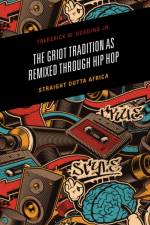
The Griot Tradition as Remixed through Hip Hop: Straight Outta Africa analyzes how Hip Hop, when seen through the lens of African connection, can be appreciated for its regenerative and connective power to create relationships between people both nationally and internationally.
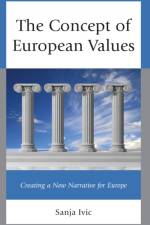
Sanja Ivic offers a philosophical analysis of the concept of European values from the origin of this concept to the present day. This book rethinks European values in light of the various crises that the European Union (EU) has faced since 2008 and analyzes EU initiatives to create a new narrative for Europe.
Educating Black Males in the 21st Century South: Tunnel Vision? offers rich accounts of the lived experiences of Black men in the South, spanning from childhood to adulthood. Backed by historical accounts and research, the authors provide a comprehensive perspective of challenges that have led to a persistent educational and societal crisis. This book illuminates systems of past oppression, unveils the truths of Black boys and men whose lives have been overshadowed by stereotypes and biases, and shares breakthrough strategies for countering such challenges and effectively reaching Black males as students to empower them to achieve more than society has allowed them to visualize for themselves.
This collection brings together transdisciplinary scholarship on sounds, images, words, and experiences to reflect on extremity's polysemic and polymorphic characteristics.
The first book-length analysis of the controversial Pan-Hispanic short story anthology "McOndo" (1996) draws on World Literature scholarship to take a step toward reclaiming the anthology's artistic intentions and considering its generation-defining legacy in Latin American literary history.
Mustafa Kemal Atatürk was one of the most significant political leaders of the twentieth century. How did he rise from humble origins in modern-day Greece to become the leader of the new Turkish Republic out of the ashes of the Ottoman Empire and go on to radically transform Turkish society?In this book, George Gawrych studies Atatürk's career in detail. He shows the remarkable character of the man: a war hero who considered himself 'baba' or father to his troops with a library of over 4000 books, Atatürk married the traits of the classic military man-of-action with those of the intellectual and theorist. Gawrych places Atatürk in the context of his times to reveal how with these unique character traits he harnessed wider forces of societal change and transformation to set Turkey on a path of secular nationalism, the legacy of which are explored in the text and can be seen everywhere in Turkey today, from the second names he imposed on citizens to the adoption of the Latin alphabet. Attentive, too, to the costs of Atatürk's policies, including the suppression of the minorities of the former multi-ethnic, interfaith and polyglot Ottoman Empire in the name of 'Turkification', the book presents a nuanced analysis of a figure who through force of will and expert manipulation of the conditions within which he found himself, did much to define modern Turkey today.
What was popular entertainment like for everyday Arab societies in Middle Eastern cities during the long nineteenth century? In what ways did café culture, theatre, illustrated periodicals, cinema, cabarets, and festivals serve as key forms of popular entertainment for Arabic-speaking audiences, many of whom were uneducated and striving to contend with modernity's anxiety-inducing realities? Studies on the 19th to mid-20th century's transformative cultural movement known as the Arab nahda (renaissance), have largely focussed on concerns with nationalism, secularism, and language, often told from the perspective of privileged groups. Highlighting overlooked aspects of this movement, this book shifts the focus away from elite circles to quotidian audiences. Its ten contributions range in scope, from music and visual media to theatre and popular fiction. Paying special attention to networks of movement and exchange across Arab societies in Lebanon, Syria, Egypt, Iraq, and Morocco, this book heeds the call for 'translocal/transnational' cultural histories, while contributing to timely global studies on gender, sexuality, and morality. Focusing on the often-marginalized frequenters of cafés, artist studios, cinemas, nightclubs, and the streets, it expands the remit of who participated in the nahda and how they did.
Abonner på vårt nyhetsbrev og få rabatter og inspirasjon til din neste leseopplevelse.
Ved å abonnere godtar du vår personvernerklæring.