














Gjør som tusenvis av andre bokelskere
Abonner på vårt nyhetsbrev og få rabatter og inspirasjon til din neste leseopplevelse.
Ved å abonnere godtar du vår personvernerklæring.Du kan når som helst melde deg av våre nyhetsbrev.

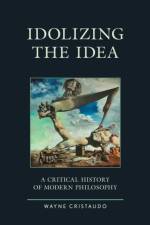
In this critical history of modern philosophy, Cristaudo develops the argument put forward by Thomas Reid that modern philosophy has generally continued along the 'way of ideas' to its own detriment. Its ever-shifting dominant ideas contribute to capturing and imprisoning rather than expands our thinking.
The core theme of this book is that the justices, both liberal and conservative, do not simply call balls and strikes, as Chief Justice Roberts memorably stated, in formulating their decisions. Instead, as shown in some 200 cases, they have expanded or limited prior precedent, created new rights, and eliminated others.
Religious Leaders and the Regime in the Second Republic of Zimbabwe discusses the nexus of religion and politics in Zimbabwe. The book focuses on how religion has played a role in thwarting democracy and has acted as a machine to silence dissenting voices, repression, and poor governance.
Ecodisaster Imaginaries in India: Essays in Critical Perspectives contains 15 essays that approach contemporary literary and cultural representations of ecological disaster in India from various theoretical angles. The studies engage with many of today's pressing ecological issues by carefully examining these diverse texts.
This book offers a variety of positions on how technology is influencing religious communal and cultural life. There is no doubt that our interaction with technology will shape the human community up ahead. These essays provide a basis for thoughtful choice and action.
In Narratives in East Asia and Beyond: An Interdisciplinary Perspective on Using Narratives as a Research Method, contributors from diverse fields jointly argue for the interdisciplinary appeal of using narratives as a research method. Scholars from the fields of philosophy of narrative, ethnographic research, linguistics, political sciences, international relations, and area studies reflect on how to approach, understand, and utilize narratives to comprehend social structures and interactions. The volume attempts to reflect on a range of questions, including: How can narrative studies broaden and deepen the scope of research in other fields? What connections exist between narratives and identities (individual and collective)? How does analyzing narratives help us better understand the dynamics of the policy change and the perceptions of self and other? The essays range from reflections on the role of narrativity in cognitive processes, interview settings, and in constructing historical memories to the analysis of narrator and audience perspectives on the Chinese Belt and Road Initiative, evaluations of roles and legitimation strategies, as well as interpretations of documentary films. The authors show the flexibility and fruitfulness of incorporating narratives into research agendas in a wide range of disciplines and highlight the theoretical and empirical research benefits that narrative studies open up.
This book introduces the Social Power Dynamic Model, which helps explain how culture and society impact power. Tolkien's works are used in sample applications of the SPDM, which demonstrates the value of this new model and provides insight into Tolkien's views on power.
This book provides a theoretical framework and case study to explore how media systems take on the form and coloration given to them by culture and in tandem with the affecting socio-political and economic systems, which are also defined by society's values, beliefs, and attitudes and even more so by those of its elites.
In this book, nineteen experts examine topics ranging from constitutional reform and debt fatigue to fiscal rules and zero-based budgeting. Together, these contributions inform a multifaceted, nuanced argument for the need to formalize spending restraint and redefine state debt to include unfunded liabilities.
Social and Solidarity Economy in Cuba examines the role of Social and Solidarity Economics (SSE) amidst national change in Cuba. Depicting both challenges and opportunities, this book makes a strong and sustained case for solidary and socially responsible practices in Cuba.
This book contributes to the debate concerning the future of the political economy of African development by addressing the important question of how African countries can strategically approach global political economy at multilateral, continental, and regional levels in view of North-South versus South-South configurations.
The book features a critical cultural sociological study of attitudes towards migration in Czechia. Based on qualitative research, it looks at the ways the Czech public draws symbolic boundaries between "us" and "them."
An edition and study of the poetry of the first of the medieval European troubadours, this book claims William's songs are cornerstones of the modern western mind and culture, but also reveal the deep-seated problems and instability of structures built on a foundation of love and freedom of desires.
A pedagogical luminary, bell hooks not only believed that teaching is "the practice of freedom," but that "anyone can learn" to teach to transgress. Through critical commentary reflection pieces, this collection explores how to teach about intersecting systems of oppression in meaningful, radical ways.
A range of seemingly unrelated problems at the forefront of controversy about consciousness, language, and vision, among others, have a deep connection with one another that has gone unnoticed. This book suggests that this mistake arises not from what is put into a theory but rather from what is missing.
This book argues that the state in Cabo Verde is illegible since its operations, procedures, and processes are carried out through Portuguese, a language that most of the people do not understand. Consequently, the illegible state produces grave political consequences in overall political participation and the quality of democracy.
Future Folk Horror: Contemporary Anxieties and Possible Futures analyzes recent novels and films, to show that folk horror as a genre uniquely captures the anxieties of the twenty-first century and imagines visions of possible futures.
Contributors use a variety of theoretical frameworks to analyze distinct areas of Craven's work, including ecology, auteurism, philosophy, queer studies, and trauma. Scholars of cinema studies, horror, and ecology will find this book of particular interest.
In this book, Sally J. McMillan draws insights from the lived experiences of digital immigrants and traces incremental points in media evolution leading up to the development of smartphones, which are now indispensable and tied to identity. Scholars of communication, media ecology, and technology will find this book of particular interest.
In the 1990s over a million Turkish Kurds were displaced from Southeastern Turkey. By focusing on the forced migrants' stories and on their mobilization of social capital in times of illness and conflict, Geerse shows how they tried to sustain meaningful lives in urban contexts marked by political and structural violence.
The Power to Assume Form: Cornelius Castoriadis and Regulative Regimes of Historicityexamines the major contribution of Cornelius Castoriadis¿s work, which elucidated the role of the social imaginary within human societies. What is significant, Sean McMorrow argues, is that Castoriadis¿s work presents a unique perspective on the regimes of historicity; modes of instituting power that establish the legitimacy of institutional order in relation to the extensive social imaginary articulations of the world. The author assesses Castoriadis¿s theorization of the radically creative capacity of the social imaginary and suggests that there remains a tendency to present an overly dichotomous view of autonomous and heteronomous modes of institution. McMorrow assesses how adherence to this inclination hinders the development of further insights into the creative capacities of social imaginary, while also imposing limits on Castoriadis¿s own assessment of the `partially¿ autonomous situation of modern societies. The author suggests that one way forward is to consider the role of an implicit dimension of instituting power, involved in the reproduction of dominant social imaginary articulations of the world, and which also shape the regulation of historicity more generally. The main purpose of this book is to develop the critical depth of Castoriadis¿s work, showing how it remains an insightful framework to analyze the significance of the deepening depoliticization of contemporary `liberal-democratic¿ regimes and the `partially¿ autonomous dynamics that underlie their shift toward increasingly authoritarian modes of governance.
This book explores how bureaucracy can provide governance stability during political crises. Relying on extensive field work conducted in Pakistan, Taiwan, and Turkey, the book offers unique insights about how a high quality and independent bureaucracy can alter a country's trajectory.
African Artists under Mission Patronage explores relationships between African artists and Western Christian missions in twentieth-century Africa, and how that patronage has shaped and defined twentieth-century African art.
This book explores major themes related to where to live in America, not only about the acquisition of a home but also the ways in which where one lives relates to one's cultural identity. It shows how changes in media and information technology are shaping both our housing choices and our understanding of the meaning of personal place.
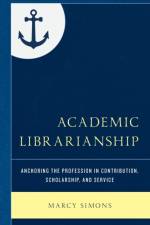
Academic Librarianship: Anchoring the Profession in Contribution, Scholarship, and Service is needed now as a response to how much has changed in academic librarianship as a profession (from the smallest academic libraries to large research libraries). Much has been written recently about the status of the profession of librarianship, i.e. whether or not it should still be considered a "profession," are the same credentials still required/enough, should things change dramatically in SLIS programs in response to the new normal, and what is the impact of hiring PhD's in disciplines outside of librarianship. Major topics covered include:·State of the profession of librarianship today·Status of librarians·Tenure or not·Move away from faculty status in some (more) academic libraries·Contributions to the profession -- scholarship ·What is produced·How are librarians conducting research·Where is it taking place -- who is producing scholarship·Why·Trends ·Contribution to the profession -- service and professional associations ·LIS Education·Tomorrow -- what are the implications for the future of our professionAuthor Marcy Simons explores the history, current status, and future of the profession of academic librarianship. She clearly demonstrates the need for a shared understanding of how we will work together in order to continue our transformation.
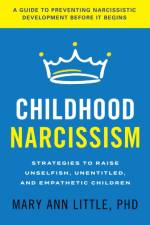
Narcissism is one of the most difficult disorders to treat in adults, but many of the symptoms and tendencies begin in childhood when it's easier to address and curtail such behaviors. Mary Ann Little helps parents recognize the symptoms and develop parenting practices that can reverse those behaviors before they become entrenched.
Abonner på vårt nyhetsbrev og få rabatter og inspirasjon til din neste leseopplevelse.
Ved å abonnere godtar du vår personvernerklæring.