

















Gjør som tusenvis av andre bokelskere
Abonner på vårt nyhetsbrev og få rabatter og inspirasjon til din neste leseopplevelse.
Ved å abonnere godtar du vår personvernerklæring.Du kan når som helst melde deg av våre nyhetsbrev.

This book explores the political ecology of motor vehicles in an era of growing social disparities and environmental crises. Humanity needs to move beyond motor vehicles as much as possible as part and parcel of the larger process of radical social structural changes.
Shame, Gender Violence, and Ethics: Terrors of Injustice draws from contemporary, concrete atrocities against women and marginalized communities to re-conceptualize moral shame and to set moral shame apart from dimensions of subordination, humiliation, and disgrace. The interdisciplinary collection starts with a contribution from a Yazidi-survivor of genocidal and sexual violence, whose case brings together core themes: gender, ethnic and religious identity, and violence and shame. Further accounts of shame and gendered violence in this collection take the reader to other and equally disturbing accounts of lesser-known atrocities from around the world. Although shame is sometimes posited as an inevitable companion to human life, editors Lenart ¿kof and Shé M. Hawke situate the discussion in the theoretical landscape of shame, and the contributors challenge this concept through fields as diverse as law, journalism, activism, philosophy, theology, ecofeminism, and gender and cultural studies. Their discussion of gendered shame makes room for it to be both a negative and a redemptive concept. Combining junior and senior scholarship, this collection examines power relations in the cycle of shame and violence.
Working from multidisciplinary and interdisciplinary perspectives (especially, from the social sciences, media studies discourse analysis, text grammar, folklore, performing arts and linguistics), the authors of the volume investigate and illuminate pertinent issues on democratization, elections and electioneering campaigns and the constitution of order in an African context. The strategies through which political actors and the media speak about important policy issues such as healthcare, infrastructure, education, and finance during presidential sessional addresses and political campaigning are also elucidated. The extent of political ecologies' impact on general elections, on policy issues, and on split-ticket voting (especially what causes it to happen and its impact on who gets elected and the consequent impact on party unity or disintegration) are also given scholarly attention. Also elucidated are is the entwinning of language, power, liberty, ideology and representation and issues deemed politically nerve wrecking and capable of entrapping political actors and causing the citizenry to either lose confidence in them or even call for their resignation.
Become a birder with this brand-new children's activity book from the RSPB. Joining the thousands of people who take part in the Big Garden Birdwatch every year has never been easier with this handy sticker book and birdwatching guide! Discover useful tips on how to attract birds to your garden or windowsill, learn to identify common birds, follow step-by-step instructions to create a bird-feeder from household items and have a go at lots of fun activities. Wherever you live and whatever time of year it is, there are always birds to spot!The perfect gift for young nature lovers and budding birders, this book is bursting with fun activities to keep kids busy, with 150 stickers to stick in scenes, colouring activities, quizzes, word searches, dot-to-dots, mazes and more. This book encourages young readers to get out into nature and begin their birdwatching adventure!
This book shows how critical theory can help school leaders and administrators to prepare students for the ever-changing political, cultural, economic, and societal conditions of the world. The contributors use ideas from critical theorists including Adorno, Fromm, Marcuse and Habermas and connect them with contemporary theories and debates in educational leadership from moral education to critical theories on race, to culturally relevant practice. The book challenges the misconceptions of many present-day educators about the analytical lens offered by the Frankfurt School theorists which is often dismissed by policymakers and practitioners. Written by leading scholars based in the UK, USA, and Canada, the contributors emphasize and explain the importance of educational aesthetics, dialectics, education and civilization, the structural transformation of education's place in the public sphere, and education as revolution and enlightenment.
This book explores and builds on the extraordinary work of Professor Paul Black across assessment and pedagogy across the curriculum, including STEM, humanities and social science subjects.This book explores the influence that Black has had within educational settings, focusing on interpretations of the work and scholarship he has achieved across a range of settings and on the ways that scholars, who have worked with him or been influenced by his ideas, have developed their research and teaching. The contributions are presented under three thematic sections, each of which reflects a set of shared educational concerns and values drawing on the natural and social sciences as well as developments in public policy. These concerns and values, with their emphasis on teacher assessment, provide a basis for a strategic, informed and coherent response to challenges in education, such as the cancellation of public examinations in the face of the Covid-19 pandemic.
Title 40 presents regulations governing care of the environment. Programs addressing air, water, pesticides, radiation protection, and noise abatement are included. Practices for waste and toxic materials disposal and clean-up are also prescribed.
Portraits of Wollstonecraft collects and introduces 102 texts and artifacts that document Mary Wollstonecraft's public reception in art, literature, philosophy and feminist politics. Each portrait is a milestone in her depiction in culture. From William Blake's 1803 poem 'Mary' to Maggi Hambling's contentious sculpture in 2020, these sources validate the monumental place Wollstonecraft holds in not just one but many canons. The color images in Part I: Public Sightings trace her earliest reception in portraiture, from 1785 to 1804, with detailed analysis paired with each of the illustrations. Arranged chronologically, these landmark images are followed by the reviews of Wollstonecraft's books that appeared during her lifetime in Jamaica, Madrid, Amsterdam and London. Part II: Global Afterlives, examines her multifarious posthumous reception and features diary entries, excerpts from English-language biographies, letters, articles and introductions to her books. From Olive Schreiner's introduction to the Rights of Women published in Cape Town in 1809 to the translator's preface to the first Czech edition of A Vindication of the Rights of Woman in 1904, they showcase an impressive sweep of cross-cultural perspectives on her life and writings. The sources in Part III: Making an International Icon chart the depth and breadth of her legacies on a global scale. Feminists, philosophers, and social scientists-from Ruth Benedict to Virginia Sapiro to Amartya Sen-have written and spoken with conviction about the emotional power of looking into the eyes of the author of the Rights of Woman. This section includes major thinkers from across the 19th and 20th centuries who responded to Wollstonecraft's theories on virtue, love, gender, education, and rights: Mary Shelley, Emma Goldman, Virginia Woolf, Simone de Beauvoir, Betty Friedan, Susan Moller Okin, Barbara Johnson and Martha Nussbaum. We see how Wollstonecraft gained traction in feminist politics, both as a philosopher and as a transcultural icon of the cause, beginning with English suffragist Millicent Fawcett's centennial edition of the Rights of Woman in 1891 and extending through feminist art in The Paris Review during the age of #MeToo. Assembling responses from Ireland, Continental Europe, North and South America and across the former colonies of the British Empire, this one-of-a-kind collection tells a compelling story of Wollstonecraft's watershed contributions to human rights debates throughout the modern and contemporary world.
Why were left-wing politics so ineffective in Iran while socialism and communism swept through the rest of the world? And why was the Left so crushingly defeated after the 1979 Islamic revolution in Iran? This text concludes the Left's demise in Iran came about for a variety of reasons.
Using historical and anthropological analysis, this book examines the changing characteristics of nations globally; nation-building in Tanzania, Uganda, and Zambia; and the history of multi-culturalism in the Global South as an advantage to development in post-colonial conceptions of the nation.
Ethos is a radical critique of Eurocentrism. In it, Ahmad Kasravi unleashes a scathing attack on Europe's self-perceived superiority as well as on Eastern promoters of the idea. Kasravi proceeds to outline the ills of post-Enlightenment European civilization: imperialism, colonialism, capitalism, Orientalism. Embedded in Europe's notions of "progress," these phenomena have in reality brought about social Darwinism, racism, war-mongering, materialism, mindless consumerism, inequality and immorality in the world. Disputing the rationality or civility of these Western tokens, Kasravi warns Euro-enthusiasts in his country of the consequences of wholesale Westernization and instead advocates for a vernacular modernity premised on the noble virtues of Iranian culture and of rationalist Islam. In the process, Kasravi created the theoretical framework and the lexicon which many of his other works build upon, and which generations of other Iranian intellectuals of various persuasions would draw on. Placed in the context of similar polemical works from the global South, Ethos's import transcends the Iranian setting. It presents an embryonic articulation of post-colonial discourse which would, decades later, come to maturity and international recognition in the works of Edward Said and others.
A collection of scholarly articles and essays by dancers and scholars of ethnochoreology, dance studies, drama studies, cultural studies, literature, and architecture, Dance and Modernism in Irish and German Literature and Culture: Connections in Motion explores Irish-German connections through dance in choreographic processes and on stage, in literary texts, dance documentation, film, and architecture from the 1920s to today. The contributors discuss modernism, with a specific focus on modern dance, and its impact on different art forms and discourses in Irish and German culture. Within this framework, dance is regarded both as a motif and a specific form of spatial movement, which allows for the transgression of medial and disciplinary boundaries as well as gender, social, or cultural differences. Part 1 of the collection focuses on Irish-German cultural connections made through dance, while part 2 studies the role of dance in Irish and German literature, visual art, and architecture.
Contemporary Africa and the Foreseeable World Order sheds light on the place of "Africa Agency" in the competitive and changing global system. This book provides scholars, policymakers, and other stakeholders studying and working on African issues with innovative solutions, strategies, knowledge, insights, case studies, and analyses to support decision-making on how best African states should position themselves in the dynamic global system in order to influence key decisions. Featuring themes such as the African Union (AU) and the consequences of the discovery of oil in the non-traditional oil exporting countries, the editors and contributors have demonstrated why and how Africa's position in the foreseeable world order is largely dependent on the influence of both existing and emerging world powers..
This book analyzes how the decline of American hegemony affects Italian foreign policy. It explores how Italy's EU membership intersects with Italy's role as a member of the coalition supporting the US-led hegemonic order.
The startlingly powerful psychological thriller by international bestselling author Sebastian Fitzek.Twelve-year-old Josy has an inexplicable illness. One day she goes to her doctor's surgery and disappears without trace.Josy's father Viktor withdraws to an isolated island in order to deal with the tragedy. It's there he is visited four years later by a beautiful stranger. Anna Glass is a novelist who suffers from an unusual form of schizophrenia: all the characters she creates for her books become real to her. Her latest work features a young girl with an unknown illness who has disappeared without trace...Could her delusions really describe Josy's last days? Reluctantly, psychiatrist Viktor agrees to become Anna's therapist in a final attempt to uncover the truth. As the past is dragged back into the light, the sessions and their consequences become ever more terrifying.Reviews for Sebastian Fitzek'Fitzek's thrillers are breathtaking, full of wild twists.' Harlan Coben'Fitzek is without question one of the crime world's most evocative storytellers' Karin Slaughter
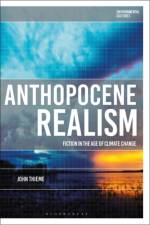
Examining the challenges faced by novelists writing realist fiction in the age of climate change, this open access book considers the various ways in which contemporary writers have evolved new and transformed modes of realism to grapple with the problems of living on an endangered planet.Focusing on fiction set in the 'long present' - a term used to cover the actual present, the near future and an historic past that interacts with the present - Thieme argues that long-present realism negates the possibility of deferring engagement with the climate crisis on the grounds that it is a future threat.Thieme examines work by twelve novelists: Margaret Atwood, James Bradley, Amitav Ghosh, Helon Habila, Liz Jensen, Barbara Kingsolver, Ian McEwan, Richard Powers, Annie Proulx, Indra Sinha, Antii Tuomainen and Wu Ming-Yi. He provides important new insights into the methods these writers use to convey the urgency of the climate crisis and how their work can inform our understandings of the Anthropocene activity that endangers life on Earth.The ebook editions of this book are available open access under a CC BY-NC-ND 4.0 licence on bloomsburycollections.com. Open access was funded by Knowledge Unlatched.
This edited volume highlights leadership from a social and relational perspective, with a particular emphasis on the innovative role that social networks play in systems change. The social systems engaged in this volume cut across a wide array of stakeholder groups, ranging from student learners, pre-service/in-service teachers, administrators, community leaders, and out to organizations and communities that reflect well beyond the education sector, showcasing diverse perspectives from multiple areas and international settings.Bringing together 33 distinguished scholars from Canada, Germany, Hong Kong, New Zealand, Norway, Spain, Taiwan, the UK and the USA, this book builds on previous and ongoing research and practice , and also extends to cutting-edge issues and practices around the use of social networks in education across different contexts and settings with a core intent to provide a perspective on leadership and connect it with leadership practice that works at these settings for change. Moving away from conventional research approaches, a mixture of qualitative, quantitative, and mixed methods social network research are drawn into each chapter.In addition to the breadth of studies connecting innovative leadership research to practice in this volume, the contributors also explore a new area of social networks and leadership by examining online and virtual social behaviors and their connections to face to face networks. Ultimately, the selected chapters in this volume make the point that "leadership is social influence" through examining a variety of social systems through social relationships.
This well-established and respected directory supports actors in their training and search for work in theatre, film, TV, radio and comedy.It is the only directory to provide detailed information for each listing and specific advice on how to approach companies and individuals, saving hours of further research. From agents and casting directors to producing theatres, showreel companies, photographers and much more, this essential reference book editorially selects only the most relevant and reputable contacts for the industry.Covering training and working in theatre, film, radio, TV and comedy, it contains invaluable resources such as a casting calendar and articles on a range of topics from your social media profile to what drama schools are looking for to financial and tax issues.With the listings updated every year, the Actors' and Performers' Yearbook continues to be the go-to guide for help with auditions, interviews and securing/sustaining work within the industry.Actors' and Performers' Yearbook 2024 is fully updated and includes a newly commissioned article by actor Mark Weinman, a new foreword, 4 new interviews by casting director Sam Stevenson, giving timely advice in response to today's fast-changing industry landscape, and an article by Paterson Joseph.
"James Graham is a political playwright so on top of his game that you kind of take it on faith that any play he comes up with will be a banger, regardless of how esoteric the subject." (Time Out) The third collection of James Graham's plays brings together four West End hits and a Tony Award Best Play nominee into one unforgettable anthology of political, national and human stories perceptively told and expertly crafted. INK: "It's a sharply written, vibrantly theatrical, boisterously performed piece of work. And while it vividly recaptures the now extinct world of Fleet Street - with its adrenalized and testosterone-heavy mix of news hounds and hacks, idealism and cynicism, professional pride and boozy waggishness - the play's depiction of the rise of a certain brand of populism and its immediately detrimental effect on British society makes it profoundly of the moment." - Hollywood Reporter Labour of Love: "James Graham [...] has a rare capacity to recreate pivotal moments from our past. In his brilliant new play, however, he adds another weapon to his armoury. He not only provides a portrait of the historic ups and downs of the Labour party; he also charts, with surprising tenderness, a turbulent relationship between an MP and his constituency agent". - Guardian Quiz: "Can we truly believe our eyes and ears, or do we only ever see what we want to see? In James Graham's glittering play you can take your pick from an array of alternative facts, but you might struggle to find the truth among the razzle-dazzle. One thing's for sure, though - Quiz is a winner." - TimesBest of Enemies: "History comes hurtling to life in "Best of Enemies," the latest attempt from the prolific playwright James Graham to put flesh on the bare bones of the past. Chronicling a sequence of televised face-offs that transfixed the United States in 1968, Graham once again shows a gift for mining the annals of politics and journalism for real theatrical gems. The result [...] is the most riveting play in London just now." - New York Times
Abonner på vårt nyhetsbrev og få rabatter og inspirasjon til din neste leseopplevelse.
Ved å abonnere godtar du vår personvernerklæring.