










Gjør som tusenvis av andre bokelskere
Abonner på vårt nyhetsbrev og få rabatter og inspirasjon til din neste leseopplevelse.
Ved å abonnere godtar du vår personvernerklæring.Du kan når som helst melde deg av våre nyhetsbrev.

Proxy warfare is a growing international phenomenon. Although states have used proxies in armed conflicts for centuries, evolving regional and global security architecture is now forcing states to radically change the way contemporary conflicts are fought. Based on ten case studies, this reassesses exactly how these changing global and systemic factors are shaping the ways in which states use non-state actors as proxies in their armed conflicts. Examining the use of proxy warfare worldwide, focusing on the last decade's conflicts, this volume brings together contributions from scholars of international relations and global security studies in order to explore cases of armed conflict of particular regional and global significance. These include recent developments in the conflict in Israel and Palestine, the Central African Republic, Libya, Mali, Central Asia, Syria, Ukraine, Nagorno-Karabakh, Brazil and Yemen. By drawing on both theory and practise, it offers a re-evaluation of contemporary understanding of "outsourced warfare", with policy implications for how we understand and negotiate with states using proxy warfare in the future.
Drawing on different understandings of feminisms, this volume archives the ways in which we engage with feminisms and imagine the mundane as a feminist site of resistance against multiple and intersectional marginalisation and oppression. How individual subjects come to their feminist praxis through autoethnographic and other qualitative accounts, and how they offer resistant and decolonial strategies via reflection on their lived and embodied realities. Plural Feminisms spurs a discussion on how structural violence is identified and resisted, and the invisible and emotional labour that goes on behind this resistance. The book documents the resistance strategies feminists employ on a daily basis to survive, and to form and sustain dissident kinships, that remain unread, unheard, overlooked, and excluded from dominant discourses of being and becoming. Through autoethnography, feminist, queer and/or trans and genderqueer, indigenous, Black and racialised, disabled and neurodivergent scholars in the academy reflect on their engagement with feminisms as well as their unique resistance methods-embracing and exploring complexities and challenges that both entail. It foregrounds the critical importance of first-person narratives in developing an expansive understanding of what it means to be a feminist, the different narratives and forms that resistance takes, and the socio-cultural value of subversion.
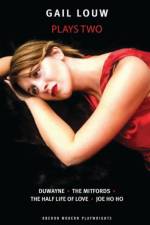
The second collection of plays by Gail Louw, including the plays Duwayne, The Mitfords, The Half Life of Love and Joe Ho Ho.
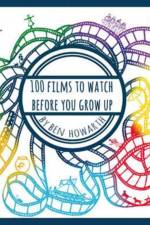
An ideal introduction to the world of children's films that charts the key productions from 1902 to the present day. An essential guide to the enchanting world of film for aspiring young film buffs (and nostalgic adults). From Le Voyage Dans la Lune to Hugo, via Chitty Chitty Bang Bang and Ghostbusters, this offers a journey through film guaranteed to entertain and delight.
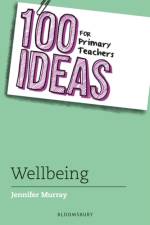
No matter what you teach, there is a 100 Ideas title for you!The 100 Ideas series offers teachers practical, easy-to-implement strategies and activities for the classroom. Each author is an expert in their field and is passionate about sharing best practice with their peers.Each title includes at least ten additional extra-creative Bonus Ideas that won't fail to inspire and engage all learners.Jennifer Murray provides a rich toolbox of supportive ideas to promote and protect wellbeing for both you and your pupils, and to help all to flourish. Activities such as 'care treasure maps' and 'connection clubs' are easy to try and to sustain, and all have been used to make a positive difference in primary schools across the UK. There is a section dedicated to teacher wellbeing as well as a broad range of strategies to use in the classroom with your pupils, covering language, relationships, physical movement, self-awareness, appreciation and awareness of your environment and much more.
A fully illustrated examination of the use of color in clay, outlining its history and exploring the styles and techniques of the leading modern makers.In nerikomi pottery, a ceramicist takes two or more different colored clays and combines them to create a decorative scheme that is then fired into the very fabric of the piece. Most often the colored designs or patterns - which may be coiled, marbled, geometric, mosaic or naturalistic - can be seen right through the piece, inside and out, the carefully engineered design permeating the structure, as opposed to using an external coat of glaze for the decoration. In this exploration of the approach, renowned ceramicist Thomas Hoadley explains various colored-clay techniques, defining nerikomi and its close relations neriage and agateware. Hoadley examines the work of historical and modern potters worldwide, from the Japanese masters Matsui Kosei and Ito Sekisui (both distinguished as Living National Treasures) to the likes of Curtis Benzie, Dorothy Feibleman, and Barbara Gittings. Each of these artists has taken inspiration from particular sources, refined an individual technique through trial and error, and produced a distinctive signature style. This fascinating book includes breathtaking images of finished pieces, and work-in-progress photographs, both from the author and from other leading experts in the field. Whether you have a general interest in ceramics or are seeking inspiration before embarking on your own nerikomi adventure, it tells you all you need to know about the work of the world's leading colored-clay artists.
An illustrated study of premier US anti-ship missile, the AGM/RGM-84 Harpoon, and its 1986 and '88 uses against Libyan and Iranian naval vessels.In this study, defence technology expert Lon Nordeen details the role played by the Harpoon missile in two Cold War flare-ups in the 1980s. The Harpoon was the first tactical anti-ship missile developed by the US Navy to provide a counter to the anti-ship missiles exported around the world by the Soviet Union and China. It was deployed on ships, aircraft, submarines and land vehicles and soon became the most widely used anti-ship missile system in the West, with 7,000+ having been produced since 1977, operated by the military forces of more than 30 nations. This exciting book explores the engagements of the Harpoon by the US Navy against its Libyan and Iranian adversaries, using original photographs and specially commissioned artwork to examine the naval systems and weapons employed by both counterparts. Drawing upon interviews with the US Navy A-6 Intruder crews that deployed the AGM084 variant of the Harpoon in 1986 and 1988, the author brings unique insight to his examination of these fascinating duels.
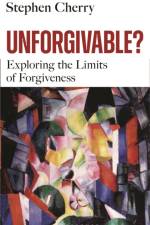
Stephen Cherry, Dean of King's College Cambridge, considers the place and importance of forgiveness in a troubled world.To quote Peter Hitchens: "Why do we all hate each other?" It is certain that society needs healing, and that we are losing the capacity to forgive and to be reconciled with each other.In this profound book, Stephen Cherry explores the central question: are there acts which are unforgiveable? Can those who do malicious harm to others - sexual abusers, political tyrants guilty of genocide, compulsive crooks - ever be forgiven?Considering the complexities of such cases, Cherry shows that while it is in the Churches today that this is most urgent and that turning the other cheek is out of the question. The need to forgive affects all political, social and religious spheres. With examples ranging from Archbishop Desmond Tutu's Truth and Reconciliation Commission which has done so much to heal the wounds caused by oppression of black people by a white minority in South Africa, to Freud's assertion that men and women would never be free until they had forgiven their parents. This is a thoughtful, sensitive look at the importance of forgiveness in our tragically polarized society.It also explores the practical, reflecting on the necessity of forgiveness for people of all creeds, races and disposition. Cherry sketches a way in which we can advocate a new appeal and promise for forgiveness in the 21st century.
This book is the first edited collection to explore Shakespeare's life as depicted on the modern stage and screen. Focusing on the years 1998-2023, the collection uniquely identifies a 25-year trend for depicting Shakespeare, his contemporaries and his social circle in theatre, film and television.Interrogating Shakespeare's afterlife across stage and screen media, the volume explores continuities and changes in the form since the release of Shakespeare in Love, which it positions as the progenitor of recent Shakespearean biofictions in Anglo-American culture. It traces these developments throughout the 21st century, from pivotal moments such as the Shakespeare 400 celebrations in 2016, up to the quatercentenary of the publication of the First Folio, whose portrait helped make the author a globally recognisable icon. The collection takes account of recent Anglo-American socio-political, cultural and literary concerns including feminism, digital media and the biopic and superhero genres.With contributions from scholars and practitioners across multiple disciplines, the collection presents a diverse and accessible account of Shakespearean biofiction and addresses a range of topics including gender, nation, parody and performance. The wide variety of works discussed range from All is True and Hamnet by Maggie O'Farrell to Upstart Crow, Bill and even The Lego Movie. Offering insights from actors, dramatists and literary and performance scholars, the collection considers why artists are drawn to Shakespeare as a character and how theatre and screen media mediate his status as literary genius.
From the Northern Lights to whirling coastal birds, and sunken villages to the annual deer rut, the UK is home to some of the world's finest natural spectacles. With this guide and a little luck, you too can experience the magic of seeing something truly extraordinary.Start planning your spectacular year with the help of this practical guide to the UK's most magical natural phenomena. This guide shows you when and where to go, and how to maximise your chances of a sighting, as well as explaining why these amazing spectacles occur in the first place. Sections cover: - Space: meteor showers, eclipses and supermoons, Northern Lights - Weather: hidden currents, mountain waves, named winds - Tides: tidal bores, tidal races, low tide walks - Land: autumn colours, wildflower displays, rutting deer - Rivers and lakes: salmon runs, sunken villages, waterfall wonders - Coast: wheeling waterbirds, seabird cities, seal pupsEach spectacle is graded according to how easy it is to spot, and the author gives expert tips on achieving the best sighting. Scientific insights describe the astronomical, meteorological and ecological causes of events, which are brought to life through the stories of the people who know them best, from the glider pilots who ride mountain waves to the King's Guides who help people navigate the dangerous sands of Morecombe Bay. This is your starting point for some truly phenomenal adventures.
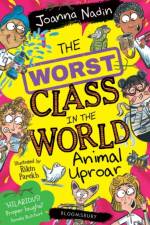
Deliciously silly, with hilarious catchphrases . a great cheer-up book' Guardian'HILARIOUS! Proper laughs!' Pamela Butchart______________________________A laugh-out-loud young fiction series from bestselling author Joanna Nadin, perfect for fans of Horrid Henry.Best friends Stanley and Manjit are part of Class 4B, which head teacher Mrs Bottomley-Blunt says is the WORST CLASS IN THE WORLD. She says school is not about footling or fiddle-faddling or FUN. It is about LEARNING and it is high time 4B tried harder to EXCEL at it.But they didn't LITERALLY mean to let the class stick insects loose in the wilds of the playground. And they really didn't LITERALLY mean to make a massive mess trying to do modern art (which may or may not have involved a mummified cat being stolen). These things just happened, even though they had FOOLPROOF plans to get away with it all.Highly illustrated and featuring two hilarious madcap adventures in one book, these stories are just right for children ready for their first chapter books.
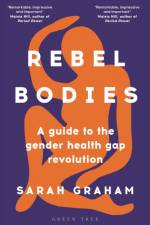
'Crucial reading for us all'Stylist'Remarkable, impressive and important' Maisie Hill, author of Period PowerAn inclusive and empowering manifesto for change in women's healthcare - exploring the systemic and deep rooted sexism within medicine, and offering actionable ways for women to advocate for ourselves and others and get the diagnosis and treatment we need.Have you ever been to a doctor and felt like you were being fobbed off or ignored? Did they belittle or overlook your concerns about your health? Ever been told you're just 'hormonal'? You're not alone. Women make up 51 per cent of the population and are the biggest users of healthcare services - for themselves and as mothers and carers. But all the research shows there are massive gender differences in men and women's healthcare. Our pain and suffering has been disbelieved; we are misdiagnosed and not trusted to make informed choices about our own bodies. As women speak out about their experiences of gaslighting and misdiagnosis, health journalist Sarah Graham investigates what it will take to bridge the gender health gap. Meet the patients, doctors and campaigners who are standing up and fighting back, and find practical tips on advocating for your own health. Be inspired by stories that will incite and offer hope.You're not alone, you're not going mad, and we believe you.
In this four-part novel, Fathy Ghanem follows the remarkable life of Yusif Abdul Hamid and the disasterous effects he inflicts on those around him. Whether by fate or bad intentions, everyone Yusif touches falls into a life of misery and all of them are keen to get their revenge...\n\nA poor journalist made editor-in-chief of one of Egypt's most illustrious newspapers, Yusif's extraordinary life story is told from the perspective of three very different characters, each narrating their lives and the unique ways in which Yusif has impacted them. \n\nMabruka - a woman ripped from her family as a child and forced to become a servant girl, is left abonded and made to support her son all alone.\n\nSamia - a beautiful aspiring actress, misses her big chance at stardom.\n\nMuhammad Nagi - one of the most distinguished and respected journalists in the Arab world, is preparing himself for a life-changing promotion. Or, at least, he was until it was stolen right from underneath him.\n\nAs the lives of these three characters overlap in unexpected ways, Yusif remains unwittingly at the very centre. \n\nThe Man Who Lost His Shadow is a detailed portrait of a man viewed through the lens of his unintentional victims. Only in the fourth section of the novel is the final piece of Yusif's character revealed - as told from his own perspective. \n\nTranslated from Arabic by Desmond Stewart.\n\n'[Yusif is] an enigmatic blend of idealism and cunning hypocrisy.' New York Times"}" data-sheets-userformat="{"2":11005,"3":{"1":0},"5":{"1":[{"1":2,"2":0,"5":{"1":2,"2":0}},{"1":0,"2":0,"3":3},{"1":1,"2":0,"4":1}]},"6":{"1":[{"1":2,"2":0,"5":{"1":2,"2":0}},{"1":0,"2":0,"3":3},{"1":1,"2":0,"4":1}]},"7":{"1":[{"1":2,"2":0,"5":{"1":2,"2":0}},{"1":0,"2":0,"3":3},{"1":1,"2":0,"4":1}]},"8":{"1":[{"1":2,"2":0,"5":{"1":2,"2":0}},{"1":0,"2":0,"3":3},{"1":1,"2":0,"4":1}]},"9":0,"10":0,"12":0,"14":{"1":2,"2":0},"16":10}" style="">In this four-part novel, Fathy Ghanem follows the remarkable life of Yusif Abdul Hamid and the disaster he inflicts on those around him. Whether by fate or bad intentions, everyone Yusif touches faces a life of misery and all of them are keen to get their revenge...In this four-part novel, Fathy Ghanem follows the remarkable life of Yusif Abdul Hamid and the disasterous effects he inflicts on those around him. Whether by fate or bad intentions, everyone Yusif touches falls into a life of misery and all of them are keen to get their revenge...\n\nA poor journalist made editor-in-chief of one of Egypt's most illustrious newspapers, Yusif's extraordinary life story is told from the perspective of three very different characters, each narrating their lives and the unique ways in which Yusif has impacted them. \n\nMabruka - a woman ripped from her family as a child and forced to become a servant girl, is left abonded and made to support her son all alone.\n\nSamia - a beautiful aspiring actress, misses her big chance at stardom.\n\nMuhammad Nagi - one of the most distinguished and respected journalists in the Arab world, is preparing himself for a life-changing promotion. Or, at least, he was until it was stolen right from underneath him.\n\nAs the lives of these three characters overlap in unexpected ways, Yusif remains unwittingly at the very centre. \n\nThe Man Who Lost His Shadow is a detailed portrait of a man viewed through the lens of his unintentional victims. Only in the fourth section of the novel is the final piece of Yusif's character revealed - as told from his own perspective. \n\nTranslated from Arabic by Desmond Stewart.\n\n'[Yusif is] an enigmatic blend of idealism and cunning hypocrisy.' New York Times"}" data-sheets-userformat="{"2":11005,"3":{"1":0},"5":{"1":[{"1":2,"2":0,"5":{"1":2,"2":0}},{"1":0,"2":0,"3":3},{"1":1,"2":0,"4":1}]},"6":{"1":[{"1":2,"2":0,"5":{"1":2,"2":0}},{"1":0,"2":0,"3":3},{"1":1,"2":0,"4":1}]},"7":{"1":[{"1":2,"2":0,"5":{"1":2,"2":0}},{"1":0,"2":0,"3":3},{"1":1,"2":0,"4":1}]},"8":{"1":[{"1":2,"2":0,"5":{"1":2,"2":0}},{"1":0,"2":0,"3":3},{"1":1,"2":0,"4":1}]},"9":0,"10":0,"12":0,"14":{"1":2,"2":0},"16":10}" style="font-size: 10pt; font-family: Arial;">In this four-part novel, Fathy Ghanem follows the remarkable life of Yusif Abdul Hamid and the disasterous effects he inflicts on those around him. Whether by fate or bad intentions, everyone Yusif touches falls into a life of misery and all of them are keen to get their revenge...\n\nA poor journalist made editor-in-chief of one of Egypt's most illustrious newspapers, Yusif's extraordinary life story is told from the perspective of three very different characters, each narrating their lives and the unique ways in which Yusif has impacted them. \n\nMabruka - a woman ripped from her family as a child and forced to become a servant girl, is left abonded and made to support her son all alone.\n\nSamia - a beautiful aspiring actress, misses her big chance at stardom.\n\nMuhammad Nagi - one of the most distinguished and respected journalists in the Arab world, is preparing himself for a life-changing promotion. Or, at least, he was until it was stolen right from underneath him.\n\nAs the lives of these three characters overlap in unexpected ways, Yusif remains unwittingly at the very centre. \n\nThe Man Who Lost His Shadow is a detailed portrait of a man viewed through the lens of his unintentional victims. Only in the fourth section of the novel is the final piece of Yusif's character revealed - as told from his own perspective. \n\nTranslated from Arabic by Desmond Stewart.\n\n'[Yusif is] an enigmatic blend of idealism and cunning hypocrisy.' New York Times"}" data-sheets-userformat="{"2":11005,"3":{"1":0},"5":{"1":[{"1":2,"2":0,"5":{"1":2,"2":0}},{"1":0,"2":0,"3":3},{"1":1,"2":0,"4":1}]},"6":{"1":[{"1":2,"2":0,"5":{"1":2,"2":0}},{"1":0,"2":0,"3":3},{"1":1,"2":0,"4":1}]},"7":{"1":[{"1":2,"2":0,"5":{"1":2,"2":0}},{"1":0,"2":0,"3":3},{"1":1,"2":0,"4":1}]},"8":{"1":[{"1":2,"2":0,"5":{"1":2,"2":0}},{"1":0,"2":0,"3":3},{"1":1,"2":0,"4":1}]},"9":0,"10":0,"12":0,"14":{"1":2,"2":0},"16":10}" style="font-size: 10pt; font-family: Arial;">A poor journalist made editor-in-chief of one of Egypt's most illustrious newspapers, Yusif's extraordinary life story is told from the perspective of three very different characters, each narrating their lives and the unique ways in which Yusif has impacted them.Mabruka - a woman ripped from her family as a child and made to become a servant girl, is left abandoned to support her son as a single mother.Samia - a beautiful aspiring actress, is forced to miss her final chance at stardom.Muhammad Nagi - one of the most distinguished and respected journalists in the Arab world, is preparing himself for a life-changing promotion - at least, he was, until it was stolen right from underneath him.In this four-part novel, Fathy Ghanem follows the remarkable life of Yusif Abdul Hamid and the disasterous effects he inflicts on those around him. Whether by fate or bad intentions, everyone Yusif touches falls into a life of misery and all of them are keen to get their revenge...\n\nA poor journalist made editor-in-chief of one of Egypt's most illustrious newspapers, Yusif's extraordinary life story is told from the perspective of three very different characters, each narrating their lives and the unique ways in which Yusif has impacted them. \n\nMabruka - a woman ripped from her family as a child and forced to become a servant girl, is left abonded and made to support her son all alone.\n\nSamia - a beautiful aspiring actress, misses her big chance at stardom.\n\nMuhammad Nagi - one of the most distinguished and respected journalists in the Arab world, is preparing himself for a life-changing promotion. Or, at least, he was until it was stolen right from underneath him.\n\nAs the lives of these three characters overlap in unexpected ways, Yusif remains unwittingly at the very centre. \n\nThe Man Who Lost His Shadow is a detailed portrait of a man viewed through the lens of his unintentional victims. Only in the fourth section of the novel is the final piece of Yusif's character revealed - as told from his own perspective. \n\nTranslated from Arabic by Desmond Stewart.\n\n'[Yusif is] an enigmatic blend of idealism and cunning hypocrisy.' New York Times"}" data-sheets-userformat="{"2":11005,"3":{"1":0},"5":{"1":[{"1":2,"2":0,"5":{"1":2,"2":0}},{"1":0,"2":0,"3":3},{"1":1,"2":0,"4":1}]},"6":{"1":[{"1":2,"2":0,"5":{"1":2,"2":0}},{"1":0,"2":0,"3":3},{"1":1,"2":0,"4":1}]},"7":{"1":[{"1":2,"2":0,"5":{"1":2,"2":0}},{"1":0,"2":0,"3":3},{"1":1,"2":0,"4":1}]},"8":{"1":[{"1":2,"2":0,"5":{"1":2,"2":0}},{"1":0,"2":0,"3":3},{"1":1,"2":0,"4":1}]},"9":0,"10":0,"12":0,"14":{"1":2,"2":0},"16":10}" style="font-size: 10pt; font-family: Arial;">As the lives of these three characters overlap in unexpected ways, Yusif remains unwittingly at the very centre.The Man Who Lost His Shadow is a detailed portrait of a man viewed through the lens of his unintentional victims before, eventually, we hear his own side of the tale...'[Yusif is] an enigmatic blend of idealism and cunning hypocrisy.' New York Times
Amu Djoleto's debut novel, The Strange Man, tells the comedic tale of Old Mensa and his troubled childhood in 1960s Ghana. Bold and rebellious ever since he was a boy, Mensa knows what it's like to be on the wrong side of the teacher's caning stick - and he is determined to save his children from the same fate. An infamous member of his community, Old Mensa's ability to speak freely and tell it how it really is has earned him many a friend and foe over the years. Looking back on his life, Mensa recounts moments in his early years when his sharp tongue led him into trouble and his knack for mischief pulled him into wild misadventures - the most memorable involving a very disgruntled goat. But his childhood battle against tyrannical teachers and corrupt church members takes on new meaning when he discovers his daughter is facing the very same cruelty he faced years ago. Writing with a deep sense of humour and wit, Djoleto shrewdly explores the role of religion, parenting, and teaching in 1960s Ghana.
The Marabi Dance is a striking coming-of-age tale following aspiring singer, Martha, as she falls in love with the illicit, underground culture of Marabi music in 1930s South Africa. Originally banned from publication, Modikwe Dikobe's novel defiantly captures the social climate of South Africa in the years before apartheid. Growing up in the slums of Johannesburg, Martha is fascinated by the lively sounds of Marabi music, with its jazz influences, vibrant style, and African rhythms. But while her passion for parties, singing, and dancing is shared by her own generation, her parents can only see a dangerous underworld full of gangs and violence. To make matters worse, her crush on the handsome and talented Marabi musician, George, is developing into something more - despite her father's plans to marry her off to her cousin. Stuck at an impassable bridge between two very different generations, Martha struggles to see a future for herself without betraying either her parents' or her own desires. 'It's beauty is in the caring of the characters for one another; and in the subtle slow paced encounters... Novels as emotionally true as this about South Africa are rare.' Ros de Lanerolle
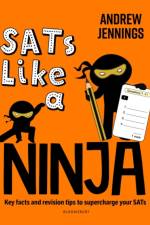
When SATs loom, panic can set in. Have you practised enough prefixes? Can you remember how to calculate a percentage? What was the difference between a colon and a semi-colon, again? There's so much to remember, so many different techniques and tips to grasp - it can be overwhelming for parents, never mind the children! With SATs Like a Ninja, you have everything you need at your fingertips to supercharge your SATs practice. This comprehensive mini guide to Key Stage 2 SATs contains everything a pupil needs to meet the demands of the KS2 National Curriculum assessments. The book is divided into three sections with advice, key concepts and failsafe strategies throughout. The maths section covers key maths facts, arithmetic and tips to tackle reasoning and word problems. The reading section offers reading strategies, advice, as well as mini texts and associated worked example questions. Finally, the spelling, punctuation and grammar (SPaG) section tackles the trickest spelling rules, explains those fiddly fronted adverbials and, amongst other things, explores the difference between there, they're and their.For more must-have Ninja books by Andrew Jennings (@VocabularyNinja), check out the Vocabulary Ninja and Comprehension Ninja classroom and home learning resources.
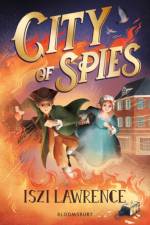
---------------A thrilling spy adventure set in New York during the American revolution. From the rising star of children's historical fiction, Iszi Lawrence, this is the perfect high-action adventure for fans of Horrible Histories, Emma Carroll and Hamilton. ---------------It's 1780 and the struggle for American independence is raging. In New York, twelve-year-old Kenny Blaise is sure that the British will win soon. How can a few rebel colonies hold out against the might of the British crown? And anyway he's more concerned with somehow managing to rise above his lot in life and make his fortune. But New York is a powder keg of soldiers and spies, and soon Kenny will be drawn into the fight for freedom in a way he could never have predicted...Packed with historical detail and tales of the Culper Spy Ring, Benedict Arnold, James Rivington and George Washington, this page-turning thriller about the American War of Independence will have young readers gripped.
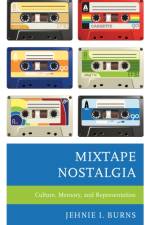
Mixtape Nostalgia: Culture, Memory, and Representation tells the story of the mixtape from its history in 1970s bootlegging to its resurgence as an icon of nostalgic analog technology. Burns looks at the history of the mixtape from the early 1980s and the rise of the cassette as a fundamental aspect of the music industry. Stories from music fans collecting hip hop mixtapes in the Bronx or recording songs off the radio permeate the book. She discusses the continued contemporary appeal of the mixtape as musicians, novelists, memoirists, playwrights, and even podcasters have used it as a metaphor for connection and identity. From Rob Sheffield's Love is a Mix Tape to Questlove's Mixtape Potluck Cookbook, Burns analyzes how the mixtape can function as a plot point, a stand-in for emotional connection, or an organizing structure. The book shows how creators use the iconography of the mixtape cassette to create ephemera, from coffee subscriptions to board games, which speaks to the appreciation of the tangible and the analog. The desire to find connection through sharing a physical artifact permeates the various creative uses of the mixtape. From blockbuster films like Guardians of the Galaxy to mixtape throw pillows, Burns highlights the mixtape as a site of collective memory tied to youth culture, community identity, and sharing music.
A cookbook full of simple, flavour-packed recipes to nourish and comfort.Whether you're making breakfast, lunch or dinner, a quick, flavour-packed meal is often the ultimate goal. But simple and swift doesn't always equal delicious and nutritious. One Nice Thing For Yourself is here to help you with that. This easy-to-follow cookbook focuses on minimising the work but maximising the flavour to produce a satisfying, nourishing meal every time. With many of the recipes making just one portion (but easily scaleable to serve more if necessary), they take influence from familiar classics, giving them the Ryan Riley treatment with Life Kitchen's innovative signature flavours, while simplifying the method for the home cook. From Parmesan orzotto with lemon porcini to pickled French onion soup, these are easy, delicious recipes to help you treat yourself.
Confucian traditions have ingrained gender stratifications in Chinese culture today. Yuan proposes re-reading early Confucian texts as a vision of Ren with Dao with the unity of heaven, earth, and humanity, in order to reclaim the egalitarian aspects and develop openness for gender equity with integration of feminist critical care ethics.
Abonner på vårt nyhetsbrev og få rabatter og inspirasjon til din neste leseopplevelse.
Ved å abonnere godtar du vår personvernerklæring.