










Gjør som tusenvis av andre bokelskere
Abonner på vårt nyhetsbrev og få rabatter og inspirasjon til din neste leseopplevelse.
Ved å abonnere godtar du vår personvernerklæring.Du kan når som helst melde deg av våre nyhetsbrev.

The Legacy of The X-Files examines the content and production of the show, its reception, its use of legend and folklore, its contemporary resonance in politics and society of the 21st century, and its impact and legacy on film, television, the Internet and beyond. Having converged with the early widespread use of the Internet, The X-Files became a cultural touchstone of the 1990s, transforming from a cult TV show into a pop cultural phenomenon by the end of the decade. To celebrate the 30th anniversary of The X-Files, this collection examines the content and production of the show, its reception, its use of legend and folklore, its contemporary resonance in politics and society of the 21st century, and its impact and legacy on film, television, the Internet and beyond. The series' themes of government mistrust, conspiracy, folklore, UFOlogy, and faith are dissected and applied to how the show spirituality resonated with post-Cold War Western society.Contributors to this collection discuss the wide-ranging impact of the television show in popular culture, from Mulder and Scully 'shippers' to the show's slogan entering the contemporary lexicon. The Legacy of The X-Files serves as an all-encompassing, multi-disciplinary, contemporary account of The X-Files, reflecting upon critical, historical, political, and social contexts, and featuring an in-depth and comprehensive introduction making it a vital work for researchers and students alike.
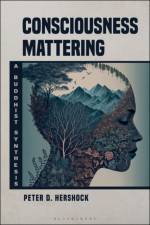
Consciousness Mattering presents a contemporary Buddhist theory in which brains, bodies, environments, and cultures are relational infrastructures for human consciousness. Drawing on insights from meditation, neuroscience, physics, and evolutionary theory, it demonstrates that human consciousness is not something that occurs only in our heads and consists in coherent differentiation-the creative elaboration of relations among sensed and sensing presences, and more fundamentally between matter and what matters. Hershock argues that without consciousness there would only be either unordered sameness or nothing at all. Evolution is consciousness mattering. Shedding new light on the co-emergence of subjective awareness and culture, the possibility of machine consciousness, the risks of algorithmic consciousness hacking, and the potentials of intentionally altered states of consciousness, Hershock invites us to consider how freely, wisely, and compassionately consciousness matters.
This three-volume reference work brings together over 400 extracts from the major writings left by Christians and Muslims that reflect their knowledge of one another and the attitudes that gradually developed. Many of them appear in English for the first time.Texts and topics range from theological and legal treatises, scientific studies, travelogues, commercial contracts, captivity narratives, martyrologies, plays and novels. The breadth and diversity in genres and languages represented makes this the most comprehensive resource in the field.Each volume is divided into the following sections:Volume 1 (600 - 1500): Muslim Arabic works; Christian Arabic works; Andalusian Arabic works; Syriac, Armenian, Persian and other Eastern language works; Greek works; Latin and European vernacular worksVolume 2 (1500 - 1700): Works from North and Western Europe; Eastern Europe; Southern Europe, theMiddle East and North Africa; East, South and South East Asia; Africa; the AmericasVolume 3 (1700 - 1914): Works from Africa and the Americas; Eastern Europe; Western Europe; the Middle East and North Africa; East, South and South East Asia.Introductions are provided to each section as well as each extract. Biographical information is included, along with notes and suggestions for further reading. The collection contains specially prepared translations, as well as 20 illustrations and 1 map.
Richard Dyer is a foundational figure for the critical study of cinema and popular culture. Across a career spanning five decades, he has made path breaking contributions to our understanding of stardom and celebrity, gay and queer politics and cultural history, film music, race and whiteness and the pleasures of popular entertainment. The Richard Dyer Reader brings together for the first time key writings by this vital and influential figure, many of which are not otherwise available. The anthology guides readers through Dyer's prolific and rich output through six thematic selections of essays and extracts, each centred on a key theme in Dyer's work: stardom and the image; entertainment and ideology; gay politics and representation; whiteness; the pleasures of popular entertainment, and textual analysis. A seventh section comprises a selection of interviews conducted across the span of his career, as well as a new interview with editors Glyn Davis and Jaap Kooijman. The book will provide an introduction for those new to Dyer's writings, as well as offering a fresh perspective for readers with a more comprehensive knowledge of his work. The collection includes archival and recent pieces of writing never previously anthologised, newly commissioned essays, a substantial introduction to Dyer's life and work and framing introduction to each section.
How can we understand social democracy today? This ambitious book offers a global perspective on the nature of capitalism; its past and future possibilities of survival; the differentiation between neoliberal, authoritarian and social democratic systems, exemplified by the United States, EU and China; and the conflict relationships between them.Reflecting on urgent global risks, such as climate change, pandemics and nuclear confrontation - Mouzelis & Sotiropoulos explore why these risks can only be dealt with by the cooperation of these three major players in the global arena. They explore how the model of social democracy, which in the previous century tamed unfettered capitalism in some national contexts, can help contain the excesses of global capitalism now. In clear, compelling and coherent terms, the authors demonstrate how unchecked antagonism among these three major players has the potential to spill-over into inertia or reluctance to manage the these urgent risks, to the detriment of humanity as a whole.
This landmark first anthropological open access volume on the topic of 'circular economies' brings together a range of international scholars with regional specialisations in Europe, Africa, Asia, and South America to examine the concept's global implications. Aspirations towards circular economies have become increasingly prominent around the world, yet until now, social anthropology has largely neglected the potentially deep social impacts of this concept, focusing instead on metrics of waste, despite its obvious implications through every level of the economy and society." Please change this to: "Aspirations towards a circular economy have become increasingly prominent around the world, yet until now, social anthropology has largely neglected the potentially deep social impacts of this concept, despite its obvious implications through every level of the economy and society. This volume covers a diverse array of international actors, including waste-pickers, traders and policymakers, and the global movement of materials like metals, plastic and textiles. Through ethnographic and qualitative case studies, it exposes many of the tensions that exist between state and corporate ideals of the circular economy, and the vernacular practices and philosophies that exist around the world. Contributors examine the frictions that emerge as these concepts and materials travel across different geographic contexts, and ask - what can an anthropological analysis contribute to a concept that is increasingly reshaping economies and restructuring global flows of virgin commodities, recyclables, and waste?The ebook editions of this book are available open access under a CC BY-NC-ND 4.0 licence on bloomsburycollections.com. Open access was funded by UKRI.
This landmark first anthropological open access volume on the topic of 'circular economies' brings together a range of international scholars with regional specialisations in Europe, Africa, Asia, and South America to examine the concept's global implications. Aspirations towards circular economies have become increasingly prominent around the world, yet until now, social anthropology has largely neglected the potentially deep social impacts of this concept, focusing instead on metrics of waste, despite its obvious implications through every level of the economy and society." Please change this to: "Aspirations towards a circular economy have become increasingly prominent around the world, yet until now, social anthropology has largely neglected the potentially deep social impacts of this concept, despite its obvious implications through every level of the economy and society. This volume covers a diverse array of international actors, including waste-pickers, traders and policymakers, and the global movement of materials like metals, plastic and textiles. Through ethnographic and qualitative case studies, it exposes many of the tensions that exist between state and corporate ideals of the circular economy, and the vernacular practices and philosophies that exist around the world. Contributors examine the frictions that emerge as these concepts and materials travel across different geographic contexts, and ask - what can an anthropological analysis contribute to a concept that is increasingly reshaping economies and restructuring global flows of virgin commodities, recyclables, and waste?The ebook editions of this book are available open access under a CC BY-NC-ND 4.0 licence on bloomsburycollections.com. Open access was funded by UKRI.
In this fully illustrated introduction, acclaimed historian Dr Aaron Edwards provides a concise overview of one of the most difficult and controversial actions in recent history.Spanning 38 years of the 'Troubles', the British Army's deployment in Northern Ireland (codenamed Operation Banner) was one of the most difficult and controversial in its recent history. Over 10,000 troops were on active service during much of the campaign, which saw armoured vehicles, helicopters and special forces deployed onto the streets of Ulster. In this book, Dr Aaron Edwards considers the strategic, operational and tactical aspects of Operation Banner, as the Army's military objectives morphed from high-profile peacekeeping into a covert war against the IRA. Using personal testimony from both sides of the sectarian divide, as well as insights from the soldiers themselves, he presents an authoritative introduction to the Army's role in the Troubles, providing expert analysis of Operation Banner's successes and failures.Updated and revised for the new edition, with full-colour maps and 50 new images, this is an accessible introduction to the complicated yet fascinating history of modern Britain's longest military campaign.
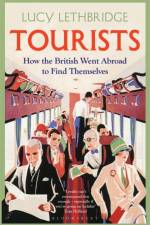
'I really can't recommend this enough - especially if you are going on holiday' Tom Holland'Delightful ... witty ... Lucy Lethbridge has written a glorious romp of a book' Kathryn Hughes, The Mail on Sunday'It is the paramount wish of every English heart, ever addicted to vagabondizing, to hasten to the Continent.'In 1815 the Battle of Waterloo brought to an end the Napoleonic Wars and the European continent opened up once again to British tourists. The nineteenth century was to be an age driven by steam technology, mass-industrialisation and movement, and, in the footsteps of the Grand Tourists a hundred years earlier, the British middle-classes flocked to Europe to see the sights.In Tourists, the voices of these travellers - puzzled, shocked, delighted and amazed - are brought vividly to life. From the discomfort of the stagecoach to the 'self-contained pleasure palace' of the beach resort, Lucy Lethbridge brilliantly examines two centuries of tourists' experience. Among a range of disparate characters, we meet the commercial titans of Victorian tourism, Albert Smith, Henry Gaze and Thomas Cook, as well as their successor, Vladimir Raitz, the creator of the modern beach holiday. The growth of popular tourism introduced new markets in guidebooks, souvenirs, cuisine and health cures. It smoothed over class differences but also exacerbated them. It destroyed traditional cultures while at the same time preserving them.From portable cameras to postcards and suntans, Tourists explores how tourism has reflected changing attitudes to modernity and how, from the grand hotel to the campsite, the foreign holiday exposes deep fears, hopes and even longings for home.
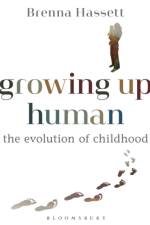
Explores how our evolutionary history has shaped a phenomenon every reader will have experienced - childhood.Tracking deep into our evolutionary history, anthropological science has begun to unravel one particular feature that sets us apart from the many, many animals that came before us - our uniquely long childhoods. Growing Up Human looks at how we have diverged from our ancestral roots to stay 'forever young' - or at least what seems like forever - and how the evolution of childhood is a critical part of the human story.Beginning with a look at the ways animals invest in their offspring, the book moves through the many steps of making a baby, from pair-bonding to hidden ovulation, points where our species has repeatedly stepped off the standard primate path. From the mystery of monogamy to the minefield of modern parenting advice, biological anthropologist Brenna Hassett reveals how differences between humans and our closest cousins lead to our messy mating systems, dangerous pregnancies, and difficult births, and what these tell us about the kind of babies we are trying to build.Using observations of our closest primate relatives, the tiny relics of childhood that come to us from the archaeological record, and the bones and teeth of our ancestors, science has started to unravel the evolution of our childhood right down the fossil record. In our species investment doesn't stop at birth, and as Growing Up Human reveals, we can compare every aspect of our care and feeding, from the chemical composition of our milk to our fondness for formal education from ancient times onwards, in order to understand just what we evolved our weird and wonderful childhoods for.
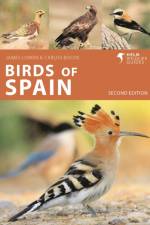
The definitive photographic guide to the avifauna of Spain.Spain is recognised as one of Europe's richest birdwatching destinations, one that offers a host of regional specialities. It includes famous birding hotspots such as the vast Coto Doñana wetlands, mountainous areas such as the Pyrenees and Picos de Europa, the Mediterranean oak forests of the south, the migration crossroads of the Strait of Gibraltar and the plains of Extremadura. Completely revised and updated, this new version of Birds of Spain provides photographic coverage of more than 320 species that regularly occur in the region, from the Hoopoe to the Golden Eagle. Concise text for each species includes information on identification, songs and calls, behaviour, distribution and habitat, with each photo having been carefully selected to aid identification. A guide to the best birdwatching sites in Spain is also included.Portable yet authoritative, this is the perfect companion for any wildlife-friendly visitor to this spectacular and bird-rich country.
Abonner på vårt nyhetsbrev og få rabatter og inspirasjon til din neste leseopplevelse.
Ved å abonnere godtar du vår personvernerklæring.