












Gjør som tusenvis av andre bokelskere
Abonner på vårt nyhetsbrev og få rabatter og inspirasjon til din neste leseopplevelse.
Ved å abonnere godtar du vår personvernerklæring.Du kan når som helst melde deg av våre nyhetsbrev.

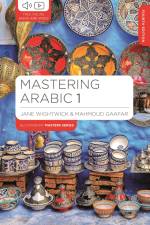
Two audio CDs are available to accompany this course. The book and CDs are also available together in a pack.Mastering Arabic 1 is the most lively, accessible and carefully-paced Arabic course on the market. It is aimed at beginners with little or no previous knowledge of the language who want to understand, speak and read Arabic confidently.Mastering Arabic 1: is the bestselling course, suitable for study at home or in the classroom teaches Modern Standard Arabic, the universal language of the Arab world understood by all Arabic speakers covers a useful variety of situations you will encounter in the Arab world offers a gradual introduction to the language, script and structures through audio, video, stories and easy-to-follow explanations includes hundreds of lively exercises to help you practise what you've learntThis new edition features: an attractive full colour page design and a wealth of illustrations and photos online video on our free-to-access website with associated exercises in the book new conversational sections which encourage you to get speaking right from the startAuthors Jane Wightwick and Mahmoud Gaafar share many years' experience in a combination of teaching, educational publishing and communication in the Arab world.Mastering Arabic 1 is also available in a complete pack with 2 CDs (ask for ISBN 978-1-137-38045-6). The CDs can be purchased separately (ISBN 978-1-137-38043-2). www.palgrave.com/masteringarabic hosts a huge range of extra activities, videos integrated into this book, transcripts of the audio, a link to interactive flashcards and much more.
Charlotte Alston's important new study explores the relationship between Russian anti-state activists and western publics, intellectuals and governments, from 1848 to the present.Russian activists and writers were important agents in shaping western engagement with Russia in the 19th and 20th centuries and this book analyses and traces their involvement. From the 1890s Russian revolutionaries and western sympathisers and the 1920s opponents of the early Soviet regime, through to the 1960s and 1970s dissident literature, smuggled out of the Soviet Union and published abroad to shape western understandings of the Soviet system, Alston investigates the ways in which anti-state polemics shaped and sometimes challenged western understandings of Russia. It also goes on to explore the opportunities and limitations afforded by the western space in which such activists operated.Beginning in the tsarist era, and moving from the early revolutionary and Stalinist regimes through to the thaw, glasnost and the 'new Russia', Dissidents, Émigrés and Revolutionaries in Russia deals with Russian dissenters and Russian authorities of many political stripes in what is a vital text for all students and scholars of modern Russian history.
From influential primary headteacher Rae Snape, author of The Headteacher's Handbook, comes The Curriculum Compendium, the ultimate guide to curriculum design.Drawing on a wide range of primary school examples, The Curriculum Compendium examines situations in which schools have successfully designed curricula to meet the needs of their pupils. Full of inspiring real-life case studies, this book encourages teachers and school leaders to rethink, transform, improve and enhance their curriculum.Written by members of staff at leading schools, each case study provides the reader with a range of suggested approaches to try. They explore the context of the school, the intent, implementation and impact behind the curriculum vision, how the school turned the vision into reality, along with key takeaways for other schools. The book provides reflective questions and space to write or draw ideas for curriculum design in their own school.
'Accessible and fun ... truly a kind of genius!' Bill Bryson----Everything you thought you knew about your body is wrong!How many senses do you have? I bet you said five. But you'd be wrong. You have THIRTY-TWO! This SENSE-ational book explores the thirty-two amazingly awesome, broccoli-hating, wee-sniffing senses that help you figure out the world around you. They tell you ...Why chilli peppers burn your mouth,How some people can SMELL sickness,When you need the loo,And why words CAN actually hurt you!Learn about the 32 senses that evolved before even the dinosaurs with this book written by award-winning science writer Emma Young and brought to life with vivid and quirky illustrations by John Devolle.
This is just me joining the family business exposing massive global injustice.Latinx Women from South London take centre stage and dare you to call them invisible.Vogue balls.When four different worlds collide, identity, history and status become the driving forces to unveiling the biggest money laundering scandal in history.Confetti.From not having a box to tick to challenging toxic stereotypes, as Alejandra, Lucia, Honey and Catalina risk everything to expose a multinational bank, they confront the audience with what it means to be both Londoner and Latinx.Chihuahua.My Uncle Is Not Pablo Escobar relishes in the seen and unseen of communities and systems so insidiously hidden.Co-Created by Valentina Andrade, Elizabeth Alvarado, Lucy Wray & Tommy Ross-Williams, rooted in the lives and experiences of Valentina Andrade & Elizabeth Alvarado. This edition was published to coincide with the Brixton House production in London, June 2023.
Six exciting new plays by some of the best artists working in the UK today written with and for young people. Created as part of Wonder Fools' international participatory project Positive Stories for Negative Times which has reached over 8000 young people from 16 different countries including UK, South Africa, India, USA, Canada, Italy and Sweden. Co-commissioned by Wonder Fools and the Traverse Theatre these six plays offer a variety of stories, styles and forms for ages 10 to 25. These original and innovative plays are: The Day the Stampers United by Sara ShaarawiAges 12+Ms Campbell's Class Fifth Period by Leyla JosephineAges 14+And The Name for That Is?... by Robert Softley GaleAges 16+Are You A Robot? by Tim CrouchAges 10+Revolting by Bryony KimmingsAges 13+Thanks for Nothing by The PappyShow with Lewis HetheringtonAges 11+Positive Stories For Negative Times was initially created in response to the lack of physical spaces for young people to participate in creative activities due to the pandemic, and instead allowing them to come together and be inspired through making new work. The project has now grown into a programme of work that includes hundreds of participating groups across the world, a youth board who dramaturg all the commissioned plays from inception to final draft, a continuing professional development programme for group leaders and four regional Scottish youth theatre festivals taking place in summer 2023.Supported by Creative Scotland, the Gannochy Trust, Hugh Fraser Foundation, William Syson Foundation, Trades House of Glasgow Commonweal Fund and Gordon Fraser Foundation. www.positivestories.scot
The fourth terrifying instalment in the Night Warriors series from master of horror Graham Masterton.Five ordinary people, forced to battle on the most terrifying field imaginable: the landscape of nightmares. They are the Night Warriors, and only they can defeat the evil that has invaded our world.Two of the cruelest and most horrific apparitions ever seen are attempting to destroy the world by entering the dreams of expectant mothers. They bring with them nightmare creatures, embedding them into the minds of newborn babies.It is against these demons, in an unreal world of terror, that the five Night Warriors will fight... innocent lives depend on it.Praise for Graham Masterton:'One of the most original and frightening storytellers of our time' Peter James'Suspenseful and tension-filled... all the finesse of a master storyteller' Guardian'One of Britain's finest horror writers' Daily Mail'You are in for a hell of a ride' Grimdark Magazine
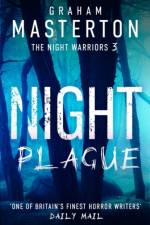
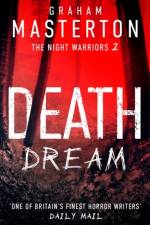
The second terrifying instalment in the Night Warriors series from master of horror Graham Masterton.For generations, the Night Warriors have used their powers to defend humanity from evil, entering men's dreams to change the shape of waking reality. Now, five modern Night Warriors face their most terrifying enemy: Isabel Gowdie, witch and mistress of Satan.Entombed for three centuries, her powers have grown stronger. Now her evil influence seeps through the earth, carrying the seeds of the Night Plague, a disease that twists men's souls into madness.The Night Warriors can stop it if they can find Isabel Gowdie's hidden prison. But time is short. With each night's sleep, more and more of humankind falls to the Plague, and two of the Night Warriors are already infected, they just don't know it yet...Praise for Graham Masterton:'One of the most original and frightening storytellers of our time' Peter James'Suspenseful and tension-filled... all the finesse of a master storyteller' Guardian'One of Britain's finest horror writers' Daily Mail'You are in for a hell of a ride' Grimdark Magazine
In this volume contributors from various social locations in North America, Asia, Europe, and Australia analyse and interpret Pauline letters. Engaging both the biblical text and the lives and contexts from different sociocultural, religious, methodological perspectives, each contributor demonstrates the dynamic interaction between text and context in their understanding and explanation of the text. The first part of the volume highlights the hermeneutical focus in interpretation. That is, how a certain chosen worldview (e.g., Lutheran liturgical worldview) affects one's decision in prioritizing a certain textual dimension and level instead of others. Part Two elucidates how even a technical analysis of the text (e.g., epistolography) is context-oriented. Part Three shows how such a contemporary contextual interpretation is also an intercontextual and intertextual interpretation that entails intersectional and global-local experiences.
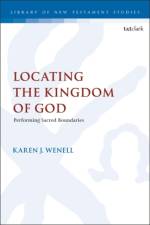
This book offers a new, multidisciplinary way of thinking about the Kingdom of God which fully recognises its sociological and spatial significance in performing boundaries of the sacred. Though spatial-critical perspectives have been increasingly recognised as important across many disciplines, the significance of non-physical religious spaces and their correspondence to boundaries of the sacred has not been explored fully, and never using the specific example of the Kingdom of God. Wenell considers the diverse and sometimes contradictory articulation of the Kingdom in the gospels as well as the ways that Kingdom language frames contemporary ethical debates. Her study of the Kingdom is located within the wider study of religion, affording the opportunity to investigate connections between space, belonging and the sacred. Wenell structures her investigation in four key areas that engage with the Kingdom in different, but theoretically interconnected ways. She begins by setting out a theory of sacred space that is capable of including the Kingdom, and establishing key concepts such as boundary, performance, physical/non-physical spatiality, spokespersons and controversy. Wenell then focuses on the synoptic gospels and the origins of the Kingdom, noting aspects of uncertainty as well as areas of agreement and controversy over boundaries of the sacred in these uniquely interrelated texts. The third and fourth areas of investigation move into cultural reception, considering instances where the Kingdom is formative for identity and ethical relationships both in individual and wider group belonging terms. Specific reference is made to issues of ethical consuming and displacement, placing the Kingdom in dialogue with Bauman's discussion of a society of consumers, and Arendt's notion of equitable co-habitation of the earth.
This volume examines a multitude of characters in Matthew's gospel and provides an in-depth look at the different approaches currently employed by scholars working with literary and reader-oriented methods. Beginning with an introduction on 'the properties of character' and the several aspects involved in the creation of person, the contributors provide a close reading of numerous characters and character types in the Gospel of Matthew. Including Mary, King Herod, John the Baptist, Jesus the Preacher, Jesus the Teacher, God the Father, the Roman Centurion, Peter, Women, Gentiles, Scribes and Pharisees, and Romans. Such close studies aid the understanding of different issues in Matthean characterization, while also charting the development of hermeneutical vistas that have developed in contemporary scholarship, resulting in a collection of exegetical character studies that are self-consciously working from a literary, narrative-critical, reader-oriented, or related methodology.
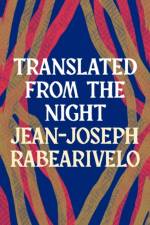
One of the greatest twentieth-century poets of Madagascar, Jean-Joseph Rabearivelo published his masterpiece, Translated from the Night, in Malagasy in 1932. This is the complete English translation of that renowned collection of poems. Translated from the French by Robert Ziller.
In Lenrie Peters' debut novel, The Second Round, a young physician decides to settle down in Freetown at the turn of Sierra Leone's independence.After years of studying in England, the young Dr Kawa decides to return to his old home in Freetown. Optimistic for his future and that of the country's, Kawa is eager to carve out a new life for himself in an independent nation. But when he falls unexpectedly in love with his neighbour's wife, Kawa's hope for a simple life comes crashing down.
In his debut novel, The Only Son, John Munonye sheds a light on how changing cultures under British colonialism inflicted deep personal conflict amongst the everyday people of Igboland.Recently made a widow and single mother to her only child, Chiaku decides to move her family to a small remote village in east-central Nigeria where she hopes to instill in her son the importance of their culture's traditions and, importantly, devotion to the Igbo god Igwe. However, just as Chiaku begins to have hopes of her son's bright future in their religion, a Roman Catholic missionary school opens up in their village. Although wary at first of the school's strange Western ways, Chiaku's son soon finds himself drawn into the teachings of the missionary priests there, sparking a conflict that threatens to split his small family apart...
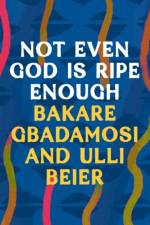
Collected by Yoruba poet Bakare Gbadamosi and the scholar Ulli Beier, Not Even God Is Ripe Enough is a mesmerising collection of traditional oral stories and Yoruba fables.Full of Yoruba proverbs and magical realism, these tales range from timeless tales steeped in wisdom to bizarre stories of talking animals and surprising twists.Translated into English by Ulli Beier
The comic companion to the BBC sitcom GHOSTS, perfect for all the family.Everybody leaves a trace. The ghosts of Button House may have been dead a long time - some of them a very long time - but they have all left their mark on the world (even if, in Robin's case, that mark is just a handprint on the wall of a cave).Gathered together in this volume is a treasure trove of unearthed cuttings, original records and rare artefacts that explore the unseen lives of those who died at Button House: from Thomas's love letters to Pat's 'Summer Camp Rap', and from Julian's campaign promises to Lady Button's Rules of Etiquette. There are even documents dictated to the one person who can see and hear the ghosts: Alison Cooper.Written by the show's creators - Mathew Baynton, Simon Farnaby, Martha Howe-Douglas, Jim Howick, Laurence Rickard and Ben Willbond - this eclectic archive is a unique chance to discover more about the beloved ghosts of Button House. Thank be to Moonah!A book for all the family, it is as warm-spirited and deliriously daft as the series itself.
The problem of free will is one of the oldest and most central philosophical conundrums. The contemporary debate around it has produced a range of sophisticated proposals, but shows no sign of leading to convergence. Christian Onof reviews these contemporary approaches and argues that their main shortcomings are ultimately due to paradoxical requirements on free will imposed by the naturalistic framework.Onof singles out Kant's critical solution as one that stands out among historical approaches insofar as it is based upon a rejection of this framework. By using the same methodological tool that he applies to contemporary proposals, namely a distinction between a volitional account of how we control our actions, a psychological account of the reasons for it and a metaphysical account of our status as agent, Onof shows that Kant's solution constitutes a coherent picture of free will. By exhibiting the structure running through several key publications of Kant's critical period and drawing upon unpublished notes, Onof addresses several debates which loom large in contemporary Kant literature. His exegetical work puts Kant's theory into conversation with contemporary analytic theories of free will and leads to defining a Kantian position that overcomes the issues plaguing existing approaches to the problem of free will.
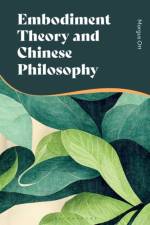
This book analyses some of the seminal texts of the Chinese tradition in light of the embodied tradition: the Analects of Confucius, the Zhuangzi, and the Treatise on Music. Margus Ott's study shows how they exemplify aspects of embodiment theory while highlighting others that have been neglected in contemporary work. Ott also develops far-reaching possibilities of an embodied philosophy.The embodied understanding did not go unchallenged in Ancient China. There were important counter-currents, most notably the Mohists and the so-called Legalists. It has been argued that this challenge set the Chinese philosophical tradition in motion. By using embodiment theory Ott demonstrates how these ideas can be seen as a decontextualizing tendency of thought that plays an important role in human affairs.
Money, Warfare and Power in the Ancient World offers eleven papers analysing the processes, consequences and problems involved in the monetization of warfare and its connection to political power in antiquity. The contributions explore not only how powerful men and states used money and coinage to achieve their aims, but how these aims and methods had often already been shaped by the medium of coined money - typically with unintended consequences. These complex relationships between money, warfare and political power - both personal and collective - are explored across different cultures and socio-political systems around the ancient Mediterranean, ranging from Pharaonic Egypt to Late Antique Europe. This volume is also a tribute to the life and impact of Professor Matthew Trundle, an inspiring teacher and scholar, who was devoted to promoting the discipline of Classics in New Zealand and beyond. At the time of his death, he was writing a book on the wider importance of money in the Greek world. A central piece of this research is incorporated into this volume, completed by one of his former students, Christopher De Lisle. Additionally, Trundle had situated himself at the centre of a wide-ranging conversation on the nature of money and power in antiquity. The contributions of scholars of ancient monetization in this volume bring together many of the threads of those conversions, further advancing a field which Matthew Trundle had worked so tirelessly to promote.
How does tourism impact theatre? How do theatrical ways of seeing, knowing, and acting shape tourism? How do economic and political processes like colonization or neoliberalization influence them both? And what is the future of these twinned global leisure industries?Theatre and tourism are kindred practices. Both engage their patrons in experiences of temporary escape to distant places, times, or different lives. Both stage expressive, communicative, embodied encounters in real time and space. Tourism and theatre are both sites of public pedagogy, cultural diplomacy, and cosmopolitan consciousness, promising pleasure and knowledge from the spectacle of others and elsewheres. This concise study explores the historical and contemporary entanglement of theatre and tourism, and speculates about the future as emerging technologies reshape both industries, offering new experiences of presence, embodiment, and mobility.
The second terrifying instalment in the Night Warriors series from master of horror Graham Masterton.When a young boy becomes the unwilling vessel of an ancient evil spirit, his family is at a loss for how to save him. Their only hope is the Night Warriors, called upon to put an end to this force.His name is The Shadow Creature. And his wrath is about to erupt from the world of dreams and into the waking world...Praise for Graham Masterton:'One of the most original and frightening storytellers of our time' Peter James'Suspenseful and tension-filled... all the finesse of a master storyteller' Guardian'One of Britain's finest horror writers' Daily Mail'You are in for a hell of a ride' Grimdark Magazine
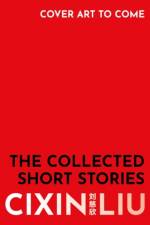
The collected short stories of Cixin Liu, author of the Three Body Problem trilogy (soon to be a major Netflix series). The collection will comprise of stories from:- The Wandering Earth- Hold Up the Sky Collected in a beautiful hardback anthology for the first time.
Abonner på vårt nyhetsbrev og få rabatter og inspirasjon til din neste leseopplevelse.
Ved å abonnere godtar du vår personvernerklæring.