






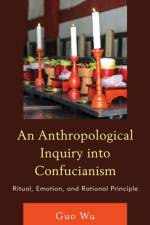



Gjør som tusenvis av andre bokelskere
Abonner på vårt nyhetsbrev og få rabatter og inspirasjon til din neste leseopplevelse.
Ved å abonnere godtar du vår personvernerklæring.Du kan når som helst melde deg av våre nyhetsbrev.

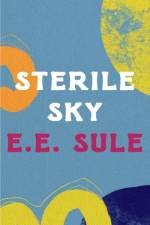
Winner of the 2013 Commonwealth Writer's Prize for African literature. In E.E. Sule's debut novel, Sterile Sky, a community is wrecked by religious conflict while a young boy hunts for a better future. As gifted student, Murtala, comes of age, violent riots break out in his home city of Kano - leading to tragedy within his own family. Whilst chaos threatens to erase everything he holds dear, Murtala is also being stalked by monsters both real and imagined. Desperate to untangle himself from the web of poverty and religious extremism that surrounds him, he is willing to do anything to escape. An immensely poignant and powerful novel, Sterile Sky captures the religious conflicts of modern Nigeria and the enduring hope for peace.'An ambitious work that tells the definitive story of an important moment in Nigeria's sociopolitical history.' Sanya Osha
In this English translation of Hammer Blows, the famous collection of poems by renowned writer David Diop is presented in all its brilliance and wit.First published in 1956, this powerful collection of poems by David Diop was written during the height of the Negritude movement in France. Posthumously translated into English as Hammer Blows, Diop's voice offers a passionate critique on slavery in the American South and colonialism in Africa.Edited and translated from the French by Simon Mpondo and Frank Jones.'A vigorous use of diction that cuts like a whip, an impassioned and total commitment to the oppressed.' John F. Povey
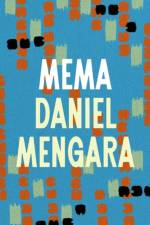
In this debut novella, Daniel Mengara captures the incredible story of a Gabonese mother that refuses to give in to Western influences nor the unjust pressures of her village. At its core, Mema is an unforgettable tale about resilience and a culture in transition.In the eyes of her son, Mema is an incredible and formidable woman. However, with an intimidatingly sharp tongue and an stubborn grasp on her principles, she frequently provokes outrage in her village. So when her husband does the unthinkable and turns violent, her neighbours refuse to help, choosing instead to believe that her misfortunes must be brought upon herself. Matters take a turn for the worse when her husband is unexpectedly found dead - and Mema is the main suspect. It quickly becomes clear that she must fight tooth and nail to be believed or she risks losing custody over her children for good. In this profound and touching tale, Daniel Mengara brings to life the changing customs and beliefs of a rural Gabonese village, interweaving prose with traditional oral storytelling.
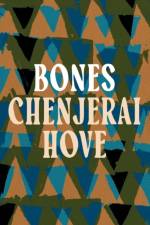
Winner of the Noma Award. Bones is the poetic and evocative novel by Chenjerai Hove, offering an intimate view into the Zimbabwe War of Liberation and the minds of those who were left behind. To Marita, an illiterate labourer on a commercial farm, the promise of independence for Rhodesia means very little. Poverty persists and her white boss continues the brutal treatment of his workers. Yet, for her son, it is a matter of life and death. Told through the voices of the people whose lives she touched, we witness Marita's devastation at her son's choice to run away and fight for liberation â¿ and her determination to discover what happened to him. Written in a blend of poetic prose and oral tradition, Bones is rich with Shona idioms and dares to ask how a nation can be free when its oppressors refuse to leave. 'Chenjerai Hoveâ¿s figure looms large in Zimbabweâ¿s literary pantheon.' Guardian 'A harrowing tale.' New York Times
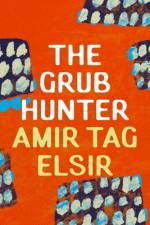
Shortlisted for the 2011 International Prize for Arab Fiction. After years of convicting novelists for the dangers they present to the nation, secret service agent Farfar decides to finally join them... After receiving a life-changing injury, Farfar, is forced to retire as an agent and leave his secret service days behind him. With no work, wife, or close family to fill the void, he struggles to find meaning in his solitary life. That is until he is struck by a surprising idea: to write a novel. Despite putting his fair share of novelists behind bars, the idea sticks. To hone his skills, Farfar visits a renowned coffeehouse, famous for its mix of strange authors, barefoot poets, and disgraced politicians. In between his bizarre adventures at the cafe, he discovers that his old colleagues are growing more and more suspicious of his actions... In a country tightly controlled by the police, existing in the world of literature is a dangerous and steady path into treason. Wonderfully curious and full of wit, The Grub Hunter is a sharply original and unforgettable novel. 'By turns funny and moving, [The Grub Hunter] captures the absurdity of modern life under the intrusive eye of a repressive regime.' Guardian '[Elsir is] a giant among Arabic fiction writers.' Daily News Egypt
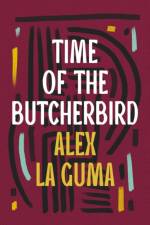
In his final novel, Alex La Guma explores the tensions of a South African town fraught with the desire for revenge. Glimpsing into precolonial days and the aftermath of the Boer War, Time of the Butcherbird is a powerful reminder of the communities that were wrecked by conflict and dispossessed of their own land.Out in the flat, featureless countryside, a small mining town in South Africa is refused access to water. Knowing that the rain is their last chance for survival, all they can do now is wait...As the oppressive summer wears on, the white Afrikaner townspeople are unaware of the storm brewing around them. In the bush, a shepherd recalls the riddle of the butcherbird.An impactful and incisive novel, Time of the Butcherbird cements Alex La Guma as one of South Africa's most prominent political writers, exposing the ugly reality of the self-professed 'civilised' oppressors and a society brimming with anger.'The greatest South African novelist of the 20th century.' The Times'[Alex La Guma] is a central figure alongside Chinua Achebe [in] the making and consolidation of modern African literature.' Ngugi wa Thiong'o
Ike Oguine's debut novel, A Squatter's Tale is the fascinating story about the pain and comedy in the life of a Nigerian business man living in exile in America.Obi does not shy away from his flaws. Dishonest and arrogant, he moves through life wearing only the best designer suits in Lagos, with the prettiest women on his arm, and caring little about the people around him. Despite his current success, when his uncle comes to visit from America, showering him with gifts and selling him tales of a new life, Obi is hooked. Eighteen years later, he finds himself suddenly without a job and needing to flee Nigeria. Remembering the riches of his uncle, he decides to buy a one-way ticket to America. Yet neither his uncle nor America turn out to be quite what they promised. Fast-paced and raucously funny, A Squatter's Tale is an honest insight into the experiences of a Nigerian immigrant living in 1990s America. 'Few people have read this hilarious novel but one read is all you need to become a fan.' Guardian
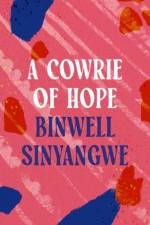
A Cowrie of Hope is the moving tale of a mother's pledge to pay for her daughter's education in 1990s Zambia, sacrificing all she owns in order to give her child the independence that was denied to her.'Marriage and men are not salvation but the ruin of any woman who can't stand on her own two feet.' Nasula craves freedom from the domination of the men around her. Offered no choice over her marriage nor any power after the wedding, her husband's unexpected death is a sudden chance for liberation. Yet, under the strain of a changing and impoverished nation, she struggles to provide for her family. Rising to the challenges of living as a widow in rural Zambia, Nasula sees her daughter as a symbol of hope for the next generation. Through relentless strength and determination, she promises to fight for her daughter's right to education - and a brighter future. Binwell Sinyangwe creates a beautiful story about the plight of women in late-twentieth-century Zambia, capturing a stirring tale of courage, dignity, and monumental resilience.
Winner of the 1999 Commonwealth Writers' Prize for Best First Book, Africa Region. The Clothes of Nakedness cleverly examines the complexities of human relationships, offering a gritty expose of the divide between rich and poor in modern Ghana. Evil lurks in the streets of Accra and it goes by the name of Mystique Mysterious. A wealthy man with maleficent intentions, Mystique delights in manipulating the vulnerable with his exploitative deals. His bargains may seem fishy but when poverty is knocking on your door and options are limited, what choice do you have? The Clothes of Nakedness is a gripping exploration into how, when pushed, ordinary people can fall into a vicious cycle of vice and corruption that only serves to benefit the ruling class.
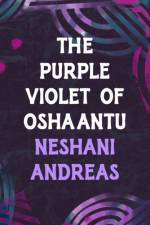
The Purple Violet of Oshaantu is the moving story of two ordinary women living in rural Namibia. In exploring tales of their marriages to vastly different men, Neshani Andreas exposes the burdens they carry and the friendships they must forge in order to survive. When Ali arrives in the village of Oshaantu, she is met with a cold welcome. Only the young mother next door, Kauna, is willing to truly accept Ali's presence. Kind-hearted and married to an abusive husband, Kauna quickly becomes more than just a neighbour - she becomes a friend, daughter, and someone to mentor. Disaster strikes when Kauna's husband is suddenly found dead at home, causing the villagers to suspect her of poisoning him. What follows is an emotive account of Kauna's journey into widowhood and Ali's bittersweet reflections on the beliefs and customs of her village. Beautiful and thoughtfully written, Andreas paints a vibrant picture of friendship and sisterhood in traditional Namibian society. 'A gentle fighter for women's rights, who used her writing as a weapon.' Mariama Bâ 'One of Namibia's finest post-independence novels.' Erika von Weitersheim
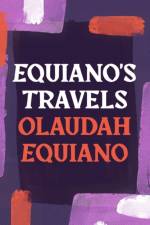
The most famous slave memoir of the 18th century. Equiano's Travel's recounts the extraordinary life and times of Olaudah Equiano, from his early life in Africa to his long struggle for freedom in the West Indies. 'I who had been a slave in the morning, trembling at the will of another, was become my own master, and completely free.' Olaudah Equiano was only eleven when he and his sister were kidnapped from the Kingdom of Benin and forced into slavery. His description of the inconceivable horrors he endured on slave ships and in the West Indies offer a rare and significant insight into the realities of the transatlantic slave trade.Published in London in 1789, Equiano's memoirs became an instant success and paved the way for the abolition of slavery in the British Empire. Introduction by Professor S. E. Ogude. Edited by Paul Edwards. 'A powerful and terrifying read.' Guardian 'Central to our understanding of Atlantic slavery.' The Times 'A gripping account from 1789 of life as a slave.' New York Times
In this historical novel, Yaw M. Boateng tells the harrowing story of the Atlantic slave trade and the devastating effects it had on the Ashanti Empire. 'This, then, is the story of Seku and Jakpa. But it is also the story of Malaam Fuseini, and of Africa in one of the most trying periods on human record.' It is the early nineteenth century, slavers have incited chaos, violence, and an insatiable greed across the Gold Coast. Clan is pitted against clan and those who have gained riches from the slave trade are fearing their own downfall. As advisor to the Ashanti King, Malaam Fuseini has only one plan: to unite the warring factions. Together, they can overcome the constant infighting and stand allied against the invaders. Otherwise, they will be forced to watch as the slavers burn Ashanti's cities to the ground... Among the Ashanti leaders is Seku, a military hero. His brother, Jakpa, is a former slave. Both are strangers to this land and consumed in a bitter feud against one another. Yet as the threat to the kingdom grows, the two must reconcile if they hope to save their allies - and themselves - from destruction. 'Boateng is a superb storyteller, with a keen sense of place and history, a lively imagination for dramatic action.' Es'kia Mphahlele 'The Return possesses great compassion, and more importantly, a vital sense of history.' John A. Williams 'Tense and engrossing.' Kirkus Reviews
Shortlisted for the 1992 Commonwealth Best First Book Award. Orimili is the profound story of a father looking to deepen his cultural roots and find identity within his community. But gaining the town elders' respect proves more difficult than he ever imagined. Despite the respect and wealth Orimili has accumulated over the years, there remains one last barrier to his recognition within the town of Okocha - the title of Ozo. The most important symbol of nobility and honour, Orimili is desperate to finally have the title and ensure his status as an integral part of the community. Writing with remarkable poise, Amechi Akwanya charts Orimili's difficult journey to citizenship, offering a compelling insight into the customs of mid-twentieth century Nigeria and the universal desire for acceptance.
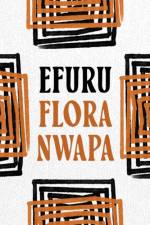
Pioneering author Flora Nwapa paints the stirring tale of a young wife attempting to carve out her own independence against the traditional beliefs of Igbo society.Ever since she was young, Efuru has been famed for her beauty, intelligence, and noble lineage. So her family is appalled when they uncover her betrothal to an unremarkable villager. Although generous in her devotion to him, Efuru soon begins to realise that love is weak in comparison to centuries of superstition and tradition.Her only reprieve is in the strange, vivid dream that visits her at night - one of an ethereal woman sitting at the bottom of a lake, entrancing Efuru with her beauty and lavish piles of riches.When a village sage reveals to Efuru that she has been chosen as a worshipper for the powerful lake goddess, Uhamiri, it seems she can finally find meaning in something beyond her marriage. Yet, even under the attention of the divine, Efuru will struggle to overcome the pressures of a community that values her womb beyond all else.From pregnancy to prophesy, female circumcision to the complications of polygamy, Efuru voyages to the core of the female experience in post-independent Nigeria. Flora Nwapa writes with the clear and impactful depth that has made Efuru an instant literary classic.'If Chinua Achebe and Flora Nwapa [had] not written the books they did, when they did, and how they did, I would perhaps not have had the emotional courage to write.' Chimamanda Ngozi Adichie
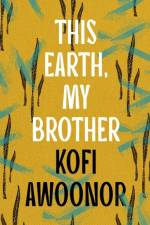
In this debut novel, Kofi Awoonor brilliantly interweaves poetry and allegory into a profound tale of social corruption in post-colonial Ghana. This Earth, My Brother explores how a man can become a stranger to his tribe, his traditions, and to himself.'The ancestors - revered now for their infinite sagacity - decreed long ago that this land, this earth, my brother, shall witness a crashing collapse.'Rooted in the African oral tradition, This Earth, My Brother paints an account of post-independent Ghana through two distinctive narratives.In the first strand, we find Amamu, a young lawyer who is struggling to come to terms with his place amongst the new Ghanaian elite. Frustrated by the debauchery of his peers and the misery inflicting the country, he makes the momentous decision to leave it all. During his journey across Europe, Amamu is gripped with a different kind of spiritual alienation - one that he can't run away from.Bridging the gaps between Amamu's story are chapters of rich prose poetry that tell an allegorical tale of new Ghana. From religious suffering to yearning after mermaids, Kofi Awoonor lyrically captures the inner workings of a man's disturbed conscience and the conflicting realities of Ghana's independence.'Wonderfully musical prose.' Guardian 'A great and powerful literary personality.' Auma Obama
Of Wives, Talismans and the Dead is a collection of short stories by influential author, I.N.C. Aniebo. Written originally in the 1960s, these tales explore superstition, Westernisation, and the rising tensions of an unequal society in post-independent Nigeria.'Now, dry your tears my child,' his father said gently. 'I am going to drive him, away. He will not disturb you again. Dead men should not wander in the land of the living.'In the title story, 'Of Wives, Talismans and the Dead', eleven-year-old Ibe worries about embarrassing himself in front of his father, finding time to play hide and seek with his friends, and, most importantly, his impending marriage with a young girl named Egeolu.Ibe's tender innocence is set against the gravity of death and marriage as I.N.C. Aniebo captures the enduring traditions of 1960s Nigeria from the perspective of a young boy.Throughout the collection, Aniebo masterfully weaves together tales of exploitation, cultural change, and the desire to challenge authority. Of Wives, Talismans and the Dead is an outstanding illustration of classic Nigerian literature.Edited by Willfried F. Feuser.
Sony Lab'ou Tansi's surreal portrait of a despised and incompetent regime is a biting, burlesque fable, incisive in its description of postcolonial colour and chaos.'At the time of night when dew begins to form on objects left outside, and while Fartanio Andra's insomniac cocks crowed, we heard a cry from the town square: "Help me! He's killed me!"'History has been silenced in this modern African state: only the voices of the dead cry out for justice. It is a cry answered by Estina Bronzario, the Woman of Bronze, determined to act against the political and moral corruption of male-dominated society.Murders escalate, crowds ebb and flow, and the years roll by. But all the while, the police never come... 'Central Africa's greatest writer.' New York Times'No greater genius than Sony Lab'ou Tansi.' Independent'Sublimely surreal allegory... Tansi [is] one of Africa's important voices.' Publishers Weekly
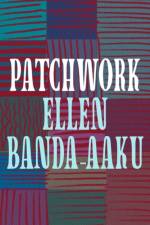
Winner of the 2010 Penguin Prize for African Writing. In this coming-of-age novel, acclaimed author Ellen Banda-Aaku offers a profound exploration into the effects of stigma, class, and family dynamics in 1970s Zambia.'Everyone calls me Pumpkin. Firstly, because I was a fat, chubby-cheeked baby. And, secondly, because when Ma was pregnant with me, no matter how much pumpkin she ate, she just couldn't get enough...'Pumpkin is a nine-year-old girl pulled between two vastly different worlds - that of her father, the wealthy and power-hungry Joseph Sakavungo, and her mother, his unstable mistress.As Pumpkin attempts to come to terms with her own identity, will she be able to fashion a future for herself out of the torn patchwork of her life?Beautifully constructed, Banda-Aaku moulds a story that is heart-rending and bittersweet.
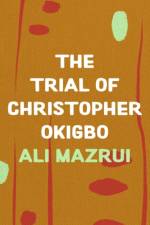
Written during the Nigerian-Biafran War of the late 1960s, The Trial of Christopher Okigbo boldly tackles questions of Pan-Africanism, the importance of art, and the struggle for independence. In the celestial courts of an imagined African afterlife, the answers may lead to blissful immortality or eternal damnation...After a fatal car accident, Hamisi wakes up in a strange land called After-Africa - an afterworld for all Africans who have died since history began. He soon finds out, however, that his place in the afterlife hangs in the balance.To be allowed to stay, Hamisi must participate in the absurd trial of the renowned poet and solider, Christopher Okigbo, who was recently killed on the front lines of the Nigerian-Biafran War. Okigbo's crime? The offence of putting the military needs of society before his poetry.With the trial taking place in a magical football stadium capable of seating millions of dead souls, and with celebrity testimonies from Lord Byron, Oscar Wilde, and Kwame Nkrumah, the stage is set for this bizarre debate. Although thoroughly bewilidered, if Hamisi fails in his defence of Okigbo, Hell awaits them both.The Trial of Christopher Okigbo is a surrealist examination into the responsibilities of art and war and their often uncomfortable coexistence.'[The Trial of Christopher Okigbo is] its own best proof that important political questioning and art are not mutually exclusive.' New York Times'Whether in speech or in writing, Mazrui dissected and unravelled Africa in a delightful manner.' Guardian
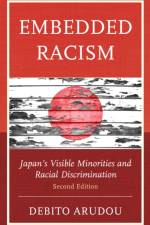
Despite domestic constitutional provisions and international treaty promises, Japan has no law against racial discrimination. Consequently, businesses around Japan display ';Japanese Only' signs, denying entry to all foreigners on sight. Employers and landlords routinely refuse jobs and apartments to foreign applicants. Japanese police racially profile foreign-looking bystanders for invasive questioning on the street. Legislators, administrators, and pundits portray foreigners as a national security threat and call for their segregation and expulsion. Nevertheless, Japan's government and media claim there is no discrimination by race in Japan, therefore no laws are necessary.How does Japan resolve the cognitive dissonance of racial discrimination being unconstitutional yet not illegal? Embedded Racism carefully untangles Japanese society's complex narrative on race by analyzing two mutually-supportive levels of national identity maintenance. Starting with case studies of hundreds of individual ';Japanese Only' businesses, it carefully analyzes the construction of Japanese identity through legal structures, statute enforcement, public policy, and media messages. It reveals how the concept of a ';Japanese' has been racialized to the point where one must look ';Japanese' to be treated as one.The product of a quarter-century of research and fieldwork by a scholar living in Japan as a naturalized Japanese citizen, Embedded Racism offers an unprecedented perspective on Japan's deeply-entrenched, poorly-understood, and strenuously-unacknowledged discrimination as it affects people by physical appearance.
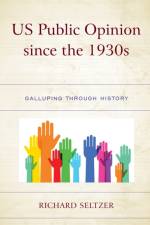
This is both a history book and a book on public opinion. George Gallup, who pioneered survey sampling methods and whose name in fact became synonymous with public opinion polls, conducted his first survey in 1936. The main part of this book starts there as well. Dedicating a chapter to each decade from the 1930s to the present, Seltzer discusses historical events of the period and what the U.S. public thought of those events according to Gallup polls and other public opinion surveys. Each chapter is divided into the following categories: world events; U.S. politics; race; sex and gender; the economy; science, technology and the environment; and popular trends. Within each chapter, approximately 40 survey questions were chosen for more extended analysis: breaking down the results by race, age, gender, education, region, and political party.
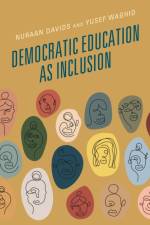
Political and social expectations are often stymied and distorted by individual and communal identitiescreating vastly incongruent and unrelated lived experiences, often within the same context. Democratic Education as Inclusion explores how the existence and enactments of diversity continue to present ubiquitous epicenters of misreading, misrecognition, and missed opportunities for peaceful co-existencewhether in established, or nascent democracies. Nuraan Davids and Yusef Waghid study how the public sphere has never held the same meaning to all individuals or groups. As such, there are deep implications for differentiated experiences of citizenship, between those who are included in the center of the sphere, and those who are excluded on the margins. This book explains the dyadic relationship between inclusion and exclusion and how it is not limited to the public sphere, or to broader conceptions of democratic citizenship. It is as apparent in educational settings, presenting under-explored complexities not only for teaching and learning, but for the life experiences of participants in teaching-learning. Often the foundational norms put into place during educational initiations become the primary determinants of how young people conceive of themselves as citizens, and how they conceive of themselves in relation to others.
Cyberhate: The Far-Right in the Digital Age explores the online world of right-wing political extremism by examining the propaganda, funding mechanisms, online subcultures, violent movements, and the ideologies that drive it.
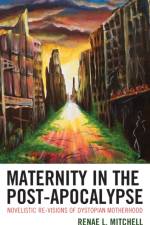
Maternity in the Post-Apocalypse: Novelistic Revisions of Dystopian Motherhood deconstructs the ways in which women novelists have reconceived the post-apocalyptic genre in recent decades through narratives centered on heroic maternal characters. These writers have placed midwives, pregnant women, and mothers at the forefront of their novels, transforming them from the hapless victims of male oppressors to protagonists who are instrumental in transforming the post-apocalyptic social landscape from one that attempts to reconstruct a patriarchal past to one that safeguards, validates, and even lauds maternity as a form of empowerment. In a novelistic future devastated landscape in which human civilizations are shattered and waver at the brink of extinction, women who embody facets of maternity are taking the reins of rebuilding human societies by overturning patriarchal assumptions of femininity, reclaiming intersectional autonomy, and (re)visioning the possibilities for a declining anthropocene.
Comprised of nineteen chapters written by a diverse group of scholars and researchers, Anthropological Research in India: Retrospect and Prospects analyses the history and future of anthropology on the subcontinent, ranging from prehistoric civilizations and colonial legacies to Indigenous medicine and coffee culture.
Animal Texts examines key works of American environmental literature for how they portray, discuss, and represent animals. The author establishes critical animal concepts that expand the understanding and knowledge of animal lives to promote conservation and meaningful reflection on current human-animal relationships.
Ground Zero Narratives: Islam and Muslims in Post-9/11 American Narratives and Arab American Counter-Narratives analyzes the relations between post-9/11 America and the Islamic world. This book presents narrative discourse to detect literary incitement to typological and cultural representations.
Portrayals of Masculinity in Nigerian Plays explores Nigerian people's notions of masculinity as portrayed in twelve Nigerian plays, written by three generations of Nigerian playwrights. This book identifies different thoughts of masculinity within the Nigerian space in which hegemonic masculinity is the predominant.
The author makes the cause for an analysis of digital politics grounded in both materialism and Bruno Latour¿s Actor-Network-Theory. Such an analysis identifies asymmetries of digital power in the contemporary internet, explaining some of the more concerning, undemocratic trends of recent years including politically-motivated violence.
Abonner på vårt nyhetsbrev og få rabatter og inspirasjon til din neste leseopplevelse.
Ved å abonnere godtar du vår personvernerklæring.