























Gjør som tusenvis av andre bokelskere
Abonner på vårt nyhetsbrev og få rabatter og inspirasjon til din neste leseopplevelse.
Ved å abonnere godtar du vår personvernerklæring.Du kan når som helst melde deg av våre nyhetsbrev.

This study is an unique approach to social and cultural history of Japan through the scope of food and food ways. In this book-length study of food markets in the early modern Japanese capital of Edo, Akira Shimizu draws a fascinating picture of early modern Japanese society where specialty foodsseasonal, regional, and hard-to-find delicacies that satisfied the palate of nation's highest political authority, the shogunserved as a powerful nexus that connected different social groups. In the course of their daily lives, peasants, fisherfolks, and merchants, who made specialty food available at the market, were in constant negotiation with powerful wholesalers and government authorities in charge of procuring specialty foods of the highest qualities for the shogun's Edo Castle. Utilizing a number of previously unused archival materials that reveals the lives of those at the bottom of the society, the book traces the production, supply, and handling of specialty foods and shows how ordinary people were empowered to assume control over the distribution of specialty food, eventually affecting their procurement for the shogunal kitchen. In doing so, they disrupted the existing market order on the shogunal requisition, and led to the reconfiguration of market relations.
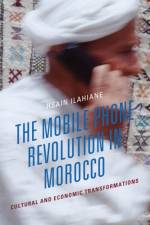
In The Mobile Phone Revolution in Morocco, Hsain Ilahiane examines how Moroccans use the mobile phone to redefine core notions of gender and space, honor and shame, placemaking, and surveillance and control. Drawing on ethnographic fieldwork with urban street vendors, urban micro-entrepreneurs, urban female domestic workers, and smallholder farmers in urban and rural Morocco, Ilahiane illustrates how the mobile phone has the endowed capacity to inform, rearrange, and transform almost every aspect of Moroccan society.
In Women and Tourist Work in Jamaica: Seven Miles of Sandy Beach, A. Lynne Bolles examines Jamaican women tourist workers and their workplaces in Negril, Jamaica.
Circulating Fear: Japanese Horror, Fractured Realities, and New Media explores the changing role of screens, new media objects, and social media in Japanese horror films from the 2010s to present day. Lindsay Nelson places these films and their paratexts in the context of changes in the new media landscape that have occurred since J-horrors peak in the early 2000s; in particular, the rise of social media and the ease of user remediation through platforms like YouTube and Niconico. This book demonstrates how Japanese horror film narratives have shifted their focus from old mediavideo cassettes, TV, and cell phonesto new mediasocial media, online video sharing, and smart phones. In these films, media devices and new media objects exist both inside and outside the frame: they are central to the films' narratives, but they are also the means through which the films are consumed and disseminated. Across a multitude of screens, platforms, devices, and perspectives, Nelson argues, contemporary Japanese horror films are circulated as an ever-shifting series of images and fragments, creating a sense of ';fractured reality' in the films' narratives and the media landscape that surrounds them. Scholars of film studies, horror studies, media studies, and Japanese studies will find this book particularly useful.
Black Womens Rights: Leadership and the Circularities of Power presents Black women as alternative and transformative leaders in the highest political positions and at grassroots community levels. Beginning with a critique of the assumption of an equivalence between masculinity and political leadership, Carole Boyce Davies moves through the various conceptual definitions, intents, and meanings of leadership and the differences in the presentation of practices of leadership by women and feminist scholars. She studies the actualizing of political leadership in the Presidency of Ellen Johnson Sirleaf, the historical role of Shirley Chisholm as the first woman to run for presidency of the United States on a leading party ticket, the promise of the Black left feminist leadership of Brazilian Marielle Franco, and the current model of Prime Minister Mia Mottley of Barbados in advancing new leadership models from the Caribbean. This book proclaims the 21st century as the century for Black womens leadership.
Psychological Borders in Europe and the United States: Contemporary Nationalism, Nativism, and Populism presents an integrative sociopolitical and psychological analysis model to examine contemporary sociopolitical rising ideologies in Europe and the United States; specifically, nationalism, nativism, and populism. Further, this book explores processes involved in the construction and sociopolitical mobilization of large, group identities. Political psychology is introduced to discuss the formation of national and psychological borders and their manifestations, including dynamics of identity driven aggression. The connection between the rise of ideologies, such as nativism and populism, and historical collective traumas is discussed, highlighting the role of social re-enactments, identity transformation, and large collective mourning to contemporary sociopolitical dynamics in Europe and the United States. Ethnic, racial, and intergroup conflict, and the role of immigration and asylum policy in maintaining, changing, and transforming existing collective identities is discussed, to then examine the war between Russia and the Ukraine. This book includes specific case applications to European countries and the United States, where nationalism, nativism, and populism have been on the ascendant.
This book focuses on the generation of the sixties and seventies in Kharkiv, Soviet Ukraine, a milieu of writers who lived through the Thaw and the processes of de-Stalinization and re-Stalinization. Special attention is paid to KGB operations against what came to be known as the dissident milieu, and the interaction of Ukrainians, Jews, and Russians in the movement, their persona friendships, formal and informal interactions, and the ways they dealt with repression and arrests. This study demonstrates that the KGB unintentionally facilitated the transnational and intercultural links among the Kharkiv multi-ethnic community of writers and their mutual enrichment. Post-Khrushchev Kharkiv is analyzed as a political space and a place of state violence aimed at combating Ukrainian nationalism and Zionism, two major targets in the 1960s1970s. Despite their various cultural and social backgrounds, the Kharkiv literati might be identified as a distinct bohemian group possessing shared aesthetic and political values that emerged as the result of de-Stalinization under Khrushchev. Archival documents, diaries, and memoirs suggest that the 1960s1970s was a period of intense KGB operations, ';active measures' designed to disrupt a community of intellectuals and to fragment friendships, bonds, and support among Ukrainians, Russians, and Jews along ethnic lines domestically and abroad.
In Intersections of Race, Gender, and Precarity: Navigating Insecurities in an American City, Stephanie Baran argues that when it comes to assistance the United States government often creates more problems than it solves. These institutions are not in the business of creating a pathway for people to escape poverty, often compounding that poverty instead. Through a two-year ethnographic study of poverty and insecurity in Milwaukee, Wisconsin, the author shows how people navigate situations of poverty through interviews with recipients and organizations as well as those working at a local community pantry. Consequently, research uncovered how local food organizations with connections to the Milwaukee Chapter of the Black Panther Party hide their more radical roots to protect food donations from white donors, in essence protecting white fragility. People are far closer to experiencing poverty than they realize, as shown by the Government Shutdown of 2019 and the ongoing COVID-19 pandemic, and typically have incomplete and inaccurate ideas of poverty as well as how people can experience upward mobility. Intersections of Race, Gender, and Precarity reveals this gap through a focus on how all these factors show up in Milwaukee, Wisconsin.
Bringing together scholars in fields ranging from economics and sociology to psychology, education, and political science, this volume represents one of the first interdisciplinary studies to analyze the effects of Hurricane Maria, including the slow response and recovery, on island and stateside Puerto Ricans.
The book introduces the concept of practical biopolitics and discusses its applicability for anti-pandemic crisis management in Indonesia and Russia. The authors scrutinize the functioning of sovereign power and governmentality during the state of exception.
This book looks at the political aspects of comedy and how unconscious social and psychological factors within a cultural and historical context shape it. Updating Freud¿s work on jokes, Samuels argues that any universal model of comedy must account for the role played by distinct genres, which are determined by political psychopathologies.
Ranging from literary fashions and trends in the press to science, militarism, and gender categories, the contributions in this volume shed new light on the Good Neighbor Policy, through which the US defined its approach toward South America and solidified its hemispheric hegemony.
Drawing on ethnographic studies of the lived experiences of people with rare diseases, this volume critically examines rare, chronic diseases in the context of care, kinship, and technologies, providing in-depth analyses of local worlds that usually remain at the peripheries of medical anthropological inquiry.
How History Was Used in the Wars of the Twentieth Century: Perpetual War for Perpetual Peace examines the decisions that historical thinking shaped about war and peace in Germany and the United States during the twentieth century and how contemporary scholars can better understand the influences of today¿s historical insight.
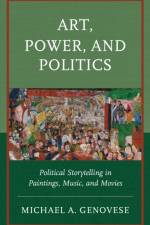
Stories matter. Stories help us digest information, make sense of our world, understand ourselves and remember. This book takes political storytelling seriously. It examines stories as presented in paintings, music, and Films. and concludes with commentary designed to make sense of the role of political stories in our lives.
If our near future sometimes feels like a dystopian sci-fi movie, that¿s because it is. Come With Me If You Want to Live reveals how great science fiction films predicted the world we¿re increasingly living in, but how we can still avoid the worst of what they warned us about. [50]
Most books on polyamory focus on people already in a multi-person relationship. This book¿s unique contribution is to consider the social and psychological processes involved in how someone makes the decision to transition from a monogamous to a consensually nonmonogamous relationship.
This book disrupts the quintessential assumptions of ecology, the politics of identity, and environmental destruction, while proposing new readings, interpretations, and solutions in the face of urgent environmental issues.
Many believe that our sense of community is dying as the result of our digitized world. In this book, Brooke Dunbar-Treadwell refutes this claim and presents a case that connection is thriving in online spaces as people share stories, practice vulnerability, and build communities. From memes to Reddit to Facebook, Dunbar-Treadwell offers perspectives that combine relevant scholarship with examples from her research, pop culture, and society. She addresses some of the factors that contribute to disconnection like political division and dehumanization, while also painting a picture of a society that desperately desires connection and may not always know how to find it. Ultimately, this book illustrates how community and connection have changed over time, how they are currently alive and well, while offering some important practical advice for how readers can consider their own choices in online spaces to help them find the community that they seek. Scholars of communication, media studies, and political science will find this book of particular interest.
Polyamory and Reading the Book of Ruth establishes a polyamorous hermeneutic for reading biblical texts and applies it to the Book of Ruth. The book concludes with a contemporary `targumic¿ rendition of the Book of Ruth, which foregrounds this polyamorous reading.
Ali Askerov theorizes that although the Russo-Chechen wars that unfolded between 1994 and 1996, and again from 1999 to 2008, the Chechen predicament continues to remain uncertain. The enduring demand of the Chechen people for national independence persists, while Russiäs ruthless aggression towards its ethnic minorities and neighboring sovereign nations exhibits no discernible signs of diminishing.Immerse yourself in this powerful narrative that shines a light on resilience, determination, and the pursuit of freedom of Chechnya and the Chechen people.
This book compares bipartisan Congressional majorities resolutely defending America from serious contemporary Chinese challenges with past episodes of Congressional activism.
This book examines the paradox of digital enhancement: we simultaneously desire to be governed by the logic of perfection and to be self-governed. Through genealogical and aesthetic critique, Sarah Bianchi questions the costs of our digital present and conceptualizes how to critically construct an enlightened agency.
The revised, updated, and expanded edition of Inclusion in the American Military: A Force for Diversity provides an updated, rich, expanded, and absorbing overview of the social history and contemporary standing of diversity and inclusion in the United States armed forces covering eleven different and unique social groups.
Tradition and Autonomy in Platös Euthyphro shows, through detailed commentary, that the purported opposition between tradition and autonomy is not a contradiction, but rather a necessary tension in human and political life. Norman J. Fischer II identifies the root of this tension and illuminates its various dimensions, giving an account of tradition and piety that does justice to the autonomy implicit in philosophical inquiry. This book demonstrates that the weakness in Euthyphrös understanding of the relationship between generations is one of enmity and argues for a friendlier version of piety implicit in Socrates¿ suggestions, actions, and arguments in the dialogue. Fischer argues that this version reveals an understanding of the human soul that both opposes that of Socrates¿ accusers and sheds light upon the challenge that philosophy poses to the political community. In this reading, Platös Euthyphro is part of the defense of Socrates against the charges of impiety and corruption, one that puts into clearer relief both the common grounds of politics and philosophy and the tensions between political life and the life of the mind.
Vibiana Cvetkovic examines Philadelphia hosted children's cartoon shows which were broadcast in the industry's earliest days. This book explores the figure of the host with regard to Cold War notions of race, gender, and class and how the host challenged or reified these constructs.
Abonner på vårt nyhetsbrev og få rabatter og inspirasjon til din neste leseopplevelse.
Ved å abonnere godtar du vår personvernerklæring.