



















Gjør som tusenvis av andre bokelskere
Abonner på vårt nyhetsbrev og få rabatter og inspirasjon til din neste leseopplevelse.
Ved å abonnere godtar du vår personvernerklæring.Du kan når som helst melde deg av våre nyhetsbrev.

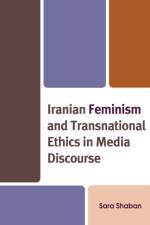
Iranian Feminism and Transnational Ethics in Media Discourse examines the mediated dialogue of #WhiteWednesdays, specifically between U.S. mainstream news narratives and Iranian activists on Twitter. These narratives highlight how hierarchies of visibility in both news and social media discourse overshadow transnational feminist politics while reinforcing femonationalist narratives. Such discourses seemingly support women in Iran, but simultaneously promote Islamophobic messages aligned with U.S. geopolitical politics. In a critical discourse analysis of the #WhiteWednesdays campaign on Twitter and mainstream U.S. news coverage of the movement, this analysis complicates representations of Iran, Muslim women, and feminist politics. The author also unpacks the politics of representation, where voices on the ground are obscured in favor of elite sources who reaffirm U.S Islamophobic and xenophobic ideologies. Scholars and students of communication and media studies will find this book particularly interesting.
Murakami Haruki, Ogawa Y¿ko, Tawada Y¿ko, Kanai Mieko, Hino Keiz¿, Murakami Ry¿, Kawakami Hiromi, Murata Sayaka... These acclaimed authors are united by a shared fascination with fantastical conceptions of space. In highlighting these luminaries of contemporary Japanese literature, Into the Fantastical Spaces of Contemporary Japanese Literature examines the role of extramundane topos from an interdisciplinary approach. As writers navigate fantastical spaces in resistance to the logic of everyday life, they are able to challenge the dualistic norms on the body and mind that typify modern Japanese life. These studies demonstrate the essential role played by fantastical spaces in the development of modern Japanese literature to the present day. Scholars of Japanese studies, literature, and other fields will find this book an excellent resource for teaching and research.
Compulsive buying is a shopping addiction with worldwide prevalence that causes significant emotional, financial, and social problems for those afflicted by it. While most research has focused on the problem and its consequences, this book examines the intersections between consumer traits, self-regulation, ethical considerations, and compulsive buying. Compulsive Buying: Consumer Traits, Self-Regulation and Marketing Ethics presents a model on consumer trait predictors of compulsive buying as well as guidelines for consumers, government policymakers, and companies.
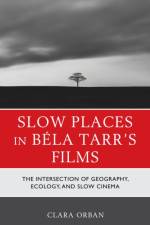
Slow Places in Bela Tarr's Films explores Hungarian filmmaker Bela Tarr's approach to creating geographies of indifference through slow cinema techniques. Through a close examination of Tarr's filmography, Clara Orban observes that his interiors provide claustrophobic environments in which human relationships have difficult flourishing, while his exteriors become landscapes through which characters wander endlessly. Furthermore, Orban argues, Tarr's sparse use of animals provides contrast to the humans who inhabit these spaces, as they, too, are indifferent to humans' fates. Orban utilizes close readings of Tarr's filmsincluding his earlier short filmsalong with relevant poems, a thorough filmography, and an interview with Tarr about aspects of this book to aid in her analysis. Ultimately, this book offers an accessible but detailed look at the geographic locations and ecological implications of the entire compendium of Tarr's productions.
The book, is to evaluate the present, future, and possible dimensions of the effects of pandemics on financial system.
This book explores how pivotal Instagram Live events Club Quarantine and Verzuz have provided respite from social isolation and a rearticulated space for Black cultural engagement in the midst of the COVID-19 pandemic and increased racial tensions in the United States.
This book examines immigration policies and politics in Africa, the social impacts and history of xenophobia and nativism in African life and culture, and the effects of xenophobia and nativism on Pan-Africanism. The chapters also offer suggestions for reducing xenophobia and nativism in Africa through social and economic policies.
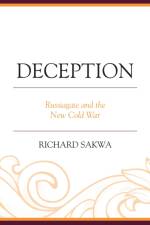
The ';Russiagate' affair is one of the most far-reaching political events of recent years. But what exactly was the nature and extent of Russian interference in the campaign that led to the presidency of Donald J. Trump? Richard Sakwa sets out the dramatic series of events that combined to create Russiagate and examines whether together they form a persuasive account of Russia's role in the extraordinary 2016 American election. Offering a meticulous account of the multiple layers in play, his authoritative analysis challenges the claims of Russian interference and collusion. As we enter into a new cold war, this myth-busting, accessible and balanced account is essential reading to understand contemporary East-West relations.
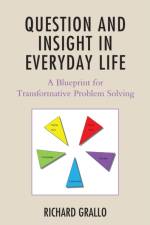
In Question and Insight in Everyday Life: A Blueprint for Transformative Problem Solving, Richard Grallo examines the nature and patterns of human problem solving. Grallo identifies four patterns of problem solving that together result in complex human learning and growth. The four patterns constitute a cycle that is transformative not only of problematic situations but of the problem solvers themselves. This book also explores the roles of questions, insights, the desire to know, and social trust in problem solving. Its conclusions apply equally to the problems of everyday life as well as to challenges that arise in educational, counseling, political, engineering, and science fields.
This study of Japanese prime minister Abe Shinzô¿ (2012-2020) answers three questions:How could Abe Shinzô¿ remain in power for nearly a decade? What was the policy mix devised to keep voters happy yet try to promote structural reforms and growth? What is his legacy as chief executive now that he has gone?
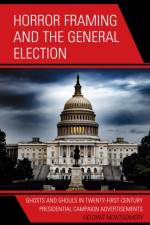
In Horror Framing and the General Election: Ghosts and Ghouls in Twenty-First-Century Presidential Campaign Advertisements, Fielding Montgomery reveals a pattern of mostly increasing horror framing implemented across presidential elections from 2000 to 2020. By analyzing the two most common frameworks of horror within U.S. popular culture (classic and conflicted), he demonstrates how such frameworks are deployed by twenty-first-century U.S. presidential campaign advertisements. Televised advertisements are analyzed to illustrate a clearer picture of how horror frameworks have been utilized, the intensity of their usage, and how self-positive appeals to audience efficacy help bolster these rhetorical attempts at persuasion. Horror Framing and the General Election shows readers how the extensionally constitutive ripples of horrific campaign rhetoric are felt in contemporary political unrest and provides a potential path forward.
Using countries such as Burkina Faso, Cote d'Ivoire, Egypt, Mauritania, Sierra Leone, and Sudan as case studies, this book studies the causes, effects, and evolution of military coups in Africa in order to show that eliminating military coups will require identifying and addressing the root causes of the coup in each affected state.
In Everyone a Sheriff, the word sheriff serves as a metaphor for programs involving citizens in social control initiatives. Partnership between community members and their local police force is at the heart of any effective strategy aimed at reducing urban crime and insecurity. Ordinary community residents represent a vast, untapped resource in the fight against crime, disorder, and fear. The real story of citizens long association with the policing function is revealed. The book highlights include: an in-depth examination of volunteerism primarily at the law enforcement level; the importance of preparing youth and minorities for careers in policing and homeland security; the need for transitioning police and citizen volunteers from serving not only as peacekeepers, but becoming peacemakers; a realistic view of various pitfalls when regular and volunteer police are thrust into patterns of co-existence when fighting crime out on the street or seeking solutions to crime; numerous examples of current police-sponsored citizen academies, police cadet and junior deputy programs; histories of the invention of police and citizen-supported neighborhood crime watch programs. The only way to successfully cross the divide between the police and public is to give meaning to the phrase: the police are the people, and the people are the police.
This book examines early modern Mito, today an ordinary provincial capital on the outskirts of the Tokyo commuter belt, but once the headquarters of Mito Domain, one of the most consequential places in all of Japan. As one of just three senior branches of the Tokugawa familywhich ruled over Japan for 260 yearsMito's ruling family enjoyed unparalleled status and exerted enormous influence throughout its history. In the seventeenth century, its scholars produced some of early modern Japan's most important historical scholarship. In the eighteenth century, it developed a robust and pragmatic program of reform to confront depopulation and foreign threats. In the nineteenth century, it became the birthplace of a revolutionary ideology that transformed Japan into a modern, imperial nation. The power of these ideas swept across Japan, inspiring activists everywhere to take up the cause of building a new nationbut they also devastated Mito, leading to a brutal civil war that scarred its people for generations. This book complements existing studies of Mito's ideas by focusing on the history of Mito as a place and telling the stories of Mito's politicians, reformers, and ordinary people from the beginning of the domain's history to its end.
In Ecowomanism at the Panam Canal: Black Women, Labor, and Environmental Ethics, Sofia Betancourt constructs a transnational ecowomanist ethic that reclaims inherited environmental cultures across multiple sites of displacement. Betancourt argues that women in the African diaspora have a unique understanding of how a moral refusal to compromise their humanity provides the very understanding needed to survive what was once an inconceivable level of environmental devastation. This work is guided by the experiences of West Indian women, imported to Panam by the United States from across the Caribbean, whose labor supported the building of the Panam Canalthe so-called silver men and women who faced mud, mosquitoes, and malaria while building a literal pathway to the American empire.
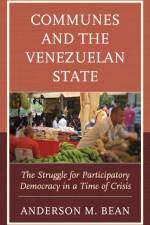
Since 2006, Venezuela has witnessed an explosion of different forms of popular power and participatory democracy. Over 47,000 grassroots neighborhood-based communal councils and 3,000 communes have been constructed. In Communes and the Venezuelan State: The Struggle for Participatory Democracy in a Time of Crisis, Anderson Bean offers a critical analysis of these experiments in popular and workers power and their potential for societal transformation within and beyond Venezuela. Drawing on extensive ethnographic research, Bean demonstrates how workers and peasants, through networks of popular power, exercise agency over their own development while facing challenges from the capitalist state. Most importantly, this book connects with the far-reaching implications that the communal movement in Venezuela has for building a society responsive more to the needs of ordinary people than to the desires of the elites.
Kierkegaard and the New Nationalism argues for the relevance of Kierkegaard's "attack upon Christendom" within our current situation of resurgent nationalism. Kierkegaard's ascetic voice calls his readers not simply to critique nationalism, but to renounce it, thereby striking at nationalism's self-assertive core.
In Speaking of Silence in Heidegger, Wanda Torres Gregory critically analyzes Heidegger's thoughts on silence. Arguing that silence about silence is a guiding principle in his sparse and often reticent words, Torres Gregory sets out to decipher their elusive meanings. Charting the trajectory of Heidegger's reflections, from Being and Time to On the Way to Language, she shows that he develops his ideas of silence in increasingly closer relations to his also evolving ideas of truth as the unconcealedness of being/beyng and language as disclosive sonorous saying. Torres Gregory distinguishes between human, primordial, and primeval forms of silence, and the linguistic, pre-linguistic, and proto-linguistic levels at which silence can occur in relation to sonorous speech. While the book focuses on these inner conceptual dynamics, the author remains mindful of Heidegger's ties to National Socialism and clarifies how his theoretical assumptions allow for oppressive silencing. The book concludes with critical reflections on the later Heidegger's thinking of silence and proposes alternatives to his claims concerning the sound beyond sounds, the metaphysics of mystical silence, the uniquely linguistic essence of the mortals, and the loud idle talk in the age of modern technology.
Communication in the Age of the COVID-19 Pandemic centers around changes in communication as a byproduct of the COVID-19 pandemic. Specific contexts include changes in our intimate relationships and changes in how media outlets communicate to audiences.
This book considers Italian peasant culture, its impact on intellectual activism, and its significance in shaping the Slow Food international grassroot movement.
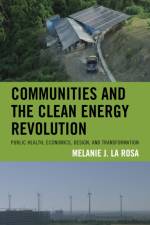
Communities and the Clean Energy Revolution: Public Health, Economics, Design, and Transformation is an engaging and interdisciplinary investigation into clean energy systems such as solar and wind power and the need to transform our energy system. Looking at the intersection of clean energy with community engagement, diversity, and economic development, it is a remarkably accessible account from the front lines of the clean energy revolution. Organized as a series of case studies set in eight locations, the author profiles people leading varied renewable energy projects from using solar to survive hurricanes to passing a Green New Deal bill for America's largest city, the beginnings of the offshore wind industry, modular solar power systems, and changing the culture of an entire utility. Each case study is set into context of broader research, addressing how cities and states meet clean energy goals, howsolar or wind power address blackouts, and how individuals can accelerate clean energy for their home, business, or community. This book goes beyond merely explaining clean energy transition by providing unique insight into the calls for a complete transformation of America's energy system.
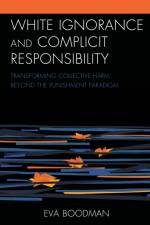
White ignorance is a form of collective denial that aggressively resists acknowledging the role of race and racism. It dominates our political landscape, warps white moral frameworks and affective responses, intervenes in white self-conceptions, and organizes white identities. In this way, white ignorance poses a problem for conceptions of responsibility that rely on individuals' intentions, causal contributions, or knowledge of the facts. As Eva Boodman shows, our moral concepts for responding to racism are implicated in the process of racialization when they understand responsibility as the attribution of blame or absolution, innocence or guilt. White Ignorance and Complicit Responsibility challenges these binary, punitive moralities, arguing that they reproduce racial harm by encouraging white people to seek innocence and the purification of moral taint instead of addressing the material conditions of racial harm. Instead, Boodman claims the space of complicity as a place of anti-racist possibility. Linking the construction of whiteness to a racist punishment paradigm, this book makes the case for a different way of responding to harm as necessary for dismantling the moral, racial, political, and affective constructs that keep racial capitalism in place.
In Pentecostalism, Postmodernism, and Reformed Epistemology, Yoon Shin critically builds on James K. A. Smith's postmodern Pentecostal epistemology with the aid of Reformed epistemology. It takes the reader through an interdisciplinary journey that exposits and illumines the relationship among Pentecostal spirituality, continental and analytic philosophy, postliberalism, moral psychology, and philosophy of emotion. This work clarifies misunderstandings of Smith, in Smith, and between continental and analytic epistemology, constructively and coherently synthesizing the sources through interdisciplinary analysis and thereby demonstrating the value of mashup philosophy. The resulting epistemology strengthens the mostly descriptive epistemology of Smith with the warrant criteria of Alvin Plantinga.
Published to coincide with the twentieth anniversary of the World Trade Center attacks, 9/11 Gothic: Decrypting Ghosts and Trauma in New York City's Terrorism Novels returns to the ruins and anguish of 9/11 to pose a question not yet addressed by scholarship. Two time World Fantasy Award-winning writer Danel Olson asks how, why, and where New York City novels capture the terror of the Al-Qaeda mass murders through a supernatural lens. This book explores ghostly presences from the world's largest crime scene in novels by Don DeLillo, Jonathan Safran Foer, Lynne Sharon Schwartz, Griffin Hansbury, and Patrick McGrathall of whom have been called writers of Gotham. Arguing how theories on trauma and the Gothic can combine to explain ghostly encounters civilian survivors experience in fiction, Olson shares what those eerie meetings express about grief, guilt, love, memory, sex, and suicidal urges. This book also explores why and how paths to recovery open for these ghost-visited survivors in the fiction of catastrophe from the early twenty-first century.
Honoring the lifework of the comparative literature scholar, From the Americas to the World: Essays in Honor of Lois Parkinson Zamora traces artistic and cultural pathways that connect Latin American literature and culture to the Americas, and to the world beyond. The essays in this collection cover three critical fields: comparative hemispheric American literature, magical realism, and the Baroque/New World Baroque/Neobaroque. Beginning with a critical reassessment of hemispheric American studies, these essays analyze the works of a wide array of writers, such as Roberto Bolaño, Alejo Carpentier, Gabriel García Márquez, Waldo Frank, and José Lez. These chapters build upon the legacy of the scholarship done by Dr. Zamora and exemplify the pattern of literary studies that she has driven forward.
Womanist AIDS Activism in the United States: ';It's Who We Are' is an in-depth exploration of AIDS advocacy work among Black women. Based on interviews gathered from thirty-six Black women AIDS activists from across the nation, Angelique Harris and Omar Mushtaq examine the ways in which race, gender, sexuality, and spirituality influence the motivations and approaches behind the efforts of the women in the study. The authors use womanisman epistemological framework that centers the world views of women of colorto better situate this activism within a larger sociocultural and historical context. They find that identity, spirituality, emotions, and experiences with AIDS knowledge all influence the ways in which these activists approached their community activism work. The authors analyze womanism in detail and propose ways in which this framework can be applied more broadly in examinations of community engagement among women of color, and specifically Black women.
Abonner på vårt nyhetsbrev og få rabatter og inspirasjon til din neste leseopplevelse.
Ved å abonnere godtar du vår personvernerklæring.