

















Gjør som tusenvis av andre bokelskere
Abonner på vårt nyhetsbrev og få rabatter og inspirasjon til din neste leseopplevelse.
Ved å abonnere godtar du vår personvernerklæring.Du kan når som helst melde deg av våre nyhetsbrev.

This book researches the current status of Artificial Intelligence in higher education
This book provides six different strategies for teaching the fundamentals of reading with social-emotional learning in mind.
This book provides six different strategies for teaching the fundamentals of reading with social-emotional learning in mind.
In this monograph, Castagnino suggests that contemporary Italian fiction often uses fantastic tropes to address realistic concerns such as ecocriticism, artificial intelligence, transhumanism, and personal and collective memory.
A Psychology of Food, Cooks, and Cooking reviews psychological research and theory to illuminate the ubiquitous human behavior of cooking in both professional and domestic kitchens, drawing upon Livert¿s twenty years of experience examining both types of cooks.
In Canada, first- and second-generation young immigrant women face racism, xenophobia, democratic racism, and other forms of aggression in their daily lives. This book observes and analyzes the experiences of these women from their point of view.
James Ellroy has mined the darkest corners of the American experience, public and private, to paint a landscape of corrupt hearts, minds, and institutions. Ellroy is particularly notable for exploring the connection between the murder of his own mother, when he was ten years old, and his troubled adolescence and early adulthood struggles with addiction. ¿Dead people belong to the live people who claim them most obsessively,¿ he wrote in the memoir My Dark Places. Dark Places: Crime and Politics in the Personal Noir of James Ellroy will explore connections between politics, art, history, memory, and crime -- Ellroy¿s personal noir. The editors here present an interdisciplinary collection of essays, each with insight and argument into the pressurized, and at times, highly personal literary production of one of the most critically and commercially successful authors of our time. These contributions, scholarly yet accessible, offer compelling and provocative maps into the terrain of Ellroy¿s fiction and non-fiction, drawing focus as well on film adaptations of his work.
Philosopher and psychoanalyst Jon Mills examines the ominous existential risks that could bring about the end of civilization. He draws on the psychological motivations, unconscious conflicts, and cultural complexes that drive human behavior and social relations to offer a fresh perspective on the looming fate of humanity.
Democracy and Morality: Religious and Secular Views compares the views and principles of nine prominent ethical traditions, religious and secular, on their relationship with democracy and democratic ideals.
Democracy and Morality: Religious and Secular Views compares the views and principles of nine prominent ethical traditions, religious and secular, on their relationship with democracy and democratic ideals.
In Letters to an Atheist, esteemed philosopher and author Peter Kreeft corresponds with a young atheist who is wrestling with the question of God. Together they work through some of the primary reasons people don¿t believe in God, including violence committed in the name of religion, the problem of evil, and more. They also discuss many of the reasons for belief, including love, miracles, and the relationship between religion and science.The debate between atheists and theists today is often strident and angry, and understandably söthe debate encompasses fundamental questions about how we live our lives. As Kreeft writes, ¿if God does not exist, then religion is the biggest hoax, the biggest myth, the biggest lie in the history of the world.¿ However, Letters to an Atheist showcases a respectful exploration of some of life¿s biggest questions, trying to understand the opposing point of view. With characteristic warmth and clarity, Kreeft¿s letters offer believers and non-believers alike much to consider.
On the frontlines of the global Cyberwar
Baseball¿s Great Expectations features the fascinating stories of baseball players who were on the cusp of greatness, who everyone expected to be the next superstar, but never quite lived up to the hype¿or through tragic circumstances, never had the chance.
The Missing Peace equips readers with a new and relatable lens to seeing anxiety for what it is: a liar that predicts doom. They will learn how to re-train themselves from years of personal and inherited anxiety. What once seemed overwhelming and unsurpassable is within reach.
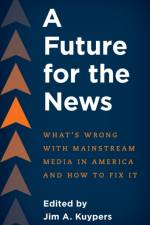
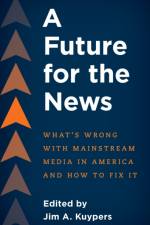
Bringing together academics and news industry professionals, this daring book investigates and offers solutions to significant problems with the productive functioning of the mainstream news media. Each chapter offers a pathway for improvement for individual reporters, the institution more broadly, and the news consumer.
The Anger Myth is a step-by-step guide to help readers permanently get rid of anger in all its forms for a happier, healthier, wealthier, and more productive life. It introduces readers to Anger¿s 7 Cranky Cousins and the 5-Step Tame and Reframe method to transform anger quickly to either peacefulness or constructive action.
Bringing together academics and news industry professionals, this daring book investigates and offers solutions to significant problems with the productive functioning of the mainstream news media. Each chapter offers a pathway for improvement for individual reporters, the institution more broadly, and the news consumer.
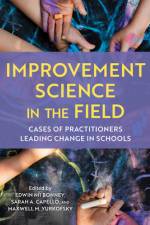
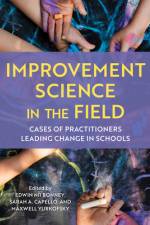
Written by K12 educators for K12 educators, this ground-breaking, practical continuous improvement resource provides a plethora of practical tools, processes, and advice for any school teams to adapt and use in their own settings.
Written by K12 educators for K12 educators, this ground-breaking, practical continuous improvement resource provides a plethora of practical tools, processes, and advice for any school teams to adapt and use in their own settings.
This open access book explores law, politics, and inequality in fights against infectious diseases. Guided by a theoretical framework called "governing through contagion", the studies in this book analyse how past and present governments have tried to combat contagious diseases, such as the bubonic plague, cholera, HIV/AIDS, and COVID-19. They examine how these governments used law and other technologies, including waste management, mask-wearing, quarantine stations, house inspections, and the burning of entire neighbourhoods, to achieve their aims of protecting populations and ensuring productivity. Although the studies recognise the power of the state, they simultaneously emphasise the active roles of technologies and creatures, drawing attention to the often-taken-for-granted workings of the non-human in public health governance. They also consider the implications of strategies of control on marginalised communities and democratic politics. Collectively, the studies in this book bring attention to the connections between COVID-19 responses by governments and their historical antecedents, shedding light on the role of capitalism, colonialism, and geopolitics in circulating contagions and the strategies used to control them.The ebook editions of this book are available open access under a CC BY-NC-ND 4.0 licence on bloomsburycollections.com.
This book explores the movement towards the recognition of animal sentience in the law. It explores some first principles underpinning the recognition of animal sentience, including the nature and scope of sentience provisions, the connection between sentience and empathy, drafting issues, and the relationship between sentience recognition and animal rights. The book highlights the operation of animal sentience provisions in several jurisdictions throughout the world and considers some sector-specific applications and limitations of animal sentience recognition.The first book of its kind, it draws together different perspectives as to what this novel turn in the law might mean and where it might lead. The chapters provide a full picture of what the recognition of animal sentience might entail for humans, animals, and our environment, as well as the experiences of different legal jurisdictions in pursuing recognition of animal sentience.This collection is an essential read for both practitioners and academics alike, as well as any group seeking to advance the interests of non-human animals.
This book articulates and defends a sceptical general account of parliamentary sovereignty.It challenges the orthodox approach to this fundamental doctrine by making three key heretical claims. First, there are some laws that Parliament cannot make. Second, there are several ways in which primary legislation can be overridden or set aside by institutions other than Parliament. And third, Parliament has the power to bind itself as to the substance of future legislation. All three positions are developed using arguments which depend on existing legal materials and are compatible with the normative underpinnings of the doctrine of parliamentary sovereignty. The book combines theoretical and doctrinal analysis. The theoretical part of the book situates Parliament's authority to legislate in the broader context of an examination of constitutional and political authority. It develops a conception of the ways in which competing views on the scope of Parliament's legislative authority are mediated into law. The doctrinal part of the book reconsiders Parliament's legal position. It proposes a novel conception of Parliament's power to bind itself, rooted in the idea of commitments. It defends the existence of a judicial power to impose narrowly conceived freestanding limits on Parliament's law-making authority, rooted in the rule of law. Finally, the book examines the challenges posed to parliamentary sovereignty by both its internal procedures and the devolved legislatures.
This book researches the current status of Artificial Intelligence in higher education
Often forgotten as an important political site for social contacts, public opinion, democracy, freedom and openness - characteristics which are frequently ascribed to streets and squares - this accessible and novel open access study puts public transport at the heart of political debates about public space. Public transport can be an intensely sensory experience, leaving impressions both favourable and unfavourable on its users, and gathering around itself an extensive archive of representations since the early 19th-century. Bringing together contributions from a range of key scholars and public intellectuals, as well as literary texts, this volume offers a richly illustrated commentary on public transport as public space which combines theoretical analysis and practical case studies.The eBook editions of this book are available open access under a CC BY-NC-ND 4.0 licence on bloomsburycollections.com.
Here, Oscar Garcia Augustin and Paolo Cossarini analyse the recent history of the Spanish body-politic, with special reference to the populism and polarization that have taken over politics in the country since the enormous turbulence of the 2008 global financial crisis. The financial and economic crisis gave birth first to anti-austerity movements and a subsequent left-wing populist party, and then to a series of socio-political ruptures that have reconfigured politics permanently in Europe's fifth largest economy. Topics covered include an assessment of the Catalan march towards independence, the reconfiguration of Spain's party system, the rise of far-right groups, increased feminist and equality activism, municipalism, and a growing environmentalist movement. The authors, both experts on populism as well as Spain's political system, reflect on these aspects of the current Spanish situation in order to provide a comprehensive socio-political overview of 21st century Spain.
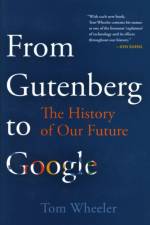
It's easy to think that today's revolutions in communications, business, and many areas of daily life are unprecedented. The changes we experience nearly every day may be happening faster than those of the past, and on multiple fronts. But our ancestors at times were just as bewildered by rapid upheavals in what we now call ¿networks¿: the physical links that bind any society together.In this fascinating book, Tom Wheeler vividly describes the two great network revolutions of the past and uses them to put in perspective the confusion, uncertainty, and excitement most people feel about changes happening now, changes that make up the third network revolution.The first major network revolution was Gutenberg's invention of movable-type printing in the fifteenth century, which created the first mass-information economy. This book, its millions of predecessors, and history-shifting trends such as the Reformation, the Renaissance, and the scientific revolutions of the past 500 years would not have been possible without that one invention.The second revolution came early in the nineteenth century with the inventions of the railroad and the telegraph. Never before had people been able to travel or communicate over long distances faster than a horse could gallop. Together, these two inventions compressed space and time, and in the process upended centuries of stability, transformed economies, and redrew the map of the world.Wheeler contrasts these past revolutions with our experience today, when rapid-fire changes in networking are disrupting the nature of work, personal privacy, education, the media, and nearly every other aspect of modern life. The principal manifestation of this revolution¿one that touches each of us directly and shapes both commerce and culture¿is how we connect with each other. Our networks have always defined who we are, both economically and sociologically. Now, technology has delivered us into history's latest network revolution, changing everything it touches.Outlining ¿what's next,¿ Wheeler describes how artificial intelligence, virtual reality, blockchain, and the need for cybersecurity will prolong the third network revolution well into the future.
Abonner på vårt nyhetsbrev og få rabatter og inspirasjon til din neste leseopplevelse.
Ved å abonnere godtar du vår personvernerklæring.