
























Gjør som tusenvis av andre bokelskere
Abonner på vårt nyhetsbrev og få rabatter og inspirasjon til din neste leseopplevelse.
Ved å abonnere godtar du vår personvernerklæring.Du kan når som helst melde deg av våre nyhetsbrev.

This book discusses the issue of the missing Hindu interlocutors in the disciplines of theology of religions, interreligious dialogue, and comparative theology. It fills the gap left by the missing Hindu interlocutors by offering a first-ever ¿¿kta thealogy of religions and a ¿¿kta method for comparative theology.
This book explores the creative work and dissent activities of Czech surrealist Eva vankmajerová and writer Eda Kriseová, examining the ways in which the women wrote, painted, sculpted, and supported each other while struggling to survive the totalitarian communist regime from the late 1960s to the fall of the Iron Curtain in 1989.
This book differentiates both the objective structural elements and the subjective emotional elements in organizations and shows how psychological processes cast their influence throughout. It demonstrates the development of work, workplaces, organization, and organizations in the context of psychology and social psychology.
This book takes a harsh, critical look at capital punishment and points out the glaring flaws and misconceptions about its effectiveness. It makes a factual, legal, and moral argument for its abolition while refuting the main arguments in support of the death penalty.
Transnational Zombie Cinema, 2010 to 2020: Readings in a Mutating Tradition examines selected films produced outside the United States in the second decade of the millennial zombie renaissance. Ziegler analyzes how the films adapt the zombie myth to localized concerns as it circulates in post-Great Recession transnational zombie cinema.
Emerson's Metaphors provides a radical reading of Ralph Waldo Emerson's figurative language, demonstrating that Emerson's metaphors should be understood as ways of thinking. Covering the full range of Emerson's writings, this book offers a reinterpretation of one the most important and influential nineteenth-century American writers.
Red Sauce traces the evolution of popular Italian-American foods like lasagna, eggplant parmigiana, and penne alla vodka while seeking the origins of these ¿red sauce¿ recipes, debunking myths, and examining how Italians lost their foreign otherness as Americans embraced Italian-American cuisine over the Twentieth century.
This book examines the daunting hurdles facing the EPA in its critical roles in drinking water, air and water pollution, climate change, and toxic chemicals. It illustrates the importance of a strong EPA, the challenges of regulation, and how today¿s war on science is undermining the scientific foundation upon which the agency¿s legitimacy rests.
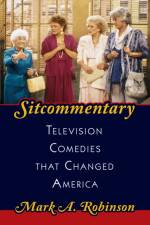
From I Love Lucy to Will & Grace, this book looks at the television comedies that have tackled social issues, facilitated discussion, or in some other way have broken down barriers. Other landmark shows discussed here include All in the Family, Ellen, The Golden Girls, Good Times, The Jeffersons, Maude, Modern Family, Roseanne, and Soap.
Christian Ethics for a Digital Society examines how we live in an increasingly digital world. From sexting to hashtag activism like the #metoo movement, technology has entered both our private and public lives in a deep way. Christian Ethics for a Digital Society offers pragmatic wisdom on how to live thoughtfully today.
While the subject of climate change is often in the news and social media, and its realities debated in various arenas of science and government, the health impacts are often overlooked. Here, two seasoned physicians dispel myths, clarify science, and help readers understand the threats of environmental change to human health.
This handbook is a comprehensive resource for students, scholars, and practitioners seeking a broad overview of interrelated topics concerning the aging workforce.
Exploring Careers in Cybersecurity and Digital Forensics serves as a career guide, providing information about education, certifications, and tools to help those making career decisions within the cybersecurity field.
The Con and the FBI Agent is the story of an unlikely alliance between two diametrically opposed people that results in one of the most successful undercover cases in Boston FBI history.
The Rowman & Littlefield Handbook of Policing, Communication, and Society brings together well-regarded academics and experienced practitioners to explore how communication intersects with policing in areas such as cop-culture, race and ethnicity, terrorism and hate crimes, social media, police reform, crowd violence, and many more.
The Crisis in America's Criminal Courts highlights a variety of problems that judges, prosecutors, and public defenders face within a criminal justice system that is ineffective, unfair, and extraordinarily expensive. While many argue, and I agree, that crushing caseloads and court dockets certainly qualify as a crisis, I suggest there is a much greater crisis in the courts that results in profound downstream effects on criminal justice performance and outcomes. It sounds simple, but the greatest risk faced by the justice system is the lack of time, expertise, and resources for effective decision-making. In this book, I propose a variety of evidence-based reforms that, as a start, provide the key decision-makers with professional clinical experts to accurately assess and advise regarding mitigating the circumstances that bring individuals into the courts. We must rebalance. We need incarceration for those who are too dangerous or violent or who are habitual offenders. For most of the rest, we need to manage risk, but very importantly, it is time to get serious about behavioral change. We need to change the culture of the courthouse and reorient how we think about crime and punishment.
This book analyzes the everyday actions of ordinary people in the context of extreme political and cultural polarization, distort the criminal justice system and betray the lofty ideals expressed in American founding documents and centuries of Anglo-American articulations of basic human rights.
This heart-wrenching story immerses readers in the dramatic survival of one outspoken man, An Wei, who illuminates the souls of a billion ordinary Chinese citizens. His perseverance and ability to confront adversity combine with the dramatic events and upheavals in China's modern history, inspiring a narrative that will keep readers enthralled.
In this compelling book, Lithuanian writer Ruta Vanagaite holds a frank conversation with noted historian Christoph Dieckmann.. Her searching exchanges with Dieckmann illuminate the most profound questions we have as we struggle to understand the causes and consequences of the Holocaust.
This third edition collection provides a contemporary survey of current international issues in bioethics and human rights for study across social science disciplines. New chapters discuss the reproductive justice in the US, immigration politics and medical duty during pandemics, climate change implications for bioethics, acoustic weaponry technologies, and vaccine politics.Following a consideration of theoretical frameworks, there three units on human rights, life and death, and public health form an in-depth look at contemporary issues in the field of bioethics. Each unit includes cutting edge analyses by international experts and thought-provoking case studies, as well as discussion and essay prompts, and Internet and film resources. Topics range from pediatric genomics, abortion (including the Dobbs decision, medical tourism, human experimentation, climate change, the Havana syndrome, the care of aging family members, truth-telling, vulnerable human subjects, health equity, healthcare in ICE detention facilities, solitary confinement, euthanasia, lethal injections and the harvesting of human organs, pandemic ethics, vaccine controversies, and more.The new, updated, and retained chapters make this book an appealing resource as a primary text, scholarly reference book, or a course supplement.
This third edition collection provides a contemporary survey of current international issues in bioethics and human rights for study across social science disciplines. New chapters discuss the reproductive justice in the US, immigration politics and medical duty during pandemics, climate change implications for bioethics, acoustic weaponry technologies, and vaccine politics.Following a consideration of theoretical frameworks, there three units on human rights, life and death, and public health form an in-depth look at contemporary issues in the field of bioethics. Each unit includes cutting edge analyses by international experts and thought-provoking case studies, as well as discussion and essay prompts, and Internet and film resources. Topics range from pediatric genomics, abortion (including the Dobbs decision, medical tourism, human experimentation, climate change, the Havana syndrome, the care of aging family members, truth-telling, vulnerable human subjects, health equity, healthcare in ICE detention facilities, solitary confinement, euthanasia, lethal injections and the harvesting of human organs, pandemic ethics, vaccine controversies, and more.The new, updated, and retained chapters make this book an appealing resource as a primary text, scholarly reference book, or a course supplement.
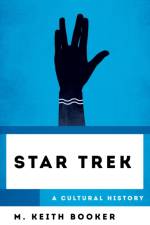
First airing in 1966, with a promise to ¿boldly go where no man has gone before,¿ Star Trek would eventually become a bona fide phenomenon. Week after week, viewers of the series tuned in to watch Captain Kirk, Spock, and the rest of the crew of the USS Enterprise as they conducted their five-year mission in space. Their mission was cut short by a corporate monolith that demanded higher ratings, but Star Trek lived on in syndication, ultimately becoming a multibillion-dollar media franchise. With merchandise spin-offs, feature films, and several television iterations¿from The Next Generation to Discovery¿Star Trek is a firmly established part of the American cultural landscape.In Star Trek: A Cultural History, M. Keith Booker offers an intriguing account of the series from its original run to its far-reaching impact on society. By placing the Star Trek franchise within the context of American history and popular culture, the author explores how the series engaged with political and social issues such as the Vietnam War, race, gender, and the advancement of technology. While this book emphasizes the original series, it also addresses the significance of subsequent programs, as well as the numerous films and extensive array of novels, comic books, and merchandise that have been produced in the decades since.A show that originally resonated with science fiction fans, Star Trek has also intrigued the general public due to its engaging characters, exciting plotlines, and vision of a better future. It is those exact elements that allowed Star Trek to go from simply a good show to the massive media franchise it is today. Star Trek: A Cultural History will appeal to scholars of media, television, and popular culture, as well as to fans of the show.
This book looks at The Simpsons place in the pop culture firmament, from inspirations like Mad magazine to its critical role in the renaissance of animated television. The author recounts the birth of the show, discusses its remarkable merchandising success, and examines the show's popularity as the longest running episodic program in TV history.
Frasier is one of the most critically acclaimed series in television history, winning an astounding thirty-seven Emmys. This book shows how the series managed to create its own identity and iconic cast of characters, embraced farce to an unseen level in American sitcoms, and exploited class issues for humor in a unique style.
This is a collection of essays, poems, think pieces and the so-called detritus of academic research written by people who write to help us (out)live the constraints of the world.
This is a collection of essays, poems, think pieces and the so-called detritus of academic research written by people who write to help us (out)live the constraints of the world.
Social robots are an increasingly integral part of society, already appearing as customer service assistants, care-home helpers, teaching assistants and personal companions. This book argues that the wider inclusion of social robots in our society is having a revolutionary impact on some of our key intuitions regarding ethics, metaphysics and epistemology and, as such, will put pressure on many of our best theories.Social robots elicit an emotional and social response in humans that some have taken to be evidence that robots deserve moral consideration. Others have argued that, as robots are only machines, we should avoid designing robots that encourage emotional engagement. The fictional dualism model provides a new way for us to view social robots and a new route for our continued relationship with them. When we engage with a social robot, we create a fictional overlay that has wants, needs and desires. Our emotional attachment to social robots is a natural continuation of our relationship to fiction: a life-enhancing and important connection, but not one that prompts moral consideration for the fictional entity. In this book, Paula Sweeney shows how the fictional dualism model of social robots differs from other popular models. In addition to providing a distinctive and ethically appropriate framework for emotional engagement without moral consideration, the model provides conditions for trusting social robots and, uniquely, allows us to individuate social robots as distinct persons, even in contexts in which they share a collective mind.
From Megyn Kelly's claim that Jesus is white to former President Trump's claim that he is the ¿chosen one¿ or the ¿King of Israel,¿ there is serious trouble in paradise. Contemporary manifestations of white Christian nationalism are deeply entangled in political issues from women¿s political rights over their own bodies to the rejection of Critical Race Theory (CRT). Carrying Christian signs and crosses, protestors at the Capitol insurrection on January 6th were not only fighting with a sense of white nationalist duty but fighting with a religious zeal, making this a pressing moment in the current time to which this volume speaks.This edited collection invites scholars share frustration, anger, interrogation, and conceptual clarity with readers regarding this toxic form of Christianity that fights not in the name of love, but in the name of political domination and out of deep fear and hatred. Attention is also brought to Christianity¿s counter-voice, one predicated upon love, and its effectiveness to resist not just deep political pro-white forces at work, but also its capacity to focus emphasis upon Christian love. The text is designed to speak to the contemporary moment with respect to the explicit and implicit ways in which white nationalism and white Christianity continue to be entangled and reinforce one another. Contributors are asked to articulate what is behind this racially, politically, ideologically, psychically charged whiteness of Christianity in the US, and to articulate what is beyond the whiteness of Christianity for both Christians and non-Christians alike concerned with the rise of white Christian nationalism.
From Megyn Kelly's claim that Jesus is white to former President Trump's claim that he is the ¿chosen one¿ or the ¿King of Israel,¿ there is serious trouble in paradise. Contemporary manifestations of white Christian nationalism are deeply entangled in political issues from women¿s political rights over their own bodies to the rejection of Critical Race Theory (CRT). Carrying Christian signs and crosses, protestors at the Capitol insurrection on January 6th were not only fighting with a sense of white nationalist duty but fighting with a religious zeal, making this a pressing moment in the current time to which this volume speaks.This edited collection invites scholars share frustration, anger, interrogation, and conceptual clarity with readers regarding this toxic form of Christianity that fights not in the name of love, but in the name of political domination and out of deep fear and hatred. Attention is also brought to Christianity¿s counter-voice, one predicated upon love, and its effectiveness to resist not just deep political pro-white forces at work, but also its capacity to focus emphasis upon Christian love. The text is designed to speak to the contemporary moment with respect to the explicit and implicit ways in which white nationalism and white Christianity continue to be entangled and reinforce one another. Contributors are asked to articulate what is behind this racially, politically, ideologically, psychically charged whiteness of Christianity in the US, and to articulate what is beyond the whiteness of Christianity for both Christians and non-Christians alike concerned with the rise of white Christian nationalism.
Abonner på vårt nyhetsbrev og få rabatter og inspirasjon til din neste leseopplevelse.
Ved å abonnere godtar du vår personvernerklæring.