





















Gjør som tusenvis av andre bokelskere
Abonner på vårt nyhetsbrev og få rabatter og inspirasjon til din neste leseopplevelse.
Ved å abonnere godtar du vår personvernerklæring.Du kan når som helst melde deg av våre nyhetsbrev.

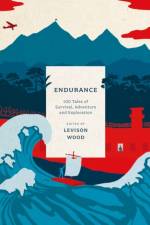
100 of the most astonishing stories of human survival, adventure and exploration, chosen by Levison Wood.We are always captivated by tales of courage and bravery, of world-firsts and death-defying experiences. In this anthology, explorer and bestselling author Levison Wood has gathered 100 of the most fascinating accounts of human endurance throughout history. From the heroism of Antarctic explorers to pioneering women in the Middle East, from record-breaking athletes to survivors of war and torture, this wide-ranging collection embraces both classics of the genre, as well as new and neglected voices. The extracts are organised around a range of themes; you will find those who sought out new frontiers, or who purposely tested their physical limits in full knowledge of the dangers or risks they might face, but also those who endured persecution and suffering, or were thrust into life or death situations yet defied the odds to survive.Endurance is packed full of you-couldn't-make-it-up true stories and adventure fiction classics, from the high seas to the poles, from inhospitable jungles and deserts to the unknown realms of space, through physical and mental despair to euphoric highs. Yet all of these extraordinary stories celebrate the enduring nature of the human spirit, and show the mental and physical determination it sometimes takes to achieve one's aims.This varied and compelling collection will take you on an adventure around the world, but also on an emotional journey exploring what it means to be human.Includes extracts about and by Ernest Shackleton, Robert Falcon Scott, Sir Edmund Hillary, Tenzing Norgay, Amelia Earhart, Marie Colvin, Jon Krakauer, Solomon Northup, Ella Maillart, Freya Stark, Ed Stafford, Aleksandr Solzhenitsyn, Aron Lee Ralston, María Elena Moyano, Gertrude Bell, Isabelle Eberhardt, Nellie Bly, Alex Honnold, Nelson Mandela, David Nott, Jules Verne, Neil Armstrong and Scott Kelly.
From the bestselling author of The Miniaturist. Jessie Burton's Hidden Treasure is the phenomenal page-turning story of two children whose lives collide when they find an ancient treasure with the power to return to them the most precious thing they have ever lost
There's this unspoken thing right? I guess this resistance to admitting that someone else's trauma can be traumatising.Ria is working with her band to complete a new album - songs charting the rise and fall of a recent relationship. But the more Ria progresses, the more she's drawn back to the darkness of her troubled past, until we're not sure where memory ends and reality begins.Manic Street Creature is a fresh and thrilling take on a modern love story from Olivier nominee (Standing at the Sky's Edge) Maimuna Memon. Love, lust, and late nights collide in a musical roller coaster, taking the audience through the euphoria and distress of two people dealing with their own and each other's mental health.From its multi-award winning run at the Edinburgh Fringe Festival in 2022, including The Scotsman Fringe First, the Mental Health Fringe Award and The Stage Edinburgh Award, this edition of Manic Street Creature is published to coincide with its Southwark Playhouse Borough run in October 2023.
How do I even start? It's a mental story. Ah know, Ah know, everyone says that - 'ma life's pure mental'.But honestly - a guy drowns, a man eats a live pigeon (though Ah might no have time for that), a woman gets set on fire, right before my eyes!But before we get tae aw that, Ah should tell you ma name. Right. So, ma name, is. . . Pip.Pip is just your average wee guy - happy with his lot and not much of a complainer (though you really wouldn't blame him if he was!). Regularly tortured and terrified, in what is, it must be said, a truly hard life, he still finds time to laugh, smile and dream of a brighter future, even though no-one expects anything of him. Or so he thinks. . .Nae Expectations is Gary McNair's fresh look at the Dickens classic, with a Glasgow tongue and a gallus spirit. Follow young Pip as he battles with monstrous adults, the class system and, most of all, his inner demons as he tries to work out who he is, what he wants to be and how to find his own way in the world.This edition was published to coincide with the world premiere at Glasgow's Tron Theatre, in October 2023.
A play that charts the notorious rise and fall of Enron and its founding partners Ken Lay and Jeffrey Skilling, who became 'the most vilified figure from the financial scandal of the century.
Up until now the domain of literary critics, counterfactual fiction and uchronic narratives are here analysed by ancient historians and classicists, shedding important new light on how cultures of the ancient world are perceived now and to what extent our experience and perception of the past is used to explore alternate presents and futures. Alternate history entices the imagination of the public by suggesting hypothetical scenarios that never occurred, characterised by one scholar as a latent tension between artificiality and authenticity. This interest has resulted in a growing number of publications that gauge the impact of what-if narratives, and this one is the first to give ancient historians the stage. Focusing in turn on history, politics, the arts and under-represented voices, the essays in this collection cover a wide variety of modern and contemporary fiction from Pauline Hopkins and L. Sprague De Camp to T. S. Chaudhry and Catherynne M. Valente. Chapters look into the question of chance vs determinism in the unfolding of historical events; the role individuals play in shaping a society or occasion; and the way art and literature symbolise important messages in counterfactual histories. They also show how uchronic narratives can take advantage of modern literary techniques to reveal new and relevant aspects of the past, including ensuring that marginalised and suppressed individuals in the ancient world, from women to slaves to minorities, can now take centre stage.
Welcome to Sea Glass Cove!Marine archaeologist Lauren Sunshine is used to life on the go. Her suitcase is always packed ready to explore the country's underwater heritage so when a shipwreck is found off the Dorset coast, she is thrilled to be leading the excavation team.Philippa Silver, 'Phil' to the folk of Sea Glass Cove, has devoted her life to the Museum by the Sea. But funding is tight, and despite subletting half of the museum to her best friend Jules's sea glass shop, she fears for the museum's future. Phil hopes the wreck discovery could bring more visitors - but there's a problem - the museum's too small to house its treasures. Thankfully, new friend Lauren seems as determined as she is to save the museum. But, when Phil's brother Archie catches Lauren's eye, she begins to wonder if she has more than one reason to be interested in life at Sea Glass Cove..
Robert Saler examines the small but influential "Death to the World" movement in US Eastern Orthodox Christianity. Presenting a case study in theological aesthetics, Saler demonstrates how a relatively small consumer phenomenon within US Eastern Orthodoxy sits at the centre of a variety of larger questions, including:- The relationship between formal ecclesial and para-church structures - The role of the Internet in modern religiosity - Consumer structures and patterns as constitutive of piety- How theology can help us understand art and vice versaUnderstanding "Death to the World" as an instance of lived religion tied to questions of identity, politics of religious purity, relationships to capitalism, and concerns over conspiracy theory helps us to see how studies of uniquely American Eastern Orthodox identity must address these broader cultural strands.
This summer, save the date for Renweneth Farm's very first wedding!As the seasons change, so do the lives of those who call the farm home. Bustling with activity in anticipation of a busy Spring, it's all go with Jess and Riley's wedding on the horizon and Renweneth Manor's restoration in full swing.But while the farm business flourishes, Jess and Ivy need to learn to navigate unforeseen challenges - financial worries, two disgruntled locals, and even a blast from Riley's past. In the midst of it all can Ivy juggle a new and unexpected arrival with her booming business, and can Jess keep track of her perfect day?Join Jess and the team at Renweneth Farm as they struggle to make the pieces of the intricate puzzle that bonds them together, fall neatly into place. A story that celebrates love, life, and the way friends become family in this growing community.Perfect for fans of Philippa Ashley, Sue Moorcroft and Holly Martin.
Deleuzo-Guattarian philosophy provides crucial insights for assessing the post-neoliberal era in this cutting-edge volume of anti-capitalist scholarship. It maps the critical new assemblages emerging out of decades of neoliberalism to diagnose contemporary and future discontent. Working alongside other forms of inquiry into the post-neoliberal era, the volume proposes a novel combination of ethics and Deleuzo-Guattarian philosophy to understand the post-neoliberal era. Contributors argue that current critiques of neoliberalism ignore the determining role of colonialism and the accelerated threat of climate breakdown. They highlight the precariousness of our planetary existence and propose new forms of inquiry into Deleuzo-Guattarian becoming. Deleuze, Guattari and the Schizoanalysis of Post-Neoliberalism considers new modes of capitalism, societies built on exhaustion, digital power, education, agroforestry, as well as literary texts that characterise the post-neoliberal era. Alongside these critical positions, the volume uses an ethical framework to challenge dialectical divisions in neoliberal critique. In the process, the essays remap the antagonisms, discontents and tensions of current post-neoliberal becoming.
The Environmental Uncanny argues that the increasing destitution of our world is the result of a certain forgetfulness: we have forgotten that the basis of our knowledge is not calculative reason, but our participation in the natural world. The modern built environment is exemplary of this forgetfulness, and induces an uncanniness that can help us to understand the nature of our environmental crisis. This book offers a unique interdisciplinary perspective on the global environmental crisis. Ranging from traditional phenomenology, including substantial discussion of both Merleau-Ponty and Heidegger, to philosophy of biology, to architectural and urban design theory, to landscape photography, it makes illuminating connections to paint a multifaceted picture. Tracing the root causes of dwindling biodiversity, deforestation and suburban sprawl, we can find how might we mark the path back toward a mode of rich inhabitation in a contemporary age. In charting out how it is that we are losing our world, Irwin offers a thought as to how we might regain it.
Combining perspectives from both continental and analytic philosophy, this timely volume explores how imagination today both shapes and is shaped by technology, art and ethics. Imagination is one of the most significant and broadly examined concepts in contemporary philosophy and is frequently understood as a basic human faculty that enables complex activities. This book shows, however, that imagination is more than a mere enabler. Whilst imagination shapes our experiences, it is at the same time shaped by our environments. Some of the most creative manifestations of imagination are the result of its two-way interaction with art or technology, or both. In short, imagination co-shapes us. Beyond the traditional perspectives of Kant and Heidegger, The Philosophy of Imagination: Technology, Art and Ethics examines our dynamic relationship with imagination, from contemporary technological advancements such as AI that transform the whole ecosystem to imagination in the context of videogames and literary fiction. Analysing societal imagination, it addresses the relationship between the racial imaginary and white ignorance, as well as the effects that societal mechanisms such as lockdowns can have on our imagination. Taking its cue from the here and now, this volume brings together leading international scholars to investigate how the concept of co-shaping allows us to see imagination and its crucial role in society in new and productive ways.
Inspired by Joanne's experiences of her mother's bipolar diagnosis, and informed by a series of workshops with other affected families and individuals, thisplay presents a compelling and very human insight into the charms and challenges of a fascinating and commonly misunderstood condition.Originally commissioned by Belltable: Connect, development of In Two Minds was supported by The Arts Council, Limerick City and County Council, Fishamble's New Play Clinic, Community Foundation Ireland and The JP McManus Benevolent Fund.This edition was published to coincide with the run at the Dublin Theatre Festival in October 2023.
By bringing together fundamental rights, economic law, and recent legislation in the areas of digital platforms, data, and AI, this open access book gives a comprehensive picture of the state of play in technology regulation in the EU.Risks of regulatory fragmentation are on the rise with ever more legislative instruments becoming applicable to the technology sector. This book explores the prospects and challenges of ensuring legal consistency in a period of transition in which new legislation is being implemented and the interpretation of existing laws is being challenged by the use of data, AI, and platform technologies.The book analyses the legal consistency of technology regulation from three perspectives: (1) the relationship between the EU and the Council of Europe; (2) the relationship among EU regulatory frameworks; and (3) the relationship between EU and Member State law. By covering issues of fundamental rights protection, the free flow of data, consumer protection, competition, and innovation, the book gives a unique and extensive outlook into the state of the art in academic and policy discussions. Unravelling the relationship between legal fields, the book is an essential resource for academics, practitioners and students wishing to understand the increasingly complex landscape of technology regulation in Europe.The ebook editions of this book are available open access under a CC BY-NC-ND 4.0 licence on bloomsburycollections.com.
Challenging the tired old stereotypes of Scandinavian design, these essays look at design in Denmark, Norway and Sweden and assess the different roles that Finland and the wider Nordic region had in forming an image of Scandinavian design throughout the world. By looking at the legacy of Nordic design and its global impact, editors Rachel Gotlieb and Astrid Skjerven shed light on the development of national and regional design identities and their historical associations. Authors explore the transnational circulation of ideas throughout the later 20th century and examine the influences on design practices, production and consumerism. They look at how different countries negotiated and promoted Nordic branding and ideology, and offer new perspectives on design in relation to sustainability, changing economies and indigenous traditions. A range of leading international scholars look at the popularity of Nordic style in Soviet material culture, the influence on jewellery design in post-war Britain, Japanese interpretations of furniture and the shared philosophies of Japan and Finland. They investigate the particularly extensive use of natural materials and associations with sustainability in the USA, Canada and Europe. Drawing from a wealth of archival material and interviews with designers, makers and other stakeholders, this book reveals a lesser-known history of cross-cultural collaborations, exhibition production and tensions between mainstream and indigenous design in Scandinavia. Transnational Discourses in Nordic Design also provides an insight into some of the authors' own design practices and reveals the challenges facing Nordic designers today.
'Give this book to everyone you know - NOW!' Miriam Margolyes'The wonderful Barry Cryer' Stephen Fry'He was so funny and such fun and here he is again in all his rib-tickling glory' Gyles Brandreth'I'm insanely happy that the life of jokester Barry Cryer is to be lovingly detailed by his son' Emma Thompson'I don't know how long I've got left . I don't even buy green bananas anymore' When the legendary comedian Barry Cryer died in January 2022, there was a vast outpouring of grief, appreciation and anecdotes - from the general public and fellow comics alike. Now, his son, Bob, is doing what Barry's humility did not allow: revealing the story of the man behind the jokes.This book is an ode to both Barry's incredible life and to the lessons he so generously imparted on the art of comedy during his sixty-year career. Stretching from the music halls of the fifties, via working alongside everyone from Morecambe and Wise to Kenny Everett and David Frost, and into more recent times as a stalwart of Radio 4's long-running I'm Sorry I Haven't a Clue, this book is a hugely entertaining insight into the life of a true comedy legend. Bob also shares a range of exclusive material unique to the Cryer family - including family photos, memorabilia, oral recordings, interviews with friends and colleagues (among them Michael Palin and Eric Idle) - as well as Bob's own personal reflections on living and working with a comedy icon. Laced with candour, warmth and filled with his trademark humour, Barry Cryer: Same Time Tomorrow? is not just a wonderfully witty and affectionate biography of a father by a son, but a heartwarming insight into a vanishing era of comedy.
Daniel L. Christopher-Smith focuses on the life and efforts of Keir Hardie, one of the founders of the UK Labour Party and one of the foremost figureheads of trade unionism. Drawing upon the work of two contemporary and significant American theorists - Herbert Guttman's classic essay on "Working Class Religion" and Michael Gold's call for "Proletarian Literature" - Christopher-Smith marries British and American historical and theoretical debates to argue that Hardie's work is surely the quintessential example of a "proletarian exegesis" of the Bible.Beginning with a summary of the major events in Hardie's life, Christopher-Smith draws both upon existing biographies and more recent historical discussions that question assumption of British social history. He then reviews previous debates upon the influence of Hardie's own Christian faith upon his journalist output, and assesses three Christian Socialists whose work was advertised and reviewed by Hardie himself: Dennis Hird, Morrison Davidson, and Carolyn Martyn. Christopher-Smith proceeds to Hardie's copious writings, both for the The Labour Leader and separately published lectures, pamphlets, and somewhat longer works of autobiography and comment. Highlighting Hardie's tendency to cite favorite texts (heavily from the Gospels and James, but also some notable Old Testament discussions), Christopher-Smith proves Hardie's serious discussion of these texts beyond mere political rhetoric; concluding by comparing a selection of Hardie's favorite Biblical arguments with contemporary research in Biblical Studies about these same passages, evaluating the problems and possibilities of proposing a "Proletarian Exegesis".
Abonner på vårt nyhetsbrev og få rabatter og inspirasjon til din neste leseopplevelse.
Ved å abonnere godtar du vår personvernerklæring.