





Gjør som tusenvis av andre bokelskere
Abonner på vårt nyhetsbrev og få rabatter og inspirasjon til din neste leseopplevelse.
Ved å abonnere godtar du vår personvernerklæring.Du kan når som helst melde deg av våre nyhetsbrev.

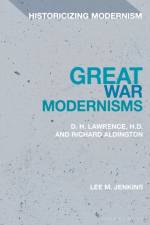
Taking 44 Mecklenburgh Square as the focal point and springboard for a critical group study of D.H. Lawrence, H.D. and Richard Aldington, this book offers a fresh perspective on the relationship of modernist biofiction and poetry to the literature of the First World War. A group that Perdita Schaffner described as 'another Bloomsbury set', the Mecklenburgh Square writers, like the Bloomsbury Group proper, 'lived in squares' and 'loved in triangles', in Dorothy Parker's famous formulation. Geographically adjacent, these sets intersected socially and, at points, in their aesthetics: both practiced innovative forms of what may broadly be defined as 'life writing'. But, demarcating the Mecklenburgh Square writers from the Bloomsbury Set, the former had its origins in the transatlantic avant-garde: Lawrence. H.D., Aldington (and John Cournos) were all associated with Imagism, the poetic movement which instantiated Anglo-American modernism. Considered as a pro-tem collective, these four poets, all of whom were also novelists and translators, contest the binaries that still obtain between modernist and First World War writing. This group study of Lawrence, H.D., Aldington and Cournos tracks the transition of Imagism from a pre-war mode to a war poetics which includes but is not confined to the trench lyric and it traces, in the transtextual relations between the Mecklenburgh Square novels, the traumatic imprint of the war on modernist life writing.
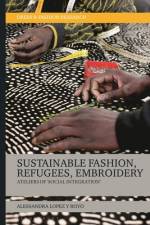
Sustainable Fashion, Migrants, Embroidery: Ateliers of 'Social Integration' tells of community-led 'solidarity ateliers' engaged in sewing and embroidery activities which, in the Global North and Global South, are providing a vital alternative to neoliberal and neo-colonial fashion paradigms.On encountering several ateliers solidaires/sartorie sociali during her immersive fieldwork, for which she travelled to Morocco, Southern Italy, and Turkey, and contrasting her findings with her knowledge of parallel and analogous initiatives in London, Alessandra Lopez y Royo suggests that despite their different outlook and approach these ateliers can be inscribed within an ever-growing economy of solidarity and sharing.With a uniquely combined focus on sustainability, fashion and migration, Lopez y Royo examines how the ateliers foreground a powerful social inclusion agenda, encouraging migrants (and refugees) to collaborate, exchange knowledge, and foster communities on a level playing field with locals.Questioning widely accepted notions of 'empowerment' and 'social integration', and drawing on her background in archaeology and material culture studies, Lopez y Royo uses micro-studies to illuminate a broader path to a more inclusive, sustainable, and socially conscious industry, presenting a fresh perspective on repurposing and upcycling.In a world grappling with the need to shift away from fast fashion's wasteful practices, this thought-provoking exploration shows how slow-growth 'solidarity ateliers' can challenge the widely accepted notions of both 'fashion' and 'social integration'.
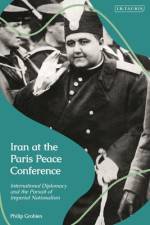
The end of the Qajar era in Iran, despite the accepted narrative of decline, was in fact an occasion of modern and forward-thinking nationalism. Iran developed an imperial nationalism, which was informed by its experiences under British and Russian hegemony and the absorption of Western modern ideas and practices, and which now looked towards a future as a sovereign and independent state within the foundational framework of its previous Empire. Emboldened by post-WWI notions of self-determination and the development of international institutions devoted to peace, Iran spearheaded its new-found diplomacy by sending a delegation to the peace talks in Paris in 1919. This book shows how Iran's immediate post-war diplomacy came about, the conduct of Iran's delegation to Paris, frustrations with the Anglo-Persian Agreement, and ultimately how Iran's progress became the victim of British imperialism. Throwing a spotlight on an under-researched period of Iranian history, it will be of interest to readers of Iranian history, and those interested in the Paris Peace Conference of 1919.
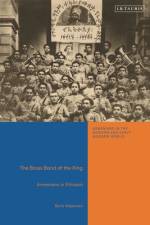
In 1924, the crown prince and future emperor of Ethiopia, Ras Täfäri, on a visit to Jerusalem, called on forty Armenian orphans who had survived the genocide of 1915-1916 to form his empire's royal brass band. The conductor, who was also Armenian, composed the first official anthem of the Ethiopian state.Drawing on this highly symbolic event, and following the history of the small Armenian community in Ethiopia, in this book Boris Adjemian shows how it operated on the margins of political society, hiding in its interstices, preferring intimacy and discreet loyalty to the glitter of open politics. The astonishing role of the Armenians in their host country was embodied in the friendship that the kings and queens of Ethiopia extended to them, a theme that is echoed in the life stories collected from their descendants.Bringing to light the political and cultural importance of a community that has long been ignored and has almost vanished, this study draws on the collective memory of Armenian immigration and the centuries-long history of proximity between the Armenian and Ethiopian Churches. The author argues for a sedentary approach to the diaspora, for a socio-history of this collective rootedness, which dates back to the 19th century and builds on historical representations of otherness from the early modern period up to the colonial era. Highlighting stateless immigrants halfway between the national and the foreign, this history reveals the agency of stateless immigrants and their descendants, their ability to play with identities and undermine assigned belongings.The Brass Band of the King is an original exploration of the social making of nationhood and foreignness in Africa and elsewhere.
This volume examines the use of Paul's writing within the work of ante-Nicene apologetic writers. It takes apologetics as a broad genre in which many early Christian writers participated, offering rhetorical defenses for emerging aspects of doctrine, rooted in understanding of the scriptures, and often specifically the writings of Paul. The volume interacts with the writings of many significant 'apologetic' writers, including: Melito of Sardis, Clement of Alexandria, Tatian, Tertullian, Hippolytus and Cyprian. The chapters examine how these early Christian writers used the letters of Paul to develop their own philosophical ideas and defenses of aspects of the emerging Christian faith. The internationally renowned contributors have all been specially commissioned for this volume, and an afterword by Todd D. Still considers the question of whether or not Paul was an 'apologist' himself.
The artistic traditions of four major Christian denominations are examined and outlined in detail in this groundbreaking volume that presents the first synthesis of the artistic contributions of those traditions. Diane Apostolos-Cappadona has curated a volume that presents four single-authored contributions in one place, broadening the study of Christian art beyond Roman Catholic, Orthodox and 'protestant' traditions to consider these more recent Christian approaches in close and expert detail. Rachel Epp Buller examines art in the Mennonite tradition, Mormon art is considered by Heather Belnap, Quaker contributions by Rowena Loverance and Swedenborgian art by Diane Apostolos-Cappadona. Each writer presents elements of the theology of their chosen tradition through the prism of the artists and artistic works that they have selected. Alongside mainstream artistic figures such as William Blake less known figures come to the fore and the volume features color illustrations that support and underline the theological and artistic themes presented in each section of the book. Together these studies of artistic presentations in these four traditions will be a much need means of filling a gap in the study of Christian art.
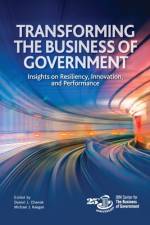
Governments face increasingly serious, seemingly intractable management challenges. This book brings together scholars, thought leaders, and government executives to address the future of government operations, and provide government leaders with practical, actionable insights on how best to manage and lead through uncertain and disruptive times.
Governments face increasingly serious, seemingly intractable management challenges. This book brings together scholars, thought leaders, and government executives to address the future of government operations, and provide government leaders with practical, actionable insights on how best to manage and lead through uncertain and disruptive times.
The Promise of Women¿s Boxing details the exciting period from the first ever inclusion of women¿s boxing in the 2012 Olympics through the true ¿million-dollar baby¿ women¿s super-fights of 2022 and beyond. Rich in content, the stories that emerge focus on boxing stars, important battles, and the challenges women in boxing still face today.
**Get ready to meet Perla - the feisty, magical rescue dog who will steal your heart!**From #1 international bestselling author Isabel Allende and award winning illustrator Sandy Rodriguez comes the first in a series of picture books about a dog called Perla and the family who love her! Meet Perla. She's a small dog with a BIG personality and a very impressive roar. When she's adopted by the Ricos, a Mexican-American family in search of a guard dog, Perla quickly makes friends with seven-year old Nico Rico - who needs someone to help him deal with the school bullies. Soon, Perla has changed the lives of everyone in the Rico family ... and found a place in their hearts forever.
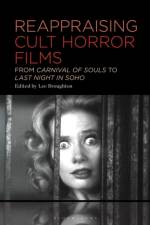
Identifies key - and in some cases previously overlooked - cult horror films from around the world and reappraises them by approaching and interrogating them in new ways.New productions in the horror genre occupy a prominent space within the cinematic landscape of the 21st century, but the genre's back catalogue of older films refuses to be consigned to the motion picture graveyard just yet. Interest in older horror films remains high, and an ever-increasing number of these films have enjoyed an afterlife as cult movies thanks to regular film festival screenings, television broadcasts and home video releases. Similarly, academic interest in the horror genre has remained high. The frameworks applied by contributors to the collection include genre studies, narrative theory, socio-political readings, aspects of cultural studies, gendered readings, archival research, fan culture work, interviews with filmmakers, aspects of film historiography, spatial theory and cult film theory. Covering a corpus of films that ranges from recognised cult horror classics such as The Wicker Man, The Shining and Candyman to more obscure films like Daughters of Darkness, The Legend of the 7 Golden Vampires, Shivers, Howling III: The Marsupials and Inside, Broughton has curated an international selection of case studies that show the diverse nature of the cult horror subgenre. Be they star-laden, stylish, violent, bizarre or simply little heard-of obscurities, this book offers a multitude of new critical insights into a truly eclectic selection of cult horror films.
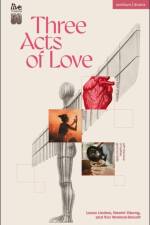
Passion. Obsession. Acceptance. Betrayal. Three ground-breaking female playwrights have cooked up a feast, with a trio of short plays with music that explore love in all its glorious, sticky complexity. From the boozy warmth of the social club to the endless labyrinth of the internet, this is a show about the communities we form, the care that we show each other and the love that we hope never tears us apart.The Start of Space by Laura Lindow: A visiting expert lecturing on the secrets of the heart has a dark and unexpected truth of their own.fangirl, or the justification of limerence by Naomi Obeng: An obsessive fan poses as her musical idol online and becomes lost in a maze of love and revenge.with the love of neither god nor state by Vici Wreford-Sinnott: A young woman runs away from a world that doesn't understand her and finds shelter in a local social club. But will they have the heart to truly let her in?This edition was published to coincide with the world premiere at Newcastle's Live Theatre, in November 2023.
He talks about going to Switzerland, to that place where you pay them to kill you. And I say "go! It'll do you good. Broaden your horizons.you've never been abroad!After sixty years of marriage, happily settled into their retirement village in Yorkshire, Jack and Florence have elevated bickering almost to the status of high art. That said, they're otherwise getting along fine with the support of a cousin and the hilarious interventions of the man known locally as 'Rhubarb Eddie'. But will their anxious son, shuttling between London and LA, and their errant daughter, contemplating a move to Australia, leave them to live out their days in peace? Richard Bean's uproarious new comedy tackles the prickly problem of dealing with ageing parents who just don't want to be dealt with. This edition was published to coincide the world premiere at London's Hampstead Theatre, in October, 2023.
Is conflict inherent to the politics of borders? Recent global events, erupting from national, religious, class, racial and gender boundaries would suggest it is. From the inhumanity of post-Brexit British immigration policy to the violent suppression of women's freedom in Iran, to Russia's territorial invasion of Ukraine, and most immediately to the violent conflagration engulfing Palestine, border hostilities seem everywhere characterised by fearful and toxic intolerance of what is deemed other.This book examines the writing of award-winning European novelists to suggest an alternative perspective, one that redresses time-sanctioned hierarchies of mind over body, of ideals over physical reality. It explores novelistic representations of power, war, sacrifice, heroism, national history and identity, all issues more conventionally viewed within a male consensus. The fiction offers a cultural and imaginative response to border conflicts of all kinds, ethical, bodily, religious, and geographical, often drawing upon the writers' own personal experience of threatening divisions. Examining works by Virginia Woolf, Jenny Erpenbeck, Olga Tokarczuk, Herta Müller, Anna Burns, Chika Unigwe, Maylis de Kerangal, Magda Szabó, Elena Ferranti, Alki Zei, Elif Shafak, and Oksana Zabuzhko, it uses an integrated interdisciplinary approach to combine literary readings with detailed historical and political understanding of cultural context. Coming from many different cultures and histories, these writers speak a common condemnation of all hierarchies of worth and of exceptionalist identities whether sanctified by religion, nature, or tradition. Morris shows how their stories, read here in translation, also articulate a strikingly unified vision of a radical ecological understanding of human relations based on physical continuity and co-existence rather than borders dividing an idealised 'us' from a denigrated 'them'.
Tracing the genre through fiction, visual art, film and videogames from the 1980s to the present, this book offers a comprehensive exploration of the intersection between neo-Victorianism, urban spaces and Steampunk. Characterised by its interplay between past and present and its anachronistic retro-speculation, Neo-Victorian-infused Steampunk remixes modern collective memory to produce a re-imagined vision of Victorian London. Investigating how Steampunk's re-calibrated Londons both source from and subvert Victorian discourse about the city, Steampunk London offers a deeper understanding of how a popular cultural memory of the Victorian past is shaped and transmitted in light of present-day identity politics. Covering key themes including retrofuturism, gender and sexuality, colonialism and postcolonialism, it considers such ideas as how early Steampunk synthesizes Victorian urban ethnography; how Victorian urban Gothic shapes shared transmedia memory to challenge reactionary, nostalgic meta-narratives; how Steampunk video games mobilize urban space as an immersive storytelling device with cities open to play; and how Steampunk interprets the modern metropolis as an opportunity for feminist and queer agency. Through examination of Victorian-era writers from Charles Dickens to Arthur Conan Doyle, the book digs into works of fiction and media alike, looking at The Difference Engine, Soulless, and The League of Extraordinary Gentlemen, From Hell, Guy Ritchie's Sherlock Holmes, cyberpunk classic Blade Runner, and Assassin's Creed: Syndicate and The Order 1886. An important intervention in the study of steampunk, Helena Esser demonstrates how the works explored invite participatory consumption and considers the genre's potential- and failures- to interrogate and challenge our relationship with the Victorian past.
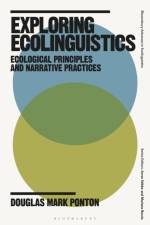
Contributing to the rapidly emerging field of Ecolinguistics, this book explores the role of language in mediating and determining our relationship with nature and in shaping attitudes and social practices in environmental areas. In doing so, it maps out research pathways for informed ecological debate that concerns both the planet and the discipline.The book centres on two case studies. The first is a nature reserve near Siracusa in Sicily run by Fabio Cilea, where flamingos have begun to breed despite the devastation of the nearby coastline by one of the largest petro-chemical plants in Europe. The second is High Ash farm, a small farm near Norwich. Farmer, Chris Skinner, is a passionate naturalist who for thirty years has presented a programme on BBC Radio Norfolk. Through analysing the discourse of both Skinner and Cilea, the book explores what it can reveal about the underlying environmental visions that sustain them. Together with the discourse of other engaged ecological figures, a picture emerges of the connections that exist between our beliefs/attitudes, language and the natural world.Presenting a framework for analysing environmental discourse from a primarily positivist standpoint, the book draws attention to the discourses that underline social practices felt to be useful, necessary and beneficial in these moments of environmental crisis. Although these contexts are European, the methodologies applied, as well as the ecological and linguistic issues dealt with, are universal, clarifying the relationship between social practices and language itself, viewed in the book as an ecosystem that is also in need of loving attention.
An outrageously funny, heartbreaking read - when Ruby finds out she has cancer on the brink of her 50th birthday, she decides to start living instead of complying...Ruby has always been the generous mediator among her friends, family and colleagues, which is why they have all turned up to celebrate her 50th birthday. But after a few too many glasses of champers, Ruby's speech doesn't exactly go to plan. Instead of delivering the witty and warm words her guests are expecting, Ruby takes her moment in the spotlight to reveal what she really thinks of every one of them. She also accuses her husband, Harry, of having an affair and lambasts her mother for a lifetime of playing her three daughters against each other. It's blisteringly brutal.As the stunned gathering gawks at Ruby, the birthday girl concludes her bravura monologue with the throwaway comment that she has terminal cancer. She has cashed in her life savings and plans on taking her two sisters cruising into the sunset for a dose of Husband Replacement Therapy. But is Ruby being courageous, or ruthlessly selfish? Praise for Kathy Lette:?Fabulous, fast-paced, funny & unapologetically female. Nobody does it better.' DEBORAH FRANCES-WHITE, THE GUILTY FEMINIST?Deliciously rude and darkly funny, but with compassion and humanity at its heart. Read with relish.' NICOLE KIDMAN?Kathy Lette can turn from raunchy farce to the most tender emotion in a trice.' STEPHEN FRY
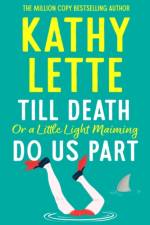
One dead husband. Three grieving widows... A darkly funny revenge caper from the hilarious and heartfelt Kathy Lette. When she hears a man has been killed by a Great White, Gwen races to the beach only to find that all that remains of her husband is his swimming cap and a piece of torn, blood-stained wetsuit. Her grief is soon interrupted by Tish, screaming for information about the accident. When Gwen reassures her that it's her husband, Jason Riley, whoâEUR(TM)s perished, Tish's response is earth-shattering for them both: Jason was her husband too. The women's mutual animosity is not assuaged when they learn that Jason recently sent all his âEUR" make that their âEUR" money to a mysterious âEUR¿business partnerâEUR(TM) in Egypt called Skye. But when they fly to Cairo to confront her, they find another grieving widow whose life-savings have gone missing... As this double-crossed threesome cross continents in their search for truth and retribution, they start to realise they're embarking on a journey of self-discovery, renewal and friendship too. Praise for Kathy Lette:âEUR¿Fabulous, fast-paced, funny & unapologetically female. Nobody does it better.âEUR(TM) DEBORAH FRANCES-WHITE, THE GUILTY FEMINISTâEUR¿Deliciously rude and darkly funny, but with compassion and humanity at its heart. Read with relish.âEUR(TM) NICOLE KIDMANâEUR¿Kathy Lette can turn from raunchy farce to the most tender emotion in a trice.âEUR(TM) STEPHEN FRY
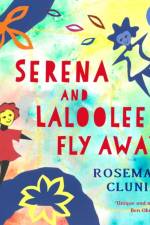
A beautiful gift book and an original, modern fairy tale, told in sparkling prose and striking colour and collage. Serena wishes she could fly. One day, she makes a pair of wings that come to life by the enchantment of a precious blue stone. Soon Serena soars through the sky, only she travels too far and too fast. When she befriends a little girl called Laloolee in a magical floating world, Serena learns how to control her wings - and how to find her way back home again.
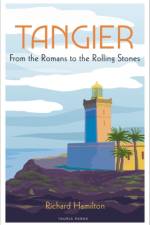
Tangier is perennially fascinating and experiencing a major renaissance
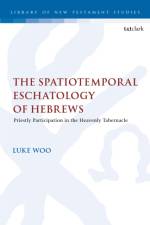
There are two coexisting realities classified under New Testament eschatology: the temporal and spatial. While much scholarly attention has focused on the temporal, Luke Woo argues that the spatial aspect is either neglected or relegated to Platonic or cosmological categories. Woo thus seeks to provide a holistic understanding, by investigating these realities for believers under the heavenly tabernacle motif in the Epistle to the Hebrews.Woo posits that the author of Hebrews presents the heavenly tabernacle and all its high priestly activity in order to eschatologically situate, orient, and ground believers; thus enabling believers to actualize their heavenly, priestly identity by serving as priests on earth. Woo uses Edward Soja's Tripartite Critical Spatiality to analyze the heavenly tabernacle's Firstspace, Secondspace, and Thirdspace features found in Hebrews 4:14; 8:1-5; 9:1-14. He suggests that Christ, in his resurrection and ascension, enters an actualized, heavenly tabernacle, which allows believers to spiritually occupy that sanctuary space in the presence of God, establishing a spatial orientation for believers who can identify as heavenly priests and be motivated to serve as such as they live on earth.
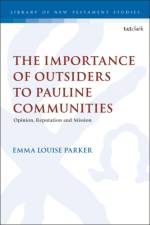
This book argues that, despite Paul's often dramatic and critical descriptions of non-Christians, his letters reveal a deep concern for the presence of outsiders and for their opinion of Christians. Parker suggests that outsiders are enormously important to Paul: they determine whether Christian communities dwindle or thrive, while also playing a key role in helping such communities to understand and shape their purpose as missional disciples, develop their thinking and practice around normal daily events and relationships - and even shape how they understand God. Parker offers a careful exegesis of the main texts within the Pauline corpus, revealing a sensitivity to the outsider; including 1 Thessalonians, Romans, 1 Corinthians and the Pastoral Epistles. By using Social Identity Theory she explores key concepts of group boundaries, identity and inter-group relations, highlighting a theme which is significant in Paul's own thought: the importance of similarity between groups. Whilst not denying the counter-cultural identity of the new Christian communities, Parker concludes that Paul reveals the areas of overlap between insiders and outsiders, since these areas not only create opportunities for positive opinions and relationships but also point to a greater understanding of God.
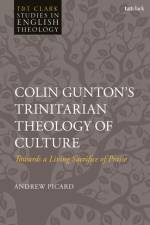
Whilst upholding some of the criticisms of Colin Gunton's work, this incisive book argues that there is a Hauptbriefe in Gunton reception that assumes his early classic works, The One, the Three and the Many and The Promise of Trinitarian Theology (1st ed), are definitive of his project and fail to engage adequately with the progressions in Gunton's later thought. Instead, this book offers a fresh reading of Gunton by giving greater prominence to his later writings, which are centred in the mediation of the Son and the Spirit in creation.Andrew Picard argues that Gunton's trinitarian theology of culture emerges from his later trinitarian theology of mediation, creation, Christology, pneumatology, and ecclesiology. Exploring these doctrinal foci enables an understanding of Gunton's account of faithful human culture as embodied worship; a living sacrifice of praise which contributes to the divine redemption and perfection of creation. It is the church's particular calling to embody such praise through its visible life in community. The study concludes by intersecting Gunton's theology with the social sciences to critique ableism and consider the politics of the church's belonging in community.
Abonner på vårt nyhetsbrev og få rabatter og inspirasjon til din neste leseopplevelse.
Ved å abonnere godtar du vår personvernerklæring.