
























Gjør som tusenvis av andre bokelskere
Abonner på vårt nyhetsbrev og få rabatter og inspirasjon til din neste leseopplevelse.
Ved å abonnere godtar du vår personvernerklæring.Du kan når som helst melde deg av våre nyhetsbrev.

This book explores the complexity and depths of our digital world by providing a selection of analyses and discussions from the 16th annual international conference on Computers, Privacy and Data Protection (CPDP): Ideas that Drive Our Digital World. The first half of the book focuses on issues related to the GDPR and data. These chapters provide a critical analysis of the 5-year history of the complex GDPR enforcement system; on codes of conduct as a potential co-regulation instrument for the market; an interdisciplinary approach to privacy assessment on synthetic data; the ethical implications of secondary use of publicly available personal data; and automating technologies and GDPR compliance.The second half of the book shifts focus to novel issues and ideas that drive our digital world. The chapters offer analyses on social and environmental sustainability of smart cities; reconstructing states as information platforms; stakeholder identification using the example of video-based Active and Assisted Living (AAL); and a human-centred approach to dark patterns.This interdisciplinary book invites readers to an intellectual journey into a wide range of issues and cutting-edge ideas to tackle our ever-evolving digital landscape.
A delightful new small-format collection of Carry Akroyd's birds of the month linocut artworks
The essential guide for organizations to understand how toxic cultures form, identify the warning signs, and take effective action to address and prevent them.
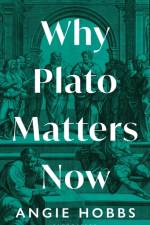
In this most persuasive book, Professor Hobbs shows how Plato can help us retain sanity and stop us going mad. To Plato the soul is non-material: it is beyond time and space and therefore eternal. But in our society which is reductionist and at war with itself, the modern man is more than ever in search of a soul, of beauty, truth and goodness. In so many walks of life, not least in politics, these elements seem to have disappeared. Plato's Republic explores many concerns relevant to the modern world: law, commerce, happiness and self-completion. Looking at the intersection between the ancient and the modern, Professor Hobbs examines women's rights, healthcare, justice, happiness, elitism, death, love, truth and reality using Plato's wisdom and key works. Above all, as Plato shows in the allegory of the cave, we have lost a sense of the distinction between things as they are and things as they appear to be. Never has the wisdom of the ancients been so necessary.
A Cultural History of Objects in the Age of Enlightenment covers the period 1600 to 1760, a time marked by the movement of people, ideas and goods. The objects explored in this volume -from scientific instrumentation and Baroque paintings to slave ships and shackles -encapsulate the contradictory impulses of the age. The entwined forces of capitalism and colonialism created new patterns of consumption, facilitated by innovations in maritime transport, new forms of exchange relations, and the exploitation of non-Western peoples and lands. The world of objects in the Enlightenment reveal a Western material culture profoundly shaped by global encounters. The 6 volume set of the Cultural History of Objects examines how objects have been created, used, interpreted and set loose in the world over the last 2500 years. Over this time, the West has developed particular attitudes to the material world, at the centre of which is the idea of the object. The themes covered in each volume are objecthood; technology; economic objects; everyday objects; art; architecture; bodily objects; object worlds. Audrey Horning is Professor at William & Mary, USA, and at Queen's University Belfast, UK. Volume 4 in the Cultural History of Objects set. General Editors: Dan Hicks and William Whyte
A Cultural History of Objects in the Renaissance covers the period 1400 to 1600. The Renaissance was a cultural movement, a time of re-awakening when classical knowledge was rediscovered, leading to an efflorescence in philosophy, art, and literature. The period fostered an emerging sense of individualism across European cultures. This sense was expressed through a fascination with materiality and the natural world, and a growing attachment to things. The 6 volume set of the Cultural History of Objects examines how objects have been created, used, interpreted and set loose in the world over the last 2500 years. Over this time, the West has developed particular attitudes to the material world, at the centre of which is the idea of the object. The themes covered in each volume are objecthood; technology; economic objects; everyday objects; art; architecture; bodily objects; object worlds. James Symonds is Professor at the University of Amsterdam, The Netherlands. Volume 3 in the Cultural History of Objects set. General Editors: Dan Hicks and William Whyte
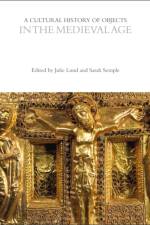
A Cultural History of Objects in the Medieval Age covers the period 500 to 1400, examining the creation, use and understanding of human-made objects and their consequences and impacts. The power and agency of objects significantly evolved over this time. Exploring objects and artefacts within art, technology, and everyday life, the volume challenges our understanding of both life worlds and object worlds in medieval society. The 6 volume set of the Cultural History of Objects examines how objects have been created, used, interpreted and set loose in the world over the last 2500 years. Over this time, the West has developed particular attitudes to the material world, at the centre of which is the idea of the object. The themes covered in each volume are objecthood; technology; economic objects; everyday objects; art; architecture; bodily objects; object worlds. Julie Lund is Professor at the University of Oslo, Norway. Sarah Semple is Professor at Durham University, UK. Volume 2 in the Cultural History of Objects set. General Editors: Dan Hicks and William Whyte
The Arden Research Handbook of Shakespeare and Adaptation explores the dynamics of adapted Shakespeare across a range of literary genres and new media forms. This comprehensive reference and research resource maps the field of Shakespeare adaptation studies, identifying theories of adaptation, their application in practice and the methodologies that underpin them. It investigates current research and points towards future lines of enquiry for students, researchers and creative practitioners of Shakespeare adaptation. The opening section on research methods and problems considers definitions and theories of Shakespeare adaptation and emphasises how Shakespeare is both adaptor and adapted. A central section develops these theoretical concerns through a series of case studies that move across a range of genres, media forms and cultures to ask not only how Shakespeare is variously transfigured, hybridised and valorised through adaptational play, but also how adaptations produce interpretive communities, and within these potentially new literacies, modes of engagement and sensory pleasures. The volume's third section provides the reader with uniquely detailed insights into creative adaptation, with writers and practice-based researchers reflecting on their close collaborations with Shakespeare's works as an aesthetic, ethical and political encounter. The Handbook further establishes the conceptual parameters of the field through detailed, practical resources that will aid the specialist and non-specialist reader alike, including a guide to research resources and an annotated bibliography.
A Cultural History of Color in the Age of Enlightenment covers the period 1650 to 1800. From the Baroque to the Neo-classical, color transformed art, architecture, ceramics, jewelry, and glass. Newton, using a prism, demonstrated the seven separate hues, which encouraged the development of color wheels and tables, and the increased standardization of color names. Technological advances in color printing resulted in superb maps and anatomical and botanical images. Identity and wealth were signalled with color, in uniforms, flags, and fashion. And the growth of empires, trade, and slavery encouraged new ideas about color. Color shapes an individual's experience of the world and also how society gives particular spaces, objects, and moments meaning. The 6 volume set of the Cultural History of Color examines how color has been created, traded, used, and interpreted over the last 5000 years. The themes covered in each volume are color philosophy and science; color technology and trade; power and identity; religion and ritual; body and clothing; language and psychology; literature and the performing arts; art; architecture and interiors; and artefacts. Carole P. Biggam is Honorary Senior Research Fellow in English Language and Linguistics at the University of Glasgow, U.K. Kirsten Wolf is Professor of Old Norse and Scandinavian Linguistics at the University of Wisconsin-Madison, USA.Volume 4 in the Cultural History of Color set. General Editors: Carole P. Biggam and Kirsten Wolf
A Cultural History of Color in the Medieval Age covers the period 500 to 1400. The medieval age saw an extraordinary burst of color - from illuminated manuscripts and polychrome sculpture to architecture and interiors, and from enamelled and jewelled metalwork to colored glass and the exquisite decoration of artefacts. Color was used to denote affiliation in heraldry and social status in medieval clothes. Color names were created in various languages and their resonance explored in poems, romances, epics, and plays. And, whilst medieval philosophers began to explain the rainbow, theologians and artists developed a color symbolism for both virtues and vices. Color shapes an individual's experience of the world and also how society gives particular spaces, objects, and moments meaning. The 6 volume set of the Cultural History of Color examines how color has been created, traded, used, and interpreted over the last 5000 years. The themes covered in each volume are color philosophy and science; color technology and trade; power and identity; religion and ritual; body and clothing; language and psychology; literature and the performing arts; art; architecture and interiors; and artefacts. Carole P. Biggam is Honorary Senior Research Fellow in English Language and Linguistics at the University of Glasgow, U.K. Kirsten Wolf is Professor of Old Norse and Scandinavian Linguistics at the University of Wisconsin-Madison, USA. Volume 2 in the Cultural History of Color set. General Editors: Carole P. Biggam and Kirsten Wolf
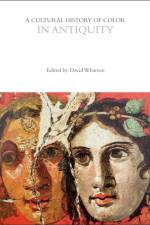
A Cultural History of Color in Antiquity covers the period 3000 BCE to 500 CE. Although the smooth, white marbles of Classical sculpture and architecture lull us into thinking that the color world of the ancient Greeks and Romans was restrained and monochromatic, nothing could be further from the truth. Classical archaeologists are rapidly uncovering and restoring the vivid, polychrome nature of the ancient built environment. At the same time, new understandings of ancient color cognition and language have unlocked insights into the ways - often unfamiliar and strange to us - that ancient peoples thought and spoke about color.Color shapes an individual's experience of the world and also how society gives particular spaces, objects, and moments meaning. The 6 volume set of the Cultural History of Color examines how color has been created, traded, used, and interpreted over the last 5000 years. The themes covered in each volume are color philosophy and science; color technology and trade; power and identity; religion and ritual; body and clothing; language and psychology; literature and the performing arts; art; architecture and interiors; and artefacts.David Wharton is Associate Professor of Classical Studies at the University of North Carolina at Greensboro, USA.Volume 1 in the Cultural History of Color set.General Editors: Carole P. Biggam and Kirsten Wolf
This wide-ranging collection reflects on the various motivations that caused the Folio to come into being in 1623, seven years after Shakespeare's death, and on how the now iconic book has been continually reimagined after its initial publication to the present day. In honour of its original publication, Shakespeare's First Folio 1623-2023 brings together a remarkable set of ground-breaking essays by an international group of scholars. From the beginning, the publication that came to be called the 'First Folio' was defined by the tension between the book as text and the book as a material object. In this volume, the individual contributions move exactly between these two meanings that have been attributed to the First Folio from the beginning. They consider precursors to the First Folio in the form of reader-assembled volumes; the poetic identity of Shakespeare; and how crises and successes in the early modern printing house shaped Shakespeare's text. Some of the chapters examine the unpredictable and often surprising subsequent histories and re-imaginations of the iconic book, which itself has become the basis of Shakespeare's unique position in the history of literature. They consider the afterlife of the text, for instance, in relation to the reception of Shakespeare's First Folio in Spain, its presence in and influence on James Joyce's Ulysses, the role that Meisei University of Japan's Shakespeare Collection has played in the education and research of the institution, and what the collection of 82 copies at the Folger Shakespeare Library in Washington, DC, tells us about the the ongoing role of these books within the study of Shakespeare and the early modern period.
This volume explores how the quest for security reshaped the world over the course of the 19th century, altering the structures, hierarchies and dynamics of international relations during a pivotal moment in world history. Taking a unique approach to imperial and international history, the essays in this volume show how security propelled imperial expansion, supported institutions of cooperation, maintained networks of imperial actors and shaped experiences of imperial rule. Contending that security should be studied as a force in its own right, one that drove processes of colonization, civilization and commerce, Securing Empire shows how cooperation between and across empires hinged on shared notions of threats and common ways of countering them.In showing that security did not solely inform, support and complicate unilateral imperial endeavours, but also brought different imperial entities together and forged global modes of government, this book shows how integral security was to the 'global transformation' of the 19th century and the new world order that emerged.
Lusophone Africa has been neglected in Anglophone historiography. With the exceptions of a narrow set of episodes, figures, and interpretations, all of which appear in a fragmented set of journal articles, its struggles against Portuguese colonialism have remained outside the grand narratives of decolonisation. Bringing together a group of established and up-and-coming historians of Lusophone Africa, Globalising Lusophone Africa's Independence Struggles brings much-needed coherence to this interconnected set of anti-colonial struggles in order to show how people and ideas from these countries crossed borders around the globe. Its international team of contributors draws on a an underutilized range of source material beyond the usual Western state archives in order to cover a wide geographic scope, from North America, Latin America, Western Europe, Eastern Europe, and Asia, all while critically examining the consequences of such international connections within the Lusophone states themselves. For its empirically rich, original contributions to the grand narratives of African independence struggles, this book is a must-read for students and scholars interested in African history, decolonization, and the Cold War, and it is of keen interest to anyone interested in alternative histories of decolonization.
This book focuses on Lucian of Samosata, a Syrian writer of the Greek language in the second century CE, and his engagement with contemporary debates regarding the form and register of language best suited to Greek literature in the Roman Empire. Many authors of the period advocated or practiced writing in a revived version of Attic Greek, the dialect used in classical Athenian rhetoric, philosophy and drama of the fifth and fourth centuries BCE. However, this book argues that Lucian distinguishes himself from other writers, including those who also comment extensively on the linguistic dimensions of classical reception, through a self-aware, humorous approach to sociolinguistics. As Stifler demonstrates, the focal point of much of Lucian's satire is at the intersection of, on the one hand, vocabulary, syntax and usage, and on the other hand, cultural, racial and political identity - a space in which other authors also operate but seldom acknowledge. In his view, a crucial component of Lucian's satire is in fact sociolinguistic and constitutes a complex but ultimately coherent ideology of Atticism, expressed through multiple perspectives or personae comprising a sophisticated commentary on the sociolinguistic imaginaries of Lucian's period. The result is an approach of integrating and negotiating Lucian's authorial persona, as a non-Greek practicing Greek sophism, by decoupling linguistic expertise from ethnic identity.
Based on four years of ethnographic research, this book discusses the influence of Christianity on Areruya, an indigenous religious movement practiced by the Ingariko in Northern Amazonia. Tracing the role of 19th-century missionaries in the region, the book shows how shamans started to announce the coming of a cataclysm, associated with the promise of indigenous salvation in Christian paradise and the acquisition of the colonizers' goods. It also cites how the ancient mythological elaboration of salvation after death in Areruya was reinforced through both an appropriation of some aspects of Christianity, and concomitantly, the development of a very violent form of shamanism, which epitomizes the evilness ascribed to the human condition on earth.This book is valuable as a reflection on cultural transformations, revealing how Areruya is not only a shamanic appropriation of Christianity, but also an indigenous and ritualized interpretation of colonization, whereby exogenous elements are corporally translated.
Erich S. Gruen investigates a remarkable phenomenon in religious and literary history: the freedom with which Jewish writers in antiquity retold and recast, sometimes distorted or bypassed, biblical narratives that ostensibly had the status of sacred texts. Gruen asks the question of what prompted such tampering with tales that carried divine authority, and what implications this widespread practice of liberal revising had for attitudes toward the sacrality of the scriptures in general.Gruen focuses upon writings of the Second Temple period, an era of the deep integration of Jewish history and the Greco-Roman world. Gruen brings to the task the training of a classicist and ancient historian rather than that of a biblical textual critic or a rabbinics scholar, not pursuing the commentaries of the later rabbis with their very different approaches, methods, and goals. As such, Gruen's emphasis rests upon narrative rather than legal matters, the haggadic rather than the halakhic. The former lends itself most readily to the creative instincts of the re-tellers.
Ted Strong Jr. was a two-sport athlete, a major star of the Negro Leagues and one of the original Harlem Globetrotters. This book shares the fascinating story of a man who played in seven Negro League Baseball All-Star games and was a key member of the Harlem Globetrotter team that won the World Professional Basketball Championship.
This book explores the best ways for governments to design venture capital investment incentives. Venture capital is a multi-billion-dollar industry and a major driver of innovation and national growth. Investment in startup companies by venture capital funds helps finance new inventions and create wealth, economic growth, and jobs. However, because venture capital investment is highly risky and sensitive to market downturns, many governments around the world use special legal and tax incentives to help encourage this form of investment. Since the introduction of the first venture capital incentive in the USA in 1958, scores of venture capital incentives have come and gone. These incentives have experienced varied success, with some failing entirely.Filling a gap in an important area, this book employs a legal and regulatory approach to examine venture capital policy from a global perspective. It uses an analytical framework to evaluate the design, implementation, and success of incentives, and looks at over 60 examples from 25 countries around the world. The book is aimed at researchers and policy makers in law, finance and economics, as well as practitioners and investors in the venture capital space. The book introduces the legal aspects of venture capital investment and presents a list of leading practice guidelines and recommendations to help policy makers design effective, efficient, and appropriate venture capital incentives.
Administrative tribunals are a vital part of the public law frameworks of most countries. This is the first edited book collection to examine tribunals across the common law world. It brings together key international scholars to discuss current and future challenges.The book features leading scholars from all major common law jurisdictions - the UK, the USA, Canada, Australia, New Zealand, Ireland, Israel, Hong Kong, Singapore, India, and South Africa. This global analysis is both deep and expansive in its coverage of the operation of administrative tribunals across common law legal systems. The book has two key themes: one is the enduring question of the location and operation of tribunals within public law systems; the second is the continued mission of tribunals to provide administrative justice. The collection is an important addition to public law scholarship, addressing common problems faced in the tribunals of common law countries, and providing solutions for how tribunals can evolve to match the changing nature of government.
A Cultural History of Sport in the Modern Age covers the period 1920 to today. Over this time, world-wide participation in sport has been shaped by economic developments, communication and transportation innovations, declining racism, diplomacy, political ideologies, feminization, democratization, as well as increasing professionalization and commercialization. Sport has now become both a global cultural force and one of the deepest ways in which individual nations express their myths, beliefs, values, traditions and realities. The 6 volume set of the Cultural History of Sport presents the first comprehensive history from classical antiquity to today, covering all forms and aspects of sport and its ever-changing social, cultural, political, and economic context and impact. The themes covered in each volume are the purpose of sport; sporting time and sporting space; products, training and technology; rules and order; conflict and accommodation; inclusion, exclusion and segregation; minds, bodies and identities; representation. Steven A. Riess is Professor Emeritus at Northeastern Illinois University, USA. Volume 6 in the Cultural History of Sport set General Editors: Wray Vamplew, Mark Dyreson, and John McClelland
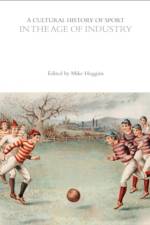
A Cultural History of Sport in the Age of Industry covers the period 1800 to 1920. Over this period, sport become increasingly global, some sports were radically altered, sports clubs proliferated, and new team games - such as baseball, basketball and the various forms of football - were created, codified, commercialized, and professionalized. Yet this was also an age of cultural and political tensions, when issues around the role of women, social class, ethnicity and race, imperial relationships, nation-building, and amateur and professional approaches were all shaping sport. At the same time, increasing urbanization, population, real wages and leisure time drove demand for sport ever higher, and the institutionalization and regulation of sport accelerated. The 6 volume set of the Cultural History of Sport presents the first comprehensive history from classical antiquity to today, covering all forms and aspects of sport and its ever-changing social, cultural, political, and economic context and impact. The themes covered in each volume are the purpose of sport; sporting time and sporting space; products, training and technology; rules and order; conflict and accommodation; inclusion, exclusion and segregation; minds, bodies and identities; representation. Mike Huggins is Emeritus Professor at the University of Cumbria, UK. Volume 5 in the Cultural History of Sport set General Editors: Wray Vamplew, Mark Dyreson, and John McClelland
A Cultural History of Sport in the Age of Enlightenment covers the period 1650 to 1800, a period often seen as a time of decline in sporting practice and literature. In fact, a rich sporting culture existed and sports were practised by both men and women at all levels of society. The Enlightenment called into question many of the earlier notions of religion, gender, and rank which had previously shaped sporting activities and also initiated the commercialization, professionalization and associativity which were to define modern sport. The 6 volume set of the Cultural History of Sport presents the first comprehensive history from classical antiquity to today, covering all forms and aspects of sport and its ever-changing social, cultural, political, and economic context and impact. The themes covered in each volume are the purpose of sport; sporting time and sporting space; products, training and technology; rules and order; conflict and accommodation; inclusion, exclusion and segregation; minds, bodies and identities; representation. Rebekka von Mallinckrodt is Professor at the University of Bremen, Germany. Volume 4 in the Cultural History of Sport set General Editors: Wray Vamplew, Mark Dyreson, and John McClelland
A Cultural History of Sport in the Renaissance covers the period 1450 to 1650. Outwardly, Renaissance sports resembled their medieval forebears, but the incorporation of athletics into the educational curriculum signalled a change. As part of the scientific revolution, sport now became the object of intellectual analysis. Numerous books were written on the medical benefits of sport and on the best way to joust, fence, train horses and ride, play ball games, swim, practice archery, wrestle, or become an acrobat. Sport became the visible sign of the mind's control over the physical body, such control often becoming an end in itself with some sports shaped more by decorum than exercise. The 6 volume set of the Cultural History of Sport presents the first comprehensive history from classical antiquity to today, covering all forms and aspects of sport and its ever-changing social, cultural, political, and economic context and impact. The themes covered in each volume are the purpose of sport; sporting time and sporting space; products, training and technology; rules and order; conflict and accommodation; inclusion, exclusion and segregation; minds, bodies and identities; representation. Alessandro Arcangeli is Associate Professor at the University of Verona, Italy. Volume 3 in the Cultural History of Sport set General Editors: Wray Vamplew, Mark Dyreson, and John McClelland
A Cultural History of Sport in the Medieval Age covers the period 600 to 1450. Lacking any viable ancient models, sport evolved into two distinct forms, divided by class. Male and female aristocrats hunted and knights engaged in jousting and tournaments, transforming increasingly outdated modes of warfare into brilliant spectacle. Meanwhile, simpler sports provided recreational distraction from the dangerously unsettled conditions of everyday life. Running, jumping, wrestling, and many ball games - soccer, cricket, baseball, golf, and tennis - had their often violent beginnings in this period. The 6 volume set of the Cultural History of Sport presents the first comprehensive history from classical antiquity to today, covering all forms and aspects of sport and its ever-changing social, cultural, political, and economic context and impact. The themes covered in each volume are the purpose of sport; sporting time and sporting space; products, training and technology; rules and order; conflict and accommodation; inclusion, exclusion and segregation; minds, bodies and identities; representation. Noel Fallows is Distinguished Research Professor at the University of Georgia, USA. Volume 2 in the Cultural History of Sport set General Editors: Wray Vamplew, Mark Dyreson, and John McClelland
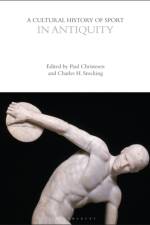
A Cultural History of Sport in Antiquity covers the period 800 BCE to 600 CE. From the founding of the Olympics and Rome's celebratory games, sport permeated the cultural life of Greco-Roman antiquity almost as it does our own. Gymnasiums, public baths, monumental arenas, and circuses for chariot racing were constructed, and athletic contests proliferated. Sports-themed household objects were very popular, whilst the exploits of individual athletes, gladiators, and charioteers were immortalized in poetry, monuments, and the mosaic floors of the wealthy. This rich sporting culture attests to the importance of leisure among the middle and upper classes of the Greco-Roman world, but by 600 CE rising costs, barbarian invasions, and Christianity had swept it all away. The 6 volume set of the Cultural History of Sport presents the first comprehensive history from classical antiquity to today, covering all forms and aspects of sport and its ever-changing social, cultural, political, and economic context and impact. The themes covered in each volume are the purpose of sport; sporting time and sporting space; products, training and technology; rules and order; conflict and accommodation; inclusion, exclusion and segregation; minds, bodies and identities; representation. Paul Christesen is Professor at Dartmouth College, USA. Charles Stocking is Associate Professor at Western University, Canada. Volume 1 in the Cultural History of Sport set General Editors: Wray Vamplew, Mark Dyreson, and John McClelland
A Cultural History of Color in the Modern Age covers the period 1920 to the present, a time of extraordinary developments in colour science, philosophy, art, design and technologies. The expansion of products produced with synthetic dyes was accelerated by mass consumerism as artists, designers, architects, writers, theater and filmmakers made us a 'color conscious' society. This influenced what we wore, how we chose to furnish and decorate our homes, and how we responded to the vibrancy and chromatic eclecticism of contemporary visual cultures.The volume brings together research on how philosophers, scientists, linguists and artists debated color's polyvalence, its meaning to different cultures, and how it could be measured, manufactured, manipulated and enjoyed. Color shapes an individual's experience of the world and also how society gives particular spaces, objects, and moments meaning. The 6 volume set of the Cultural History of Color examines how color has been created, traded, used, and interpreted over the last 5000 years. The themes covered in each volume are color philosophy and science; color technology and trade; power and identity; religion and ritual; body and clothing; language and psychology; literature and the performing arts; art; architecture and interiors; and artefacts. Anders Steinvall is Senior Lecturer in English Linguistics at Umea University, Sweden. Sarah Street is Professor of Film at the University of Bristol, UK. Volume 6 in the Cultural History of Color set. General Editors: Carole P. Biggam and Kirsten Wolf
A Cultural History of Color in the Age of Industry covers the period 1800 to 1920, when the world embraced color like never before. Inventions, such as steam power, lithography, photography, electricity, motor cars, aviation, and cheaper color printing, all contributed to a new exuberance about color. Available pigments and colored products - made possible by new technologies, industrial manufacturing, commercialization, and urbanization - also greatly increased, as did illustrated printed literature for the mass market. Color, both literally and metaphorically, was splashed around, and became an expressive tool for artists, designers, and writers. Color shapes an individual's experience of the world and also how society gives particular spaces, objects, and moments meaning. The 6 volume set of the Cultural History of Color examines how color has been created, traded, used, and interpreted over the last 5000 years. The themes covered in each volume are color philosophy and science; color technology and trade; power and identity; religion and ritual; body and clothing; language and psychology; literature and the performing arts; art; architecture and interiors; and artefacts. Alexandra Loske is Curator at the Royal Pavilion and Museums, Brighton, UK.Volume 5 in the Cultural History of Color set. General Editors: Carole P. Biggam and Kirsten Wolf
This book focuses on contemporary problems related to fraud and risk in commercial law.It has been said by some that we are in a 'golden age of fraud'. In part this has been caused by globalisation, technological changes and the financialisation of business. This has resulted in the creation of automated linkages with integrated supply chains and the creation of systemic risks, which have been exacerbated by new forms of intangible assets like tokens and their ease of movement. While regulation has ebbed and flowed given the desire of governments to generate economic growth, as well as the distrust of their coercive powers, the courts have sought to strike a balance between considerations such as commercial certainty and fairness.The book provides an analysis of key contemporary issues on the theme of fraud and risk in commercial law, including: technology and fraud, secondary liability and 'failure to prevent' economic crime, abuse of business entities, insolvency and creditor protection, injunctions and other orders, cross-border issues, the relationship between regulation and private law, and solutions for policy makers.
Abonner på vårt nyhetsbrev og få rabatter og inspirasjon til din neste leseopplevelse.
Ved å abonnere godtar du vår personvernerklæring.