






Gjør som tusenvis av andre bokelskere
Abonner på vårt nyhetsbrev og få rabatter og inspirasjon til din neste leseopplevelse.
Ved å abonnere godtar du vår personvernerklæring.Du kan når som helst melde deg av våre nyhetsbrev.

The Spanish Second Republic, 1931-1939, has been written about widely and remains mired in antifascist, anti-communist, and historical memory controversies. A deep dive into the Soviet, British intelligence and other European archives, this new book brings the majority consensus among historians of the Second Republic into question and sheds new light on the scale of Soviet communist activity in Spain before the outbreak of war in July 1936. Providing an in-depth analysis of Comintern (RGASPI) and other European archival documentation, much of which has not been discussed until now, Gustavo Martín Asensio here demonstrates the growing and fundamentally subversive activity of the Comintern within the socialist union and party, the armed forces and cultural influencers which culminated in the spring of 1936.
This concise but exhaustive treatment of sea powers examines the strengths and weaknesses of maritime power, including chapters on mutiny, blockades, coalitions, expeditionary warfare, piracy, commerce raiding, and soft power operations. Throughout, Elleman analyzes the competition between land power and sea power strategies.
This book explores how changes in the structure of the international system and technology incentivize major powers to adopt different types of military power¿either the traditional threat and use of force or ¿shaping¿ through the non-warfighting use of military organizations¿to manage threats in world politics.
"A rich and detailed exploration of Qanats, the remarkably engineered ancient underground aqueducts, which includes worldwide examples from the Middle East, North Africa, Mediterranean, Central Asia, China, India, Southwest USA, Central America and South America"--
This groundbreaking study examines the unlikely merger of two Japanese cultural phenomena, an 11th-century aristocratic text and contemporary manga comics. It explores the ways in which the manga versions of The Tale of Genji use gender, sexuality, and desire to challenge perceptions of reading and readership, morality and ethics, and what is translatable from one culture to another.Lynne K. Miyake shows that, through their girls, ladies, Boy Love, boys and young men, and informational comics remediations of the tale, the manga Genjis visually, narratively, and affectively rework male and female gazes; Miyake reveals how they gently inject humor, eroticize, gender flip, queer, and simultaneously re-inscribe and challenge heteronormative gender norms. The first full-length study of Genji manga, this book analyses these adaptations within manga studies and the historical and cultural moments that fashioned and sustained them. It also interrogates the circumscribed, in-group aristocratic society and the consumer and production practices of the Heian society that come full circle in the manga versions.The Tale of Genji through Contemporary Manga utilizes western queer, feminist, sexuality and gender theory and Japanese cultural practices to illuminate the ways in which the Genji tale redeploys itself. Yet it also provides much needed context and explanation regarding the charges of appropriation of prepubescent (fe)male and gay bodies and the utilization of (sexual) violence mounted against Genji manga-and manga and anime in general once they went global.
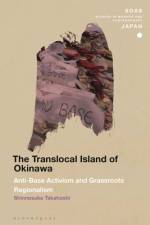
The Translocal Island of Okinawa reveals the underrepresented memories, visions and actions that are involved in the making of Okinawan resistance against its subordinated status under the US-Japan security system beyond the narrowly defined political, cultural and geographical borders of locality. As Okinawa's base politics is a problem deeply rooted in the context of East Asia, so is the history of the people's protest movement. The issue examined in this book is the arbitrary distinction of scale between 'local', which tends to be employed for a particular territory demarcated by a cohesive culture, and 'regional', a larger area that consists of myriad localities. Locality, Shinnosuke Takahashi here argues, is neither self-evident, fixed nor homogenous but is established through historical processes that involve interaction, conflict and negotiation of individuals and communities across territorial and cultural boundaries. This book reveals the novel concept of Okinawa as a translocal island which offers a way to understand locality in the context of Okinawan activism as a product of multiple cultural and human flows, as opposed to the conventional way of framing the local community as fixed, internally cohesive and rigidly bordered. It makes an exciting contribution to the field of modern Japanese and East Asian studies by stimulating discussions on the richness and scale of local civic activism that is increasingly becoming a key political feature of the East Asian region.
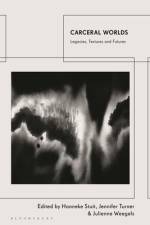
We live a world in which the number of prisons is growing and experiences of incarceration are increasingly widespread. Carceral Worlds offers a necessary and timely contribution to understanding these carceral realities of the globalized present.The book asks how the carceral has become so central in life, how it manifests in different geographical locations and, finally, what the likely consequences are of living in such a carceral world. Carceral Worlds focuses on carceral practices, experiences and imaginaries that reach far beyond traditional spaces of confinement. It shows the lasting effects of colonial carceral heritage, the influence of prison systems on city management, and the entrapping nature of digital infrastructures. It also discusses new urbanized forms of migrant detention, the relation between prisons and homelessness, the use of carceral metaphors in the everyday, and the carceral implications of the uneven distribution of climate risk across the globe. The volume brings together work from scholars across the world and from a variety of disciplines in the social sciences and humanities, offering a fresh approach to the carceral as a central vector in modern life.
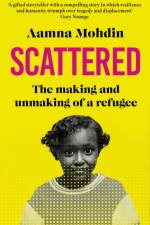
**A Guardian book to look out for in 2024**A powerful, evocative and deeply personal journey into the refugee crisis past and present In 2015, journalist Aamna Mohdin travelled to Calais to report from the frontlines of the refugee crisis. It was on her return to London, when she discussed her experiences with her parents, that she came face-to-face with a reality she had been outrunning for nearly two decades: that she had been a refugee herself. Aamna herself had arrived in the UK aged seven, after her parents fled war-torn Somalia. Determined to piece their scattered family history together in the present, she set off on a mission: first into the past, to uncover her parents' experience of displacement in their own words; and then on the road, first to Somalia, and then to the refugee camp in Kenya that was her home in early childhood. Along the way, Aamna would not only confront the history and legacy of the devastations of war and displacement, but also came face-to-face for the first time with her identity: as a Somalian coming back to her homeland for the first time; as a refugee; and as a black British woman, and a journalist. Scattered is a young woman's exploration of where she came from; a powerful reportage from the frontlines of a refugee crisis in the past and present; an epic journey of returns and reunions, of facing the past and reckoning with trauma; and above all, a defiant and joyful celebration of family and the third culture kid experience.
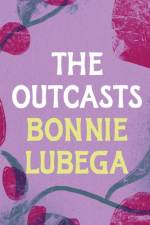
Persecuted and despised, the nomadic kraalmen are forced to herd their oppressor's cattle. Their only hope lies in an unlikely hero, Karekyesi - who dares to outwit the enemy... When the Baganda tribe tired of tending their cattle themselves, they decided to employ the kraalmen - a pitiful tribe who they see as not much better than the animals themselves. Lowly, dung-encrusted, and barely deserving of their wages, the last thing the Baganda leaders expected was a rebellion. But when one man dares to take a stand, a remarkable power struggle ensues. The Outcasts is the striking story of an underdog who refuses to be pushed down, no matter the consequences...
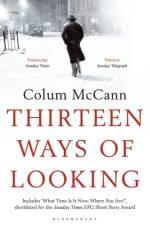
A story in this collection has been longlisted for the Sunday Times EFG short story awardAs it was, it was like being set down in the best of poems, carried into a cold landscape, blindfolded, turned around, unblindfolded, forced, then, to invent new ways of seeing. It is a cold day in January when J. Mendelssohn wakes in his Upper East Side apartment. Old and frail, he is entirely reliant on the help of his paid carer, and as he waits for the heating to come on, the clacking of the pipes stirs memories of the past; of his childhood in Lithuania and Dublin, of his distinguished career as a judge, and of his late wife, Eileen. Later he leaves the house to meet his son Elliot for lunch, and when Eliot departs mid-meal, Mendelssohn continues eating alone as the snow falls heavily outside.Moments after he leaves the restaurant he is brutally attacked. The detectives working on the case search through the footage of Mendelssohn''s movements, captured by cameras in his home and on the street. Their work is like that of a poet: the search for a random word that, included at the right instance, will suddenly make sense of everything. Told from a multitude of perspectives, in lyrical, hypnotic prose, Thirteen Ways of Looking is a ground-breaking novella of true resonance. Accompanied by three equally powerful stories set in Afghanistan, Galway and London, this is a tribute to humanity''s search for meaning and grace, from a writer at the height of his form, capable of imagining immensities even in the smallest corners of our lives.
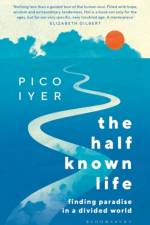
'Nothing less than a guided tour of the human soul ... A masterpiece' Elizabeth GilbertOne of our most perceptive travel writers embarks on an exploration of the world's holiest places and where we might find paradise on Earth.It's so easy, I thought, to place Paradise in the past or the future - anywhere but here.After half a century of travel, from Ethiopia to Tibet, from Belfast to Jerusalem, Pico Iyer asks himself what kind of paradise can ever be found in a world of unceasing conflict. In a spectacular journey, both inward and outward, Iyer roams from crowded mosques in Iran to a film studio in North Korea, from a holy mountain in Japan to the sometimes spooky emptiness of the Australian outback.At every stop, he makes connections with unexpected strangers - mystics and taxi drivers and fellow travellers - and draws on his own memories, of time spent in a Benedictine monastery high above the Pacific, of regular travels with the Dalai Lama, of hearing his late mother speak of sunlit moments in pre-Partition India.By the end, he has upended many of our expectations and dared to suggest that we can find paradise right in the heart of our angry, confused and divided world.
"Exploring jazz music using a close reading of songs, albums, and techniques, Listen to Jazz! provides an introduction to the diversity of the music for new listeners and experts alike"--
Women on the Right explores the complex relationships between conservative and right-wing politics, social action, and women actors from the late 19th to the late 20th century. Edited by Clarisse Berthezène, Laura Lee Downs, and Julie V. Gottlieb, each essay examines the spectrum of women's engagement with right-wing politics, from centrist and 'progressive conservatism' groups, to authoritarianism and fascism.This book uses local and national case studies to explore a wide range of women's social and political mobilizations. Using a bottom-up perspective, it stays focused on the ideas, ambitions, and practices of the actors themselves. Key points of comparison include: the very different roles played by religious institutions and associations, the broader regional and national contexts, and the dynamics that favour - or not - the eventual construction of welfare states. Women on the Right consistently adopts a multinational and multidimensional approach, by bringing together a team of expert contributors to engage in a discussion of the comparative and transnational features of right-wing women's political thought and practice. The result is a unique contribution to the historical understanding of women's participation in - and ideas about - conservative activism.
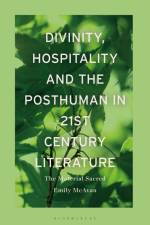
"The first comprehensive look at the religious significance of this century's contemporary literature, this book examines in detail many of this century's most significant writers: Margaret Atwood, Salman Rushdie, Elizabeth Strout, Marilynne Robinson, Mohsin Hamid, Michael Chabon, Howard Jacobson and Don DeLillo"--
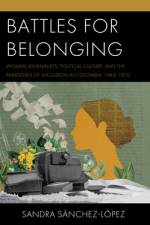
This book examines the ongoing negotiations involved within women¿s disputes over inclusion and democracy from the 1940s through the 1960s in Colombia.
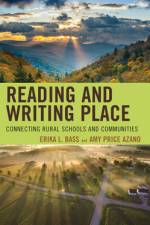
Using a place-infused narrative writing unit with two rural schools in two different states, the authors argue for a nuanced understanding of using place in the classroom. This book explores how student data led the authors to develop the concept of place: Big "P" Place and small "p" place.
Philosophical Praxis, launched by the author in 1981, ushers in a new academic philosophy as an alternative to current therapeutic practices, offering unique insights into the compelling origin and development of a renaissance of philosophy.
This book explores the rich tapestry of Middle Eastern diasporic literature, spanning the landscapes of Canada and France while breathing life into an array of mesmerizing texts authored by luminaries including Wajdi Mouawad, Khaled Osman, Rawi Hage, Denis Villeneuve, and Soha Béchara whose literary roots span Lebanon and Switzerland.
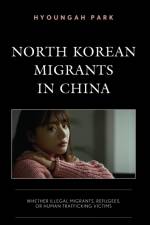
Hyoungah Park interviews fifty-eight North Korean migrants in China and analyzes their stories, exploring why they decided to escape North Korea despite the risks, how they escaped, and their experiences being victimized by human trafficking.
This book uses the author¿s participatory research with refugees, producing a portrait of fear, desperation, courage, and optimism. Refugee voices lead us through tortuous journeys, which provide powerful ideas for revamping an overwhelmed global refugee system.
Philosophy of Language in Uruguay examines works of philosophy of language through epistemology, linguistics, and cognitive sciences to discover how philosophy of language has developed in Uruguay in the last two decades.
Socio-Anthropological Approaches to Religion demonstrates various interpretations and phenomena of the ¿environmental hope¿ from a multi-disciplinary perspective to enhance the prosocial characteristics of religion in the humanities and the social sciences.
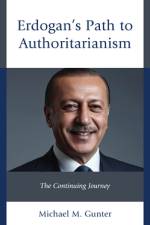
The author examines the current populist, charismatic, but divisive president of Turkey and arguably the most consequential Turkish leader since Kemal Ataturk--was again reelected in May 2023 despite so many negative factors working against him such as a terribly faltering economy, deadly earthquake, and authoritarian reputation, among others.
This book investigates the poetry of Thomas Hardy and Sylvia Plath under the theoretical guidance of critical plant studies to disclose these two poets¿ botanical awareness of the vegetal agency and their attentiveness to the ethical standing of plants in human life.
Looking primarily at the twenty-first century boom in superhero media, this collection provides insights into the overlap between data, the internet, and the superhero. Multiple disciplinary approaches investigate what can be learned from the superhero genre and its use and involvement with networked technology.
Literature¿s Critique, Subversion, and Transformation of Justice explores two of the fundamental institutions in human existence and social democracy that attend to philosophical consideration and critical discussion of how literature interacts with the phenomena of justice.
Despite a new era, we are stuck with a 40-year-old education system whose purpose is obsolete. New Era ¿ New Urgency presents a historical case for the need to repurpose education given the challenges of the new century. Merlino and Pomeroy describe their work repurposing education in Egypt and elsewhere.
This book explores the time during the Cold War when Russian displaced persons, including former Soviet citizens, were amongst the hundreds of thousands of immigrants given assisted passage to Australia and other Western countries in the wake of the Second World War.
Abonner på vårt nyhetsbrev og få rabatter og inspirasjon til din neste leseopplevelse.
Ved å abonnere godtar du vår personvernerklæring.