
Gjør som tusenvis av andre bokelskere
Abonner på vårt nyhetsbrev og få rabatter og inspirasjon til din neste leseopplevelse.
Ved å abonnere godtar du vår personvernerklæring.Du kan når som helst melde deg av våre nyhetsbrev.

"Interdisciplinary studies on the position of love in contemporary global thought and literature that reflect on experiences of intimate, romantic, and sexual love, and the role of individual identity"--
YouTube has afforded new ways of documenting, performing and circulating musical creativity. This first open access sustained exploration of YouTube and music shows how record companies, musicians and amateur users have embraced YouTube's potential to promote artists, stage performances, build artistic (cyber)identity, initiate interactive composition, refresh music pedagogy, perform fandom, influence musical tourism and soundtrack our everyday lives. Speaking from a variety of perspectives, musicologists, film scholars, philosophers, new media theorists, cultural geographers and psychologists use case studies to situate YouTube as a vital component of contemporary musical culture. This book works together with its companion text Remediating Sound: Repeatable Culture, YouTube and Music.The ebook editions of this book are available open access under a CC BY-NC-ND 4.0 licence on bloomsburycollections.com. Open access was funded by Knowledge Unlatched.
Leading football journalist Nick Miller lifts the lid on football club ownership: the defining issue shaping the modern game.The landscape of football club ownership has changed. Long gone are the days when clubs were dominated by local factory proprietors or millionaire boyhood fans. This clear, insightful and thought-provoking guide provides serious football fans with a unique and timely account of modern football ownership: the central issue shaping the game. Fascinating for supporters looking to understand their club's and its rivals' strategy and methods, and those curious about finance and power in football, Who Owns Football? reveals how the game's custodians operate. Football club owners can take teams to the heights of the Champions League or financial oblivion. Still, in a world of super leagues, rapidly escalating wages, transfer fees, Financial Fair Play and an increasingly profitable women's game, they tread a precarious tightrope. This book relates the jeopardy, strategies, transformative successes and horror stories as it uncovers the complex world of football finance. Who Owns Football? lifts the lid on the inner workings of modern club ownership. Full of captivating tales, fascinating characters, high finance and shady deals, it examines the forces at play and discusses how today's football club ownership models face up to an impending crisis in the game.
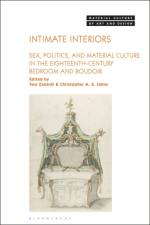
A desire for intimacy in domestic spaces - motivated by a growing sense of individualistic expression, an incentive to conceal the labor or enslavement taking place, and an appetite for solace and comfort - led to interiors taking on more specific roles in the eighteenth century. By examining the architectural, visual, and material culture of eighteenth-century spaces, Intimate Interiors foregrounds the interrelated concepts of intimacy, privacy, informality, and sociability in order to show how these ideas played an increasingly integral role in the period's architectural and material design.Across eleven innovative chapters that explore issues of gender, politics, travel, exoticism, imperialism, sensorial experiences, identity, interiority, and modernity, this volume demonstrates how intimacy was a fundamental goal in the planning of private quarters. In doing so, the political nature of private spaces is uncovered, whilst highlighting the contradictions and complexities of these highly performative "private" interiors. Employing distinct methodological perspectives across various geographical sites, from Turkey to Versailles, Britain to Benin, Intimate Interiors draws as-yet untraced connections between Enlightenment Europe, imperial outposts, and major metropolitan centers across the globe.
The Covid-19 pandemic has directly impacted the way teachers and learners worldwide teach and learn languages, forcing numerous educational activities in technologically-deprived contexts to stop altogether and those in technologically-rich environments to go online on an emergency basis. This volume provides a collection of theoretical and practical insights into the challenges and affordances faced globally during the pandemic and lessons learnt about the application of digital technologies for language teaching and learning. The chapters explore the vital role of technology in its various forms, including the internet, social media, CALL (Computer-Assisted Language Learning), MALL (Mobile Assisted Language Learning), TALL (Technology Assisted Language Learning) and TELL (Technology Enhanced Language Learning). Topics explored include the new avenues digital technology has opened up for language teachers and learners, options and challenges in applying technology in various contexts, and how the second language education industry could have been adversely impacted at the time of the pandemic without technological affordances. The contributions showcase studies from various geographical contexts, revealing how the global crisis was received and tackled differently in Australia, Hong Kong, Iran, Italy, Japan, New Zealand, the UAE, the UK and the USA.
This book presents a case for teaching philosophy in schools. It develops two original arguments for teaching philosophy to all students at some point over the course of their education. Gatley argues that teaching philosophy is the best way to help students to think clearly using ordinary, or non-specialist concepts such as 'good', 'truth', or 'happiness'. She goes on to argue that teaching philosophy is the best way to help students to make sense of the different conceptual schemes used by different school subjects. Combining these two arguments, Gatley suggests that these two roles for philosophy are central to the task of educating people, and so philosophy ought to be included on school curricula. Building on the work of philosophers of education including Richard Stanley Peters, Harry Brighouse, Matthew Lipman, Mary Midgley and Martha Nussbaum, the book covers a range of topics including Philosophy for Children (P4C), the aims education, religious education, curriculum design and education policy.
An exploration of the burgeoning field of Anglophone Asian diaspora poetry, this book draws on the thematic concerns of Hong Kong, Asian-American and British Asian poets from the wider Chinese or East Asian diasporic culture to offer a transnational understanding of the complex notions of home, displacement and race in a globalised world.Located within current discourse surrounding Asian poetry, postcolonial and migrant writing, and bridging the fields of literary and cultural criticism with author interviews, this book provides close readings on established and emerging Chinese diasporic poets' work by incorporating the writers' own reflections on their craft through interviews with some of those featured. In doing so, Jennifer Wong explores the usefulness and limitations of existing labels and categories in reading the works of selected poets from specific racial, socio-cultural, linguistic environments and gender backgrounds, including Bei Dao, Li-Young Lee, Marilyn Chin, Hannah Lowe and Sarah Howe, Nina Mingya Powles and Mary Jean Chan. Incorporating scholarship from both the East and the West, Wong demonstrates how these poets' experimentation with poetic language and forms serve to challenge the changing notions of homeland, family, history and identity, offering new evaluations of contemporary diasporic voices.
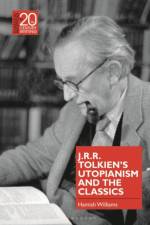
"This book opens up new perspectives on the English fantasy writer J.R.R. Tolkien, arguing that he was an influential thinker of utopianism in 20th-century fiction and that his scrutiny of utopias can be assessed through his dialogue with antiquity. Tolkien's engagement with the ancient world often reflects an interest in retrotopianism: his fictional places - cities, forests, homes - draw on a rich (post-)classical narrative imagination of similar spaces. Importantly for Tolkien, such narratives entail 'eutopian' thought experiments: the decline and fall of distinctly 'classical' communities provide an utopian blueprint for future political restorations; the home as oikos becomes a space where an ideal ethical reciprocity between host and guest can be sought; the 'ancient forest' is an ambiguous, unsettling site where characters can experience necessary forms of awakening. From these perspectives, tokens of Platonic moderation, Augustan restoration, Homeric xenophilia, and the Ovidian material sublime are evident in Tolkien's writing. Likewise, his retrotopianism also always entails a rewriting of ancient narratives in post-classical and modern terms. This study then explores how Tolkien's use of the classical past can help us to align classical and utopian studies, and thus to reflect on the ranges and limits of utopianism in classical literature and thought"--
Taking seriously Jacques Lacan's claim that 'the unconscious is politics', this volume proposes a new understanding of political power, interrogating the assumption that contemporary capitalism functions by tapping into forms of unconscious enjoyment, rather than providing transcendental conditions for the articulation of political meanings and desires. Whether we're aware of it or not, political communication today targets the audience's libidinal response through political and institutional language: in policies, speeches, tweets, social media appearances, gestures and images. Yet does this mean that current power structures no longer need symbolic or ideological frameworks? The authors in this volume think not. Far from demonstrating a shift to a post-ideological age, they argue instead that such methods inaugurate an altogether novel approach to political power. Written by leading scholars from around the world, including Roberto Esposito and Slavoj Zizek, each chapter reflects on contemporary power and inspires consideration of new political potentialities, which our focus on politics in transcendental rather than immanent terms has thus far obscured. In so doing, Capitalism and the New Political Unconscious provides an original and forceful exploration of the centrality of both psychoanalytic theory and the philosophy of immanence to an alternative understanding of the political.
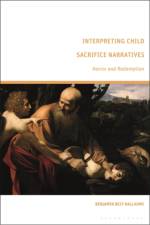
Examining the theme of child sacrifice as a psychological challenge, this book applies a unique approach to religious ideas by looking at beliefs and practices that are considered deviant, but also make up part of mainstream religious discourse in Judaism, Islam, and Christianity. Ancient religious mythology, which survives through living traditions and transmitted narratives, rituals, and writings, is filled with violent stories, often involving the targeting of children as ritual victims. Christianity offers Abraham's sacrifice and assures us that the "only begotten son" has died, and then been resurrected. This version of the sacrifice myth has dominated the West. It is celebrated in an act of fantasy cannibalism, in which the believers share the divine son's flesh and blood. This book makes the connection between Satanism stories in the 1980s, the Blood Libel in Europe, The Eucharist, and Eastern Mediterranean narratives of child sacrifice.
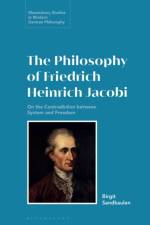
The contemporaries of Friedrich Heinrich Jacobi (1743-1819) openly acknowledged his towering importance. Both Fichte and Hegel praised him in the same breath with Kant as having launched the philosophical revolution they sought to complete. Yet for more than a century, misrepresentations of Jacobi's thought have stood in the way of a proper appreciation of his insights. In her study of this long-neglected German philosopher, internationally-renowned Jacobi expert Birgit Sandkaulen interprets his philosophical writings in their intellectual context. Originally published in German and translated into English for the first time, this is a major contribution to reading the life, work, and legacy of Jacobi. The biographical chapter on Jacobi's life as a public intellectual was written specifically for this English edition. Offering new perspectives on Fichte, Schelling, and Hegel, Sandkaulen focuses on Jacobi's specific conception of practical realism. This conception, the source of Jacobi's famous defense of faith and human freedom, matches his critique of the German Idealists: the post-Kantian systems of German Idealism were bound to fail. Sandkaulen shows us that long before 20th-century philosophers took up this line of thought, indeed at the very origin of the epoch-making developments of classical German philosophy, Jacobi articulated a practical, ethical, personal realism that is as philosophically appealing and relevant today as it was in its time.
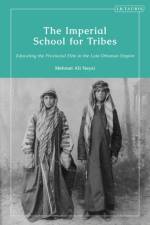
Founded in the waning years of the Ottoman Empire, the Imperial School for Tribes (Asiret Mektebi) was an initiative by Sultan Abdulhamid II to bring the sons of prominent Arab tribal leaders to Istanbul for a world-class education and transform them into loyal Ottoman future military and governmental leaders. Utilizing a plethora of new documents recently made available in the Ottoman archives as well as Ottoman newspaper collections in Istanbul and Beirut, this is the first book to shed light on the School for Tribes. It provides a detailed analysis of the origins and families of the over 500 graduates of the school, as well as the recruitment and placement processes developed by the administration. The further careers and allegiances of the graduates are examined, allowing us to better understand relations between Turks and Arabs both during the last years of the Empire as well as in the following decades. The book shows that many graduates who became prominent leaders in their newly formed countries, including Abdulmuhsin al-Sadoun (Prime Minister of Iraq), Omar Mansour and Orhan Kologlu (Prime Ministers of Cyrenaica-Libya), and Ramadan al-Shallash (Lebanon) availed of their Ottoman training and preserved their imperial loyalties even as rifts that occurred between the Republic of Turkey and the Arab states widened.
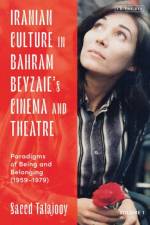
Since the beginning of his artistic career in 1959, Bahram Beyzaie's oeuvre has incorporated various aspects of Iranian, Euro-American, Chinese, Japanese, and Indian performance traditions and cinema. Beyzaie's work reformulates indigenous artistic and ritual forms and cultural narratives in plays and films whose emancipatory aesthetics have influenced several generations of writers, playwrights, and filmmakers. This book examines the origins and development of what the author identifies as Beyzaie's unique sense of creativity, using an interdisciplinary method of semiotic and cultural analysis to identify its manifestations in Beyzaie's films and plays of the 1960s and 1970s. It focusses on Beyzaie's early works, such as Downpour and Uncle Moustache, and how they engage with neglected aspects of Iranian culture to challenge mainstream approaches to writing and directing plays and films. In this way, the author argues, Beyzaie's work questions notions of being and belonging, by subverting exclusionist discourses on art, politics, society, culture, self and other, personal and collective identity, gender relations, intellectuals, heroes and villains, and children.
Why did the Gulf monarchies - and the UAE in particular - avoid the upheavals and challenges of the Arab uprisings? This book examines how the UAE survived the waves of regional unrest. It departs from attributing regime survival to rentier state theory and instead offers a more nuanced approach to understanding the pillars of regime legitimacy upon which the UAE now rests. In doing so, the book sheds light on the transformation of the UAE from a quietist state, which relied almost entirely upon an overseas security guarantor, to an assertive regional power in its own right.Written by an Emirati author who understands the internal dynamics of the country, the book examines the state's proactive foreign policy and the changing domestic and regional environment influencing its decisions. The book argues that the UAE leadership encouraged a new national identity to evolve amid the pressures of modernity, particularly at a time when young Emiratis had access to information beyond government control via social media. This is also part of its shift away from a country based on a rentier economy to a situation where the citizens take more initiative, learn more skills, and increasingly enter the private sector to help the country prosper. This has given rise to a new Emirati identity that is politically conservative, economically neo-liberal and socially liberal. In providing an analysis of the policies of the UAE leadership before and after the Arab Spring, this book is a vital contribution to the literature on Emirati domestic and foreign policy and points to where the country might be headed.
THE TIMES AND WATERSTONES BEST ART BOOK OF 2023'Marvellous . . . intimate and insightful . . . reads like a novel by Samuel Beckett' Paul Theroux A portrait of one of the twentieth century's greatest sculptors from one of our most eminent art historiansToday the work of Alberto Giacometti is world-famous and his sculptures sell for record-breaking prices. But from his early days as an unknown outsider to the end of a dramatic international career, Giacometti lived in the same hovel of a studio in Paris. It was Paris that made him, and he in turn immortalised the city through his art.Arriving in Paris from the Swiss Alps in 1922, Giacometti was shaped not only by his relationships with remarkable artists and writers - from Picasso, Breton and Dalí to Sartre, Beauvoir and Beckett - but by the everyday life, pre-war and post-war, of Paris itself. His distinctive figures emerged from the city's unique atmosphere: the crumbling grey stone of its humbler streets and the café-terraces buzzing with radical ideas and racy gossip.In Giacometti in Paris, Michael Peppiatt, who spent thirty years documenting the Parisian art world and mixing with many of the people Giacometti knew, brilliantly charts the course of the artist's life and work. From falling in and out with the Surrealists to years of artistic anguish, from devotion to his mother to intense friendships, tragic love affairs and a fraught marriage, this is an intimate portrait of an outstanding artist in exceptional times.
Four decades of economic reform have made China one of the most unequal countries in the world - but the impact of this inequality is not just socioeconomic. Love Troubles is the first book to examine the emotional cost of this inequality to the intimate and emotional lives of China's people.Drawing on first-hand ethnographic research among rural migrant factory workers in the Pearl River Delta in southern China, Wanning Sun critically analyzes narratives about love, romance, and intimacy in contemporary Chinese public discourses. Examining the impact of economic and cultural inequality on private life, this book both embodies and facilitates an intimate turn in the study of China's social change, and presents a significant intellectual intervention into worldwide debates on inequality.
Marco Sgarbi tells a new history of epistemology from the Renaissance to Newton through the impact of Aristotelian scientific doctrines on key figures including Galileo Galilei, Thomas Hobbes, René Descartes, John Locke, Gottfried Wilhelm Leibniz and Isaac Newton. This history illuminates the debates philosophers had on deduction, meditation, regressus, syllogism, experiment and observation, the certainty of mathematics and the foundations of scientific knowledge. Sgarbi focuses on the Aristotelian education key philosophers received, providing a concrete historical framework through which to read epistemological re-definitions, developments and transformations over three centuries. The Age of Epistemology further highlights how Aristotelianism itself changed over time by absorbing doctrines from other philosophical traditions and generating a variety of interpretations in the process.
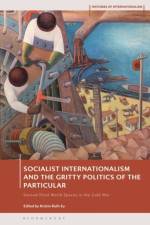
This collection takes a case study approach to enter into and explore spaces of 'Second-Third World' interaction during the Cold War. From the dining halls of a university, to hospital wards, construction sites, military barracks, pubs and more, the chapters drop the scale down from the global to the particular to better see, understand and interpret the complex nature of these spaces. These ordinary spaces are examined to understand how they were conceived, constructed, shaped and reshaped by people over time. Many are physical places of encounter, while others are more abstract, embodying ideological goals. In exploring these spaces the contributors show how the Second and Third World actors understood them and connected them to ideas such as gender and space, the space of the nation, of the modern and of the self. Essentially, it seeks to unravel how these spaces between Second and Third Worlds worked, and what, if anything, was distinctive and consequential about them. Second-Third World Spaces in the Cold War explores the ways in which these Second and Third World actors collaborated and clashed in these everyday spaces, and brings these multi-faceted, multi-actor histories to a vital centre ground.
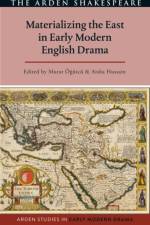
"Despite the popularity of plays about the East, the representation of the East in early modern drama has been either overlooked, marginalized as footnotes, or generalized into taken-for-granted stereotypes. Materializing the East in Early Modern English Drama focuses on the multi-layered, often conflicting and changing perceptions of the East and how dramatic works made use of their respective theatrical space to represent the concept of the East in drama. This volume re-examines the (mis)representation of the East on the early modern English outdoor and indoor stage and broadens our understanding of early modern theatrical productions beyond Shakespeare and the European continent. It traces the origin of conventional depictions of the East to university dramas and explores how they influenced the commercial stage. Chapters uncover how conflicting representations of the East were communicated on stage through the material aspects of stage architecture, costumes and performance effects. The collection emphasizes these material aspects of dramatic performances and showcases neglected plays, including George Peele's The Battle of Alcazar, Robert Greene's The Historie of Orlando Furioso and Joseph Simons' Leo the Armenian, and puts them in conversation with William Shakespeare's The Tempest, John Fletcher's The Island Princess and Philip Massinger and Fletcher's The Sea Voyage"--
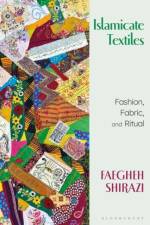
Textiles and clothing are interwoven with Islamic culture. In Islamicate Textiles, readers are taken on a journey from Central Asia to Tanzania to uncover the central roles that textiles play within Muslim-majority communities.This thematically arranged book sheds light on the traditions, rituals and religious practices of these regions, and the ways in which each one incorporates materials and clothing. Drawing on examples including Iranian lion carpets and Arabic keffiyeh, Faegheh Shirazi frames these textiles and totemic items as important cultural signifiers that, together, form a dynamic and fascinating material culture. Like a developing language, this culture expands, bends and develops to suit the needs of new generations and groups across the world.The political significance of Islamicate textiles is also explored: Faegheh Shirazi's writing reveals the fraught relationship between the East - with its sought-after materials and much-valued textiles - and the European countries that purchased and repurposed these goods, and lays bare the historical and contemporary connections between textiles, colonialism, immigration and economics. Dr Shirazi also discusses gender and how textiles and clothing are intimately linked with sexuality and gender identity.
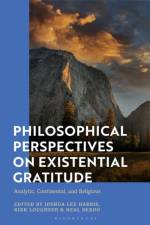
Existential gratitude-gratitude for one's very existence or life as a whole-is pervasive across the most influential human, cultural and religious traditions. Weaving together analytic and continental, as well as non-western and historical philosophical perspectives, this volume explores the nexus of gratitude, existence and God as an inter-subjective phenomenon for the first time. A team of leading scholars introduce existential gratitude as a perennially and characteristically human phenomenon, central to the distinctive life of our species. Attention is given to the conditions under which existence itself might be construed as having a gift-like or otherwise gratitude-inducing character. Drawing on a diversity of perspectives, chapters mark out new territory in philosophical inquiry, addressing whether and in what sense we ought to be grateful for our very existence. By analysing gratitude, this collection makes a novel contribution to the discourse on moral emotions, phenomenology, anti-natalism and theology.
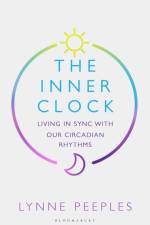
At this very moment, a symphony of tiny timepieces is ticking throughout your body - in your stomach and skin, in your liver and lungs, even in your legs. Orchestrating this round-the-clock production is a master timekeeper in your brain. What happens when these circadian rhythms are out of tune? How has our modern lifestyle led to an epidemic of broken body clocks? And how can we reverse it?In The Inner Clock, journalist Lynne Peeples travels around the world to discover the ways in which our circadian clocks affect our days - and our nights. Speaking to biologists, professional athletes, surgeons, astronomers, software developers and sleep scientists, she reveals the cutting-edge research that is newly available about the powerful sway circadian rhythms have on our bodies and our cultures. Along the way, she sleeps in a Cold War-era bunker, chases the midnight sun, spits into test tubes and wears light-adjusting headsets in an effort to decipher what makes our internal timers tick and how we can reset them for the better. Threats to our body clocks abound: artificial light, air pollution, jet lag, late-night meals and a myriad of other modern insults. But we can also harness our internal rhythms to our advantage - learning the optimal time to take medication, schedule a job interview or eat dinner. The time has come to reckon with the effects of circadian cycles on our minds, bodies and societies.
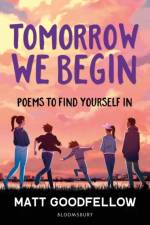
A powerful new collection of poems for teenagers from prize-winning poet Matt Goodfellow, author of Let's Chase Stars Together and The Final Year. Perfect for readers aged 11+
Western philosophy has often claimed for itself not just a distinct sphere of knowledge, but a distinct form of communication, set against ordinary speech. In Speaking Philosophically, Thomas Sutherland proposes that for some philosophers, authentic philosophizing demands a specific manner of speaking or writing, adoption of which enables one to gesture toward truths that propositional speech will never grasp. Drawing on a variety of thinkers - Heraclitus, Plato, Kant, Fichte, Nietzsche, Kierkegaard, Weil, Foucault, and Irigaray - Sutherland argues this emphasis on the form of philosophical communication can function as an exclusionary mechanism, determining who is deemed capable of speaking philosophically.
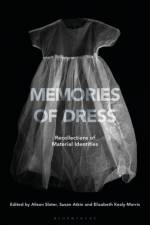
Memories of clothing feature prominently in auto/biographies, yet traditionally they have not been subjected to the same level of academic scrutiny as other sources. Memories of Dress redresses this imbalance by bringing auto/biographical memories to the centre of a new methodology for understanding fashion history, material culture, and other disciplines. Presenting a comprehensive overview of theoretical and practice-based approaches, the book invites readers to explore the relations between clothing and memory through diverse examples ranging from oral histories of Madchester men and Hungarian socialist sewing, to a quilt-making autoethnography into the complexities of American racial heritage and imagined memories within museum collections. Chapters by leading and emerging experts consider the ways in which dress is remembered and the ways that memories and nostalgia in turn influence everyday dress practices, unpicking the meanings and motivations-both collective and public, personal and private-behind the clothes we wear in different times, places and life stages; and the impact of class, gender, ethnicity, and disability on material identities. Uniquely weaving personal recollection with theory, this multidisciplinary book offers new ways of understanding clothing, material culture, and memory.
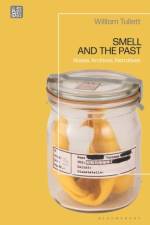
What if researchers interested in 'the past' used their noses? This open access book makes the case for a more imaginatively interdisciplinary approach to sensory heritage and history, arguing that we can and should engage our noses as a research tool for articulating the past. Assessing how both we and our ancestors approach, understand and conceptualise smell, Tullett shows how archives can be 're-odorized' to uncover narratives that are only implicit in or obscured by the historical record. From perfume libraries to organic compounds emitted by historical objects, this book acts as a guide for employing our olfactory senses when researching and studying history in order to understand and communicate the past more fully. Employing 'olfactory figures' examples, Smell and the Past shows how historical narratives and arguments can be found through a structured olfactory experience, and demonstrates how our understanding of the past and its relationship with the present is enriched by opening our minds and using our noses. The ebook editions of this book are available open access under a CC BY-NC-ND 4.0 licence on bloomsburycollections.com. Open access was funded by the European Union's Horizon 2020 program project ODEUROPA under grant agreement number 101004469.
Abonner på vårt nyhetsbrev og få rabatter og inspirasjon til din neste leseopplevelse.
Ved å abonnere godtar du vår personvernerklæring.