




Gjør som tusenvis av andre bokelskere
Abonner på vårt nyhetsbrev og få rabatter og inspirasjon til din neste leseopplevelse.
Ved å abonnere godtar du vår personvernerklæring.Du kan når som helst melde deg av våre nyhetsbrev.

Title 40 presents regulations governing care of the environment from the 14 subchapters of Chapter I and from the provisions regarding the Council on Environmental Quality found in Chapter V. Programs addressing air, water, pesticides, radiation protection, and noise abatement are included.
Title 40 presents regulations governing care of the environment from the 14 subchapters of Chapter I and from the provisions regarding the Council on Environmental Quality found in Chapter V. Programs addressing air, water, pesticides, radiation protection, and noise abatement are included.
Title 40 presents regulations governing care of the environment. Programs addressing air, water, pesticides, radiation protection, and noise abatement are included. Practices for waste and toxic materials disposal and clean-up are also prescribed.
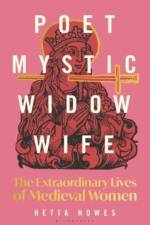
A spectacular, vivid, groundbreaking work of history which takes us into the minds and lives of medieval women.What was life really like for women in the medieval period? How did they think about sex, death and God? Could they live independent lives? And how can we hear the stories of women from this period? Few women had the luxury of writing down their thoughts and feelings during medieval times. But remarkably, there are at least four extraordinary women who did. Those women were: Marie de France, a poet; Julian of Norwich, a mystic and anchoress; Christine de Pizan, a widow and court writer; and Margery Kempe, a no-good wife. Four women, writing hundreds of years ago, long before feminism existed - yet in their own ways these four, very different writers pushed back against the misogyny of the period. Each of them broke new ground in women's writing and left us incredible insights into the world of medieval life and politics. Hetta Howes has spent her working life uncovering these women's stories to give us a valuable and unique historical insight that challenges what we hold to be common knowledge about medieval women in Europe. Women did earn money, they could live independent lives, and they thought, loved, fought and suffered just as we do today. Poet, Mystic, Widow, Wife paints a portrait of the world in which these women lived, and the ways their lives speak to us in the present.
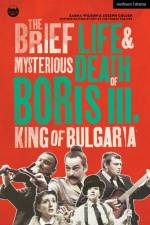
Your country, sir. Your people. Your responsibility. It rather does fall to you to make things right. Clean up your father's mess. Winner of the 2023 Off West End 'Best Ensemble' AwardRunner Up for the 2023 BBC Writersroom Popcorn Award for Best New WritingWinner of the 2020 VAULT Festival Origins AwardThe year is 1943 and Bulgaria has just told Hitler where to stick it. Europe's major powers are at war and King Boris III must choose a side or be swept away. A raucous and poignant tale in which a bunch of underdogs use every trick in the book to outwit the Nazis and save nearly 50,000 Jewish lives. Award-winning Out Of The Forest Theatre's irreverent comedy - featuring live music inspired by Bulgarian and Jewish folk tunes - tells the incredible true story that the world forgot. This is a unique story in 20th century European history. Prepare to be enthralled as The Brief Life & Mysterious Death of Boris III, King of Bulgaria weaves a tale that delves deep into history, leaving you both informed and spellbound. This edition was published to coincide with the initial run at New York City's Brits Off Broadway festival at 59E59 Theatre in May 2024, before the show toured the UK in June 2024.
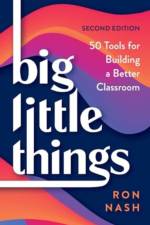
This second edition of Big Little Things highlights 50 tools for building better classrooms at all levels.
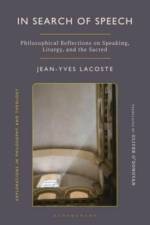
Jean-Yves Lacoste is one of the best known French philosophers alive today. Along with Jean-Luc Marion, Jean-Louis Chrétien, and Michel Henry, Lacoste is hailed as a leading figure in the revival of French phenomenology in its engagement with Christian theology. In this highly readable and stylish translation by Oliver O'Donovan, Lacoste's In Search of Speech considers how linguistic events are precisely what enable us to escape the threat of nihilism and to survive in a world now cynically regarded as having entered a phase of 'post-truth.' In recent decades, language has been reduced by various philosophers, both Anglo-American and European, in treatments that render it abstract, flat, or distant from life. In Search of Speech seeks to do justice to speech in the various ways in which we perform it and in which it confronts us as one or more events. Speech always occurs in the world: it makes things present to us or it makes them absent from us. Speaking, reading, and even being silent, are never wholly free from anxiety, babble, boredom, humour, and concern for others. Liturgical speech deserves particular attention, and even here speech is in danger; for speech can conceal as well as reveal. Lacoste begins with very weak assumptions and slowly, using many examples, and clarifying as he goes along, builds up a rich picture of human speech and the forces that seek to drain it of meaning.
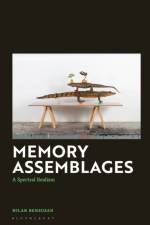
Making the claim that reality is more like memory than a permanent substance, this original work draws on Derrida and Malabou to suggest a picture of the world as an assemblage of spectral resonances and disseminations. In Memory Assemblages, Hilan Bensusan combines elements of continental and analytic philosophy to advance a theory of realism which insists on the reality of spectres, an ultrametaphysical approach departing from metaphysics while attending to the problems that triggered metaphysical investigation. In doing so, Bensusan builds on the reception of Derrida's hauntology, particularly by Latin American scholars in disciplines such as media studies, history, and political theory, and engages with currents of speculative realism as well as contemporary work on idealism and logic.Challenging the correlationist view in which being and time cannot be considered independently of subjectivity, Bensusan gives an account of exteriority where thought and reality share a common logic of addition. Central to the book is this philosophy of addition, where addition structures the insufficiency and incompleteness of whatever seems to be present: it is an operation that dismantles what has been before in a way that depends on that past consigned to memory. Addition is explored in light of the Derridian supplement, the Epicurean Swerve, Jean-Luc Nancy's notion of struction and the Marxist notion of forces of production. A coda further elaborates the notion of production in this context, arguing for a spectral Marxism and drawing on Deleuze and Guattari's Anti-Oedipus.
This incisive volume offers fresh historical and constructive engagements with the ever fascinating and perplexing theological ethics of Dietrich Bonhoeffer. Matthew Puffer examines the historical crises out of which Bonhoeffer composed the manuscripts that would become his posthumously published magnum opus, Ethics. He explores the ways in which Bonhoeffer understood his work as a response not only to the ecclesial, social, and political crises of Nazi Germany, but more specifically to a "crisis in ethics," the failure of traditional forms of ethics to effectively respond to the state of emergency. Bonhoeffer famously wrestles with novel proposals for how Christians should think about responsibility, complicity, culpability, and guilt in ways that have left not only casual readers but also philosophers and Bonhoeffer scholars scratching their heads. In these chapters, Matthew Puffer argues for a critical reconsideration of the ethics supposed to have informed Bonhoeffer's participation in German resistance, but also for an extension of Bonhoeffer's thought to the global, ecological, and intergenerational crises of ethics that we face today. An ethics of hope proves to be an essential and ineliminable feature of Bonhoeffer's thought, evident in his insistence that ethics is fundamentally about how coming generations will live. In Bonhoeffer we find fresh inspiration for contemporary debates regarding the meaning and political implications of human dignity, integrating the wellbeing of not-yet-existing future generations into the moral calculus regarding what it means to treat present day persons with dignity.
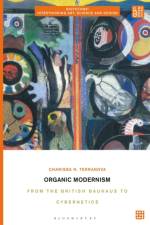
When artists, scientists, and designers unite they create new ways of thinking and alternative paths to problem solving.The first book to trace the story of British "organic modernism", this ground-breaking open access study tells the story of a collective culture of artists, scientists, and designers in 20th century united by a holistic understanding of the organic world and devoted to collaboration, cooperation, and cross-pollination of the arts and biological sciences.Tracing how artists, scientists, and designers cooperated in various capacities from the Great Depression to postwar cybernetics, this book follows the evolution of philosophical organicism from the British Bauhaus, modern architecture, and surrealism; through to post-war socialism, the welfare state, epigenetics, biology-based art exhibitions; robotic art and design, cybernetics and ecology in art. Reacting against blunt reductionism, organic modernists implemented organicist and emergentist philosophies in scientific labs, design studios, and art ateliers, embracing complexity to solve problems in various scales and arenas, from cells to socialism. Their actions offer a template for finding meaningful agency and problem solving in today's world fraught by global climate disaster, ever-expanding economic inequalities, and backsliding democracyA sequel to Terranova's Art as Organism: Biology and the Evolution of the Digital Image (2016), Organic Modernism reveals the biological roots of cybernetics in the British context.The ebook editions of this book are available open access under a CC BY-NC-ND 4.0 licence on bloomsburycollections.com. Open access was funded by the Edith O'Donnell Institute of Art History.
Ype de Boer invites you to rethink what you know about the philosophy of Giorgio Agamben.In a compelling and original argument, De Boer contends that, in the work of Agamben, ethics takes primacy over politics. Presenting a careful evaluation of Agamben's overlooked contribution to ethics, this book explores his enigmatic yet central concept of the 'happy life'.By reading Agamben's philosophy in terms of a 'poetico-philosophical experiment' - a term coined by the Italian philosopher himself, and one through which he questions our very mode of existence - De Boer assesses the variety of ethical paradigms that Agamben's work offers. This not only challenges the widespread misconception of Agamben as the 'dark prophet' known for his pessimistic, even nihilistic political critiques, but reveals how understanding the various facets of the 'happy life' allows for a better appreciation of his attacks on the ethico-political condition. Agamben's Ethics and the Happy Life demonstrates that ultimately Agamben seeks to formulate an alternative notion of ethics, politics and ontology that will lead us out of nihilism.Tracing Agamben's positive moral philosophy through his key works, including the seminal Homo Sacer series, De Boer uncovers how, for Agamben, a happy life is one directed not by responsibility, guilt, action and duty, but by receptivity, love, use and potentiality.
Exploring how Shusaku Endo, Ta-Nehisi Coates, Thomas Merton, Marilynne Robinson, Cormac McCarthy, and Octavia E. Butler engage with social justice and activism, this book explores the significant role that literature plays in the formation of justice. Jeff Keuss foregrounds literature and the role of poetics as both a method and a frame by which justice can not only be understood but uniquely positioned to transform and redeem the moral call on individuals in ways that some recent philosophical and ethical projects do not. He examines how these authors are representative of a theme in literature which is the "turn to justice" as a literary form and discusses how these authors' engagement with activism challenges isolated and anxious models of contemporary selfhood. Demonstrating how these writers utilize fiction, across different contexts of race, gender, culture, and theological denominations, to present themes of justice in communion with others, Keuss provides new insights into "communal selfhood" and shows how we can use this idea to shape our ideas of ethics, morality, activism, and justice.
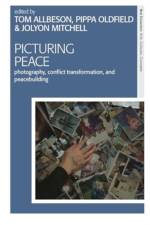
"What is the relationship between peace and photography? How are artists and curators motivated to convey narratives of peace and not just stories of war? Does the digital afterlife of iconic images reveal societal shifts towards conflict transformation? Providing interdisciplinary and international perspectives on important research questions, Picturing Peace explores issues of identity construction, collective memory, and imagined futures in the creating and sustaining of civil societies. How things look and are perceived are not superficial issues; when it comes to war and conflict, photography is vitally relevant not only to fomenting violence, but also to rebuilding peaceful societies"--
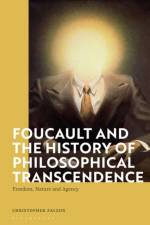
In an original approach to Foucault's philosophy, Christopher Falzon argues for a reading of Foucault as a philosopher of finite transcendence, and explores its implications for ethics. In order to distinguish Foucault's position, Falzon charts the historical trajectory of transcendence as a philosophical concept, starting with the radical notion of transcendence that was introduced by Plato, and which reappears in various forms in subsequent thinkers from the Stoics to Descartes, and from Kant to Sartre. He argues that Foucault's critique of the transcendent subject of humanism is a rejection not of transcendence per se but of radical transcendence in its distinctively modern form. As such, he shows how Foucault's conceptualisation of transcendence as finite enables a picture of the human being as neither fully determined nor a creature of infinite possibilities, but as both subject and object, affected by but also able to affect the world. With the notion of finite transcendence Falzon captures the essence of Foucault's unique philosophy and provides a new insight into his contribution to ethics. Demonstrating its contemporary relevance, Foucault and the History of Philosophical Transcendence further explores the potential application of Foucault's approach to the current ecological crisis.
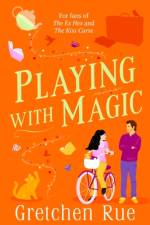
Bookstore owner Phoebe Winchester is putting on her first major author event when a body is discovered and the plot goes off the rails in this cozy mystery, perfect for fans of Cleo Coyle and Jenn McKinlay. Amateur witch Phoebe Winchester is excited to host her first big author event at the Earl's Study, her book and tea store. The author, Sebastian Marlow, is a famous birder excited to put Raven Creek on the map for his rediscovery of a presumed-extinct bird. When Sebastian is found dead before his planned bird hike, where he expected to prove the existence of the bird to fellow birding enthusiasts, it's obvious someone wanted him to be extinct, too. Sebastian had a few unfriendly encounters with his staff-including his recently fired manager, who was seen arguing with him at the author event. Phoebe is determined to figure out who killed Sebastian, worried that it will negatively affect her store's image that her biggest guest author got killed. With the clock ticking, she enlists the help of Rich Lofting, the handsome local private investigator, to help her look into the murder. It's not long before another victim is pecked off and someone close to Phoebe is the suspect. She'll have to work quickly to uncover the killer and figure out who's up to fowl play in the third charming book in this warm and witchy series.
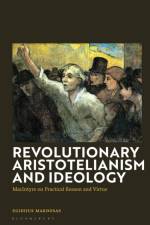
How does ideology function and, more importantly, can philosophy help us resist ideological subjugation? Egidijus Mardosas answers these questions by applying the philosophical resources of Revolutionary Aristotelianism: a recent approach in social philosophy that takes inspiration from the Aristotelian works of Alasdair MacIntyre. In particular, Mardosas focuses on the Aristotelian and Macintyrian notions of practical reason (phronesis) and virtue. To be a successful practical agent, he explains, is to reach for genuine human goods and resist all forms of ideological subjection. And our virtues are the intellectual and moral powers that can help us in this task. Considering which virtues to practise, this book examines the qualities of truthfulness, comradeship, courage, and justice and uncovers how all four virtues are key, in differing ways, to sustaining our practical agency in the face of ideological manipulation. Bringing together ethics, social philosophy, and Aristotle via MacIntyre, as well as key thinkers from Gramsci to Honneth, Revolutionary Aristotelianism and Ideology provides an urgent investigation into the necessity and virtues of social struggle.
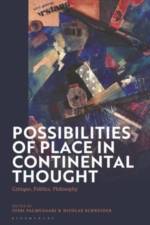
Exploring the critical potential of place in continental philosophy, this volume focuses on socio-political and historical context to challenge traditional approaches to place rooted in geography and phenomenology.Chapters on capitalist time, the space-time of slave resistance, the place of thought, and the place of structure point to the ambiguity inherent in philosophical notions of place. By rejecting a singular and homogenous theory of place, this collection collapses the dichotomies that tend to characterise the discourse on place in favour of a plural conceptualisation. This plurality draws attention to the spatial and temporal dynamics within varying theoretical and historical contexts and moves the field forward in significant and vital ways.
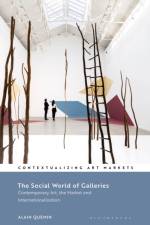
"This book presents the first detailed study of the place of galleries and gallerists within the French art market. Based on field research carried out for over a decade, the book draws on interviews with those working in the field today to provide a thorough and up-to-date analysis of what contemporary art galleries really are, illuminating the hierarchized structure of the sector and revealing the major role galleries play in the creation of art value. The book concludes by providing a sociological ranking of international contemporary art galleries. It is essential reading for scholars and students of art sociology, art history and art business"--
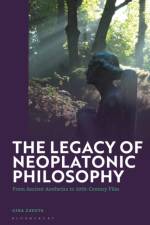
Bringing together leading scholars from philosophy, architecture, history, classics, and art history, this volume asks: what are the key concepts in Neoplatonic aesthetics? And what impact have they had on the arts since 3rd century CE? Organized into three parts, in part I four authors examine the theory behind Neoplatonic aesthetics, including in particular the philosophy of beauty, ornament, and the artistic imagination. Based on the thought of Plato, Neoplatonism incorporated influences from Aristotle, Stoicism, and a variety of other philosophical traditions to create a unique school of thought within the Western canon. The second part explores the influence of Neoplatonic thought on the painting, architecture, and music of classical, medieval, and Renaissance Europe. With chapters on Byzantine hymns, the birth of the Gothic, and Vasari's Saint Michael, the authors bring to life the Neoplatonic influence on European culture and thinking. Finally, part III uncovers the impact of Neoplatonism right up to the modern day through a range of 19th- and 20th-century artistic case studies, from Kandinsky and Malevich to literature, music and world cinema. Unique in its interdisciplinary breadth, historical coverage, and combination of theory and application, The Legacy of Neoplatonic Aesthetics provides a fresh insight into the enduring influence of Neoplatonic thought on the arts of the Western world.
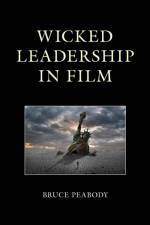
This book offers an original theory and set of cinematic case studies to examine how we contend with "wicked problems," important, entrenched, and far-reaching political and social challenges (such as climate change or mental illness) that resist ordinary policies and problem solving.
This book offers a re-reading of Chaka to show that Mofolo astutely deconstructs, and then reconstructs, King Chaka into a messianic figure whose life trajectory and destiny mirrors that of Jesus Christ in the Bible's New Testament in order to subvert the colonial ethos of the time.
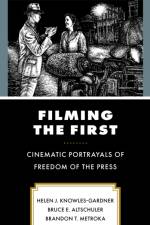
Filming the First provides in-depth case studies and analyses of eighteen films depicting aspects of freedom of the press. It discusses the substantive social, political, historical, and legal aspects and implications of press freedoms illustrated in the films.
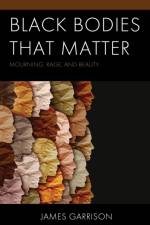
Responding to interconnected tragedies affecting minority populations in America, Black Bodies That Matter: Mourning, Rage, and Beauty brings together the nascent Black Lives Matter movement with the framework initially developed by Judith Butler in her work Bodies That Matter.
The Construction of Metaphoric Text and Talk: A Discourse Analytic Approach argues that in view of their omnipresence in human thinking and action, metaphors play a very important role in discourse construction and organization and this role can be textural and textual. In order to explore the textual role of metaphors, Meizhen Liao proposes that metaphors in discourse be treated as a complex adaptive system (CAS), which is further composed of two sub-systems, a micro one consisted of the tenor and the vehicle and a macro one made up of different metaphors. The dynamic interaction within the micro system between the tenor and the vehicle in terms of mapping, as well as among the macro system of all the metaphors in the text or talk via competition, cooperation, or complementation contributes to the construction and organization of discourse as an adaptive process in pursuit for the goal or goals of the discourse. In the process of the interaction, emergent textual patterns develop and an adequate analysis of the patterns at both micro and macro as well as deep and surface levels of discourse will shed light on the true nature and pattern of human thinking and action. The author concludes that as metaphor has become entrenched in our conceptual system the study of metaphor as a complex adaptive system in discourse be conducted in its own right.
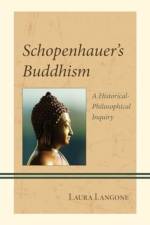
In a letter from May 10, 1852 Adam von Doß, Schopenhauer declared himself a Buddhist. This book is the first study to do justice to Schopenhauer's passion for Buddhism, reconstructing the notions of Buddhism he acquired through his Buddhist readings as well as their influence on his thought.
This book argues that Islam is at risk of losing itself through the process of modernity. It is ironically the lessons of modernity that can save it: a return to origins without a negation of meaning and embracing the project of hermeneutics with deference for the classics.
James Buchanan Elmore (1857-1942): Literary Ethnographer and Folk Poet details the life and work of Elmore as a "folk poet," emphasizing the importance in the cultural understanding of the ethnographic insights he gave as a farmer in the midwestern United States that experienced dramatic social change after the Civil War.
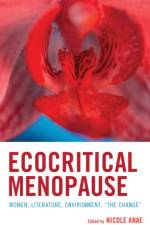
This collection reexamines menopause across the disciplinary fields of ecofeminism and ecocriticism and brings together cross-sectional ecofeminist voices privileging women's menopausal positionality within literary works.
Abonner på vårt nyhetsbrev og få rabatter og inspirasjon til din neste leseopplevelse.
Ved å abonnere godtar du vår personvernerklæring.