






Gjør som tusenvis av andre bokelskere
Abonner på vårt nyhetsbrev og få rabatter og inspirasjon til din neste leseopplevelse.
Ved å abonnere godtar du vår personvernerklæring.Du kan når som helst melde deg av våre nyhetsbrev.

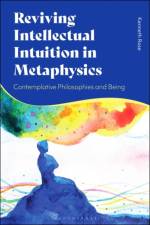
Calling for a revival of intellectual intuition in metaphysics long after its banning by Kant, Kenneth Rose overcomes the forgetfulness of being through contemplative ontology. Rose argues for the reinstatement of intellectual intuition in metaphysics long after its banning by Kant. His claim is not merely the conclusion of a thought-experiment or of an exercise in conceptual analysis. It is the result of the contemplative recognition of being with a meditatively concentrated intellect: nous in Greek and buddhi in Sanskrit. Recognizing intellectual intuition as a long-neglected faculty of philosophical insight, Rose shows how it can result in an immediate, intuitive discerning of being. He discusses how being parcels itself out into the intellectual forms providing the underlying nonphysical arrangement of the physical and mental worlds. By reviving the use of intellectual intuition in metaphysics, Rose draws upon historical sources across multiple Asian and Anglo-European philosophical schools. This is a work of contemplative constructive philosophy that breaks down divisions between science, philosophy, and religion and between diverse cultures and divergent worldviews.
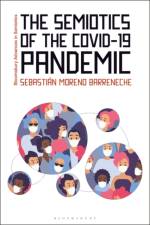
Focusing on the discursive dimension of the COVID-19 pandemic from a semiotic perspective, this book uses semiotic theory and methods to analyse the meaning-making mechanisms and dynamics that occurred during, and revolved around, the pandemic. Demonstrating the utility of semiotic theory, concepts and analytical methods to make sense of discursive phenomena like those triggered by the COVID-19 pandemic, the book explores in detail: · the blame-attribution discourses that emerged at the beginning of the pandemic; · how the coronavirus was brought to life in plastic and visual manifestations as a monster that poses a threat to humans; · how the collective actor 'the healthcare workers' was constructed in discourse and axiologised in positive terms; · the semiotics of the body during the pandemic, with a focus on the face, facemasks, social distancing and the uses of the body in online environments; · the idea of a 'new' normality following the pandemic. The book examines different dimensions of the COVID-19 pandemic, including examples from Europe, Latin America and the United States and a wide range of images, texts, practices and objects, in order to highlight the importance of its discursive and semiotic nature.
This book examines the experiences of students with learning disabilities in South African higher education, exploring the different factors that shape students' university engagements. Students' experiences, gathered through semi-structured interviews, are analysed within the Capability Approach to assess the way social arrangements influence students with learning disabilities' academic engagements. The book then discusses the ways universities can foster opportunities that contribute to students' multi-dimensional achievements for their academic and general wellbeing. The book exposes inequalities in higher education that impact students with learning disabilities who often operate in inflexible educational systems, practices and standardised learning outcomes that do not take into account the unique ways by which students with learning disabilities process information. The book sheds light on the educational trajectories and conditions which students with learning disabilities operate in.
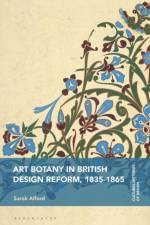
"This book provides an interdisciplinary study of how design and botanical science came together in the 19th century, examining the work of leading botanists, designers and illustrators such as Sarah Drake, John Lindley, Owen Jones and Christopher Dresser. It reveals how design reformers looked to 'art botany', the practice of basing decorative form and ornament on the hidden, natural laws that govern plant growth and structure, as a model for how to create and identify what is new and incorporate it into what was already familiar and meaningful, in order to develop a national design aesthetic and a professional field of practice"--
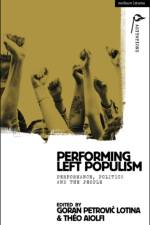
"This interdisciplinary volume offers new insights into the connections between populism and performance. As a driving force of the contemporary left, populist logic offers a way for progressive politics to radicalize actions against the elite, fostering greater democratization of societies at a time of socio-political, sanitary and environmental crisis. Exploring the populist roots of a number of performances, the contributors to this study analyze the potentials and limits of the new forms of left populism for more democratic ways of living together. Combining performance studies and political theory, Performing Left Populism demonstrates how various performance practices give rise to populism. It shows how both civic performances (including grassroots, civil movements, political speeches, state policies and media campaigns) and artistic performances (such as theatre, dance, music and artistic activism) contribute to these processes. By these means, the book examines the processes of constructing 'a people' through both the real/civic and imaginary/artistic perspectives. Offering scholars and practitioners a thought-provoking analysis of the ways in which performance can be viewed politically, as a social practice capable of mobilizing alternative ways of living and invigorating democracy, it expands the debate about left populism towards strategies of mobilization, collectivism and democratic politics"--
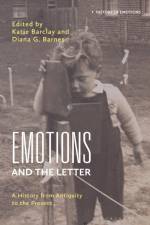
From hate mail to suicide notes to begging letters, this book explores the relationship between letter writing and emotion through case studies from antiquity to the 21st century. It shows how the epistolary form has offered a wide range of ways to communicate private feelings, make public statements and offers a rich historical source to explore how people have performed emotions for a range of audiences.Emotions and the Letter shows how this long-standing historical source can provide insights into a diversity of emotion traditions in different periods. Uses of the letter in different periods and its emotional potential reflect important interactions between individuals and society, private and public, aesthetics and authenticity. Applying approaches and methods from the history of emotions, literary studies and affect studies this collection significantly advances our understanding of why letters remain such a critical mode of communication and shows how to analyse letters for historical emotions research.
Roman political leaders used distance from Rome as a key political tool to assert pre-eminence. Through the case studies of Caesar's hegemony, Augustus's autocracy, and Tiberius's reign, this book examines how these figures' experiences and manipulations of absence established a multipolar focus of political life centred less on the city of Rome, and more on the idea of a single leader. The Roman expansion over Italy and the Mediterranean put the political system under considerable stress, and eventually resulted in a dispersal of leadership and a decentralization of power. Absent generals rivalled their peers in Rome for influence and threatened to surpass them from the provinces. Roman leaders, from Sulla to Tiberius, used absence as a mechanism to act autonomously, but it came at the cost of losing influence and control at the centre. In order to hold influence while being split off from the decision-making powers of the geographical nucleus that was Rome, communication channels to mitigate necessary absences were developed during this period, such as travel, intermediate meetings, letters (propaganda writings) and a complex network of mediators, ultimately forming the circle from which the imperial court emerged. Absent leadership, as it developed throughout the Late Republic, a hitherto neglected issue, eventually became a valuable asset in the institutionalising process of the autocracy of Caesar, Augustus, and Tiberius.
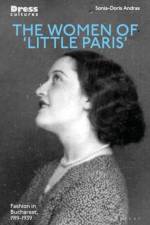
Filling a gap in Eastern European fashion studies, this book presents middle-class women consuming fashion in the symbolic 'Little Paris' of interwar Bucharest, and examines how their material and cultural means supported the city's modernisation. Combining archival research with personal archaeology, this interdisciplinary work explores Romania's reinvention as a modern state, focusing on middle-class women as they lived their lives - walking through the streets, at lavish events, at cafes and clubs, shopping, and working. Analysing largely unseen, unused written and visual texts, The Women of 'Little Paris' encourages exploration of new avenues for research, uniting scholars of Romanian culture, history and fashion and guiding readers through a forgotten, little explored world and, in so doing, adds to our understanding and knowledge of the global image of interwar fashion cultures and the emerging field of Romanian fashion studies.
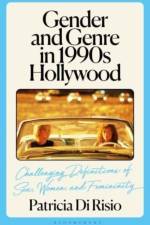
The 1990s was a decade of significant turmoil in Hollywood cinema, which resulted in a watershed moment in the interplay of gender and genre. Patricia Di Risio argues that cinematic representations of unconventional women had an important effect on traditionally male oriented genres, such as the crime thriller, road movie, western, film noir, war film, sci-fi, and horror. Di Risio analyses seven key films from the decade, including Blue Steel (1990), Thelma & Louise (1991), The Quick and the Dead (1995), Bound (1996), Jackie Brown (1997), G.I. Jane (1997) and Alien: Resurrection (1997), paying particular attention to their use of irony, allusion, and pastiche. She highlights how their female protagonists, a majority of whom are decidedly queer or gender questioning personas, produce an intense crossover in genre conventions, largely driven by their gender rebellion. She examines how a deconstruction of gender simultaneously allows genre hybridity and intertextuality, taking these films into unexpected new directions. In doing so, she delineates a clear line between the unconventional nature of the representation of the female protagonists and innovative changes to genre filmmaking practices.
Innovatively combining philosophical inquiry and aphoristic writing, this study presents a bold new interpretation of philosophical poetics. Exploring fragments, both thematically and formally, Luke Fischer situates the form as uniquely positioned between philosophy and poetry. Like poetry, fragments condense insights into few words, employ striking metaphors that draw intuitive connections, and make space for creative interpretation. Contrasting with the logical linearity of much philosophy, fragments disclose rather than prove, intimate more than argue, suggest a whole without elaborating a system, and emphasize the intuitive act of thinking. Fischer readjusts our understanding of philosophical ideas as they originate in moments of illumination, and reveals the fragment as philosophy in process. In a collection of original fragments and an exploratory essay, Fischer sheds light on the relation between poetry and philosophy, aesthetics and society, art and the environment, and discusses seminal practitioners of the fragmentary form, including Novalis, F. Schlegel, Nietzsche, and Heraclitus. Philosophical Fragments as the Poetry of Thinking makes an engaging, nonlinear case for the possibility and significance of a poetic transmutation of philosophy.
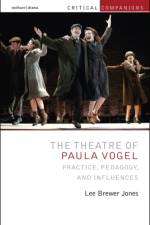
In this volume, Lee Brewer Jones examines Paula Vogel as both a playwright and renowned teacher, analyzing texts and early reviews of Vogel's major plays-including Indecent, Desdemona, How I Learned to Drive, and The Baltimore Waltz-before turning attention to her influence upon other major American playwrights, including Sarah Ruhl, Lynn Nottage, and Quiara Alegría Hudes. Chapters explore Vogel's plays in chronological order, consider her early influences and offer detailed accounts of her work in performance. Enriched by an interview with Lynn Nottage and essays from scholars Ana Fernández-Caparrós and Amy Muse, this is a vibrant exploration of Paula Vogel as a major American playwright.By the time Paula Vogel made her Broadway debut with her 2017 Rebecca Taichman collaboration Indecent, she was already an accomplished playwright, with a Pulitzer Prize for How I Learned to Drive (1998) and two Obie Awards. She had also enjoyed a brilliant career as a professor at Brown and Yale with students such as Sarah Ruhl, a MacArthur "Genius" Grant winner, Pulitzer Prize winners Nilo Cruz, Quiara Alegría Hudes, and the only woman to win two Pulitzers for Drama, Lynn Nottage. Vogel's theatre draws upon Russian Formalist Viktor Shklovsky and uses devices such as "defamiliarization" and "negative empathy" to challenge conventional definitions of protagonists and antagonists.
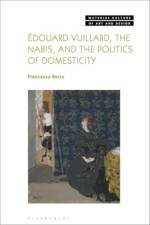
This ground-breaking book is the first to address the feminine and feminist politics of Intimist art - a modernist mode of art making developed in the 1890s by Édouard Vuillard while associated with the Nabi 'brotherhood'.Coined by contemporary critics, 'intimisme' encapsulated the shared approach of these artists to depicting intimate settings and themes. Vuillard's paintings, which are typically small, employ bold pigments and economic brushstrokes to depict female figures in tightly composed apartment interiors. Those portrayed include his mother and sister, just as wives and lovers dominate the art of other Nabis, including Maurice Denis and Pierre Bonnard.Francesca Berry comparatively analyses the gender politics of Nabi art to reveal real differences. Through skilled visual interpretation she argues that Vuillard attempted a profound engagement with the material conditions of feminine domesticity in cooperation with his first and most sustained audience: women. He did so, the author reveals, in artworks that explore a complex range of feminine experiences such as sexual initiation, stillbirth, illicit work, and unceasing housework. The personal gender politics of Intimiste practice also are foregrounded. Vuillard's studio-bedroom afforded him access to quotidian femininity. But at what risks to his sister's privacy and to his mother's subjectivity?Making an artistic project of feminine domesticity also meant entering the field of politics. The 1890s was the decade of state legislation and feminist demands with respect to work in the home and women's familial rights. Personal in motif and Synthetist in form, Berry's extensive historical research reveals these artworks also to have been social and political, sometimes even feminist, in meaning. Transcending the structural repression of domesticity in histories of modernist art, this book powerfully overturns residual myths of aesthetic introspection and social retreat that for too long have been attached to Nabi Synthetism.
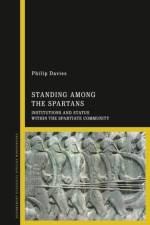
Conformity, uniformity, institutionality, exceptionality - each of these terms encapsulates an aspect of the common perception of Sparta, both among scholars and in the popular imagination. This volume seeks to interrogate how rightly we may apply these terms to the Spartan citizen community in the classical period (approximately 500-350 BC) and reveals a much greater level of differentiation within this social group than is often assumed. Drawing upon recent scholarship on Sparta, theoretical and methodological discussions from within the wider fields of classical studies and ancient history, and approaches to status and institutions developed in the social sciences, Philip John Victor Davies examines the diverse factors which influenced the standing of individuals within the Spartiate community and assesses how great a role institutions played in determining a Spartiate's standing and to what extent Sparta was, as ancient accounts would suggest, significantly more institutionalized than other Greek societies. Placing Sparta in the context of the renewed interest in institutions and their social significance represented across multiple disciplines by the 'New Institutionalist turn', he presents a more dynamic understanding of the internal life of the Spartiate community, with a nuanced appreciation of the dimensions and limits of Sparta's exceptionality.
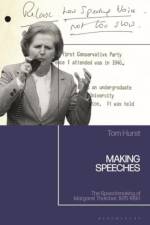
Having recently passed the 40th anniversary of Margaret Thatcher's entry into Number 10 Downing Street, the burgeoning field of Thatcher studies continues to attract the attention of scholars and students alike. The dense array of literature has thus far comprehensively covered Thatcher's politics, personal life and famous speeches, but the approaches she took to her speech writing have hitherto been overlooked. By consulting a variety of primary sources such as the Chrurchill archives which house Thatcher's papers Tom Hurst deftly presents a comprehensive account of Margaret Thatcher's Speechmaking. By encompassing the creation, delivery and dissemination of the speeches before concluding with a focus on the reception of these speeches in an unprecedented digital age, Hurst fills an existing gap.By focusing on the oft-overlooked staff who helped Thatcher draft her speeches - and in so doing, shaped Thatcherism from behind the scenes - Hurst promotes an entirely original work that unveils the Iron Lady's reliance on her speechmakers, which has previously been unexplored.
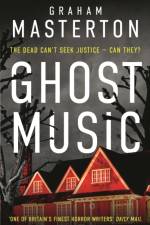
The dead can't seek justice - can they?Gideon Lake, a successful composer, is immediately smitten by his neighbour Kate Solway. They begin a passionate affair, and Kate invites him to Europe so that they can be together without her husband finding out. But when Gideon witnesses all kinds of strange and terrifying events, he soon realises that nothing in Kate's world is what it seems. Gideon must work out who, and what, Kate really is - and what she wants from him... Praise for Graham Masterton: 'One of the most original and frightening storytellers of our time' Peter James 'Suspenseful and tension-filled... all the finesse of a master storyteller' Guardian 'One of Britain's finest horror writers' Daily Mail
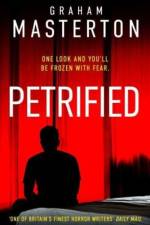
ONE LOOK AND YOU'LL BE FROZEN WITH FEAR. Braydon Harris and Suki, his little girl, are leaving her grandparent's house when a huge truck jack-knifes in front of their car. Suki is thrown from the vehicle and winds up in hospital suffering with terrible burns. Luckily, cryptozoology professor Nathan Underhill is working on a perfect cure. Underhill breeds mythological beasts, and lately he's been working with the legendary phoenix - whose cells he believes might hold exceptional healing properties against burns. Despite the treatment, Suki finds that the pain from the burns and this remedy only exacerbates a terrible nightmare she's had for years - one that's becoming realer by the minute, about scary things flying through the sky... and now they're headed straight for her. Petrified is an original and terrifying fantasy horror thriller from the Master of Horror himself, Graham Masterton. Praise for Graham Masterton:'One of the most original and frightening storytellers of our time' Peter James'Suspenseful and tension-filled... all the finesse of a master storyteller' Guardian'One of Britain's finest horror writers' Daily Mail'You are in for a hell of a ride' Grimdark Magazine
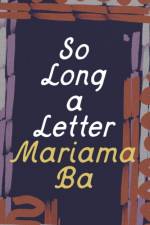
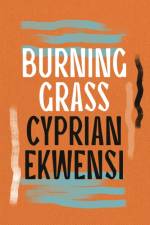
Mariama Bâ's pioneering debut, So Long a Letter, captures the private lives of women in 1970s Senegal. Recently widowed, Ramatoulaye is required to take sole responsibility for the long mourning process of her late husband. A husband she has not seen in over four years - not after he married his second wife. In a letter to her friend, Ramatoulaye recalls both of their experiences as students impatient to change the world, as wives suffering in the private sphere of marriage, and as mothers witnessing the dangers of Westernisation. Undaunted by topics of polygamy, social castes, and religion, So Long a Letter is a novel rich with poetic prose and profound wisdom. 'Mariama Bâ is in a class of her own, conveying with real power and poetry a subtle, changing world of female experience.' Guardian 'The most deeply felt presentation of the female condition in African fiction.' Abiola Irele
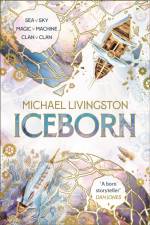
In the thrilling sequel to Seaborn, the Windborn threaten war against the Fair Isles - and three women of the sea hatch daring plans to change their fates.Bela, the reluctant hero, journeys into the inhospitable Sea of Ice in search of the ancient portal that broke the world.Shae, the ship-less Bone Pirate, stands with a Windborn exile before an arms of remorseless metal beings.And Alira, the huntress, faces the revelation of what the Bloodborn are, and the truth of their horrible magicks.In desperation, in determination, and in hope, every step they take reveals new secrets about their past - and new fears for their future.
A new title in the Pippa's Pony Tales series, a must-have for any reader who loves horses and ponies. Tilly and her horse, Magic Spirit, are inseparable. Are they closer to achieving their dreams of stardom?Tilly, Magic Spirit and the rest of the Junior Squad are training with a top eventer for a week. There's a lot of hard work and a lot to learn if they are all to achieve their dreams. To be the best, you have to train like the best, and Tilly and her friends' team spirit is pushed to the limit.
A thrilling read set in the American West from New York Times bestseller C.J. Box, award-winning author of the Joe Pickett and Cassie Dewell series, now adapted into the hit TV shows Joe Pickett and Big Sky. \n\nA body hangs from a wind turbine, a bullet hole in his chest: Earl Alden, millionaire property developer. His wife, Missy, is the prime suspect. It wouldn't be a problem for Wyoming Game Warden Joe Pickett, if Missy weren't his mother-in-law.\n\nMissy claims she's innocent, and for his wife's sake, Joe would like to believe her... but all the early signs point to her being as guilty as sin.\n\nWith his wife on one side and the law on the other, Joe needs to get to the truth before his family is ripped apart.\n\nReviews for Cold Wind\n\n'A nonstop thrill ride not to be missed!' Bookpage\n'Superlative...Box's many fans won't be disappointed.' Booklist\n'A page-turner.' Seattle Post-Intelligencer\n"}" data-sheets-userformat="{"2":11005,"3":{"1":0},"5":{"1":[{"1":2,"2":0,"5":{"1":2,"2":0}},{"1":0,"2":0,"3":3},{"1":1,"2":0,"4":1}]},"6":{"1":[{"1":2,"2":0,"5":{"1":2,"2":0}},{"1":0,"2":0,"3":3},{"1":1,"2":0,"4":1}]},"7":{"1":[{"1":2,"2":0,"5":{"1":2,"2":0}},{"1":0,"2":0,"3":3},{"1":1,"2":0,"4":1}]},"8":{"1":[{"1":2,"2":0,"5":{"1":2,"2":0}},{"1":0,"2":0,"3":3},{"1":1,"2":0,"4":1}]},"9":0,"10":0,"12":0,"14":{"1":2,"2":0},"16":10}" style="font-size: 10pt; font-family: Arial;">A thrilling read set in the American West from New York Times bestseller C.J. Box, award-winning author of the Joe Pickett and Cassie Dewell series, now adapted into the hit TV shows Joe Pickett and Big Sky. A body hangs from a wind turbine, a bullet hole in his chest: Earl Alden, millionaire property developer. His wife, Missy, is the prime suspect. It wouldn't be a problem for Wyoming Game Warden Joe Pickett, if Missy weren't his mother-in-law. Missy claims she's innocent, and for his wife's sake, Joe would like to believe her... but all the early signs point to her being as guilty as sin. With his wife on one side and the law on the other, Joe needs to get to the truth before his family is ripped apart. Reviews for Cold Wind'A nonstop thrill ride not to be missed!' Bookpage'Superlative...Box's many fans won't be disappointed.' Booklist'A page-turner.' Seattle Post-Intelligencer
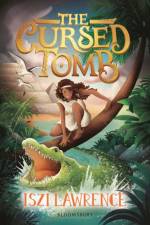
A thrilling adventure of ancient curses, myths and legends set in ancient Egypt, perfect for fans of Emma Carroll and Horrible Histories. It's 1240 BC in ancient Egypt and eleven-year-old Henut is sceptical of just about everything, even the gods. But a mysterious break-in, an unsettling dream and a strangely familiar shadowy figure lead her into a dangerous quest she could never have imagined. Will she really venture into a tomb in the Valley of Kings? She might not have a choice...Packed with real historical details of the rule of Pharaoh Rameses II, mummification, hieroglyphs, historical figures and the pyramids of Giza, this page-turning thriller about the myths and magic of ancient Egypt will have readers gripped.
Abonner på vårt nyhetsbrev og få rabatter og inspirasjon til din neste leseopplevelse.
Ved å abonnere godtar du vår personvernerklæring.