







Gjør som tusenvis av andre bokelskere
Abonner på vårt nyhetsbrev og få rabatter og inspirasjon til din neste leseopplevelse.
Ved å abonnere godtar du vår personvernerklæring.Du kan når som helst melde deg av våre nyhetsbrev.

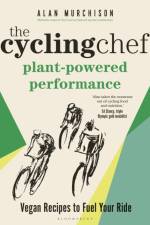
Mouth-watering plant-based recipes and expert advice to boost energy and performance. As a nutritionist for British Cycling, Alan Murchison knows all about the rise of veganism among cyclists. With cycling and food the twin passions of his life, and a philosophy that food should both be for pleasure and for performance, Alan creates a range of delicious recipes to give the plant-powered cyclists the best possible preparation. A plant-based diet should not diminish performance, and can even improve it with the right balance of nutrients, vitamins, carbs and protein. Alan provides invaluable guidance on meals where protein levels can be enhanced with an array of recipes for main meals, lunches, breakfasts, smoothies, on-the-bike snacks and recovery meals to enable riders to build a balanced meal plan. Recipes include a Cajun-spiced roast pumpkin gnocchi, a coconut breakfast scramble and an impressive Asian-style burger stack. This book shares the Cycling Chef series' combination of imaginative recipes, beautiful photography and stylish archive cycling images, accompanied by breakout sections of advice and information, all well-seasoned with Alan's now familiar wit and wisdom. It is destined to be a favourite for the growing peloton of vegan cyclists as well as anyone aiming to reduce their meat and dairy consumption.
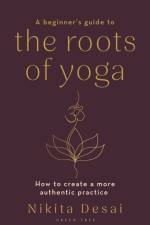
Learn how to incorporate traditional yoga into your modern practice - and feel the benefits. Yoga in its traditional form is a practice focused on inclusivity, inner work and peace. But the yoga that is practised today in the West has got a little lost along the way. In this accessible beginner's guide, Indian yoga teacher Nikita Desai brings us back to the authentic roots of this ancient practice. In A Beginner's Guide to the Roots of Yoga, Desai unpicks the complexities of the modern yoga space. Moving away from the focus on physical poses, expensive outfits and Instagram-perfect bodies, she delves into traditional resources to show how yoga can help your mental and spiritual wellbeing. With a range of enlightening essays, she explores why change in the industry is vital, before centring key yogic texts, philosophy and history in a digestible manner to give us a basic understanding of the origins of yoga. Desai then guides us through integrating these foundations into our current practice both on and off the mat, so you can enjoy the benefits of the tradition while helping to make yoga today a more inclusive and diverse space. A Beginner's Guide to the Roots of Yoga is the perfect jumping off point for anyone wanting to make their practice more authentic.
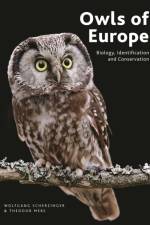
An essential compendium on the biology, identification, distribution and conservation of Europe's 13 species of owls.Owls are fascinating birds, with remarkable adaptations for their lives as nocturnal hunters. Covering the 13 species of owls that occur across the continent, Owls of Europe features detailed drawings of typical positions, behaviours and facial expressions, alongside more than 300 photos selected to demonstrate age and subspecific variation, colour phases and the birds in flight. This book includes up-to-date distribution maps and the latest European population estimates, along with detailed text on behaviour, voice, brood biology and juvenile development, life strategies, hunting techniques, choice of prey and habitat requirements for each species. It also explores human interactions with owls, from the threats posed to determined conservation efforts.Owls of Europe is an essential book for birdwatchers, professional ornithologists and those who simply love owls.
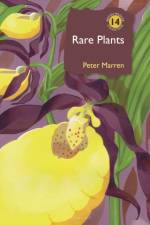
A beautifully written and illustrated account of the threatened plant species that inhabit the British Isles. Britain and Ireland are home to around 300 species of rare flowering plants, and many more rare ferns, mosses, liverworts and freshwater algae. These are species at the cutting edge of biodiversity: fascinating, often beautiful, and in decline. Yet as some teeter on the brink, more rare species are still being discovered. In Rare Plants, prize-winning author Peter Marren describes the allure of Britain and Ireland's vanishing wild flora, from the simple joy of plant hunting to the wonder and (sometimes) weirdness of the plants themselves, as well as their important place in our landscape and culture. He also explores the condition of rarity in the context of our changing world and climate: why do plants become rare, what threats do they face, and what opportunities do we have to protect them before it is too late? The book concludes with an overview of different conservation techniques, using test cases such as Lady's Slipper Orchid and Starved Wood-sedge, and asks at what point careful management becomes gardening, and how far we are justified in intervening in the life of a wild species. Illustrated with around 300 colour images by some of our best plant photographers, as well as boxed texts telling the fascinating stories of several key species, this is above all a celebration of rare plants and why they matter.
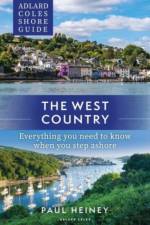
From the Isles of Scilly to Portland Bill, this handy travel guide to the West Country ensures sailors make the most of every minute ashore. Arriving ashore somewhere often raises many questions for even the most experienced sailor: Where are the best anchorages and peaceful places to stop? What are the best routes for walks? Once you are fed and watered, how do I keep the family entertained? Where are the best beaches and where can I find laundry facilities? Sailors need a different kind of pilot guide and this book is their shore-side companion, helping them to explore and enjoy all the West Country has to offer. Without doubt, this stretch of coastline is Britain's most popular cruising destination. It offers a rich variety of coastline from the rugged, Atlantic feel of Scilly and Land's End, to the traditional Cornish villages between the Lizard Peninsula and Plymouth harbour. After Start Point, the Devon coastline softens and opens out to offer Dartmouth and the Rivers Dart and Exe working their way far inland to provide a wide array of flat-water cruising. Further east, you'll find the Jurassic coast with broad beaches busy with fossil hunters and places to stop if the weather is on your side. Illustrated with beautiful photographs and maps, this guide brings together the key information needed for your trip, along with Paul Heiney's brilliant recommendations, all in one handy place, freeing up valuable holiday time.
Featuring 130 of the most common and readily identifiable species, this illustrated pocket guide is the ideal companion for anyone interested in the naturally occurring spiders found in the British Isles. Presented in a portable and accessible format, this is the perfect guide for both beginners and more experienced enthusiasts. Featuring stunning artwork by the world-renowned invertebrate artist Richard Lewington, this pocket guide covers 130 species of spider, as well as illustrations of webs, egg cocoons and spider behaviour. The introduction features an 'at-a-glance' guide providing a quick reference to each species, with corresponding page numbers to find out more. Additional sections clearly explain how the reader can distinguish similar species, and the book also includes a glossary and bibliography to aid beginners. Each species account includes a detailed description covering field characteristics, habitat and distribution, webs, egg cocoons and similar species. Species accounts are interspersed with beautifully illustrated spreads showing similar, confusion species, making this the perfect companion for use in the field. A contribution from the sale of each book is made to the British Arachnological Society.
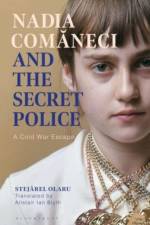
2024 Independent Publisher Book Awards Winner - Silver Medal, World HistoryNadia Comaneci is the Romanian child prodigy and global gymnastics star who ultimately fled her homeland and the brutal oppression of a communist regime. At the age of just 14, Nadia became the first gymnast to be awarded a perfect score of 10.0 at the 1976 Montreal Olympic Games and went on to collect three gold medals in performances which influenced the sport for generations to come, cementing Nadia's place as a sporting legend. However, as the communist authorities in Romania sought an iron grip over its highest-profile athletes, Nadia and her trainers were subjected to surveillance from the Securitate, the Romanian secret police. Drawing on 25,000 secret police archive pages, countless secret service intelligence documents, and numerous wiretap recordings, this book tells the compelling story of Nadia's life and career using unique insights from the communist dictatorship which monitored her.Nadia Comaneci and the Secret Police explores Nadia's complex and combustible relationship with her sometimes abusive coaches, Béla and Marta Károlyi, figures who would later become embroiled in the USA Gymnastics scandal. The book addresses Nadia's mental struggles and 1978 suicide attempt, and her remarkable resurgence to gold at the Moscow Olympics in 1980. It explores the impact of Nadia's subsequent withdrawal from international activity and reflects on burning questions surrounding the heart-stopping, border-hopping defection to the United States that she successfully undertook in November 1989. Was the defection organised by CIA agents? Was it arranged on the orders of President George Bush himself? Or was Nadia aided and abetted by some of the very Securitate officers who were meant to be watching the communist world's most lauded sporting icon? What is revealed is a thrilling tale of endurance and escape, in which one of the world's greatest gymnasts risked everything for freedom.
"Anger was the engine of justice in the ancient Greek world. It drove quests for vengeance which resulted in a variety of consequences, often harmful not only for the relevant actors but also for the wider communities in which they lived. From as early as the seventh century BCE, Greek communities had developed more or less formal means of imposing restrictions on this behaviour in the form of courts. However, this did not necessarily mean a less angry or vengeful society so much as one where anger and revenge were subject to public sanction and sometimes put to public use"--
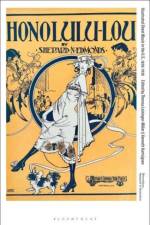
"A dynamic group of art historians explores intricacies of the most democratic form of visual imagery in the U.S., illustrated sheet music, owned by millions of Americans who were wooed by compelling lithographic covers, displayed the material culture in their parlors, and performed compositions on home pianos"--
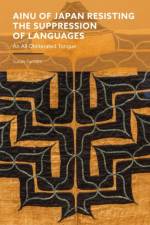
This volume shows that, by moving away from code models that foster restrictive perceptions of language as learned words and rules, and towards an ecolinguistics capable of integrating with concepts of embodied cognition, it is possible to recognise a broad range of connections with a language from which an individual or community has become estranged. Using the Ainu of Japan, an indigenous population who are concurrently completely modern, as an example and comparator, this book reviews historical and contemporary suppression of languages as a means of, or as a bi-product of, the suppression of their speakers. Preservation of the Ainu language, which had no written form, has been central to official culture promotion programs, but the language has steadily declined in use. The Ainu experience has much in common with that of communities taken over and suppressed by oppressive forces in other countries and spans rural and urban contexts. Susan Samata examines the historical, social and ecolinguistic contexts of Ainu, with particular emphasis on presentation and perception in daily life. She also considers how aspects of ecolinguistic theory may be mapped onto museum practices, television and cinema, popular literature, and the promotion of tourism. These are then compared to the sociolinguistic situations of a selection of other languages and cultures in China, North America, Russia and Scandinavia. By highlighting points of similarity and dissimilarity, Samata demonstrates the factors that operate in the suppression of people and their languages and suggests ways in which the perspective described may support resistance to suppression and assimilation, not least in language teaching areas.
"Through an examination of paratextuality in late antique literature, this collection of essays reconsiders the importance of the written material that appears in the margins of ancient poetic texts. Paratexts such as headings, prefaces, letters et al. have largely been skimmed over or completely disregarded in favour of the main ancient work"--
With this book Jon Levisohn argues that current history education is set up in a way that sees students of history at one end of a continuum with the academic experts in the field of history at the other, and where the goal of history education is to help students to think like historians. Building on a critical engagement with Carl Hempel, Hayden White, and David Carr, as well as contemporary work in virtue epistemology, Levisohn proposes a new theory of historiography which serves as a set of guidelines for the teaching and learning of history. According to the theory, the work of historiography is best characterized as a negotiation among narratives, weaving together received narratives with new information and ideas in order to construct a new narrative. This negotiation happens with a particular orientation towards negative evidence or 'flexible disconfirmationism', and is assessed according to the openness, sensitivity, responsibility, creativity, boldness and humility, i.e. the virtues of historical interpretation. The book rethinks the work of history education, offering new ways of thinking about the goals of the teaching of history, namely, in terms of the cultivation of the interpretive virtues.
Bringing together concerns in border studies, the environmental humanities and Scottish literary studies, this book examines the relationship between borders and the environment in Scottish literature from the nineteenth-century to the present. Developing an innovative methodology that approaches Scotland from an interdisciplinary perspective, this book puts key debates in Scottish studies, literary theory, critical border studies and the environmental humanities into dialogue to highlight the critical intervention that Scottish literature can make in current theoretical discussions about borders and the environment.Examining a range of literary texts from the nineteenth century to the present day, Scottish Literature, Borders and the Environmental Imagination proposes that the creative possibilities of literature allow Scottish literary works to unpack key issues relating to borders and environmental concerns. It includes analyses of works by Walter Scott, Jules Verne, Nan Shepherd, Willa Muir, John Buchan, Alasdair Gray, Sarah Moss and offers a combination of theoretical discussions and in-depth case studies to show how writers reconfigure borders in connection with the Scottish environment.
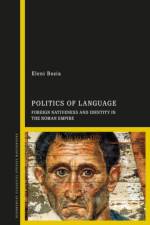
"Examining the identity and belonging of native and non-native speakers of Greek during the time of the High Roman Empire, Eleni Bozia closely studies grammarians, lexicographers and literary writers who used Attic Greek. Bozia argues that transculturalism and translingualism created a new space for both the naturalised and native citizenry. In the act of imitating, emulating and recreating Attic Greek, speakers formed a socio-politically distinct and nuanced mode of expression in the social echelons of the Roman world"--
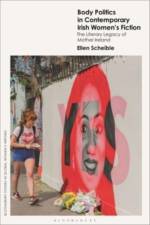
Exploring twentieth- and twenty-first century texts that wrestle with the Irish domestic interior as a sexualized and commodified space, this book provides readings of the power and authority of the feminized body in Ireland. Scheible dissects the ways that 'the woman-as-symbol' remains consistent in Irish literary representations of national experience in Irish fiction and shows how this problematizes the role of women in Ireland by underscoring the oppression of sexuality and gender that characterized Irish culture during the twentieth century. Examining works by Elizabeth Bowen, Pamela Hinkson, Emma Donoghue, Tana French, Sally Rooney and James Joyce, this book demonstrates that the definition of Irish nationhood in our contemporary experience of capitalism and biopolitics is dependent on the intertwining and paradoxical tropes of a traditional, yet equally sexual, feminine identity which has been quelled by violence and reproduction.
In this volume, leading scholars explore aspects of Renaissance Aristotelianism in the overlooked region of Southeast Europe. Uncovering forgotten texts, neglected topics, and little-known authors, ten chapters examine the philosophies and scholarly practices of figures including Antonio Zara, Nikola Vitov Gucetic (Nicolaus Viti Gozzius), Matija Frkic (Matthaeus Ferchius), Juraj Dubrovcanin (Georgius Raguseius), and Daniel Furlanus. The volume is organized into three sections. 'Scholarship' explores various aspects of accumulation, organization, and the display of knowledge typical for the Renaissance period. 'Metaphysics' looks at Aristotelian cosmological theories and doctrines, as well as exceptions to the general demise of metaphysics as a discipline in the Renaissance. 'Interactions with Platonism' provides different angles on how Renaissance philosophers handled the authority and the intellectual legacy of the two towering figures, Plato and Aristotle. In so doing, this volume provides insight into a number of topics central to Renaissance Aristotelianism in general. Beginning with an Editors' Introduction offering vital context to the differing interpretations of Aristotelianism at the time, as well as a brief history of the areas in focus, this is an essential resource for anyone wanting to broaden their understanding of Renaissance Aristotelianism beyond the oft-examined cultural centres of Western Europe.
This book examines the understudied role of the interfaith movement in institutionalizing religious pluralism in the public life of contemporary societies through the case study of Interfaith Scotland. It analyzes the organization and their literature, demonstrating the ways in which they have cultivated a particular model of religious pluralism compatible with a secular civic-cultural nationalism. It places this case into a comparative discussion of the interfaith movement as an emerging global phenomenon. In this case study, the author considers how Interfaith Scotland presents 'religions' as equivalent, compatible bodies of ethical teachings through selective appeals to textual traditions or in some cases, their construction. It has also depended on conforming to the 'world religions paradigm', where it is only religions with global reach and cohesive characteristics which require representation. Liam Sutherland discusses how Interfaith Scotland encouraged a common, seemingly 'apolitical' attachment to Scotland's democratic institutions and cultural heritage, especially in relation to the question of independence. This case study sheds light on the wider relationship between the global interfaith movement and nationalism - both in protecting religions against prejudice and exclusion but also pursuing integrationist goals.
Philip Rieff's social theory is at once a crucial tool in understanding the movements of contemporary culture, and a challenging body of work that has often been overlooked. The Social Philosophy of Philip Rieff embraces the lessons that this calm-headed but controversial figure in 20th-century sociology can teach those trying to parse the contemporary 'culture wars' analytically and without fanaticism.Anyone with an interest in the religious, cultural and educational institutions of the West must grapple with how they have been, and will continue to be, transformed - this collection offers a wealth of routes into Rieff's analysis of those transformations. Mending the perceived rift between Rieff's early studies of Freud and his later commentaries on academia, culture and religion, each chapter looks at a particular facet of his work as it applies to a central topic in cultural theory. Alasdair MacIntyre described Rieff's work as 'a permanently valuable contribution to the human sciences', and this book assesses that value to endeavours from self-knowledge and religious practice to cultural criticism and rational debate. This interdisciplinary perspective gives a full and cohesive sense of how Rieff's responsible, deliberately unprophetic voice holds weight across the political spectrum.
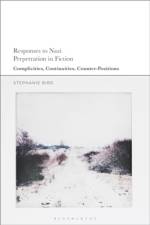
Looking at novels by authors from countries directly involved in and affected by genocidal violence and its legacies, this open access book analyses representations of Nazi perpetration and complicity. It considers how these novels challenge our understanding of perpetration and complicity, how they point to different types of complicit involvement that continue into the present, and how they explore the potential for countering complicity. Literary representations of Nazi perpetrators that give them a voice frequently cause anxiety, fuelled by ethical worry around the fascination exerted by perpetrators, and the sense that enjoyment of their literary representation might be morally inappropriate. This book takes such unease as its starting point.Focusing on authors and texts from countries directly involved in the genocidal policies of National Socialism: Germany, Yugoslavia, Hungary, Israel and Poland, Stephanie Bird analyses novels that demand our engagement with perpetration and complicity and that question literature's critique of and participation in constructing our understanding of mass violence.The ebook editions of this book are available open access under a CC BY-NC-ND 4.0 licence on bloomsburycollections.com. Open access was funded by UKRI
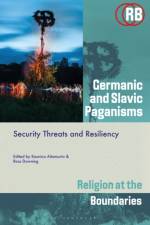
Providing an intensive and up-to-date analysis of far-right, ethno-purist and nationalistic currents as well as the inclusive visions for social and ecological change, this book explores the complexities of contemporary Slavic and Germanic Paganisms.This timely volume re-evaluates what we know about contemporary Paganism, particularly addressing the social threat and impact of radicalism. In light of the war in Ukraine, the authors deconstruct heritage narratives that are at the heart of current geopolitical and nationalist social tensions in Central and Eastern Europe including the West versus East problem. With suggestions on how we can mitigate and overcome the potential security threats connected to radical forms of Paganisms, this book shows how minority groups are advancing solutions to global challenges.Exploring multiple perspectives through a diverse blend of contributors, this volume bridges the gap between academia, governmental institutions and Pagan communities, providing a rich resource for all parties. Highlighting broader religious and security issues, this volume is the first to consider the dialogue between ethno-exclusivist and inclusivist positioning within contemporary Slavic and Germanic Paganisms.
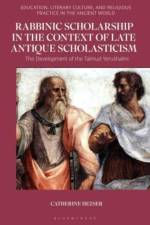
"Based on an understanding of scholasticism as a cross-cultural phenomenon, this book examines the literary-historical development of rabbinic compilations. The book explores texts such as the Talmud Yerushalmi in the context of late antique scholarly practice, which preserved past knowledge for future generations. Catherine Hezser argues that rabbinic scholarship was an integral part of late antique intellectual life and should be recognized as an Eastern equivalent to Western, paideia-based forms of scholarship in the Roman-Byzantine period and beyond"--
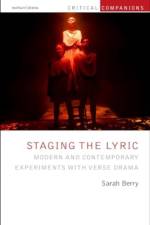
Verse drama is not a dead form, but very much alive on the contemporary stage. Drawing on plays from throughout the English-speaking world, including the United States, United Kingdom, Ireland, and the Caribbean, Staging the Lyric seeks to explain the 21st-century resurgence of Anglophone verse drama, tracing it back to an experimental impulse that is present in the modernist verse drama of a century ago. Covering major writers including Derek Walcott, Seamus Heaney, Sylvia Plath, Samuel Beckett, Dorothy Sayers, Djuna Barnes, and Ntozake Shange, it also encompasses lesser known and more recent poets and playwrights. This modern verse drama differs from its ancient and Elizabethan antecedents as it is understood not as a genre in its own right, but as a hybrid of the lyric and the dramatic. Both modernist and contemporary writers take advantage of this hybridity as fertile ground for experimentation. While they differ in their ideology and form, this book contends that they are united by exploring the relationship between lyric and dramatic elements on stage and what these two different modes afford. To demonstrate this continuity, it traces a genealogy from contemporary plays by Joanna Laurens, Joyelle McSweeney, and David Grieg back to W.B. Yeats, Gertrude Stein, T.S. Eliot, and W.H. Auden, to reveal that the tensions that animate verse drama have stayed the same, even as the strategies for staging them have evolved. The book is divided into three sections-'Voice,' 'Words,' and 'Time'-each treating one feature that has been used to define the lyric. Within these sections, the chapters compare contemporary plays with modernist ones that experiment with the same point of tension between the lyric and the dramatic.
The post-WWII era was a time of superpower confrontation and antagonistic bloc politics, but it was also a period in which organized internationalism reached its peak as both an ideological value and a political practice. This open access volume explores how international organizations affected the evolution and nature of Cold War rivalries, and how they in turn were shaped by them. In seeking to understand the role that international organizations have played as sites of confrontation, this volume also highlights their role as spaces for mediation and negotiation, particularly for middle-size powers and colonized or newly decolonized countries. Through multiple perspectives, based on a diverse array of historical sources, the authors collectively explore how international organizations were able to bridge and move beyond the Cold War divide by promoting common causes and shaping common scientific knowledge, communities and practices. Rather than focusing exclusively on western-dominated institutions within the UN system which have received the most scholarly attention to date, International Organizations and the Cold War highlights the role of lesser-known groups such as the Paris-based International Child Center, the Prague-based International Union of Students and historical actors such as Soviet public health experts and Chinese development specialists. In doing so, it asks new questions about the role of international organizations in securing peace and security across the modern world, and their role as negotiator in times of tension and crisis.The ebook editions of this book are available open access under a CC BY-NC-ND 4.0 licence on bloomsburycollections.com. Open access was funded by the Swiss National Science Foundation.
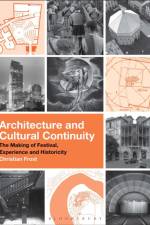
"Bridging together architecture and festival, ritual and community, past and present, Architecture and Cultural Continuity provides an interdisciplinary philosophical framework for evaluating architecture as experience rather than uniquely form. Utilising primarily the Festival of San Giovanni as a site of study, establishing the importance of cultural depth to architecture, both through its participation in such ritualised events, as well as when it is the background to everyday life. Global case studies - from Turkey to Japan, and from a range of different time periods - highlight how architecture can prioritise community and belonging. Will appeal to researchers in architectural history and theory and cultural studies"--
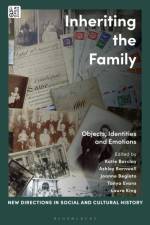
This open access book uses new methodologies from the history and sociology of emotions to analyse why people select specific tokens of family inheritance, and how this influences personal identity, cultural heritage, and national memory.Much of our cultural heritage emerges from family histories - with many of the objects curated in museums, stories passed between generations, and monuments marking notable figures being the direct product of familial collections, donations, and investments. This edited collection uses emotion as an analytical tool to interpret such behaviours, and offers novel ways to investigate how and why family inheritances from a range of social, racial, and ethnic groups maintain their cultural power, as they move through time and from the private to the public spheres.Drawing on a variety of case studies, and exploring items ranging from Victorian library chairs, to quilts, religious texts, and pieces of intergenerational writing - this volume considers the role of objects and inheritances in the emotional lives of individuals and families, and acknowledges them as agents in the creation of histories and identities. Combining insight from scholars of the history of emotions with that of historians and researchers situated outside the academy, this collection allows fresh insights on family history and material culture to emerge.The ebook editions of this book are available open access under a CC BY-NC-ND 4.0 license on bloomsburycollections.com. Open access was funded by UK Research and Innovation.
Abonner på vårt nyhetsbrev og få rabatter og inspirasjon til din neste leseopplevelse.
Ved å abonnere godtar du vår personvernerklæring.