Gjør som tusenvis av andre bokelskere
Abonner på vårt nyhetsbrev og få rabatter og inspirasjon til din neste leseopplevelse.
Ved å abonnere godtar du vår personvernerklæring.Du kan når som helst melde deg av våre nyhetsbrev.

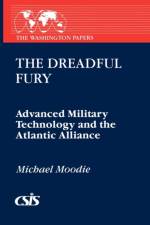
In this important new study from the Center for Strategic and International Studies, Moody examines how NATO can best exploit advanced technology to bolster its conventional forces on the battlefield of the future.
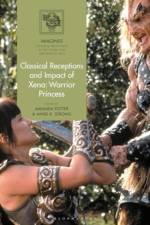
Presenting a wide range of new scholarly approaches, this is the first volume to critique the highly influential television series Xena: Warrior Princess. Based on the online international 2021 conference on Xena: Warrior Princess, this book offers a critical overview of the series' ground-breaking impact and discusses why it has maintained its appeal.Contributors from across the world include perspectives from classical reception studies, queer studies and fan studies to examine the influence of ancient Mediterranean mythology and history in the series and, in turn, how the series shaped the viewer's understanding of the classical past. Significantly, there are also studies of Xena's depiction as a barrier-smashing heroine, and an examination of how the series paved the way for portrayals of LGBTQ+ relationships on mainstream television. The legacy of the series is seen in how it has continued to shape modern views about classical antiquity and how it laid the groundwork for subsequent series and films representing the ancient world.
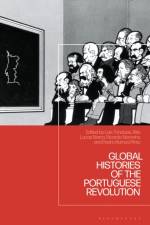
The Portuguese revolution marked the closure of the country's five-centuries of imperial history as well as its 48-year authoritarian period, a dramatic moment of political radicalization and social conflict that took place against the backdrop of rapid social transformation in an increasingly globalised world. This collection goes beyond the limits of national history to locate the revolution at the intersection of transnational historical phenomena such as the long 1960s, the Cold War, the emergence of the 'Third World' and postwar modernization. Foregrounding the complex geographies and chronologies of semi-peripheral Portugal, this book combines its status as the centre of a global Empire with its subaltern position in Europe. Offering a new, global, approach to this still understudied event, chapters explore transnational socialist and grassroots forms of solidarity, processes of global communication and Cultural Revolution, decolonization, feminism, and socio-economic transformations to offer a non-Eurocentric global history from within Europe itself.
This book offers a deep dive into sex education pedagogy in the Australian context, taking a close look at the language used to teach the key topics of consent and respect. It examines questions students ask, how teachers accommodate different beliefs in their classrooms, and how students learn about more values-based topics including consent, respectful relationships, and gender and sexuality diversity. It also considers what teaching and assessment looks like over the course of a school term and what makes a 'successful' student. In short it answers the question - how is sex education actually taught? The Language of Sex Education provides the first book-length treatment of the language of sex education, offering a detailed account of pedagogy from the perspective of Systemic Functional Linguistics. The study is situated in the Australian context, though has broader relevance to places such as New Zealand, North America, and the United Kingdom whose sex education is historically and culturally comparable to that of Australia. The book provides descriptions of the key topics of consent and respect, illustrating how teachers impart technical knowledge and how they support students to adopt and challenge the nuanced values needed when engaging with sex education. It does this through new descriptions of key linguistic resources of technicality and iconisation that synthesise the central knowledge and values of the field. Through these descriptions and analyses, this book not only provides a detailed account of sex education pedagogy, but also offers new insights into the role of language in building fields and building communities.
The first collection of plays from Olivier-nominated playwright Isley Lynn, whose award-winning work uplifts their deeply human characters through stories that are unexpected, radically intimate, and profoundly theatrical. Lean (2013): "It's not just powerful but it's incandescent. There is a profound intensity... that truly keeps you on the edge of your seat the whole way through. Sensitively written... Exemplary theatre at its best." - The London StageSkin A Cat (2016): "Frequently hilarious, it's also refreshingly honest and open in its discussion of menstruation, masturbation, oral and anal sex, and might well be the smartest, sharpest piece about female sexual identity since Phoebe Waller Bridge's Fleabag... this is bold and genuinely exciting new writing." - The Stagealbatross (2021): "Every intimate, individual scene is engaging, as the full-bodied characters knock up against their own judgments and histories... Lynn's scenes are full of genuine connections between characters, and the hope that comes with change." - GuardianThe Swell (2023): "Isley Lynn's characters are nuanced and beautifully drawn, and the play's dialogue is gorgeously natural and flowing. Where the playwright really excels though, is in bold and unexpected choices. The Swell takes its audience on some hugely gripping twists and turns. Lynn's writing is genuinely exciting." - Evening StandardIsley won the Charles Wintour Most Promising Playwright Award at the 2023 Evening Standard Theatre Awards for The Swell, which was also nominated for Outstanding Achievement In An Affiliate Theatre at the 2024 Olivier Awards, as well as Best New Play, Best Director, and Best Production at the 2023 Off West End awards. Skin A Cat was awarded Pick Of The Year at Vault Festival 2016 and nominated for four Off West End Awards (Most Promising New Playwright - shortlist, Best New Play, Best Lead Female, Best Director) for its transfer as inaugural production at The Bunker, 2016, before touring nationally throughout 2018. Isley was the 2014 Script6 winner at The Space with Bright Nights, they received Special Commendation from the 2012 Soho Young Writers Award for Lomography, and they were twice named Champion of Literary Death Match (Norfolk and Norwich Festival, The Book Club London).
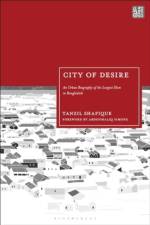
In this major open access contribution to Global South urban studies, Tanzil Shafique offers a new way of knowing and engaging with the most common urban environment in the Global South - informal settlements, or "slums".Informal settlements house more than a billion people now and will house three billion people by 2050. Yet they remain marginalised in urban theory and practice, and most projects to improve them fail due to a lack of knowledge of the ongoing processes that build them.Through a detailed case study of Karail, the largest informal settlement in Bangladesh, Shafique offers ground-breaking insights into the production of informal urbanism through a brand-new approach rooted in deep ethnography and spatial mapping. Shafique explores, for the first time, the many different desires of settlement-dwellers and how these drive everyday urban change. He also offers brilliantly innovative recommendations for the policy-making, upgrading and management of both existing and future informal settlements. Written in an engaging narrative that weaves local stories with theoretical insight, this book is essential reading for anyone interested in international development, urban studies, sociology, and architecture.The ebook editions of this book are available open access under a CC BY licence on bloomsburycollections.com. Open access was funded by the University of Sheffield.
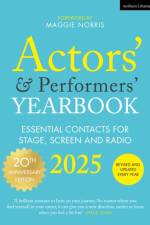
The 20th anniversary edition of this celebrated performing arts industry yearbook. This well-established and respected directory supports actors in their training and search for work in theatre, film, TV, radio and comedy.It is the only directory to provide detailed information for each listing and specific advice on how to approach companies and individuals, saving hours of further research. From agents and casting directors to producing theatres, showreel companies, photographers and much more, this essential reference book editorially selects only the most relevant and reputable contacts for the industry.Covering training and working in theatre, film, radio, TV and comedy, it contains invaluable resources such as a casting calendar and articles on a range of topics from your social media profile to what drama schools are looking for to financial and tax issues.With the listings updated every year, the Actors' and Performers' Yearbook continues to be the go-to guide for help with auditions, interviews and securing/sustaining work within the industry.Actors' and Performers' Yearbook 2025 is fully updated and includes a new foreword by Artistic Director and Chief Executive of The Big House Theatre Company, Maggie Norris, and four new industry new interviews, giving timely advice in response to today's fast-changing industry landscape.
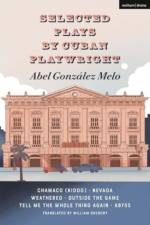
"One of Cuba's most important contemporary playwrights, Abel González Melo is known for a hybrid poetics in which he employs contemporary formal features, such as non-linear storytelling and flashbacks, interwoven with elements from the classical tradition in order to stage the ignoble realities of postmodern life. " (Lillian Manzor, University of Miami) Born in Havana in 1980, Abel González Melo is a rare example of a contemporary Cuban playwright whose work is performed and celebrated not only in Cuba, but also in the US, the Americas more widely, Europe, and beyond.Investigating a raft of national and universal themes, such as queer sexuality, the dilemma of leaving or remaining, political power and censorship, family dynamics, the ambition and responsibility of the artist, and so-called 'cancel culture', González Melo's work is international and universal in scope. The result of a 20-year collaboration with translator William Gregory, this collection of six plays surveys González Melo's eclectic two-decade career: from his beginning with earlier works exploring the pulsing underworld of early-2000s Havana in Chamaco and Nevada, through to his most recent takes on theatre and its intersection with contemporary issues in Tell Me the Whole Thing Again and Abyss. Complete with an edited introduction by Ernesto Fundora and a translator's note from Gregory, Selected Plays by Cuban Playwright Abel González Melo explores not only González Melo's oeuvre but also his distinctive stylistic and aesthetic variety, gained from living in both Spain and Cuba.
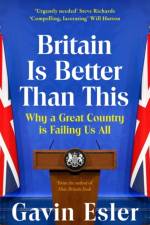
An urgent and timely exploration of a British political system in peril - and what we must do to save it.For centuries, British identity has been shaped by ideas of exceptionalism, grandeur and competence. Yet British democracy is failing. Governments supported by a minority of voters are elected with enormous majorities under a deeply unrepresentative first-past-the-post system. The result has been failed leaders delivering wounding blows to the country's economy, prosperity and international image.Britain Is Better Than This explores what lies beneath this sense of malaise, revealing the structural and constitutional failures at the heart of a sclerotic political system. It sheds light on a culture of lies, distrust and corruption. It reveals fundamental flaws in core institutions, including the media, the House of Lords and the House of Commons. It draws on events such as the MP expenses scandal, Brexit, 'Partygate' and the farcical premiership of Liz Truss, as symptoms of a great nation at a turning point yet unsure of which way to turn. And it looks ahead, offering practical solutions to answer the key question of our time: What do we need to do to build a better future?'The most compelling, lacerating description of the Muppet Show that is British public life I have yet read.' Will Hutton'There can be no book more urgently needed than this one.' Steve Richards
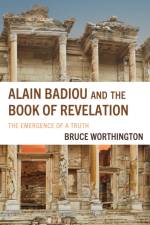
Using many key philosophical concepts based on the work of Alain Badiou, this book outlines the relationship between an event and the emergence of a "truth", which serves as a helpful organizing principle from which to study the origins of Christianity.
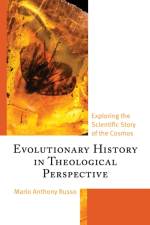
Evolutionary History in Theological Perspective: Exploring the Scientific Story of the Cosmos argues, with a new theological interpretive lens, that Christian theological interpretations make more compelling sense of evolutionary history than naturalistic or spiritual ones.
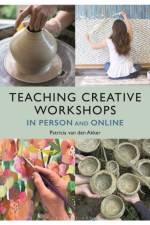
The ultimate handbook for artists and makers to learn how to deliver outstanding in person and online workshops. Packed full of advice, inspiration and practical information, this book goes into all aspects of creating quality workshops, from curating a program and identifying your target students, to finding the best platform - be it in person or online. Additionally, you'll learn how to teach your creative skills all whilst juggling the practicalities of pricing and marketing. As well as checklists, examples and action points there are case studies, photos and Q&As with a wide variety of artists who successfully teach a variety of subjects such as printmaking, embroidery, ceramics, jewellery-making and hand-weaving. Award-winning creative business adviser, trainer and coach, Patricia van den Akker, teaches you how to become a better and more confident teacher and how to promote and launch your workshops to turn them into a profitable venture, whether delivering them to amateur adults, peers, or specialist groups.
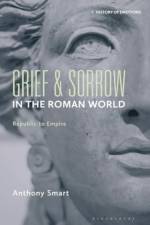
Engaging with the long history of emotions, this book provides a new narrative of how grief was defined, experienced and used in Ancient Rome. From studies of tears and weeping, to Roman funerary monuments and inscriptions, the role of female grief in navigating political conflict, and letters of consolation, Grief and Sorrow in the Roman World explores the language of grief and individuality of sorrow in Rome, and asks how and why they shaped their emotions in this way.Revisiting familiar sources such as Livy and Plutarch it offers new interpretations to place the Roman emotional framework against our own. Can we recognise our own notions of grief in the Ancient World? Do we feel pain in the same way as our Roman ancestors did? Exploring these questions and more, Anthony Smart challenges existing perceptions of grief and sorrow in the Roman world and places emotions at the centre of this rich culture.
Reorienting understandings of Adrienne Rich's later work through her interest in Marx and Marxist politics, this book engages with this overlooked part of her oeuvre through considerations of issues such as race, nationhood, and gender. From 1983 onward, after she visited revolutionary Nicaragua until the end of her life, Rich's political vision can best be described as Marxist-Humanist. Until recently, very little attention has been paid to Rich's "interest" in Marx; there is no in-depth treatment of the effect of Marx's humanistic philosophy on Rich's later work, or even on her unwavering, but altered dedication to Women's Liberation. This book fills this gap, showing how Rich's discovery of Marx's humanism affected her poetry. In doing so, it makes a significant intervention into debates about the direction of American poetics and argues powerfully for a greater consciousness of political engagement through poetry.
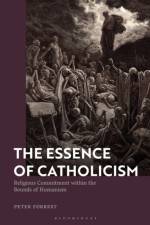
Peter Forrest argues that Essential Catholicism is the one and only religion to which reasonable humanists could commit. Drawing on Immanuel Kant's Religion within the Bounds of Bare Reason and Ludwig Feuerbach's The Essence of Christianity, he provides an in-depth philosophical investigation into the synthesis of Catholicism and the Enlightenment. In this nuanced study humanity and divinity are two species of the same genus. Chapters defend the apologetic project from common objections and cover the argument from evil to Catholicism, the case for the Catholic synthesis, the argument from tradition, and finally the negative case for Essential Catholicism. Forrest elucidates how the various Catholic churches have Essential Catholicism in common, discussing the Roman Catholic, the Eastern Orthodox, the Oriental Orthodox, and the Old Catholics, as well as High Church Anglicanism with Methodism as a borderline case. He argues that we can learn from other Christian denominations and from other religions, but Catholicism is the overarching and one true religion. An engaging and original account, The Essence of Catholicism departs from Vatican theory and provides a sharp philosophical reflection on a distinctive religious position within the Catholic tradition of thought.
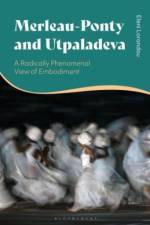
Bridging the gap between two distinct philosophical traditions, Eleni Lorandou finds consonance in the philosophies of Merleau-Ponty and Utpaladeva to articulate a radically phenomenal view of embodiment. In an argument for the transcendence of limiting dualisms in thinking, she explores how western postmodernism and Indian classical thought can speak to one another across centuries, complementing each other in a new and constructive philosophy. By bringing the phenomenology of Merleau-Ponty and the Recognition School of Utpaladeva into dialogue Lorandou uncovers intriguing insights into the constitution and possibilities of human experience. She delves into the intricacies of how we perceive the world around us and considers how our embodied existence shapes our understanding and experience. Questioning the notion that our perception directly corresponds to an objective reality and focusing on the topics of 'other minds', Lorandou draws soteriological conclusions. Examining the relevance of Merleau-Ponty's phenomenological reduction and Utpaladeva's self-recognition, this illuminating study turns our attention to the topics of perception, embodiment, realism, intersubjectivity, and, ultimately, the transformative implications of philosophical inquiry.
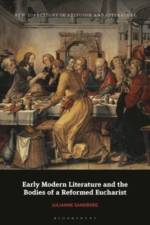
Examining what the eucharist taught early modern writers about their bodies and how it shaped the bodies they wrote about, this book shows how the exegetical roots of the Eucharistic controversy in 16th century England had very material and embodied consequences. To apprehend the nature of Christ's body-its nature, presence, closeness, and efficacy-for these writers, was also to understand one's own. And conversely, to know one's own body was to know something particular about Christ's.Sandberg provides new insights into how Edmund Spenser, William Shakespeare, John Donne, and Aemilia Lanyer use the reformed eucharistic paradigm to imagine the embodied significance of the sacrament for their own bodies, the bodies of their narrative subjects, and the body of their literary work. She shows the significance of this paradigm was for poets and playwrights at this time to represent the embodied self and negotiate how the body was read, interpreted and understood.
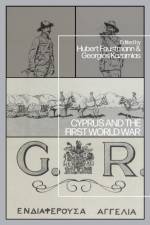
Shedding light on a forgotten aspect of Cypriot history, this book explores the involvement of Cyprus during the Great War and the impact it left on British colonial rule. It examines the political, economic, social and military aspects of the war effort. Cyprus and the First World War reflects on how Cyprus, as a British colony not in control of its own affairs, had a very specific and uncommon experience of the First World War; decisions were made elsewhere, communities were forced into a struggle that was not their own and their future status and ownership of the island was likely to be affected by the outcome. Bringing together contributors from various disciplines, this volume considers numerous facets of Cyprus' part in and contribution to the First World War and the war's effects on the island. It also highlights the fact that, while the island saw hardly any military action, it played an important role as a rear area for recovery and training purposes, as well as a provider of supplies, while Cypriots from all communities participated in the war, in particular at the Macedonian Front, a key theatre where conflict raged for much of the war.
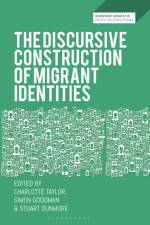
This edited volume explores how migrant identities are created and constructed in discourse both by migrants themselves and by others. The contributors reveal how migrant identities are discursively constructed by those with lived experiences of mobility and those who view themselves as part of the 'host' population. This dual focus responds to a lack of previous research examining migration representation from both perspectives. Readers will discover how the discursive constructions of migrant identities in different domains relate to one another. The case studies include a broad range of text types from film, government documents and narrative accounts to newspapers and Twitter. They also cover a wide range of contexts including Argentina, Australia, Italy, Romania, and UK, making this is a more comprehensive account of the framing of migration than has been previously accomplished. The chapters all follow the same structure to help the reader learn how to investigate migration discourses using qualitative and quantitative (critical) discourse analytic approaches.
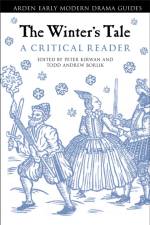
An international group of scholars reappraise The Winter's Tale through a series of research essays covering performance history, critical history, and new interpretations. Navigating the play's fluctuating genre conventions, onstage spectacle and leaps across time, scholars consider how eco-materiality, radical hospitality, childhood, gender, and critical race studies shape contemporary understandings and staging of a play that defies easy definition.By charting these changing interpretive trends, readers are introduced to a rich body of scholarship which shows how the play can be used to confront the experiences of those marginalized by race, age, gender, and nationality, to place fresh attention on the economic and material structures that define the dramatic plot of the play. As The Winter's Tale's depictions of patriarchal violence, vulnerability, economic disparity, border crossings and exploitation continue to draw attention, this guide serves as an invaluable resource for scholars, students and audiences alike. Complete with pedagogical tools including resources and strategies for approaching the play in the classroom, this Critical Reader is an essential collection of scholarship on one of Shakespeare's most audacious experiments.
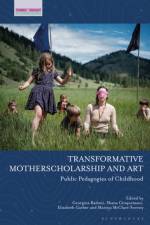
This book considers the identity of the motherscholar, a mother who draws from their practice of mothering to inform their art and scholarship and from their scholarship to inform how they mother. By considering the identity of the motherscholar the contributors from the Canada, Finland, India, and the USA work to reconceptualize feminist approaches to childhood research and uncover formerly invisibilized public pedagogies of childhood. Through theoretical research, visual art, stories and oral histories, the contributors explore how their fused identities affect and multiply structural and interpersonal transformation in homes, in communities, and in pedagogical spaces. They describe a mother as a self-identifying or non-binary person with caregiving responsibilities including but not limited to biological mothers, adoptive mothers, stepmothers, alloparents, grandmothers, mothers who are childless, mothers who are grieving, and mothers who are experiencing infertility.
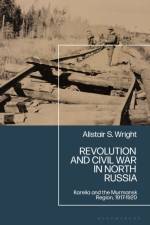
Revolution and Civil War on the Murmansk Railway examines the Allied/anti-Bolshevik military andhome fronts from a previously uncharted perspective and shines a much-needed lighton the establishment and consolidation of Bolshevik power on the civil war periphery.Expanding our understanding of the Russian civil war, this book provides the first detailed, archival-based study in English to analyse the two neighbouring regions of Murmansk and Karelia. Despite not being far from the revolutionary capital, Petrograd, both territories resisted the establishment of Bolshevik power longer than many others and so this study offers novel insights into the complexities of the struggle that eventually led to communist rule.Alistair S. Wright reflects on how both Murmansk and Karelia relied on food being imported, comparing how this problem was dealt with by the two independent local governments. Wright shows, for the first time, how the food supply in Murmansk was a key feature of Allied intervention during the conflict, part of an informative analysis of Bolshevik and Allied food supply polices to be found throughout the book.
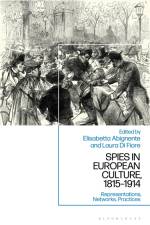
This volume brings together academics from the USA and across Europe to examine the nature, representations and perceptions of the figure of the spy in Europe between 1815 and 1914. As such, it is the first scholarly investigation of the genesis both of contemporary espionage and of the cultural imaginings associated with it. Spies in European Culture, 1815-1914 sheds light on the founding moment of espionage and the use of secrecy in politics in the contemporary age. It successfully argues that the 19th century saw the development of a cultural-historical process in which disruptive novelties like the disguise, the secret and the double identity simultaneously assailed the spheres of the state, the self and the imaginary, ushering in distinctive features of society in the modern era in the process. This global phenomenon, in which state and society, but also reality and fiction, were profoundly intertwined, is therefore investigated by means of a transdisciplinary analysis that considers both the politico-institutional and the cultural planes that existed at the time.
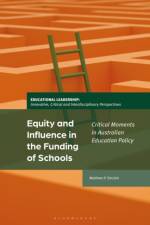
This book traces the policymaking processes of the Review of Funding for Schooling (2011), which fundamentally changed school funding policy in Australia. School funding is a key element of any equitable school system. This is because the distribution of government funding for schooling leads to significant differences in the educational opportunities available for individual students, schools, and communities. The book shows that although education policy is often thought about as an abstract process, it is a series of small critical moments that create the policy and progress implementation towards or away from equity in school funding. Sinclair offers a new theory for understanding and then impacting in real-time the policymaking process towards equity in school funding, the "critical moments theory". In doing so, he identifies where education leaders, teachers, policymakers, scholars, and community members all have the agency to influence policy from conceptualisation to implementation.
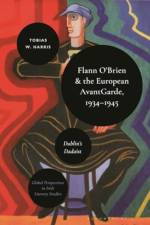
Crossing the boundaries of a single-author study, this book rediscovers Flann O'Brien's attempt to synthesise a commercially successful Irish literary project from international avant-garde influences.Placing the early work of Flann O'Brien - just as experimental and yet aimed explicitly at achieving a wide readership - into a global context, this book uses the new evidence of his collaborations to refigure O'Brien as a networked writer who drew on experimental techniques to produce new categories of writing with the aim of rethinking Irish culture and delivering a commercially successful project. It reveals a network of Irish cultural production around him that draws on diverse sources such as English comic magazines, Dadaist photomontage, Expressionism and Central European theatre, as well as on well-known writers such as Jorge Luis Borges and Franz Kafka. By rethinking Flann O'Brien in this way, the book also rewrites the cultural history of Ireland in the 1930s and 1940s.
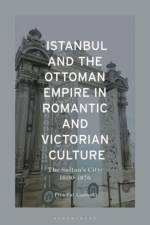
Piya Pal Lapinski explores the transformation of the Ottoman empire (and its Byzantine ghosts) during the period 1800-1900 in terms of its crucial impact on British and European transnational identities. From Romantic Byzantium to operatic sultans and vampiric janissaries, the arc of this book takes on a fascinating but often overlooked area of 19th century studies - the encounter with Constantinople/Istanbul, "the diamond between two sapphires" on the Bosphorus and the effect of the city's complicated history on Romantic /Victorian writers and artists. Drawing on unpublished, archival material on Thomas Hope and Julia Pardoe, she provides fresh readings of these writers as well as Byron, Disraeli, Scott and Mary Shelley, among others. Taking up the problems posed by the existence of a global, cosmopolitan empire with its centre in Istanbul and control over borderlands known as "Turkey in Europe," the book examines these issues against the background of the rise of nationalist movements and ethnic affiliations in the 19th century. Istanbul and the Ottoman Empire in Romantic and Victorian Culture proposes a new approach to understanding the final century of a significant non-Western, Islamic empire.
Abonner på vårt nyhetsbrev og få rabatter og inspirasjon til din neste leseopplevelse.
Ved å abonnere godtar du vår personvernerklæring.