



Gjør som tusenvis av andre bokelskere
Abonner på vårt nyhetsbrev og få rabatter og inspirasjon til din neste leseopplevelse.
Ved å abonnere godtar du vår personvernerklæring.Du kan når som helst melde deg av våre nyhetsbrev.

In recent decades the study of the ancient economy and ancient warfare have both been transformed by ground-breaking new studies and methodological approaches. Offering a selection of cutting-edge research on the interlocked themes of economics and war, this edited volume explores how armed conflict affected markets and economic opportunities in ancient Greece. From the destruction of cities to the emergence of new fiscal institutions, war prompted massive changes to economic conditions throughout the ancient Mediterranean and beyond - some with lasting consequences for the organisation of states and armies. The contributors look beyond the old paradigms of finance and logistics, and broaden the discussion to address themes such as gender, literary culture and the Persian Empire. More specifically, they analyse how ancient rulers and states struggled to mobilise resources and what they did to tackle fiscal challenges to wage war more efficiently, thereby demonstrating how matters of war can be an invaluable source of information on the way ancient economies worked and developed. As a result, this book shows how the study of economic factors - too often neglected in works on ancient warfare - allows a deeper understanding of military cultures and events in ancient Greece.
Drawing on the work of major philosophers in 18th and 19th-century German idealism, Thomas Raysmith critically examines G. W. F. Hegel's justification that philosophy has a history. Contrary to Kant's claims, Hegel not only considered philosophy as a discipline with its own history, but also elaborated a 'logical structure' associated with the fundamental nature of thought itself, permitting a history of philosophy. Calling this structure 'the structure of exemplarity', Raysmith presents it as a dynamic reciprocity between universality, particularity and singularity. He provides a historical reconstruction of the shifting understanding of the fundamental nature of human thought from Kant, through J. G. Fichte and F. W. J. Schelling, to Hegel's mature logic. He offers a systematic analysis based on close, critical readings of Hegel's work, specifically his Science of Logic. Offering a compelling and novel reading of Hegel's thought, Hegel and the Problem of the History of Philosophy is a groundbreaking work for students and scholars of German idealism and the history of philosophy more broadly.
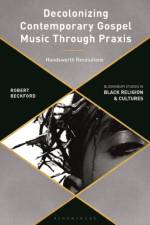
Is contemporary Black British gospel music a coloniality? What theological message is really conveyed in these songs?In this book, Robert Beckford shows how the Black British contemporary gospel music tradition is incrisis because its songs continue to be informed by colonial Christian ideas about God.Beckford explores the failure of both African and African Caribbean heritage Churches to Decolonise their faith, especially the doctrine of God, biblical interpretation and Black ontology. This predicament has left song leaders, musicians and songwriters with a reservoir of ideas that aim to disavow engagement with the social-historical world, black Biblical interpretation and the necessity of loving blackness.This book is decolonisation through praxis. Reflecting on the conceptual social justice album 'The Jamaican Bible Remix' (2017) as a communicative resource, Beckford shows how to develop production tools to inscribe decolonial theological thought onto Black British music(s). The outcome of this process is the creation of a decolonial contemporary gospel music genre. The impact of the album is demonstrated through case studies in national and international contexts.
Keep fit, keep the brain going, and with a spot of good fortune you can be living a fulfilling, active life in your 70s, 80s, 90s and beyond!Too many people think that ageing inevitably causes problems after seventy, but a lot of these can in fact be postponed or prevented because they are not caused by ageing, but by a loss of fitness, preventable disease, ageism and the negative beliefs and pessimistic attitudes that pervade society. Shake off the stereotypes and empower yourself by adopting the simple actions described in this book. Keep fit, eat well, keep your brain active, and with a spot of good fortune you can be living a rewarding, active life into your eighties, nineties and beyond. Live better for longer, and remember, seventy is the end of the beginning, not the beginning of the end!This edition includes new chapters on:- The brain and the mind (including dementia prevention)- Managing your NHS service- Taking charge of your healthcare in the digital world- Fighting back after lockdownPart brain and body exercise book, part manifesto for a happier, healthier life - this book will show you how to Sod Seventy! and live life to the fullest.
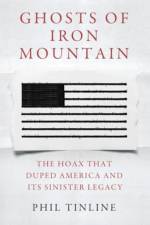
How did America end up trapped in a nightmare of conspiracy theories, in which millions see the government as an evil 'deep state'? It didn't begin with Donald Trump, and it won't end with him. In Ghosts of Iron Mountain, Phil Tinline traces the roots of today's fears back to the years after the Second World War, when America was the most powerful nation the world had ever known. He tells, in vivid, entertaining and brilliant detail, the story of a literary hoax that shocked a nation. Its impact - and its astonishing afterlife - reveal America's fears as you've never seen them before. In 1967, at the height of the war in Vietnam, a group of New York writers cooked up a satirical response to the Dr Strangelove-like thinking prevalent in Washington. They concocted what appeared to be a top-secret government report into what would happen to the USA if permanent global peace broke out. Report from Iron Mountain claimed that winding down America's vast war-making machinery would wreck the economy and tear society apart, necessitating draconian controls over the population. It was published as non-fiction - and was frighteningly convincing. Journalists tried to find out who had written it. Worried memos reached right up to the president. It became a bestselling cause celebre. Even when the hoax was revealed, many refused to believe it wasn't real. Denial became proof of truth. The Report was seized on by eager figures on the far right and in the militia movement, who insisted that it revealed terrifying government conspiracies to pollute the environment, enslave Americans and even instigate eugenics. It helped to shape the movie that has done more than any other to revive conspiracy theory: Oliver Stone's JFK. And it spawned a second hoax, which has helped sustain its bizarre relevance right up to today. Ghosts of Iron Mountain traces this story through a gallery of vivid characters, from the radical academic C. Wright Mills and the writers EL Doctorow, Victor Navasky and Leonard Lewin in 1960s New York, to the Hitler-loving far-right impresario Willis Carto, Oklahoma City bomber Timothy McVeigh, the conspiracy theorist William Cooper, L. Fletcher Prouty (the 'Mr X' of JFK), and the ranting broadcaster Alex Jones. This is one of the great stories of our time, and an entertaining, compulsively readable narrative that reveals how nightmares about its own government drove America crazy.
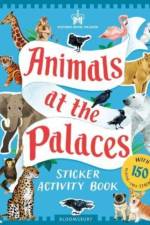
Meet royal animals from across history in this fact-packed sticker activity book made in partnership with Historic Royal Palaces. With fun activities and 150 plastic-free stickers!In partnership with Historic Royal Palaces, this sticker activity book will take you to some of the most stunning palaces in the United Kingdom, and tell you the stories of their lesser-known inhabitants - the animals! Marvel at the Tower of London's famous ravens and discover how strange animals including polar bears, elephants and lions once lived there! Draw your own crest complete with lions, dragons or unicorns and learn all about the royal family's famous pets. With fun activities and sticker pages to fill in and 150 plastic-free stickers to choose from, children will be entertained for hours while learning all about the palaces' amazing animals and the history of how they got there.
This book adopts a transnational methodology to reflect on the legalisation of international economic relations. A Liber Amicorum for Professor Francis Snyder, it outlines the ways in which legal scholarship has taken his legacy further in relation to the concept of transnational law, the 'law in context' method, and the evolution of sustainability law. The lens is both theoretical and practical, delving into international investment law, financial/monetary law, free trade agreements, indigenous rights, and food law, and covering case studies from EU law, WTO law, American law, Chinese law, and Indonesian law.The chapters explore how Snyder's ideas have advanced legal research and determined change in regulation, impacting trade relationships worldwide. Part I of the book gives an overview of the actors, the norms, and the processes of transnational economic law, discussing sites of governance, legal pluralism, and soft law. Part II takes stock of the 'law in context' research method, looking not only at the way in which it can be refined and used by academics, but also at the practical implications of such a method to improve regulatory settings and promote social and policy goals (including the emerging generation of FTAs, such as TPP, TTIP, and RCEP). Part III focuses on sustainability law, assessing Francis Snyder's contribution to systemic changes and reforms in China and the Asia Pacific region.The book is a must have for any academic or practitioner interested in an up-to-date account of the recent developments in transnational trade law research.
This book is a continuation of the prestigious series which is drawn from the papers of the biennial Cambridge Tax Law History Conference. The authors are a mix of academics and senior tax professionals from the judiciary and practice with representatives from 9 countries. The series continues to investigate current tax policy debates in an historical context. The papers fall within 3 basic categories: 1. UK and Irish tax, looking at a variety of topics such as tax administration, cases and judges (Whitney, Singer, Viscount Radcliffe), the taxation of royal forests, the taxation of spirits, and income tax transition in the Irish Free State;2. International taxation, with chapters on the role of international organisations (OECD, League of Nations) and on South Africa's early attempts to address double taxation (tax treaties); and3. Non-UK tax systems, including chapters on the legacy of colonial influence (Dutch East Indies), early developments in China, New Zealand, and the USA, an influential Canadian report (Carter Commission), development of the GAAR in Scandanavia, and the receipt of Roman tax law in Europe.
This revised and updated edition of The Russian Dilemma is an outstanding survey and analysis of Russia's development from the end of Mongol rule to the present day.
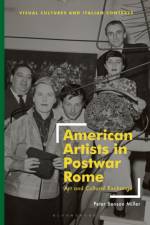
Drawing on unpublished archival sources, this book reconstitutes the experiences of a wide range of American artists, critics, and writers working in Rome in a charged environment of "Cold War cosmopolitanism."After the Second World War, American artists flocked to Rome in record numbers, even as the United States shored up Italy as a bulwark against the spread of Communism. While the market for modern art in Rome was less vigorous as those in Paris and New York, numerous galleries, artist-run spaces, and other institutions acted as important catalysts, making Rome an international artistic hub. The city attracted now canonical figures Lee Bontecou, Philip Guston, Robert Rauschenberg, Paul Thek, and Cy Twombly, along with less well-known artists, such as Eugene Berman, Gene Charlton, Carlyle Brown, Peter Chinni, William Congdon, Claire Falkenstein, Marcia Hafif, John Heliker, James Leong, Beverly Pepper, and Laura Ziegler, among many others.Rather than focusing on institutions and diplomatic relationships, the book centres the experience of artists, and also addresses Rome's gay subculture and the role of female artists during the period, eschewing traditional narratives of the male "cultural ambassador." Through case-study based investigation, Peter Benson Miller explores the reciprocal relationships between American modernist artists and Italian artists in postwar Rome, and reveals how these artists perceived Rome as less constrained by the demands of a national school, and as an alternative to New York. This congenial creative atmosphere yielded "new pictorial forms" developed in tandem with or absorbed from like-minded Italian artists, engaging the city and its multiple layers of history, from antiquity to the profound trauma inflicted by the recent conflict.The book also establishes the entangled social networks, galleries, exhibitions, and institutions sustaining their work and providing entrée into local artistic circles. Focusing on a series of specific exchanges, this study contributes to our understanding American modernism in an international context.
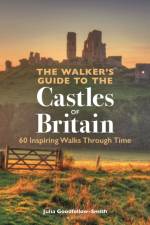
Castles often sit in spectacular landscapes that also offer exceptional walking opportunities, and some of the best views of castles are from a distance, where they can be seen in the context of the landscape. The Walker's Guide to the Castles of Britain will inspire both keen walkers to visit castles and castle visitors to explore the surrounding area, by describing 60 of the best and most popular castles in Great Britain and an accompanying delightful short walk from each. Each chapter describes the castle itself, its history and architectural features, and how those relate to the landscape that surrounds it, followed by an easy-to-navigate description of the walk itself. This absorbing text is accompanied by brilliant photography of the castle and the sights you will see on your walk, and a useful map to guide you on your way. From the well-known and popular castles such as St Michael's Mount, Tintagel Castle, Corfe Castle and Edinburgh Castle, to the lesser-known gems like Kidwelly Castle, Castle Stalker and Framlingham Castle, The Walker's Guide to the Castles of Britain will show you how to better enjoy the castles you already know and love and discover some new ones to add to your favourites list.
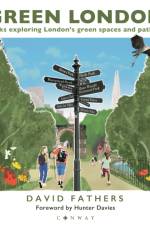
From parks and rivers to heaths and woodlands, explore London's most wonderful natural spaces and uncover the green corridors that link them, with this beautifully illustrated and entertaining walking guide. For many Londoners, now is a time like no other for walking, exploring and finding refuge in the capital's green spaces. What is not so well known is that these amazing places can be interconnected to form 'green walkways', by using old railway tracks, towpaths and riverside walks. In Green London, David Fathers shows walkers not only how to plan walks through green spaces and corridors but what is to be seen along the way. Featuring beautifully illustrated pages and intricate maps, each of the 14 walks featured describes:- Well-known landmarks, buildings and aspects- Famous people connected with the area- Historical events that have occurred nearby- Types of trees and wildlife to be found on the route- Sections of the Capital Ring- Underground and railway links- The distance covered on each pageJoin David Fathers once again as he journeys through London's glorious green spaces in Green London, a book that is sure to be loved and appreciated by locals and tourists alike.
A fascinating history of the great summer offensive launched by the Red Army in 1944 which turned the tide of the war.Throughout the war on the Eastern Front, there were two consistent trends. The Red Army battled to learn how to fight and win, while involved in a struggle for its very survival. But by 1944 it had a leadership that was able to wield it with lethal effect and with far more effective equipment than before. By contrast, the Wehrmacht had commenced a slow process of decline after the invasion of the Soviet Union. Hitler became increasingly unwilling to delegate decision-making to commanders in the field which had been crucial to earlier success. The long years of fighting had also taken a heavy toll. Thousands of irreplaceable junior officers and NCOs were dead, wounded or prisoners.Renowned Eastern Front expert Prit Buttar expertly brings these contrasting fortunes to life, trends which culminated in the huge battles of Bagration. As this masterful study conclusively shows, in 1944 the Red Army finally put together a campaign that utterly destroyed the German Army Group Centre. The Wehrmacht suffered the loss of over 300,000 men killed, wounded or taken prisoner and the Red Army rolled forward across Belarus to the outskirts of Warsaw. The end of the war was still many months away, and the Germans managed to reconstruct their line on the Eastern Front, but final victory for the Soviet Union was now only a matter of time as a direct consequence of Bagration.
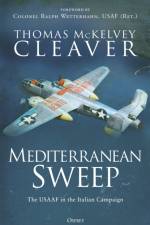
Filled with personal accounts of the action, this book details the USAAF's tactical and strategic campaigns in the skies over Italy in World War II.With the defeat of the Germans and Italians on Sicily in mid-July 1943, all eyes turned towards the battle for the Italian mainland itself. This campaign has been called "forgotten" by many, with many of the best units from the North African and Sicilian campaigns withdrawn to prepare for the coming invasion of France, while those units that remained had a lower priority for replacements of men and material.Despite these difficulties, the air war in the Italian campaign is a study in the successful application of tactical air power. Mediterranean Sweep describes how USAAF forces, alongside Free French, Italian co-belligerent forces, British and Commonwealth units and even a squadron of the Brazilian Air Force, took the war to the Axis in both the fighter-bomber war as well as Operation Bingo, the successful bombing campaign to strangle supplies to the German forces fighting on the Gothic Line.Building on the story of the USAAF in North Africa and over Sicily told in his previous work Turning the Tide, renowned aviation expert Tom Cleaver uses a wide range of first-hand accounts form American, Allied, German and Italian pilots and other aircrew to bring to life the bitter struggle in the skies over Italy from mid-1943 through to the end of World War II.
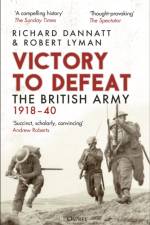
A fascinating account of the decline of an army from the triumph of victory in 1918 to defeat in 1940 and why this happened. A salutary warning for modern Britain.
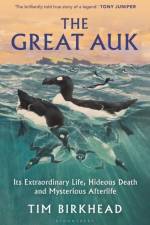
The tragic tale of the first seabird ruthlessly destroyed by human actions - an all-powerful symbol of human folly and the necessity of conservation. Since 1950 more than seventy percent of the world's seabirds have been lost through human activity. The Great Auk was the first species to go. A goose-sized seabird superbly adapted for underwater flight, their lives were idyllic prior to the appearance of humans: three months ashore to breed, the rest of the time riding the ocean waves. However, Great Auks had one main predator - humans. Having harried the bird mercilessly for centuries in the east, the Europeans who stumbled upon the Great Auks' New World breeding colonies in the 16th century couldn't believe their luck. Seabird colonies became fast-food restaurants for hungry sailors, with mariners gorging themselves on the liver-flavoured auk flesh for more than two centuries. The last two were killed in 1844, but the Great Auk lived on, with collectors obsessing over their skins, eggs and skeletons through dodgy dealings involving staggering amounts of money. In a curious twist of fate, leading ornithologist Tim Birkhead found himself the recipient of the archive of a man who accumulated more Great Auk skins and eggs than anyone else. This astonishing book reveals the Great Auk's life before humanity, its death on that fateful day in 1844, and the unrelenting subsequent quest for its remains.
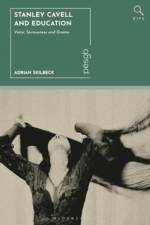
This book explores the themes of seriousness and human voice in education, drawing on the work of the American philosopher Stanley Cavell. Cavell's views on culture, the arts, politics, morality, judgement, vulnerability, and the need for people to find something they can be sincere and serious in, are discussed in relation to education. The book represents a reappraisal of seriousness in education, art and philosophy, getting to the heart of what matters in education beyond ideology. Drawing on examples from film, theatre, literature and educational practice, it provides a philosophical analysis of conventional assumptions of educational seriousness. It offers an analysis of the central importance of voice and expression in education for both learners and teachers in terms of what it means to speak authentically; both literally, in conversation, and through forms of artistic expression. Carefully chosen examples offer insights into the value of drama in education for understanding the way in which we each inhabit a voice and body and give it expression. Cavell's work is brought into conversation with a number of philosophers, with Austin, Dewey, Derrida and Wittgenstein all contributing to a reappraisal of what it means to be serious and how slippery and elusive this can be.
Abonner på vårt nyhetsbrev og få rabatter og inspirasjon til din neste leseopplevelse.
Ved å abonnere godtar du vår personvernerklæring.