













Gjør som tusenvis av andre bokelskere
Abonner på vårt nyhetsbrev og få rabatter og inspirasjon til din neste leseopplevelse.
Ved å abonnere godtar du vår personvernerklæring.Du kan når som helst melde deg av våre nyhetsbrev.

What makes us human beings? Is it merely some corporeal aspect, or rather some specific mental capacity, language, or some form of moral agency or social life? Is there a gendered bias within the concept of humanity? How do human beings become more human, and can we somehow cease to be human? This volume provides some answers to these fundamental questions and more by charting the increased preoccupation of the European Enlightenment with the concepts of humankind and humanity. Chapters investigate the philosophical concerns of major figures across Western Europe, including Montesquieu, Diderot, Rousseau, Locke, Hume, Ferguson, Kant, Herder, Johann Friedrich Blumenbach and the Comte de Buffon. As these philosophers develop important descriptive and comparative approaches to the human species and moral and social ideals of humanity, they present a view of the Enlightenment project as a particular kind of humanism that is different from its Ancient and Renaissance predecessors. With contributions from a team of internationally recognized scholars, including Stephen Gaukroger, Michael Forster, Céline Spector, Jacqueline Taylor, and Günter Zöller, this book offers a novel interpretation of the Enlightenment that is both clear in focus and impressive in scope.
Ghosts haunt the stages of world theatre, appearing in classical Greek drama through to the plays of 21st-century dramatists. Tracing the phenomenon across time and in different cultures, the chapters collected here examine their representation, dramatic function, and what they may tell us about the belief systems of their original audiences and the conditions of theatrical production. As illusions of illusions, they foreground many dramatic themes common to a wide variety of periods and cultures. Arranged chronologically, this collection examines how ghosts represent political change in Athenian culture in three plays by Aeschylus; their function in traditional Japanese drama; the staging of the supernatural in the dramatic liturgy of the early Middle Ages; ghosts within the dramatic works of Middleton, George Peele, and Christopher Marlowe, and the technologies employed in the 18th and 19th centuries to represent the supernatural on stage. Coverage of the dramatic representation of ghosts in the 20th and 21st centuries includes studies of Noël Coward's Blithe Spirit, August Wilson's Pittsburgh Cycle, plays by Sam Shepard, David Mamet, and Sarah Ruhl, Paddy Chayefsky's The Tenth Man, Suzan-Lori Parks' Topdog/Underdog, and the spectral imprint of Shakespeare's ghosts in the Irish drama of Marina Carr, Martin McDonagh, William Butler Yeats, and Samuel Beckett. The volume closes by examining three contemporary American indigenous plays by Anishinaabe author, Alanis King.
This book shows how critical theory can help school leaders and administrators to prepare students for the ever-changing political, cultural, economic, and societal conditions of the world. The contributors use ideas from critical theorists including Adorno, Fromm, Marcuse and Habermas and connect them with contemporary theories and debates in educational leadership from moral education to criticaltheories on race, to culturally relevant practice.Educational Leadership and Critical Theory challenges the misconceptions of many present-day educators about the analytical lens offered by the Frankfurt School theorists which is often dismissed by policymakers and practitioners. Written by leading scholars based in the UK, USA, and Canada, the contributors emphasize and explain the importance of educational aesthetics, dialectics, education and civilization, the structural transformation of education's place in the public sphere, and education as revolution and enlightenment.
Across these essays Arnold Berleant demonstrates how aesthetic values and theory can be used to reappraise our social practices. He tackles issues within the built environment, everyday life, and politics, breaking down the dichotomy between the natural and the human. His work represents a fresh approach to traditional philosophical questions in not only ethics, but in metaphysics, truth, meaning, psychology, phenomenology, and social and moral philosophy. Topics covered include the cultural aesthetics of environment, ecological aesthetics, the aesthetics of terrorism, and the subversion of beauty. The corruption of taste by the forces of commercial interests as well as how aesthetics can advance our understanding of violence are also considered. Berleant's exploration is supported by his analysis of 19th-century art to the present day, starting with impressionism through to postmodernism and contemporary artistic interventions. By critically examining the field in this way and casting new light on social understanding and practice, this collection makes a substantive contribution in identifying and clarifying central human issues, guided by an understanding of aesthetic engagement as a powerful tool for social critique.
What goes on in the body and mind of an endurance athlete at the limits of performance? How do they relate to the world around and prepare for the task ahead? Offering a refreshing perspective on training in the cross-lighting of aesthetic and athletic processes, this book focuses on the learning, mastery and creative adaptation of technique in performance. From traditional and physical actors to runners, boxers and other sports practitioners, it is about performers: their bodies, trainings and experiences. It interrogates what it means to prepare and train as a performer in the early 21st century.Writing from extensive experience in physical theatre and long-distance running, the author combines insights from both disciplines along with theatre history, sports science and perspectives like embodied cognition and affective science. From the kind of thoughts that go through the mind of an actor or a runner, to the economy and aesthetic of their movement and to how they feel about it, this book sheds light on the performing body and its capacities for action.Topics covered include attentional focus and distraction, affordances and equipment, 'choking' and stage fright, physiological regulation and effort perception, pacing and play, optimal flow and creative improvisation, and intentionality and automaticity in expert performance. The volume presents an informative and thought-provoking account accessible to readers interested in theatre, dance, performance, running, athletics, and sport.
What is the role of a soldier at the end of war, when either victory or defeat is inevitable? This book delves into that question, exploring how the military and soldiers on the ground have contributed to the transition to peace. With case studies from 1800 to the present day, Soldiers in Peace-making offers a historical overview of the part military men and women have played in the aftermath of war. From UN peacekeeping in Cambodia to military observers in former Yugoslavia, the post-Cold War US Army and more, the essays in this collection map the strategy, politics and practicalities involved in the transition from war to postwar. Analyzing the legitimacy of each 'peace' and the military's approach to them, the chapters explore how soldiers have engaged with politics and political leaders, interacted with civil populations, and called upon their own expertise to enable the peace-making process. In exploring the hybrid role of military men and women as diplomats, peacemakers, negotiators and fighters this book reveals the crucial part they have played as conflicts come to a close.
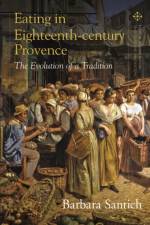
'We have two cuisines in France, that of the north and that of the south', boldly stated the first cookbook directly concerned with southern French cuisine in 1830. This book investigates the reasons for and background to these differences, specifically in Provence. In the absence of cookbooks for the region in the 18th century, it uses innovative methodologies relying on a range of hitherto unexplored primary resources, ranging from household accounts and manuscript recipes to local newspapers and gardening manuals that focus on the actuality of the 18th century Provençal table. The sources emphasise the essentially seasonal and local nature of eating in Provence at this time. In many ways eating habits echoed generalised French patterns, according to class, but at the same time the use of particular foods and culinary practices testified to a distinctive Provençal food culture, partly related to geographic and climatic differences but also to cultural influences. This food culture represented the foundation for the Provençal cuisine which was recognised and codified in the early 19th century.From a diverse archive of documents has emerged new evidence for the cultivation and consumption of potatoes and tomatoes in Provence and for the origins and evolution of emblematic dishes such as bourride, bouillabaisse and brandade. In linking the coming-of-age of Provençal cuisine to post-Revolutionary culture, in particular the success of restaurants and the flourishing of gastronomic discourse, this book offers a new understanding of the development and evolution of regional cuisines.
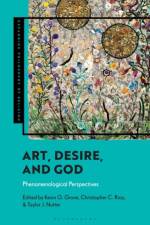
Bringing together thinkers from philosophy of religion, religious studies, music, art, and film, while drawing on a wealth of phenomenological resources and methods, a team of renowned scholars provide new vantages on the question of how art is an expression of the human desire for God. In three interrelated parts, chapters employ phenomenological tools to propose new ways for speaking of the desire for God. Scholars first draw upon music, sculpture, film, and painting to develop ways of expressing diverse philosophical and religious aspects characteristic of aesthetic experience. The discussion then opens up to examine the mystical and wounded aspects of embodied interface with God. The final part investigates embodied aesthetic praxis in philosophy of religion and religious studies. With several contributions engaging with the embodied, aesthetic experience of underrepresented voices, Art, Desire, and God offers constructive phenomenological bridges across divides of disciplines, aesthetic experiences, and embodied actions.
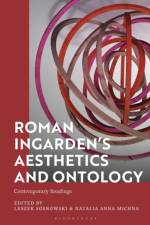
This volume explores the work of Polish phenomenologist Roman Ingarden (1893-1970) with respect to his ontology, epistemology and aesthetics. An outstanding student of Edmund Husserl, it offers a unique tribute to one of the most important figures in contemporary philosophy. Leszek Sosnowski and Natalia Anna Michna introduce a team of renowned scholars to present new and timely readings of Ingarden's thought, placing his philosophy in a broader historical and cultural context. In doing so, they offer a cutting edge reflection on the relevance, refinement and depth of Ingarden's theory. Chapters are not only retrospective, but also set out the present and future development of philosophy inspired by his works. Reinvigorating the debate about Ingarden's phenomenological legacy and its relevance for contemporary thought, this collection of essays guides us through his place in the history of philosophy and presents new perspectives on selected aspects of his theory.
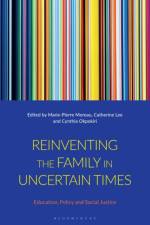
This edited volume looks at the reproduction and transformation of family norms in contemporary times. Set against a context of far-right politics calling for a return to more conservative identity politics and family norms, and building on late 20th century social movements which challenged essentialist and functionalist understandings of identities and families, it considers a variety of non-traditional family structures.Written by scholars based in Argentina, Ghana, Italy, Portugal, the UK, and the USA, the chapters question what 'counts' as a family in contemporary times and considers how the discourses of power which operate in institutional and geographical contexts impact how families are recognized and valued. The book includes analysis of non-traditional and non-heteronormative families such as single-parent families, childless families, families with animal companions, LGBTQ families, families across the Global South, mixed heritage families and families of friends. Drawing on post-structuralist, critical, and feminist theories the contributors discuss how power relationships linked to gender, class, ethnicity, sexuality, dis/ability and other in/equalities intersect and operate in defining what counts as a family.
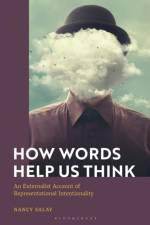
The mainstream assumption in cognitive science, artificial intelligence and analytic philosophy is that the defining characteristic of human cognition - intentionality, the capacity to represent - is biologically fundamental. This has driven research in cognitive science increasingly inwards and downwards to focus on activity at the neural and molecular levels, which, as Nancy Salay argues, is misguided. Revealing the central problems with this internalist idea, Salay puts forward an externalist paradigm of intentionality supported by recent empirical work in neuroscience, computer science, philosophy, animal cognition, developmental psychology, linguistics and anthropology. Drawing all of these insights together, she provides a unified framework in which to situate externalist views of intentionality, making progress towards a viable theory of cognition. Here is a comprehensive theoretical guide and a valuable empirical resource for those who view cognition through an extended and enactive lens.
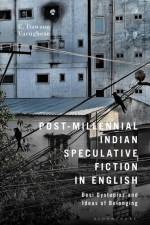
Exploring expressions of 'Indianness' buried within and scattered across post-millennial Indian speculative fiction in English, this book asks questions around what it means to 'belong' to an India of 'now' and what it might mean to belong to multiple Indias of the (near) future.With dystopia, near-future, apocalyptic Indias and fantastical metropolises all imagined across this body of writing, Post-Millennial Indian Speculative Fiction in English traces economic, social and political transformations in post-2000 'New India' across these various narratives. Drawing on established notions of the speculative, Dawson Varughese argues for a recognized, post-millennial canon of Indian speculative writing in English which moves beyond Western-centric frames of reference, centring instead on Indian sensibilities, expressions of belonging to India and speculative 'Indian' futures.Organized around key tropes and characteristics of post-millennial Indian speculative fiction in English to date - urban infrastructures, citizenship, bodies and biotech, future (Indian) histories and climate catastrophes - it takes stock of a range of science fiction, fantasy, near-future and dystopian novels and short stories and offers critical insights into the writings of Samit Basu, Varun Thomas Mathew, Gautam Bhatia, Rimi B. Chatterjee, Prayaag Akbar and Anil Menon, alongside many others. Post-millennial Indian Speculative Fiction in English examines shifting ideas of what it means to belong to India and conceptions of India as a nation and pulls these ideas together, creating a workable framework of understanding for this nascent field as we move into the third decade of the millennium.
Examining fictional purgatorial worlds in contemporary literature, film and video games, this book examines the way in which the female characters trapped within them construct identity positions of resistance and change. With the rise of populism, the Alt. Right, and isolationism in world politics in the second decade of the 21st Century, parallel, purgatorial worlds seem to currently proliferate within popular culture across all media, including television shows and films such as The Handmaids Tale, Us, Watchmen, and Margaret Atwood's The Testaments among many others. These texts depict alternate worlds that express the darkness and violence of our own, arguably none more so than for women. Featuring essays from a broad range of international contributors on topics as wide-ranging as mental health in the Silent Hill franchise and liminal spaces in the work of David Mitchell, this book is an original, timely and hope-filled analysis about overcoming the confines of a patriarchal, fundamentalist world where the female imaginative might just be the last, best hope.
In Germany, 1969, Eugen Fink's Fashion: Seductive Play was published. This first English language edition, updated with an introduction by Stefano Marino and Giovanni Matteucci, makes available Fink's philosophical investigation into fashion to an English-speaking audience. One of the greatest figures in the "phenomenological movement," Fink here investigates fashion at various philosophical levels - aesthetic, ethical, social - and in relationship to other forms of human culture, especially contemporary culture.Although there have been many transformations and changes in the world of fashion since the late 1960s, from prêt-à-porter to fast fashion, fashion's connection to both high culture and popular culture, and the new relationship between fashion and the advent of social media, Fink's insights allow wide-ranging and far-reaching inquiries into fashion's philosophical essence. Fink's extraordinary lucidity and his unique conceptual capacities have made his work crucial to the study of the philosophy of fashion today. His work, like that of Simmel's, Veblen's or Benjamin's, is as essential and important now as when it was first published.
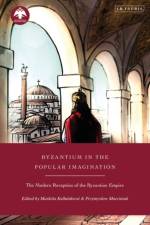
What is the contemporary cultural legacy of Byzantium or The Eastern Roman Empire? This book explores the varied reception history of the Byzantine Empire across a range of cultural production.Split into four sections: the origins of 'Byzantomania' in France, modern media, literature, and politics, it provides case studies which show the numerous ways in which the empire's legacy can be felt today. Covering television, video games and contemporary political discourse, contributors also consider a wide range of national and geographical perspectives including Russian, Turkish, Polish, Greek and Hungarian. It will be essential reading for scholars and students of the reception and cultural history of the Byzantine Empire.
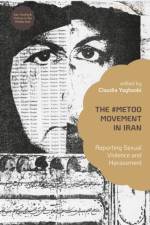
The Iranian #MeToo movement was a crucial form of resistance, with ordinary Iranian women sharing their experiences of sexual harassment and assault in the public sphere of digital media. This is the first book of its kind providing a comprehensive analysis of the Iranian #MeToo movement.Based on archival, empirical, ethnographic, literary and cultural research, the contributors discuss the abuse of women and society's responses to it. Contextualizing the historical framework of Iranian MeToo activism within larger Iranian feminist movements, as well as the historical background within the context of Middle East, the contributors address how the privileged position of men who have been outed as rapists, helps them to aggregate social, political, sexual, and economic capital through various networks in order to delegitimize the narratives of survivors. The volume also covers the intersections of various systems of oppression specifically highlighting marginalized voices. The contributors highlight the power dynamics within digital feminist networks in Iran and its unique attributes due to political, social, and religious structures. The volume ends with a chapter focusing on cultural productions, specifically cinematic works, through which some filmmakers have challenged normalizations ofsexual harassment by offering alternative discourses which have arguably paved the way for the #MeToo in Iran movement.
"This volume explores the reuse of scripture within the genre of apocalyptic, with a particular focus on the Book of Revelation, while also considering other apocalyptic texts in the New Testament and early Jewish literature"--
Part travel adventure, part ballet drama, part coming-of-age memoir, this book an unflinching, complex, and compassionate true tale of adversity, ambition, and discovery. The narrative is drawn from more than a decade of reporting, interviews, and research by an award-winning journalist.
Learn to work smarter, not harder, by implementing a new mindset and business process vision. This book guides modern entrepreneurs to streamline systems, automate tasks, and outsource non-core work by creating a holistic, sustainable system for achieving the lives they desire in and outside of the office.
Abonner på vårt nyhetsbrev og få rabatter og inspirasjon til din neste leseopplevelse.
Ved å abonnere godtar du vår personvernerklæring.