







Gjør som tusenvis av andre bokelskere
Abonner på vårt nyhetsbrev og få rabatter og inspirasjon til din neste leseopplevelse.
Ved å abonnere godtar du vår personvernerklæring.Du kan når som helst melde deg av våre nyhetsbrev.

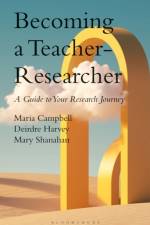
Higher education should be a place for students to innovate, create, and expand their horizons, and in order to create an environment which allows for all these things, tutors need to be able and willing to do the same. This practical and informative book explores how a diverse range of tutors working in the Arts and Humanities disciplines have succeeded in thinking creatively about their teaching, module design, and extra-curricular activities without losing sight of necessary academic rigour. The book explores:· experimental learning environments · student and lecturer collaborations · the development of students' employability and transferable skills · creative and imaginative assessment design · embedding mental wellbeing techniques into curriculaThe varied roles, subjects, and locations of the contributors enables rigorous and diverse international exploration of creative pedagogy in higher education and the book will particularly appeal to those looking to bring creativity to higher education.
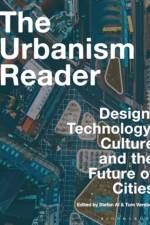
Positioning design at the center of the debate, The Urbanism Reader brings together classic and contemporary readings to help designers understand the complexities of cities and urban design in the 21st century. The selection of readings presented here is uniquely tailored to a design perspective for architects and urban designers - balancing social issues in urbanism with a clear focus on foregrounding design as an instrument for change in cities, and examining the outcomes and challenges of recent design theories, design methods, and technologies in the built urban environment. Covering today's most urgent issues, 44 texts explore key topics in urbanism - from digital design technologies to smart cities, from the ongoing ecological crisis to public health and the impact of Covid-19, and from emergence and informality to economic inequity in global cities. Chapters cover cultural issues including diversity, indigenous knowledge, decolonization, social justice, and inclusion alongside technological developments, while a final chapter speculates on the future of urbanism through readings in AI, virtual reality, and the frontiers of current thinking in architecture and urban design. The extracts are grouped by theme, each with an introduction to the historical contexts and guiding paradigms - helping design students, researchers, and professionals to make sense of the diverse field of theory and practice in the past, present, and future of global urbanism.
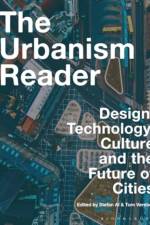
Positioning design at the center of the debate, The Urbanism Reader brings together classic and contemporary readings to help designers understand the complexities of cities and urban design in the 21st century. The selection of readings presented here is uniquely tailored to a design perspective for architects and urban designers - balancing social issues in urbanism with a clear focus on foregrounding design as an instrument for change in cities, and examining the outcomes and challenges of recent design theories, design methods, and technologies in the built urban environment. Covering today's most urgent issues, 45 texts explore key topics in urbanism - from digital design technologies to smart cities, from the ongoing ecological crisis to public health and the impact of Covid-19, and from emergence and informality to economic inequity in global cities. Chapters cover cultural issues including diversity, indigenous knowledge, decolonization, social justice, and inclusion alongside technological developments, while a final chapter speculates on the future of urbanism through readings in AI, virtual reality, and the frontiers of current thinking in architecture and urban design. The extracts are grouped by theme, each with an introduction to the historical contexts and guiding paradigms - helping design students, researchers, and professionals to make sense of the diverse field of theory and practice in the past, present, and future of global urbanism.
This book provides an overview of the European energy law, laying the groundwork for understanding the energy industry. The book explains private and public law aspects of the energy industry and energy environment law. Starting from the internal energy market, current energy law and regulatory issues are explored, from the Energy Union to the globalisation of energy trading. In order to grasp the breadth of energy law, it is important to understand the European and international framework conditions. This knowledge is a prerequisite for successful work in the energy industry, politics, administration and associations. Last but not least, it is also the basis for understanding the energy transition.
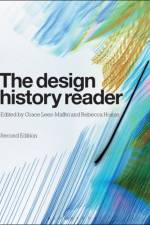
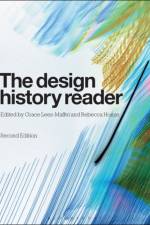
This revised and updated edition addresses the international history and practice of design from the 17th century to the present day. Covering both primary texts by social theorists, designers and design reformers, and secondary texts in the form of key works of design history and design thinking, the Reader provides an essential resource for understanding the history of design, the development of the discipline, and contemporary issues in design history and practice, including decolonization, sustainability, historiography, gender and globalization. Extracts are grouped into thematic sections, each with a contextualizing introduction by the editors, and a guide to further reading.The updated edition of The Design History Reader expands upon its original content and features numerous famed scholarly voices from across the globe. Authors include those such as Glenn Adamson, Victor Margolin, Clive Dilnot, Susan S. Bean, Karl Marx, Roland Barthes and many more.
This revised and updated edition addresses the international history and practice of design from the 17th century to the present day. Covering both primary texts by social theorists, designers and design reformers, and secondary texts in the form of key works of design history and design thinking, the Reader provides an essential resource for understanding the history of design, the development of the discipline, and contemporary issues in design history and practice, including decolonization, sustainability, historiography, gender and globalization. Extracts are grouped into thematic sections, each with a contextualizing introduction by the editors, and a guide to further reading.The updated edition of The Design History Reader expands upon its original content and features numerous famed scholarly voices from across the globe. Authors include those such as Glenn Adamson, Victor Margolin, Clive Dilnot, Susan S. Bean, Karl Marx, Roland Barthes and many more.
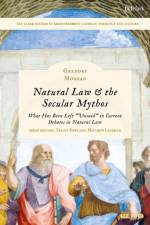
This book diagnoses why natural law theory is becoming an increasingly fragmented discourse by illustrating how natural law theorists are caught in a relationship with 'secular' discourses.
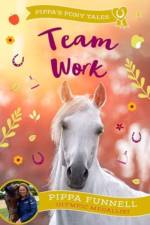
A new title in the Pippa's Pony Tales series, a must-have for any reader who loves horses and ponies. Tilly and her horse, Magic Spirit, are inseparable. Are they closer to achieving their dreams of stardom?Tilly has an exciting opportunity to groom for a top eventer at an international horse event. It's inspiring to be around so many famous horses and riders, although she misses her horse Magic Spirit and the Silver Shoe stables. Then disaster strikes, and she realises how much she needs teamwork to turn the day around.
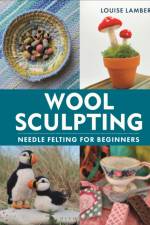
With 10 beautiful step-by-step projects, master the art of needle felting with this practical guide. Needle felting is an increasingly popular craft because it can be used to create almost anything! This book has everything you need to know to make your very own three-dimensional needle felted sculptures. After learning about the different types of wools, materials and tools needed, discover how to 'jab' fibres into basic shapes and build your own armatures from wire. Whilst they make wonderful display pieces, some projects can become wearable as brooches - all of which is explored in the book. Featuring 10 step-by-step projects to get you started, ranging from toadstools and teacups to puffins and mice, learn how to create your very own sculptures. Wool Sculpting is enriching and aspirational as well as being eminently practical. Get your needle out and start sculpting your own miniature works of art!
"Places posthumanism and feminist theory into direct conversation with contemporary science fiction film and media from the 1980s to present"--
"Challenges and contextualizes the standard language used in translation theory and comparative literature within the unique linguistic and translational context of the Canadian nation-state"--
The Beatles are known for cheeky punchlines, but understanding their humor goes beyond laughing at John Lennon's memorable "rattle your jewelry" dig at the Royal Variety Performance in 1963. From the beginning, the Beatles' music was full of wordplay and winks, guided by comedic influences ranging from rhythm and blues, British radio, and the Liverpool pub scene. Gifted with timing and deadpan wit, the band habitually relied on irony, sarcasm, and nonsense. Early jokes revealed an aptitude for improvisation and self-awareness, techniques honed throughout the 1960s and into solo careers. Experts in the art of play, including musical experimentation, the Beatles' shared sense of humor is a key ingredient to their appeal during the 1960s-and to their endurance.The Beatles and Humour offers innovative takes on the serious art of Beatle fun, an instrument of social, political, and economic critique. Chapters also situate the band alongside British and non-British predecessors and collaborators, such as Billy Preston and Yoko Ono, uncovering diverse components and unexpected effects of the Beatles' output.
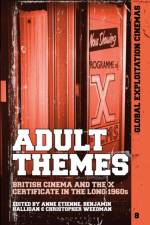
"Explores films of the long 60s that were assigned an "X" certificate by the British Board of Film Censors alongside new and emerging social and sexual practices of the time"--
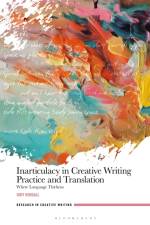
An investigation into the powerful effects occurring at the threshold between articulation and in-articulation in original and translated works, this book models how creative writing research, practice, processes, products and theories can further academic thought. At the threshold of in/articulacy, language can be said to 'thicken' and obscure the usual conditions of legibility or lexical meaning, becoming unfamiliar, flexible, incomplete, even absent. These 'thickening' moments alter and enrich literary processes and texts to initiate a paradigm shift in composition, translation and reading experiences. Interrogating this shift from the viewpoints of writers, translators and readers, Judy Kendall draws on translation studies, literary theory, anthropology, philosophy and physics and more to examine the practices of Semantic Poetry Translation, code-switching, made-up English, visual text, vital materiality and the material-discursive. Breaking new ground with her enactment of the ways in which creative writing can take an active and productive lead in research enquiries, Kendall looks at works including Old English riddles, Nigerian novels, J R. R. Tolkien's and Ursula K. Le Guin's narratives, Caroline Bergvall's hybrid works, Caryl Churchill's The Skriker, Patrick Chamoiseau's novels, Zong! and several other visual texts.
Is there a connection between the environmental, climate, and political crises facing us today and Western dualism? By critically examining the subject/object dualism that has supported Western philosophy and aesthetics since the 17th century, Nicola Perullo presents a relational and co-operative account of aesthetic experience and human existence.Exploring science, ontology and aesthetics through the perspectives of quantum physics' relational interpretation and non-dualistic philosophies, Perullo draws on Western theories in anthropology and cultural traditions such as Buddhism and Daoism. We see how the ontology supported by dualism renders the world to consist of static, solid, and discrete things, making them vulnerable to be controlled, dominated, and possessed. In Perullo's ground-breaking analysis an alternative way of perceiving is offered: the "haptic" modality which is guided by cooperation, communication, and correspondence. Such a mode of perception and experience is ecological, precluding the possibility of domination, hierarchy, and exploitation. This challenge to the ramifications of the subject-object model, the very cornerstone of Western thought, is an exciting invitation to rethink the purpose of philosophizing and its impact on life.
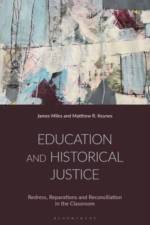
Education and Historical Justice explores how global movements for historical redress and reconciliation are reshaping education and schooling. This book is the first to theorize and name the important and growing nexus between education and historical justice: historical justice education. It considers how educational policy, curriculum, pedagogy, and materials are being reformed to address goals of historical justice, redress and reparations globally with a focus on Australia, Canada, Sweden, and the USA. It places these changes and challenges in historical context drawing on international human rights law, political and historical theory, and histories of education, to account for the growing role of education in the pursuit of historical justice. Finally, it assesses how education oriented towards historical justice reconfigures subjectivities and raises questions around complicity, guilt, and collective responsibility which have important implications for educators, researchers, and policymakers.
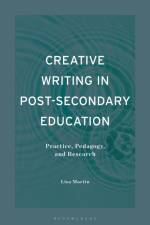
A blend of memoir and scholarly review, this book explores the kinds of thinking creative writing as a distinctly practical subject makes possible within post-secondary education. Based on personal experience, Lisa Martin reimagines higher education in more equitable, diverse, and inclusive directions. Taking the idea that creative writing should be grounded in practice, she explores how the nature of the subject gives permission to think specifically, locally, from one's own position, and in a necessarily limited way - without having one's thinking discounted as lacking rigour as a result. Modelling the deep and essential connection between practice and research in the field, this book considers post-secondary creative writing in its three key aspects - artistic practice, pedagogical practice, and practice-led research - in order to articulate the distinctive contributions creative writing makes to what "thinking" means (and whose thinking gets included). Drawing on Martin's own artistic practice as well as more than a decade of pedagogical experience in creative writing, this book braids together disciplinary history, research-informed autobiographical analysis of artistic practice and pedagogy, and scholarly research in adjacent fields such as creativity studies and educational psychology. Connecting creative writing's central commitment to artistic practice and local, material, embodied thinking with the development of learner-centred pedagogies, Creative Writing in Post-Secondary Education is timely, important and will spark spirited discussion within a debate that has been simmering since the inception of creative writing.
This groundbreaking book offers a unique collection of Indigenous and non-Indigenous approaches to decolonizing international development.The world is facing enormous challenges, from ever-growing global inequality to climate change to the continuing fallout from the Covid pandemic. It is becoming increasingly clear that the origin of these challenges lies in the economic models and imperial lifestyles perpetuated by the Global North. In order to find new answers to the world's biggest challenges, then, it is necessary for the Global North to acknowledge Indigenous knowledge systems as unique and legitimate epistemologies and to engage in dialogues with them. This collection brings together contributions from Indigenous and non-Indigenous authors to promote that dialogue. It provides a unique, rare forum for discourse between the expressive potentials of differing world views, and ultimately, for developing cooperation in the terms of Eisenstein's notion of interbeing, which counteracts the "History of Separation" between nature and culture and between Global South and Global North. What emerges is a path forward towards a new, interwoven modernity characterized by an embrace of separate, but mutually constitutive, ways of knowing.For its wide topical and geographic breadth, and for its bringing together of Indigenous and non-Indigenous scholars around the world, this book is a must-read for researchers and students interested in indigenous studies and decolonial approaches to international development.
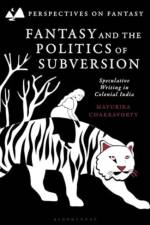
Focusing on the corpus of Fantasy texts written in colonial India during the late 19th and early 20th century, this book explores the origins, motivations, nature and role of speculative writing around the period of the Indian independence movement. Taking stock of Bengali texts previously designated as children's literature, Mayurika Chakravorty examines the works of such authors as Sanjibchandra Chattopadhyay, Trailokyanath Mukhopadhyay, Sukumar Ray and Parashuram (Rajshekhar Basu) and Sukumar Ray to shed light on how their writing offered stringent commentaries on the colonial situation whilst grappling with larger questions surrounding science, progress, the environment, ethics and morality. With a focus on how key works - previously omitted from the established canon of fantasy literature - were based on diverse classical streams from European, Persian, classical Sanskrit and local folk traditions, the book explores how speculative writers challenged the dominant literary tropes of both colonial (Western) and revivalist (Sanskrit) classicism. In highlighting overlooked writing within Indian literary history and fantasy and children's literature studies, Chakravorty demonstrates that in understanding these works in relation to one another, they provide evidence of compelling bodies of work produced in the context of, and in resistance to, empire.
Abonner på vårt nyhetsbrev og få rabatter og inspirasjon til din neste leseopplevelse.
Ved å abonnere godtar du vår personvernerklæring.