











Gjør som tusenvis av andre bokelskere
Abonner på vårt nyhetsbrev og få rabatter og inspirasjon til din neste leseopplevelse.
Ved å abonnere godtar du vår personvernerklæring.Du kan når som helst melde deg av våre nyhetsbrev.

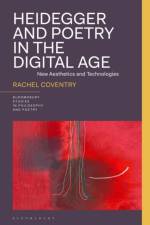
In this original study, Rachel Coventry expands Heidegger's philosophy of art to include his ontological account of poetry and technology. Following Heidegger's definition of technology as preventing authentic poetic language, alongside his argument that poetry can successfully confront technology, Coventry considers the possibility of great poetry in the digital age. This approach takes us beyond conventional literary criticism, using different case studies from contemporary poetry including eco-poetry, digital poetry and post-internet poetry. Heidegger and Poetry in the Digital Age asks provocative questions to progress the philosophical study of poetry, tracing new lines of thought in Heidegger studies and critical studies of contemporary poetry. Does the digital thwart the aim of eco-poetry? Do poetic movements that use modern technology provide us with a way to overcome the negative effects of technology? What are the ontological consequences of employing new formats for poetry? This book examines these tensions to provide a phenomenological account of digital poetry that grounds poetic metaphor in Heidegger's metaphysics.
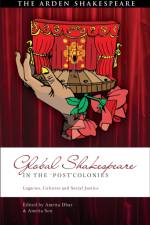
Shakespeare in the 'Post' Colonies provides a wide-ranging examination of engagements with and adaptations of Shakespeare in regions that were once under European colonial rule. Arguing for the 'Post' Colonies as a distinct category within Global Shakespeares, this volume explores the reality of 21st-century Shakespeares in geographies of postcolonial inheritance, such as continental Africa, Australasia, the Arab world, the Indian subcontinent, East Asia and the Americas. As former colonies in Asia and Africa cross fifty and even seventy years of political independence, contributors re-examine the presence of Shakespeare in marginalised or politically disenfranchised communities, interrogating how Shakespeare intersects with the internal and global power dynamics of post-independence nations. The essays cover a rich range of genres ranging from theatrical performances, translations, and cinematic adaptations to classroom strategies. They turn to texts that have often gone ignored and give voice to Shakespeare appropriations by subaltern groups. They address questions of race, gender, nationality, indigeneity, caste and class, and shed new light on the diverse range of contemporary Shakespeare engagements across global "Post"Colonies.
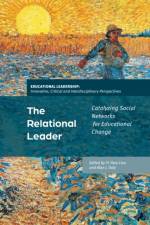
Highlighting leadership from a social and relational perspective, this book has a particular emphasis on the innovative role that social networks play in systems change. The social systems engaged in this volume cut across a wide array of stakeholder groups, ranging from student learners, pre-service/in-service teachers, administrators, community leaders, and out to organizations and communities that reflect well beyond the education sector, showcasing diverse perspectives from multiple areas and international settings. Bringing together 32 distinguished scholars from Australia, Canada, Germany, Hong Kong, New Zealand, Norway, Spain, Taiwan, the UK and the USA, this book explores the use of social networks in education across different contexts and settings, connecting it with leadership practice that works at these settings for change. The contributors also examine online and virtual social behaviors and their connections to face to face networks. Ultimately, the volume showcases that leadership is social influence through examining a variety of social systems through social relationships.In addition to the breadth of studies connecting innovative leadership research to practice in this volume, the contributors also explore a new area of social networks and leadership by examining online and virtual social behaviors and their connections to face to face networks. Ultimately, the selected chapters in this volume make the point that "leadership is social influence" through examining a variety of social systems through social relationships.
Narrating Heritage critically examines the links among heritage, rights and social justice. This book brings important original ethnographic research and unique case studies together in a coherent and cohesive way to examine patterns and differences of approaches to heritage. It exposes discourses of the uses and abuses of heritage, and provides narratives of persistence, demonstrating the importance of heritage in securing human rights and social justice. Drawing on over ten years of research and ethnographic fieldwork based on six complex case studies from Turkey and comparing them with case studies from across the world, the book explores a variety of social, political, cultural and economic heritage discourses, making explicit the relationship between cultural and natural heritage. This book expands on these discourses by examining the role of violence in heritage, expanding on the concepts of both direct and slow violence. It situates heritage discourse within the sphere of human rights and lays out redistribution, recognition and representation as dimensions of social justice in a heritage context. The case studies in this volume explore multiple themes, from the links between cultural performance and the construction of collective identity and sense of belonging, to the roles of education, learning about other cultures and nationalist use of education. They also discuss the relationship between construction of heritage, space, and access and exclusion, as well as the impact of authoritarianism and heavy neoliberal policies on heritage making.
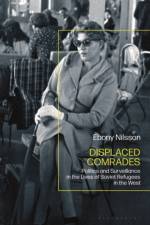
This book explores the lives of left-wing Soviet refugees who fled the Cold War to settle in Australia, and uncovers how they adjusted to life under surveillance in the West. As Cold War tensions built in the postwar years, many of these refugees happily resettled in the West as model refugees, proof of capitalist countries' superiority. But for a few, this was not the case. Displaced Comrades provides an account of these Cold War misfits, those refugees who fled East for West, but remained left-wing or pro-Soviet. Drawing on interviews, government records and surveillance dossiers from multiple continents this book explores how these refugees' ideas took root in new ways. As these radical ideas drew suspicion from western intelligence these everyday lives were put under surveillance, shadowed by the persistent threat of espionage. With unprecented access to intelligence records, Nilsson focuses on how a number of these left-wing refugees adjusted to life in Australia, opening up a previously invisible segment of postwar migration history, and offering a new exploration of life as a Soviet 'enemy alien' in the West.
Adopting a 'social practice' approach to literacy research based on ethnographic methods, this book provides a strong critique of dominant understandings of the role of literacy in the lives of adults in Australia. It explores how groups of working-class adults can manage the literacy practices of their everyday lives by drawing on social networks of support. It is based on research conducted by the author over a forty-year career in adult literacy education, featuring the voices of varied adult groups, including: prisoners, the long-term unemployed, local council workers, manufacturing workers, adult literacy students, marginalised young people, vocational students, and patients living with a chronic illness (type 2 diabetes). Each chapter explains how dominant society views these adult groups in relation to literacy, and provides a qualitative examination at the local level of how members of these groups manage the literacy practices of their everyday lives.
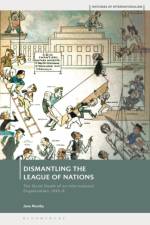
The League of Nations, one of the world's first multi-function intergovernmental organisations, was also one of the first to undergo liquidation. This book unveils the last chapter in its story, showing how complex and time-consuming the end of this 'great experiment' truly was. Starting with the signing of the Charter of the United Nations in 1945 - the death knell of the League - Mumby traces the closure process that followed. From the final meeting of the Assembly in April 1946, the transfer of assets and functions to the UN, the liquidation of the Secretariat, and the last acts of business through 1948, this book follows the story through the eyes of those who made it happen. It demonstrates why this process took longer than expected, highlights the importance of human agency in even the most bureaucratic of institutions, and points to the lingering impact of the League on international organisations today. Uncovering both the institutional and personal aspects of the League of Nations' final chapter, this book furthers our understanding of this famous institution, shedding light on those that continue to dominate contemporary international relations, and exposing the unavoidable complexity of dismantling an intergovernmental organisation.
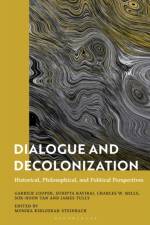
By bringing together philosophers whose work on political philosophy, intellectual history, and world philosophies pushes the boundaries of conventional scholarship, this collaborative collection opens up space in political philosophy for new approaches. Garrick Cooper, Sudipta Kaviraj, Charles W. Mills, and Sor-hoon Tan respond to the challenges James Tully raises for comparative political thought. Arranged around Tully's opening chapter, they demonstrate the value of critical dialogue and point to the different attempts cultures make to understand their experiences. Through the use of methods from various disciplines and cultural contexts, each interlocutor exemplifies the transformative power of genuine democratic dialogue across philosophical traditions. Together they call for a radical reorientation of conceptual and intellectual readings from intellectual history including the Afro-modern political tradition, Indigenous philosophies, and the lived experiences of societies in Asia. This is an urgent methodological provocation for anyone interested in the ethical, conceptual, and political challenges of political thought today.
One hundred kid-tested, child-centered activities, jam-packed with critical thinking, creativity, and fun.
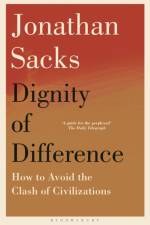
The Dignity of Difference is Rabbi Jonathan Sacks's radical proposal for reconciling hatreds.The year 2001 began as the United Nations Year of Dialogue between Civilizations. By its end, the phrase that came most readily to mind was 'the clash of civilizations.' The tragedy of September 11 intensified the danger caused by religious differences around the world. As the politics of identity begin to replace the politics of ideology, can religion become a force for peace?The first major statement by a Jewish leader on the ethics of globalization, it also marks a paradigm shift in the approach to religious coexistence. Sacks argues that we must do more than search for values common to all faiths; we must also reframe the way we see our differences.
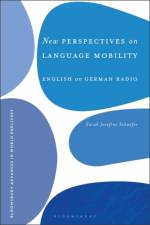
The diffusion of English and the increasing mediatization of our globalized world have significant impacts on our perceptions of language and culture. Beginning with an overview of how the conceptualization of language is currently debated in sociolinguistics and related fields, this book highlights the need for a new perspective on language mobility. Through examining the use of English on German radio morning shows, the book explores the dynamics of language use in times of accelerated globalization and provides insights into how the media operate within the global flows of messages and linguistic resources that characterize our mediatized societies. In doing so, it demonstrates how combining the different perspectives of a sociolinguistics of mobility and contact linguistics allows for a thorough investigation of language practices in society, and advances the theoretical and practical approaches to the study of language mobility as a result.
This volume provides a systematic re-examination of the Frankfurt School's theory of antisemitism and, employing this critical theory, investigates the presence of antisemitism in 20th- and 21st-century politics and society. Critical Theory and the Critique of Antisemitism uncovers how critical theory differs from mainstream socialist or liberal critiques of antisemitism, as it frames its rejection of antisemitism in the critique of other aspects of modern capitalist society, which traditional theories leave unchallenged or critique only in passing. Amongst others, these include issues of identity, nation, race, and sexuality. In exploring the Frankfurt School's writings on antisemitism therefore, the chapters in this book reveal connections to other pressing societal issues, such as racism more broadly, patriarchy, statism, and the societal dynamics of the ever-evolving capitalist mode of production. Putting the theory to practice, this volume brings together interdisciplinary scholars and activists who employ critical theory to scrutinise right- and left-wing manifestations of antisemitism. They develop, in their critique of antisemitism, a critique of capitalism, as the authors ask: why does modern capitalist society seem bound to produce antisemitism? And how do we challenge it? At a time when the rise of populism internationally has brought with it new strains of antisemitism, this is an essential resource that demonstrates the continuing relevance of the critical theory of the Frankfurt School for the struggle against antisemitism today.
The project to create a 'New Man' and 'New Woman' initiated in the Soviet Union and the Eastern Bloc constituted one of the most extensive efforts to remake human psychophysiology in modern history. Playing on the different meanings of the word 'technology' - as practice, knowledge and artefact - this edited volume brings together scholarship from across a range of fields to shed light on the ways in which socialist regimes in the Soviet bloc and Eastern Europe sought to transform and revolutionise human capacities. From external, state-driven techniques of social control and bodily management, through institutional practices of transformation, to strategies of self-fashioning, Technologies of Mind and Body in the Soviet Union and the Eastern Bloc probes how individuals and collectives engaged with - or resisted - the transformative imperatives of the Soviet experiment. The volume's broad scope covers topics including the theory and practice of revolutionary embodiment; the practice of expert knowledge and disciplinary power in psychotherapy and criminology; the representation and transformation of ideal bodies through mass media and culture; and the place of disabled bodies in the context of socialist transformational experiments. The book brings the history of human 're-making' and the history of Soviet and Eastern Bloc socialism into conversation in a way that will have broad and lasting resonance.
How do film and television makers around the world depict public housing? Why is public housing so often chosen as the backdrop for drama, horror, social critique, rebellion, violence, artistic creativity, explorations of race relations and political intrigue?Home Screens answers these questions by examining the ways in which socialized housing projects around the world are represented on screen. The volume brings together a diverse group of interdisciplinary scholars, who explore documentary and fictional portrayals of the architecture of public housing, and the communities that inhabit it, ranging from the 1950s to the present. Examining international film and media texts such as Die Architekten (1990), Swagger (2016), Cooley High (1975), Mee-Pok Man (1995), Treme (2010-2013), Mamma Roma (1962), The Pruitt-Igoe Myth (2011), and Below the Lion Rock (1972-1976), essays within this book consider public and private attitudes toward socialised housing, explaining how onscreen representations shape perceptions of these ubiquitous, often-stigmatized urban locations.
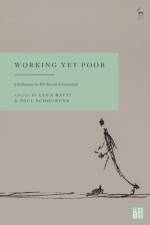
This open access book explores the EU regulatory framework to measure in-work poverty and reduce its impact on different groups of workers in the labour market. Its innovative approach links the enhancement of social rights with the full realisation of EU citizenship entitlements and values.For almost two decades, EU countries have experienced rampant inequalities as well as the varied spread of in-work poverty, both around Europe and within national labour markets. Without the realistic prospect of EU citizens earning a decent living, the substantive content of EU citizenship itself could be put in jeopardy. Following an in-depth scrutiny of the main policy options at both EU and national levels to reduce the number of working poor, this invaluable resource provides a theoretical reflection on the role of legislation and socio-fiscal welfare in contemporary labour markets. The eBook editions of this book are available open access under a CC BY-NC-ND 4.0 licence on bloomsburycollections.com.
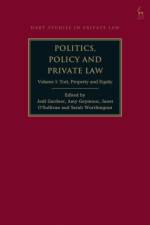
This is a landmark and ambitious research project looking at private law through the policy prism undertaken by a team of acknowledged experts in their fields.The majority of existing literature diminishes the impact of policy in the development of legal principles, impeding a deeper understanding of it. Part of a two-part study, this first volume explores tort law, property law and equity. Both studies engage with modern challenges and technical developments that now inform private law, with chapters looking at the Grenfell disaster, compensation of medical injuries post COVID-19, the gig economy and co-ownership. They also explore traditional private law areas through a novel lens, such as psychological injury and the impact of fairness and/or equality obligations. They highlight the similarities and differences across many aspects of private law, allowing for a richer analysis across all the strands of private law.
Abonner på vårt nyhetsbrev og få rabatter og inspirasjon til din neste leseopplevelse.
Ved å abonnere godtar du vår personvernerklæring.