












Gjør som tusenvis av andre bokelskere
Abonner på vårt nyhetsbrev og få rabatter og inspirasjon til din neste leseopplevelse.
Ved å abonnere godtar du vår personvernerklæring.Du kan når som helst melde deg av våre nyhetsbrev.

A detailed guide to British forces in Bolt Action: Third Edition.
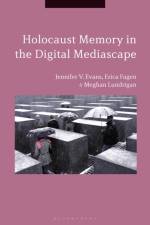
This is a comprehensive study of Holocaust memory in the digital age of social media. Focusing on the five most popular digital platforms in use today: Flickr, Instagram, YouTube, Twitter and Facebook, it examines how social technology affects the way history is made and circulated online.Social media has become a place where memories of the Holocaust take shape through user-driven content shared in elaborately interconnected communication networks. Alongside curated exhibits, documentaries and scholarly research, smartphone photos, short videos and online texts act as windows into the popular consciousness. They document how everyday people make sense of the crime of genocide, presenting unique challenges to historians. Does participatory media create a different understanding of genocide than more traditional forms of writing? How does expertise manifest in the digital public sphere? Do YouTube tourist videos and concentration camp selfies undermine the seriousness of the Holocaust and Holocaust Studies by extension? Holocaust Memory in the Digital Mediascape provides valuable answers to these questions and much more.The book comes with a range of helpful images and it also analyzes the way vernacular memory around the Holocaust and postwar reckoning and reconciliation is mobilized as well as contested in the digital sphere. It is an important volume for all scholars and students of the Holocaust, its history and memory.
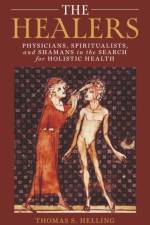
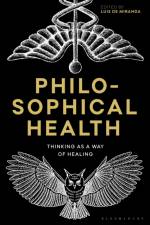
This book traces notable people in Western history who tried to decipher the mysteries of illness and health. I have chosen specific women and men for their unique perspectives in healing-some "traditional" physicians, shamans from Indigenous peoples, some focused on the body, some on the spirit. As a rule, they were individuals of compassionate character who felt for the miseries of humankind. But each one revealed to us a lesson. Each one illuminated the extreme complexity of humanness but also the extreme delicacy: human beings of organs and tissues and blood but also of worry and fear and sorrow. Suffering affects both. And each healer was human themselves. The story will span antiquity to the present. Ancient Greece produced the earliest concepts of disease and illness, that one may affect the other. The cult of Asclepius, the man-god of healing, addressed spirits damaged by pernicious gods and worked to insert the supernatural in their healing schemes. Hippocrates, the great physician, instructed proper respect for the human constitution and urged compassion - qualities for healers as important today as then. The charismatic Jesus of Nazareth revolutionized healing practices by demonstrating a compassion for all infirmed people, particularly the impoverished, a behavior taken up by his followers and which formed the basis for modern healthcare. Galen, the Greek physician, provided a method of understanding - however imprecise - that allowed interaction of flesh and spirit through the maintenance of internal harmony.The medievalists, on the brink of scientific thought, stressed knowledge of the body as the first exercise in treating disease. Skill with their hands - the newfound art of surgery - largely replaced the ineffectual remedies of the day. The Lakota shaman Black Elk (1863-1950) showed a different comprehension of illness and healing, not scientific nor contemporary but filled with invisible spirits and forces that only the chosen few could manipulate. We will also examine numerous women healers, including psychiatrist Sabina Spielrein (1885-1942), both victim and healer, tormented by childhood traumas lodged deep in her subconscious that stimulated an interest in understanding and healing others afflicted with disorders of the mind, often as severe and disabling as those of physical natures. This history of healers is not comprehensive; it is illustrative. It is not exhaustive; it is instructional. Everyone faces existential threats to health and wellness at some point in their lives. The frightful prospect of suffering and death, in the moment, is terrifying. Is science enough? Very often the answer is no. Advances in medicine and surgery have no doubt substantially contributed to the process of recovery, in fact painful and debilitating treatments may be necessary to achieve healing. Yet, there must be more. History has provided some insight to the arduous, metaphysical, and religious journey of reconciliation and resignation. This book will illuminate pivotal figures who provided not only the physical but also the metaphysical elements of therapy for those sufferers facing tormented and abbreviated futures. There is wisdom in this history, as spiritual equanimity is timeless and science remains imperfect. It is an inner, spiritual peace that humankind truly pursues. Reconciliation with illness and disease can only come by finding and embracing that peace. The Healers illustrates those variegated and multicultural attempts to seek holistic health.
Assessing Psychometric Fitness of Intelligence Tests: Toward Evidence-Based Interpretation Practices addresses issues and concerns regarding appropriate ethical and scientific underpinnings for the appropriate interpretation of intelligence tests. Ethical test interpretation requires test users to consider the empirical evidence for individual and all test score comparisons and to make appropriate clinical decisions accordingly. This requires test users to have competencies in advanced psychometric principles. The chapters in this edited volume present a variety of topics, including the intersection of ethical principles, test standards, and psychometric properties that guide evidence-based interpretation; surveys of empirical evidence in the literature for qualifying major intelligence test interpretations, and psychological measurement topics that impact psychometric understanding of what current intelligence tests can and cannot do. This critical discussion has implications for basic undergraduate and graduate instruction, as well as supervision in clinical and research applications.
This book addresses issues and concerns regarding appropriate ethical and scientific underpinnings for the appropriate interpretation of intelligence tests. It's written for psychologists, professors, researchers, and practitioners concerned with applied psychometrics in evaluating intelligence or cognitive abilities and test assessment.
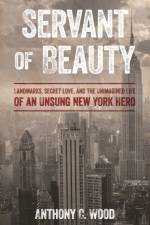
Servant of Beauty: Landmarks, Love, and the Unimagined Life of an Unsung New York Hero isthe true story of the interplay between the two all-consuming passions of this unheralded civicchampion: his love of beauty in the public realm that would forever change New York City, andhis love for a younger man that would forever change Bard.
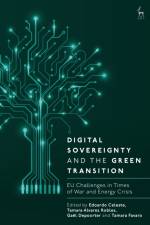
The first investigation of the environmental impact of EU digital sovereignty strategies
This book is a celebration of British raptors (including owls), following their fortunes as British breeding birds from historical times to the present day and illustrated with 200 stunning colour photographs.
The definitive go-to training manual for cyclists written by the world's leading cycling coach Joe Friel.
Joe Harkness, author of the acclaimed Bird Therapy, investigates the connections between nature and neurodiversity
This book is a detailed account of the Radical War in 1820s Scotland, highlighting the conditions that led to the revolt, the reaction of the government, and the impact on Scottish society.David Smale takes readers through the post-1815 mass unemployment, disaffection, and formation of radical groups calling for parliamentary reform, as a prelude to the Radical War. Using a wealth of archival material, this book readjusts existing narratives surrounding the conflict, shifting the focus away from the accounts of paid spies, and centering the little used records of the pioneering 'new police' force. Smale examines how police activities impacted the revolt, from the contrasting aims of pro-reformer and pro-government publications released during the time, to the activities of five 'spy groups' who entered the radical milieu and provided authorities with intelligence on their activities. Concluding with the key events of the revolt, including the Battle of Bonnymuir, and exploring the its after effects, such as the Lord Advocate's conflict with police - this volume provides comprehensive analysis of the Radical War, and places it within a pan-British context.
This volume addresses the important, but under-noticed, question of the impact of state size and scale for constitutional law and governance, and brings together leading global scholars to focus on the lessons from a range of small states and jurisdictions in this context.Often, the best way to understand the effect of scale is to examine states where scale is demonstrably lacking. Doing so allows a form of "reflective" comparison that provides greater insight and clarity into the significance of state size, and constitutional scale, as a factor affecting a range of democratic constitutional outcomes. The volume also explicitly invites critical reflection on, and problematisation of, the issues of line-drawing and boundary definition around notions of state and jurisdictional size.The collection features contributions by scholars from a wide range of jurisdictions, living and working across the Global South and North, and includes attention to the constitutional experiences of small states and jurisdictions in Europe, Africa, Asia, South America, the Caribbean and Oceania that have not received much coverage in the literature. As such, it makes a meaningful contribution to regionally-focused constitutional debates. This is especially significant in the Caribbean and Oceania, where a large percentage of states are small states, and there is only a limited body of constitutional scholarship focusing on the constitutional experiences of such jurisdictions. More generally, this volume will be of interest to audiences working in and interested in small states generally, as well as a broader comparative audience interested in issues of scale in constitutional design and implementation.
Based on close readings of three major sitcoms, this book unpacks how sitcoms understand later life sexualities and focusses on how they represent sexually active older adults.Focusing on three representative sitcoms - Waiting for God, The Old Guys and Vicious - it demonstrates the ways in which sitcoms specifically enable and restrict representations of later life sexualities. Tracing how transgressive portrayals of sexually active older adults are couched in comedic terms, it opens up new critical perspectives on later life sexualities that will critically inform public debates and academic research - in Britain and beyond.
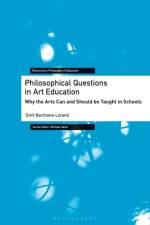
This book examines the rationale of incorporating the arts in the school curriculum from a philosophical, rather than pedagogical, perspective.Educational resources are frequently under scrutiny, and education policy makers wish to maximize the use of public funds and children's time at school, leaving the arts as a lower priority. To understand the logic behind this, Lorand revisits milestones in the history of the philosophy of art to address core questions in art education, namely, what are the challenges of teaching the arts? And why teach the arts at all?Lorand draws on the work of a broad range of philosophers including Dewey, Eisner, Greene, Hume, Plato, Kant, Langer, Read and Schiller. The book aims to show how attempts to justify art as a tool for societal and individual improvement fail in advocating art education. Ultimately she claims that the arts should be taught because children have the right to receive art education. That right stems from the unique nature of art.
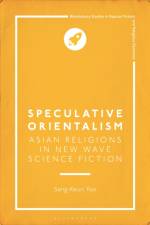
Examining the works of prominent New Wave science fiction authors from the 1950-160s, Sang-Keun Yoo highlights the underexplored connection between American science fiction and Asian religions, such as Taoism, Buddhism, and Hinduism.Yoo also considers how the major world wars of the 20th century-Second World War, the Cold War, and the Vietnam War- repositioned Asian culture in relation to the science fiction genre in the period.Underpinning this study, Yoo argues that "speculative Orientalism" emerged in American science fiction during the 1950s and 60s. This concept adopted aspects of Asian religions to envision alternative worlds, unburdened by the constraints of colonialism, totalitarianism, racism, and sexism present in contemporary American society.Bringing fresh perspectives to the works of William S. Burroughs, Philip K. Dick, Ursula K and Samuel R. Delany, this book offers an insightful examination of the role of Asian religions in American science fiction and their impact on the genre's history.
Design for Cultural Commoning explores the role of design-based thinking and practice in the construction of cultural common spaces.Torange Khonsari shows how the commons in the cultural domain can be a driver towards addressing a range of critical community and societal concerns, from citizen apathy and lack of trust, to extractive production of cultural objects exhausting our earth's resources and exacerbating the gap between the powerful and the powerless. A rich and engaging volume, it combines theory, methodology and practice to bridge disciplinary boundaries, from commons, urbanism, psychology, politics, anthropology and sociology, with practical design methodology.
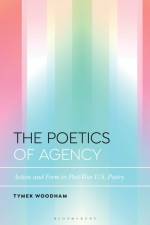
Focusing on the poetry and poetics of four pivotal authors, this book examines how experimental approaches to poetic form in the post-war United States actively intervened in and reframed period-defining questions surrounding the limits and possibilities of human agency.
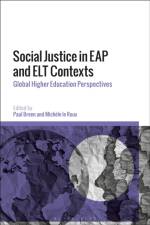
This book articulates an understanding of what is meant by the term social justice from a global perspective, drawing upon examples of practice from across a range of English for academic purposes (EAP) and English language teaching (ELT) higher education contexts. Presently, within western higher educational systems, there is a drive for greater integration of approaches that lend themselves to social justice. However, questions still remain about what that means in practice. This book seeks to answer that not by telling but by showing. It presents a series of chapters that act as vignettes into a diverse set of classrooms, contexts and countries, offering examples of how and where an epistemology of social justice has been put into practice in teaching and learning situations. Such situations range from cross-continental higher educational partnerships between east and west to instances of EAP practitioners' work with refugees from North Africa and the Middle East. These examples are threaded together by the common goal of understanding what it is that defines an enactment of social justice and what the shared denominators are across these contexts. Through looking at these various examples, the authors produce a set of codes and themes that are common to practice across contexts and discuss how these might help inform practice in other areas of language education, higher education and educational development work in general.
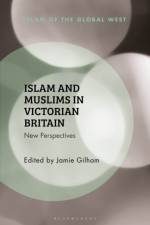
Jamie Gilham collates the work of leading and emerging scholars of Islam in Britain, Christian-Muslim relations and Victorian Studies to offer fresh perspectives on Islam and Muslims in Victorian Britain.The contributors reveal 19th-century attitudes and beliefs about Islam and Muslims to demonstrate the plurality of approaches and representations of Islam in Britain's past. Also bringing to life the stories and voices of early Muslim settlers and converts to Islam, this book examines the lived experience of Muslims in the Victorian period. Sources include political and academic writings, literature, travelogues, the press and other forms of popular culture. Intersectional themes include religion and religiosity, 'race' and ethnicity, gender, class, citizenship, empire and imperialism, and prejudice, discrimination and resilience.
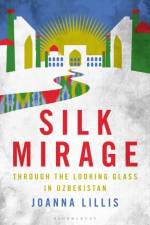
Silk Mirage is a compelling portrait of Uzbekistan, a country at the heart of the ancient silk road and now the centre of a secret power struggle in Central Asia. In 2016, the long-ruling dictator Islam Karimov - one of the last Soviet strongmen - died, sparking what was called by his successor the 'Uzbek Spring'. But, as investigative journalist Joanna Lillis shows, spring has struggled to break through in one of the world's most repressive and totalitarian states. As one of the few western journalists with access to Uzbekistan, Lillis travels deep into the heart of the Karimov regime, portraying in vivid prose all the excesses and atrocities that made it such a brutal dictatorship.Featuring 12 chapters based on extraordinary interviews, Lillis explores Uzbekistan's politics, economics, history, arts and culture - and asks where Uzbekistan stands five years after the death of its dictator, and 500 years since it's ancient capital Samarkand was the centre of the world's trade network. We travel across the country from the water crisis of Andijan in the Fergana Valley, the centre of climate change; to Samarkand and the ruins of the great silk road, where a new open-minded generation competes with Stalin's enduring legacy of cronyism, gangsterism and corruption. Lillis weaves in the stories of ordinary people and struggling places, from ancient Jewish minorities and LGBTQ activists trying to fight for the right to live and love, to the tale of the collapsed dam in the foothills of the Tian Shan mountains.Traversing salt deserts and the foothills of the border with China, taking in glittering cities and dystopian industrial landscapes, Silk Mirage conjures up Uzbekistan as place full of life and loss - the ancient heart of eastern civilization that shows us worrying signs of things to come.
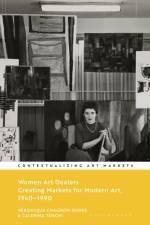
Through a range of case studies, this book challenges male-dominant art market history by exploring how female dealers worked to promote international art and acted as key agents in the development of the modern global art market.
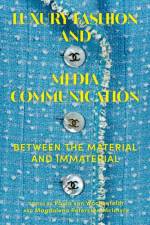
Using image and film advertisements, interviews, social media and public and private archives, Luxury Fashion and Media Communication offers an interdisciplinary approach to analyzing the value of the luxury object. Regular reports on consumption in media and frequent advertising on social media have allowed people all over the world to share in the issues and development of luxury; but how is it communicated, and how has it affected the consumer?An international range of scholars explore the material and immaterial value and meaning of luxury, how it is materialized and how it is communicated between the luxury industry and the consumer. Investigating French, Italian and Spanish luxury brands and their communication strategies on the global market, and including two chapters focusing specifically on the Chinese and American markets, they examine the ambiguity of the luxury commodity. This volume shows particularly the conflicting narratives between the idea of exclusivity and human skills and their mass marketing.In exploring theoretical perspectives alongside the practicalities of how luxury is communicated, Luxury Fashion and Media Communication reveals the value of the luxury object and the consumer's behaviour in relation to that value. It offers an innovative and important intervention in the inter-related fields of luxury fashion, media and communication, and key reading for scholars, students and practitioners wishing to explore the material and immaterial value of luxury.
Abonner på vårt nyhetsbrev og få rabatter og inspirasjon til din neste leseopplevelse.
Ved å abonnere godtar du vår personvernerklæring.