







Gjør som tusenvis av andre bokelskere
Abonner på vårt nyhetsbrev og få rabatter og inspirasjon til din neste leseopplevelse.
Ved å abonnere godtar du vår personvernerklæring.Du kan når som helst melde deg av våre nyhetsbrev.

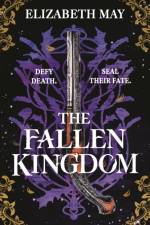
The third and final book in Elizabeth May's Edinburgh-set romantasy trilogy.
This ground-breaking new legal librarianship book serves as an invaluable resource for practicing law librarians who want to be at the forefront of information technology and law libraries.
This ground-breaking new legal librarianship book serves as an invaluable resource for practicing law librarians who want to be at the forefront of information technology and law libraries.
A scholarly consideration of Akínwùmí Ìsòlá and his anthology, Àfàìmò Àti Àwon Àròfò Mìíràn, via the analysis of the influential role of traditional forms of praise-singing in Yorùbá contemporary poetry.
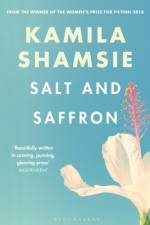
The Dard-e-Dils are known for their clavicles and love of stories. The family is cursed by its not-quite twins, and Aliya, prey to her family's legends, begins to believe that she is another 'not-quite twin', cosmically connected with her aunt Mariam in a way that hardly bodes well.
From the creator of Dublin Oldschool comes a poetic and musical journey about family, love and the sound of our voices
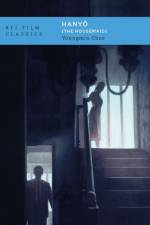
The upwardly mobile Kim family employs a young woman to help manage their new house. Mr. Kim begins an affair with the nameless 'housemaid', who soon drags the entire family into a terrible tragedy... The director Kim Ko-young played a formative part in South Korean cinema's "Golden Age" of the 1960s and 1970s; his 1960 masterpiece, Hanyo (The Housemaid), rescued and restored after almost being lost, is today widely regarded as one of the greatest South Korean films of all time. Directors such as Park Chan-wook, Im Sang-soo, Kim Ki-duk, Ryu Seung-wan and Kim Jee-woon have all praised the film, and Bong Joon-ho has referred to Hanyo as "the Citizen Kane of Korean cinema," citing it as an inspiration for his film, Parasite (2019). In this book, Youngmin Choe argues that Hanyo encapsulates the mood of social change in postwar South Korea during the period of tremendous upheaval and rapid transformation that followed the devastating war, which divided families across the newly formed Cold War boundaries. The housemaid - a figure that Kim Ki-young would explore repeatedly throughout his career - was a young woman driven by greed and envy, a femme-fatale set loose on the middle-class home. A monstrous embodiment of the destructive desires of capitalism, which recklessly eroded the foundations of tradition, this housemaid served as the conscience of a period that otherwise leaned heavily into economic transformation, pointing to the anxiety that undergirded what might be otherwise regarded as a time of 'progress'. Going beyond the traditionalist approaches that resist feminist readings of Hanyo, Youngmin Choe insists that the enduring legacy of Hanyo is both due to its uncanny aesthetics and - though it certainly was not intended to be an explicitly feminist film - in the questions it raises about class mobility, gender oppression and women's work.
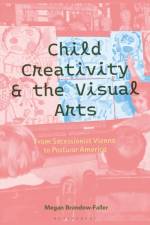
Tracing the dissemination of Secessionist ideas of child creativity - from their origination in early-20th century Vienna through to their eventual commodification in postwar America - this book highlights the central role that visual art has played in child education and in nurturing creativity in elementary and preschool curricula.Taking the reader through the ideas of three artistic visionaries and their students; Franz Cizek, and Austrian-American émigrés Emmy Zweybrück and Viktor Löwenfeld, the author reveals how these ideas developed in postwar America through a focus on child-centered methods of 'learning by doing' in artistic practice. By centring the visual arts as a vital educational medium, we see how these teachings have been popularized as a means of nurturing creativity in childhood.Across three chapter length case-studies, interspersed with three 'mini chapters' on the reception of each artist-educator's radical teachings in the American education system, the book provides new interpretations into the impact of these three luminaries' differing philosophies on a broader program of socio-political activism in the USA. Drawing on previously untapped archival and primary source materials, it blends deep material culture analysis with narrative elements to present a compelling account of the unrecognized influence of émigré art pedagogy on progressive, international art education. In doing so, it provides fresh transregional and thematic perspectives on early-1900s Vienna as a hotbed of creative and cultural experimentation and 'mecca' of progressive art education.
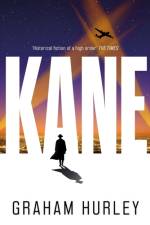
The tenth volume in Graham Hurley's critically acclaimed Spoils of War collection of novels set amongst the key events of World War II and related conflicts.
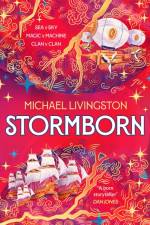
In this stunning conclusion to Michael Livingston's Seaborn Cycle, the Fair Isles sail to battle, legends become real, and new magicks threaten to shatter the world.
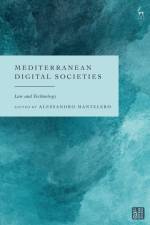
This open access book provides a Mediterranean perspective on digital societies, focusing on core issues such as cultural heritage, tourism, smart city development, migration, humanitarian action management, maritime security, health data sharing, and the Mediterranean data space. The Mediterranean Sea is not just a geographical place; it is a crossroads of cultures, economies, and political trends which are now intertwined with data-driven technologies. Neither a national nor an EU versus non-EU perspective can fully grasp the variety and complexity of the resulting space and legal issues. This book takes a multidisciplinary approach to Mediterranean digital societies by analysing the legal, societal, and technical dimensions of the Mediterranean digital environment, with contributions by scholars and experts in this area. The book is a key resource for scholars who want to better understand these under-explored topics and do so from a Mediterranean, rather than an EU-centric perspective. It also supports policy makers designing their digital strategies - both sectoral and general - in the Mediterranean region, and considering the impact of data-driven technologies on society and their geo-political dimension.The ebook editions of this book are available open access under a CC BY-NC-ND 4.0 licence on bloomsburycollections.com.
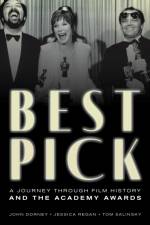
A fascinating history of motion pictures through the lens of the Academy Awards, the Best Picture winners, and the box-office contenders.In Best Pick: A Journey through Film History and the Academy Awards, John Dorney, Jessica Regan, and Tom Salinsky provide a captivating decade-by-decade exploration of the Oscars. For each decade, they examine the making of classic films, trends and innovations in cinema, behind-the-scenes scandals at the awards ceremony, and who won and why. Twenty films are reviewed in-depth, alongside ten detailed ';making-of' accounts and capsule reviews of every single Best Picture winner in history. In addition, each Best Picture winner is carefully scrutinized to answer the ultimate question: ';Did the Academy get it right?' Full of wonderful stories, cogent analysis, and fascinating insights, Best Pick is a witty and enthralling look at the people, politics, movies, and trends that have shaped our cinematic world.
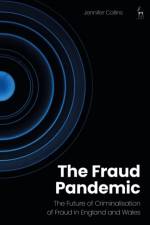
This book provides the first in-depth scholarly analysis of fraud, the highest volume crime in England and Wales, addressing the challenges faced in building a principled criminal law response by presenting an innovative normative analysis. The UK is now in a pandemic of fraud. There were 4.6 million fraud offences recorded in the year ending March 2021, accounting for 42% of all crime committed against individuals. Fraud is now the highest volume crime in England and Wales; its incidence in the first half of 2021 was described by UK Finance as a 'national security threat'. The book provides the answers to key questions, such as: - How can the rapidly changing nature of fraud be understood and mapped by criminal lawyers? - How does fraud connect to economic crime more broadly? - Is the current landscape for criminalising fraud fit for purpose, in the light of changes to the nature and complexity of wrongdoing? - What are the principled limits to using Artificial Intelligence technologies to detect and to penalise fraud? - Which principles should inform fraud criminalisation and governance following the COVID-19 pandemic, to meet the challenges of a digital age and a stretched criminal justice system?
An important and timely collection spanning time and space, pain and power, from an innovative, powerful poetic voice
A deeply radical attempt to re-orientate our scriptural understanding of homosexuality.
Abonner på vårt nyhetsbrev og få rabatter og inspirasjon til din neste leseopplevelse.
Ved å abonnere godtar du vår personvernerklæring.