












Gjør som tusenvis av andre bokelskere
Abonner på vårt nyhetsbrev og få rabatter og inspirasjon til din neste leseopplevelse.
Ved å abonnere godtar du vår personvernerklæring.Du kan når som helst melde deg av våre nyhetsbrev.

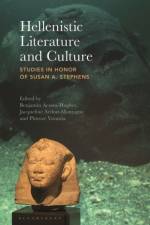
"In this book, leading Greek scholars explore the rich and diverse poetry and prose of the long Hellenistic period. Chapters focus on the poets of Alexandria such as Callimachus, Theocritus, Apollonius, and Posidippus and on prose texts written in Greek in the Roman Empire. This volume demonstrates the versatility of this literature and examines its multiple cultural affiliations. The Hellenistic writers emerge from this volume as complex, playful, and politically engaged figures, interested in the relationship between culture and society, and far removed from the stereotype of them as distant or elitist. This book makes a major contribution to the study of Hellenistic Greek culture"--
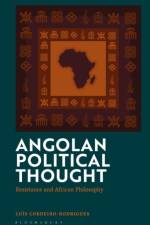
Angolan Political Thought introduces anticolonial thinkers whose writings on colonialism and liberation have been instrumental in the formation of Angolan identity. It focuses on the political nature of these thinkers and how their work has impacted Angolan political reality. Luís Cordeiro-Rodrigues both introduces and critically analyzes the thought of Queen Njinga, Mário Pinto de Andrade, Agostinho Neto and Pepetela and systematically addresses five important topics in Angolan political thought. Firstly, it gives a general introduction to African political philosophy and explains the place of Angolan political thought in this. Secondly, it explains how different Angolan thinkers have conceptualized colonialism and its effects on the global Black community. Thirdly, the book surveys what key Angolan thinkers have identified as legitimate and effective tools of liberation and resistance from colonialism. For example, it addresses the place of poetry for liberation, as well as the justification for war against colonial powers. Fourth, this book will explain the different theories that Africa and, in particular, African identity, consists of. Finally, it will look at Angolan theories of distributive justice and compensation for historical injustices.
Rethinking the philosophical grounds of police power, Melayna Lamb argues that traditional ideas of sovereignty and the law need to be radically re-evaluated. In placing police at the centre of analysis this book demonstrates the manner in which police power exists in a complex and overlapping relationship with sovereignty and law in a form which is not reducible to implementation. In doing this it argues for the centrality of order in any consideration of police and challenging a common narrative whereby a dynamic, interventionist sovereign power that follows from a belief of order as 'artificial' is replaced by a liberal, limited non-interventionist sovereign power that proceeds from a 'natural' order. Moving through thinkers such as Hobbes, Hegel and Adam Smith the book argues that police power is in fact an-archic in form, in a manner that makes it impossible to hold accountable through the law.Lamb adopts an interdisciplinary approach that turns to philosophy to make sense of global events that see police power at their centre. This includes the history of police brutality in the US, the structural injustices made more apparent by COVID-19 and the growing calls to abolish the police.
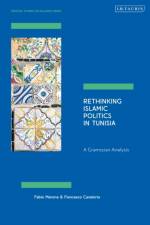
The emergence of Islamist and Salafi movements - the actors of Islamist Politics - has been a critical area of scholarship on the Middle East and North Africa. But there is no theoretical framework to understand political Islam as a phenomenon that includes both Islamic ideology and modern activism. This book uses the Gramscian concept of political activism to provide this much-needed perspective. As Arab societies have had a similar historical development and trajectory to the society Gramsci was analyzing, his ideas are shown to be particularly relevant for understanding the post-2011 democratization and politicization of Islamist and Salafi movements.Based on the case study of the Tunisian Islamist movement, al-Nahda, and the Tunisian Salafi movement, Ansar al-Sharia, political Islam is given a useful explanatory framework to explain how the ideological/theological side of Islamic activism realizes itself into practical political action. The book establishes the term 'Islamic politics' to describe this combination of socio-religious mobilization - commonly defined as dawa - and political organization, including party or revolutionary organizations. Furthermore, the authors show that Islamists and Salafists can be described as 'post-Islamist' in the same way communist parties became 'post-communist' and 'post-ideological'.Written by two renowned experts on political Islam, the innovative theoretical framework used here can explain the development and behaviour of Islamist groups in other contexts, moving scholarship beyond traditional approaches.
Examines how contact between Balkan Muslims and the Middle East sparked an Islamic Revival.
Dr. Christa K. Dixon [1935 - 2003] grew up during the time of World War 2, where her father, a German Confessing Church pastor, regularly visited American POW camps, and young Christa heard African-American soldiers singing spirituals. Her fascination grew, but Dixon's interests became quite focused on her interest in how the famous spirituals interpreted the Bible. In the mid-1960s, Dr. Dixon earned her PhD working on "Negro Spirituals" in Germany and published the text that formed from her years of research and long-lasting passion for the spirituals she heard during her visits to the prisoner camps with her father. A work of careful analysis and scholarship, Dixon's study has since been out of print, but now newly translated and presented for an audience to rediscover. In John Lovell's important 1972 monograph, Black Song: The Forge and Flame, he wrote, "...Perhaps the most intensive study of Biblical influences in the spiritual is found in Christa Dixon's Wesen und Wandel geistlicher Volkslieder Negro Spirituals...her analyses are not only deeply intensive but quite creative...". In this book, Dr. Kim R. Harris and Dr. Daniel L. Smith-Christopher provide not only a translation of the published German work, but also contribute two new essays to accompany this timeless study as both modern critique and long overdue appreciation.
George Eliot and Her Women argues that the Victorian writer George Eliot (1819 - 1880) was not only keenly aware of women's issues but more deeply engaged with them than she has yet received credit for. Proposing that her work is still misread and misunderstood because of her unusual and complex relationship to gender and an inattention to the complexity of her female characters and their representation, the book examines Eliot's construction and treatment of female characters throughout her prose fiction and her poetry to show that she was very much attuned to and supportive of women's issues. Demonstrating that Eliot was unable to speak publicly on women's issues because of her complicated private life, George Eliot and Her Women demonstrates that she nonetheless advocated for women's rights, particularly access to education, through her fiction and poetry, using her creative works to inspire sympathy and promote awareness about women's struggles in nineteenth-century Britain.
This book examines the philosophical and spiritual facets of religions like Regla de Ocha, Palo, Abakuá, and Vodou, and how deeply embedded they are in Cuban popular culture and art, be it music, the visual arts, film, or literature.
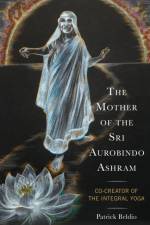
This groundbreaking book in comparative theology analyzes the contributions of the Mother to the Integral Yoga that she and Sri Aurobindo co-created. The book reveals important ways that she both fulfilled and changed his initial vision that are based on her experiences of what they called the "Supermind."
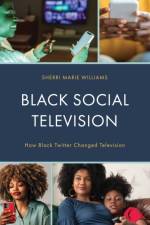
This book argues that in addition to seismic shifts in social justice, Black Twitter's activism fueled a representation revolution in television. Sherri Williams explores how Black social TV -- a subset of Black Twitter -- successfully got shows blocked from airing, taken off the air, and even revived as a result of its digital activism.
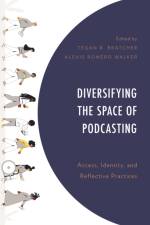
Driven by diverse scholars and professionals, Diversifying the Space of Podcasting explores how podcasting provides a space in which marginalized communities have a voice. This anthology is an essential resource in mass communication, new media, gender and race studies, and podcasting studies programs and fields.
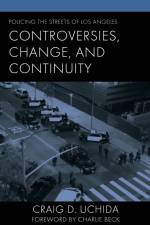
This book explores how LAPD has sought to regulate officer conduct in the face of repeated controversies over 60 years. It provides important insights into LAPD's successes and failures, and makes recommendations for ways in which improvement in policing transparency and accountability can be made permanent.
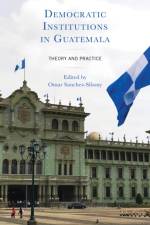
This book advances knowledge about Guatemala's democracy by embedding the country in recent conceptual and theoretical work in comparative politics and seeks to shed light upon the stubborn realities and challenges afflicting Guatemalan democracy today.
This book is a historically grounded critical exploration of how the skin whitening industry has become a contemporary site that facilitates commodification of unregulated whiteness on a global scale.
This book explores how Moral Injury, the collective manifestation of shame and guilt resulting from betrayal and transgression, experienced by veterans returning from war deeply affects one's ability to recover from PTSD and find meaningfulness in the world.
The 12th volume in Hart's leading series of books on the history of tax law, exploring important tax issues from both a UK and international perspective.
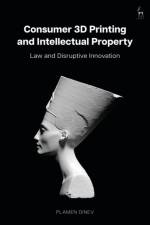
This innovative book explores the world of 3D printing from the perspective of intellectual property law, tackling theory and practice. As 3D printing digitises tangibles and equips individual users with access to design and manufacturing tools, it also raises several pressing legal and policy issues. Does the IP framework - largely designed in the analogue age - adequately regulate the operation of the technology? How should the law respond to piracy in a digital environment where copying is the norm, not the exception? What are the sharing practices, norms and views on IP within the community? Is the law actually a concern?To fully address these questions, the book begins with a contextual overview of 3D printing's history and broader socio-economic impact. It explains why the 'desktop' side of the technology is likely to be especially problematic when it comes to IP law and highlights key areas of concern. Drawing on its rich empirical data featuring world-leading experts, engineers, lawyers and users, it offers illuminating insights into the experiences and views of stakeholders before finally considering potential regulatory responses.Original and forward-looking, this book is essential reading for academics, practitioners, 3D printing users and any reader interested in the rapidly evolving field of law and technology.
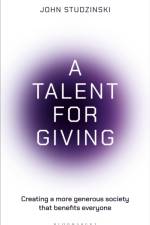
The essential guide to philanthropy - what it is, how it works, and why anyone can become an entrepreneurial philanthropist.
A study into the role played by food in the Italian Empire's occupation of Ethiopia, exploring the workings of empire in the circulation of bodies, foodways, colonialism and resistance, as well as the decolonizing practices of indigenous foods.
An exploration of the treatment of Mary Shelley's Frankenstein in popular art and culture, this book examines adaptations in film, comics, theatre, art, video-games and more, to illuminate how the novel's myth has evolved in the two centuries since its publication. Divided into four sections, The Afterlives of Frankenstein considers the cultural dialogues Mary Shelley's novel has engaged with in specific historical moments; the extraordinary examples of how Frankenstein has suffused our cultural consciousness; and how the Frankenstein myth has become something to play with, a locus for reinvention and imaginative interpretation. In the final part, artists respond to the Frankenstein legacy today, reintroducing it into cultural circulation in ways that speak creatively to current anxieties and concerns.Bringing together popular interventions that riff off Shelley's major themes, chapters survey such works as Frankenstein in Baghdad, Bob Dylan's recent "My Own Version of You", the graphic novel series Destroyer with its Black cast of characters, Jane Louden's The Mummy!, the first Japanese translation of Frankenstein, "The New Creator", the iconic Frankenstein mask and Kenneth Brannagh's Mary Shelley's Frankenstein film. A deep-dive into the crevasses of Frankenstein adaptation and lore, this volume offers compelling new directions for scholarship surrounding the novel through dynamic critical and creative responses to Shelley's original.
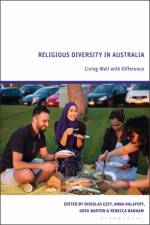
This book documents the structure of religious diversity in Australia and examines this diversity in the context of the law, migration, education, policing, the media and interfaith communities.Focusing on Melbourne and Tasmania, it articulates the benefits and opportunities of diversity, alongside the challenges that confront religious and ethnic minorities, including discrimination and structural inequalities generated by Christian and otherforms of privilege. It articulates constructive strategies that are deployed, includingencouraging forms of belonging, structured ways of negotiating disagreement and respectful engagement with difference.While scholars across the West are increasingly attuned to the problems and promises of growing religious diversity in a global age, in-depth empirical research on the consequences of that diversity in Australia is lacking. This book provides a rich, well-researched, and timely intervention.
Abonner på vårt nyhetsbrev og få rabatter og inspirasjon til din neste leseopplevelse.
Ved å abonnere godtar du vår personvernerklæring.