






Gjør som tusenvis av andre bokelskere
Abonner på vårt nyhetsbrev og få rabatter og inspirasjon til din neste leseopplevelse.
Ved å abonnere godtar du vår personvernerklæring.Du kan når som helst melde deg av våre nyhetsbrev.

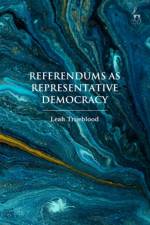
Challenges the near-universal acceptance of a US-style Western constitutional paradigm as the best basis for comparative constitutional studies
Argues that an ecclesiology centred on the crucifixion is more promising for the ecclesial recognition of other Christian communities than Eucharistic ecclesiology.
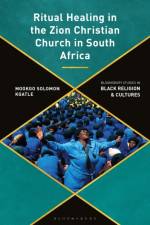
This books explores the role of Indigenous African medicine in the healing practices of the Zion Christian Church in the South African context.
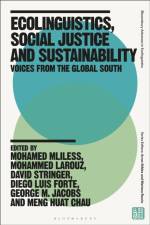
Decentring the growing field of ecolinguistics from its historically Western orientation, this book offers a comprehensive exploration of the intricate relationship between language and the environment in the Global South. It brings forward new perspectives and voices to broaden our understanding of the role of language in addressing ecological challenges.Through a series of thought-provoking chapters, the book navigates through various dimensions of ecolinguistics, shedding light on critical issues and innovative approaches across diverse contexts. Case studies include the representation of ecotourism in Morocco, the implementation of ecological ideology in Oman, colonial legacies in Argentina's food production discourse, ecological identity in Kenya, the role of civets in Indonesian coffee production and life stories about Senegalese ecologies.Through a blend of theoretical insights and practical applications, the book advocates for a holistic understanding of ecolinguistics that transcends geographical boundaries and cultural nuances.
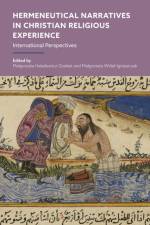
An exploration of the intersection of culture, language, and the Christian religious experience through hermeneutics and phenomenology, from a practical perspective.
An urgent comparison of what Confucianism and Charles Taylor's communitarianism have to say about the concept of the self and the contemporary challenges that it can unlock.
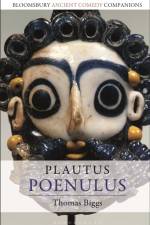
Plautus' Poenulus (or Little Carthaginian) is a staggering work. Performed in the years after Rome's traumatic struggle with Hannibal's Carthage, the comedy stages the restoration of a Carthaginian family divided through enslavement. This book explores the play's many themes such as slavery and war trauma, which resonate especially today, in a series of short thematic chapters followed by a continuous reading of the play.By presenting to a post-war Roman audience a tale of heartbreak and heartache among Carthaginians, and by setting the action in a Greece marked by comedic expectations and the geography of contemporary imperial conquest, Plautus' play stands as perhaps the most powerful surviving meditation on a Mediterranean world changed by Roman expansion. The play is populated by war veterans, enslaved peoples - including sex-workers, domestic slaves, and those who labour in the countryside - and an intersectional cast of Carthaginians and Greeks, a diversity that prompts audience interaction with a wide range of socio-cultural topics relevant to Plautus' Rome. By engaging weighty matters through song, slapstick, puns, and orientalising spectacle, Poenulus appears to defang charged issues, but its bite is deep. The play also includes one of the most metatheatrical prologues of all surviving Roman dramatic works, which thematizes the act of writing comedy and the constitution of the Roman theatrical audience.
This volume provides a deeper understanding of ethical issues in a selection of texts concerned with Abraham in Genesis 12-25.
Examines the principles and practice of automation in public governance.
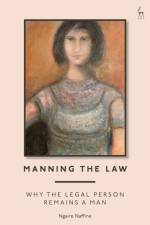
This is a study of elite English men of English law and the methods they used to retain and justify their power and privilege, through controlling the story of the legal person. It looks at how these men of legal authority thought of themselves and their institution; how they studied and explained law; and how they put themselves in the middle of it, as the standard human in need of legal regulation and protection and in charge of that regulation and protection, and assigned to women an inferior legal role and being. The main concept employed to do all this was 'the legal person'. From the 1860s to the 1920s the courts declared that women were not 'persons' who could exercise public power - to vote, to sit in Parliament, to gain degrees, to be lawyers. Up to the end of the 20th century, and into the 21st, women's personhood remained precarious in the private sphere, for rape was excused within a marriage and female reproduction remained under state control (as it still does). It looks at the positive exclusion of women from the means of making legal meaning, especially the ability to shape law's central concept and shows the epistemological effects of this sex differential of legal power which are still felt today. Leading legal thinkers who helped to construct the concept are still revered. Law's continuing male orientation is neither seen nor acknowledged and the legal person is treated (falsely) as if he had always been and remains anyone.
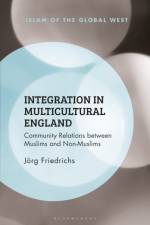
This book studies relations between Muslims and non-Muslims where it matters most, diverse inner cities. Residents' insights prove relevant for both community relations and cohesion.
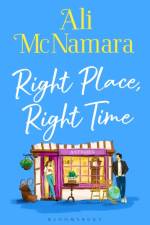
Could this be the moment they've both been waiting for?Eve has always loved antiques. She loves the way an item from the past can offer a glimpse of another world, of another time. It's why she painstakingly researches the stories behind every item in Rainy Day Antiques, her little Cambridge shop, to share with their new owners. It's her way of honouring the past and cherishing the present.Adam is firmly focussed on the future. He's only in town to sort his late grandfather's affairs. When he discovers that his grandfather hired Eve to manage his house clearance, he can only hope her methods don't delay his return to London. What neither of them know is that Adam's grandfather chose Eve for a reason. It's finally the right place and the right time for the two of them to meet. But what did he have planned for them?Readers love Ali McNamara...'I utterly love this author''I always enjoy reading books from this author''Wow. I love Ali McNamara books''I really do love this author's books''I want to read anything with Ali McNamara's name on it'
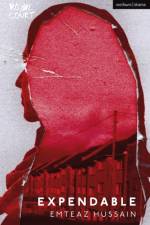
"People kept saying there's no smoke without fire, but it's not our fire is it khala? it's like we're just choking on all the fumes." Between the 1990s and 2010s hundreds of young girls were sexually exploited in northern towns by gangs of predatory men. Two sisters grapple with the impact on their community as the men around them are embroiled in a sexual abuse scandal. Playwright Emteaz Hussain's Expendable spotlights the often-overlooked voices of Pakistani women, delving into the shortcomings of law enforcement, politicians, and the media. This edition was published to coincide with the world premiere at London's Royal Court Theatre in November 2024.
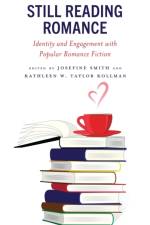
"This book questions the cultural capital of traditional archetypes, explores the experience of romance readers, and examines how romance and cultural studies researchers create quantitative, qualitative, and mixed methods research"--
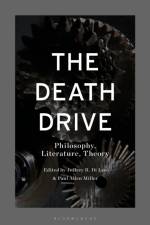
The first collection to provide an overview of the well-known psychoanalytic theory of the death drive in literary and cultural theory, this book features contributions from a range of prominent scholars working in the area of literature and psychanalysis. After its Freudian theorization, the death-drive has been re-interpreted by various psychoanalysts (including Melanie Klein, Jacques Lacan, and Slavoj Zizek), philosophers (Jacques Derrida, Gilles Deleuze, and Jean Baudrillard), political theorists (Judith Butler), queer theorists (Laurent Berlant, Lee Edelman), and posthumanist thinkers (Rosi Braidotti). This volume brings together some of the leading thinkers and theorists about the death-drive as a psychological, aesthetic, and theoretical principle in literary and cultural theory, examining texts by writers such as Plato, Henry James, and Ezra Pound.
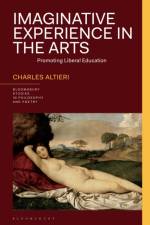
In this significant contribution to aesthetic philosophy from one of the foremost writers on American poetry, Charles Altieri champions the neglected, non-cognitive, aspects of our encounters with works of art.Carefully argued with exemplary readings of poems, paintings and fiction, Imaginative Experience in the Arts outlines a new impetus for criticism and liberal education grounded in the way art stimulates our powers of imagination and enriches our experience of the world.In contrast to literary critics and philosophers who argue for the importance of aesthetic experience by subordinating it to knowledge and practical concerns, Altieri defends a view of subjective imaginative experience as important in itself, and already socially oriented. To do so, he proposes a distinction between "experience of" and "experience as," discriminating between cognitive practices and no less valuable practices involving enhanced attention; in turn, he provides a model for criticism of the kinds of description and responsiveness appropriate for aesthetic experience understood as such. Chapters test Altieri's concepts about the nature of aesthetic experience against readings of canonical poems, novels and paintings, by Langston Hughes, Giorgione, Cézanne, Silvia Plath, Emily Dickinson, Baudelaire, Virginia Woolf, William Carlos Williams and Mina Loy. Two appendices cover the limitations of AI poetry, and review other important arguments for the powers of imagination.
Grounded in the author's lived experience and research in the Sydney Anglican Diocese, the book provides a detailed study of individuals who worship and work at three parishes, covering both the stories told about Sydney Anglicans, and the lived experiences of Anglicans themselves, their identity, their faith and their communities.This study theorizes that complementarianism is not simply a set of private beliefs, but rather a specific ecclesial discourse defining orthodoxy and orthopraxy. Embedded in language and in the relationships between church leaders and parishioners, this discourse is used as an operation of power which limits Christian belief, behaviour and belonging.Rosie Clare Shorter offers a feminist, sociological account of lived Sydney Anglicanism and draws on the work of key theorists such as Sara Ahmed, Judith Butler and Joan Scott to explore the social consequences of complementarianism. Shorter provides a new frame for analyzing the specific discourse that uses gender to construct and regulate both faith and sexuality.Furthering the study of global evangelicalism, Shorter unravels the ways in which gender, sexuality, faith and evangelism are entwined and held together by complementarian discourse. In doing so, it provides new directions for safer, more equitable and inclusive Anglican churches.
An exploration of the process in which everyday narrative language can become reflective and then analytical.
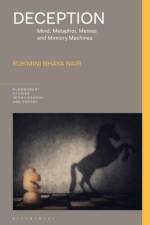
Argues that lying is fundamental to the survival of the human species, through a series of philosophical, psychological and cultural examples spanning different traditions and disciplines.
From the bestselling Ukrainian cookery writer comes a profound meditation on the hopes and fears across generations amid political upheaval
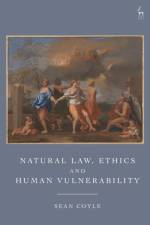
Explores human vulnerability through the lens of natural law theory.
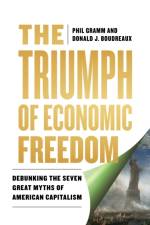
Since the Industrial Revolution, capitalism has unleashed unimaginable opportunity and prosperity. However, at key points, economic disruption has led to a greater role for government to protect against capitalism's excesses. Gramm and Boudreaux argue that government interference and policies pose the most significant threat to economic freedom.
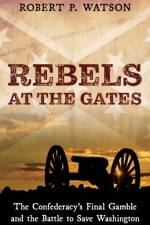
Rebels at the Gate chronicles an intriguing series of events that nearly changed American history. In the last full year of the Civil War, Washington, DC came within hours of being invaded and Lincoln within inches of being shot.
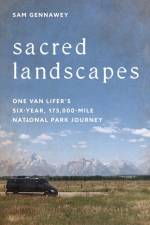
Sam Gennawey, a retired urban planner and historian, embarks on an incredible #VanLife journey spanning six-years, 175,000-miles, and over 380 sacred locations protected by the U.S. National Park Service. In a mix of travelogue, history, and self-reflection, Gennawey seeks answer to crucial questions about "We, the People" in America's journey.
Abonner på vårt nyhetsbrev og få rabatter og inspirasjon til din neste leseopplevelse.
Ved å abonnere godtar du vår personvernerklæring.