
















Gjør som tusenvis av andre bokelskere
Abonner på vårt nyhetsbrev og få rabatter og inspirasjon til din neste leseopplevelse.
Ved å abonnere godtar du vår personvernerklæring.Du kan når som helst melde deg av våre nyhetsbrev.

Licensed Premises: Law, Practice and Policy, Second Edition is a highly practical guide to the licensed industry. It clearly explains, through the use of case studies, practical tools and strategic policy advice, how the licensing regime, allied to other statutory and voluntary schemes, can be used to develop a more sustainable, diverse leisure economy.Untangling the web of licensing law: The second edition is supported by copious charts and tables to simplify explanations and argues for a strategic approach to licensing, explaining how it is part of a much larger web of control of the night time economy.Each interlocking contribution is written by an expert in their field. These include those in the areas of planning, noise, policing, door supervision, health and safety and local government strategies - all to ensure that every reader can gain an understanding of how the whole system works, as well as each individual part.Fully updated to include Hemming, Levy and EMROs: Timed to coincide with the fees, regime, the outcome of the crucial Hemming case as well as Levy and EMROs, this edition addresses such questions as 'Are enforcement costs recoverable from licensees?', 'What are the effects of the Services Directive on licensing?' and "May objections be made to EMROs on socio-economic grounds?" It also includes coverage of: Police Reform and Social Responsibility Act 2011; Localism Act 2011 and Policing and Crime Act 2009.The second edition also contains and covers:Strategic and policy advice for those working in the licensing field;The role of policy in creating vibrant economies and the role of evidence, proximity and opening hours;Standards of excellence for licensing authorities, officers, councilors, lawyers, and in licensing hearings;Public sector duties of licensing authorities, including the Crime and Disorder Act 1998, the Equality Act, human rights, the Provision of Services Regulations, the Legislative and Regulatory Reform Act 2006 and RIPA;Statutory remedies in the night time economy, including controlled drinking zones, dispersal orders, directions to leave, EMROs, area closure orders, reviews, premises closures, drink banning orders, confiscation powers and alcohol arrest referral schemes;Practical sections and appendices.Licensed Premises: Law, Practice and Policy, Second Edition is supplemented by a series of appendices encompassing helpful advice from government, trade associations and other bodies as well as a summary of the key case law in the field.
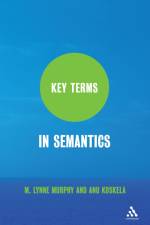
Key Terms in Semantics explains the all the terms and concepts in semantics which students on linguistics and language studies course are likely to encounter during their undergraduate study. The book is organized alphabetically, and fully cross-referenced.The book includes a section on key thinkers in semantics, from Aristotle to Noam Chomsky and will be a valuable desk reference for students throughout their undergraduate course. The final section presents a list of key readings in semantics, to signpost the reader towards classic articles, as well providing a springboard to further study. The book is accessibly written, with complex terms and concepts explained in an easy to understand and approachable manner.
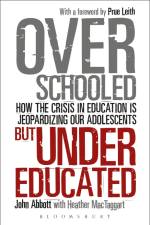
Based on the premise that education has to be about much more than intellectual development, this book calls for the transformation of the education system.
House of Agnes is the second play by Levi Addai, described as 'an attractive new talent' by the Independent after his 2005 debut 93.2FM. The play is published as a programme text to coincide with the production by Paines Plough that opens at the Oval House, London in March 2008.After forty years of building a home in London, Agnes is retiring and moving back to Ghana. Her final wish is for her sons to live together under the same roof when she is gone. But her eldest, Sol, is living with a girlfriend Agnes loathes, and he won't move home until Agnes accepts her, and younger brother Caleb will do whatever it takes to inherit the house - except share it with Sol. As her departure draws closer, tensions in Agnes' house rise to breaking point. Will she trust her twenty-first century boys and finally allow them to be men? Who will own the House of Agnes?
Scottish Roads Law, 2nd edition is a unique source of reference which brings together all the legislation and case law of this important area of Scots law. This practical and accessible text provides a straightforward guide to the operation of roads law tackling many of the roads issues that arise in development control or management including road construction consent and traffic regulation orders. Fully updated, this edition provides essential coverage of: The Transport (Scotland) Act 2005;Changes to the environmental legislative framework;Brand new section on Road Traffic Regulation Orders made under the Road Traffic Regulation Act 1984.
Scottish Planning Law is a comprehensive and accessible guide to a constantly changing and complex field. The clear, well -structured style and practical approach of previous editions have been retained and enhanced while taking account many significant developments in recent planning law.Written by a team of authors with expertise and experience, this edition encompasses the reforms in planning law and practice in Scotland introduced primarily by the Planning etc (Scotland) Act 2006 and the related suite of secondary legislation which has radically altered the legislative landscape. This highly regarded text is essential reading for all those involved in the disciplines of planning, surveying, architecture, sustainable development and law.
A fascinating and insightful volume collecting together the key writings of Joseph Ratzinger, some of them yet untranslated, from his youthful and more progressive writings, to his 'transition period' following his disillusionment with the aftermath of Vatican II, to his time as Prefect of the Vatican's Congregation for the Doctrine of the Faith down to 2005. The emphasis will be upon Joseph Ratzinger as 'private theologian', his many writings released in a personal capacity for such will chart the formation of and comment upon the official statements and texts released under his name in a more informative fashion than the simple inclusion of the formulaic 'official texts' themselves. Following a section providing insight into the fundamental and systematic theological background and development of Joseph Ratzinger's thought, further thematic sections will also be included, for example, Joseph Ratzinger's writings on Ecclesiology, on Theology and the Role of Theologians, on the Eucharist, on Religious Pluralism, on Sacramental Theology, Ecumenism, on Truth, on the Contemporary Historical Era, on Magisterium and on Faith Morals etc. The volume will open with an introductory essay charting the life and career, the achievements of and the controversies surrounding the new pope. Each reading will be prefaced by a brief introduction to its context and themes and will be followed by recommended further reading on its respective subject matter.
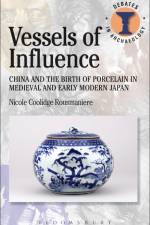
Vessels of Influence, while examining in depth the role of Chinese ceramics in Japan, also delves into the meaning, motivation for, and rapid development of Japanese porcelain from many angles, including archaeology, heirloom and documentary evidence. The political and fiscal advantage that one lord found for his domain in creating its own local 'china' is placed in the context of the domestic and international market economy.Through an examination of the role of Chinese products and that of a domesticated 'china' in Japan, a fuller picture of Japan's rich material culture emerges, revealing complex interactions between government, taste-makers, traders, merchants, consumers, imports and new technology. Vessels of Influence also discusses how these interactions have been viewed by historians, and the often heated debates that have occurred as a result.
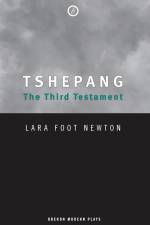
'And besides, nothing ever happens here. Nothing. Niks.'Outside a South African town a silent woman, Ruth, goes through her self-imposed rituals, a child's crib strapped to her back. An observer, Simon, who has loved Ruth since childhood, tells her story. Tshepang was inspired by the horrifying rape in 2001 of a nine month-old child. The child, Tshepang, gave her name to Lara Foot Newton's award-winning play, though it is also 'based on twenty thousand true stories' - the number of child rapes estimated to occur in South Africa each year. Having premiered in Amsterdam in June 2003, Tshepang opened at the Gate Theatre, London, in September 2004.Winner of the Fleur du Cap Award for Best New South African Play 2003
The Flu SeasonNo one in the middle of being in love ever sat down to write a love story. It's only after the belongings are sorted and the shirts returned that the pencils are sharpened and the notebooks opened. So, in a serious way, love stories are never love stories. Love is their inspiration, yes, but the end of love is the reason for their existence. This is a problem. It proposes anti-journeys where we saw only journeys, directs things toward a new negative we hadn't intended. The Flu Season tries to be a love story, anyway. It has a strategy. The play revels in ambivalence, lives in fits and starts, and derives a flailing energy from its doubts about itself. But these come at a price, which is paid by the characters in the play. A kind of clarity finally comes. In the end, is the end.Intermission"Two couples chat with one another at a play's intermission. From what we have heard, it sounds dreadful, which the cocky Jack points out. But his quibbles give way before Mr. Murray's torrent of memory and invective. He doesn't want to hear stylistic complaints, he wants the boy to recognize the play's attempts at truth. And while Mr. Murray's curmudgeon sneers at audiences' yen for weeping at shows, Mr. Eno then makes us - practically by brute force - cry for him. Mr. Eno's triumph is both canny and deeply touching, a vital look into a theater that actually reminds us what it's for." The New York SunThe Flu Season was the winner of the 2004 Oppenheimer Award for best debut production.
Our Bad Magnet is an unashamedly dark and deliciously funny play from one of Scotland's brightest young writing talents, in which the boundaries between fantasy and reality merge with unpredictable results.Centering on an uneasy reunion, Our Bad Magnet follows the progress of four boys from 9 to 29 as they try to unlock the secrets of childhood and memory. Throw in 1980s indie music, a ventriloquist's dummy, some magical fairy stories and the word 'nimston', and you have an hilarious black comedy which isn't afraid to make you think while you're laughing out loud.
Also includes The Stigma Manifesto Pity Tony's nannies at New Labour's Millbank election war-room: they're working night and day to get 'Red Ken' and prevent him from becoming Mayor of London. Suddenly it's Ken, the cuckoo in the nest, who's getting the people's vote and Millbank, charged with plotting his downfall, is getting desperate. Ever more dastardly plots are afoot as the election draws nearer. Snogging Ken was produced at the Almeida in April 2000: 'the first step in the return of democracy to London'.
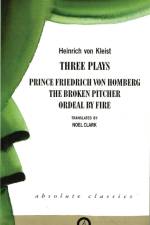
Includes the plays Prince Friedrich von Homburg, The Broken Pitcher and Ordeal by FireHeinrich von Kleist committed suicide in 1811. His masterpiece, Prince Friedrich von Homburg, is set in the world of Prussian militarism. The young cavalry general of the title achieves swift victory in the field, only to be sentenced to death for rash disobedience. In the comedy, The Broken Pitcher, a visiting judge comes to inspect a small village and finds it rife with corruption. Ordeal by Fire is a beguiling piece about the mysterious love of an armour-repairer's daughter for a young travelling knight.
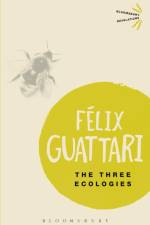
Extending the definition of ecology to encompass social relations and human subjectivity as well as environmental concerns, The Three Ecologies argues that the ecological crises that threaten our planet are the direct result of the expansion of a new form of capitalism and that a new ecosophical approach must be found which respects the differences between all living systems. A powerful critique of capitalism and a manifesto for a new way of thinking, the book is also an ideal introduction to the work of one of Europe's most radical thinkers. This edition includes a chronology of Guattari's life and work, introductions to both his general philosophy and to the work itself, and extended notes to the original text.
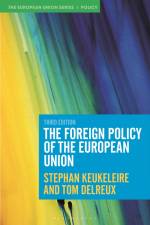
Keukeleire and Delreux demonstrate the scope and diversity of the European Union's foreign policy, showing that EU foreign policy is broader than the Common Foreign and Security Policy and the Common Security and Defence Policy, and that areas such as trade, development, environment and energy are inextricable elements of it. This book offers a comprehensive and critical account of the EU's key foreign relations - with its neighbourhood, with the US, China and Russia, and with emerged powers - and argues that the EU's foreign policy needs to be understood not only as a response to crises and conflicts, but also as a means of shaping international structures and influencing long-term processes. This third edition reflects recent changes and trends in EU foreign policy as well as the international context in which it operates, addressing issues such as the increasingly contested international order, the conflict in Ukraine, the migration and refugee crisis, Brexit and Covid-19. The book not only clarifies the formal procedures in EU foreign policy-making but also elucidates how it works in practice. The third edition includes new sections and boxes on 'strategic autonomy', European arms exports, the EU's external representation, the 'Brussels Effect', and decentring and gender approaches to EU foreign policy.Up to date, jargon-free and supported by its own website (eufp.eu), this systematic and innovative appraisal of this key policy area is suitable for undergraduate and postgraduate students, as well as practitioners.
'Of course that's how it begins: a harmless fairy tale to pass the hours'When Alice Liddell Hargreaves met Peter Llewelyn Davies at the opening of a Lewis Carroll exhibition in 1932, the original Alice in Wonderland came face to face with the original Peter Pan. In John Logan's remarkable new play, enchantment and reality collide as this brief encounter lays bare the lives of these two extraordinary characters.This is the new play from Academy Award winning screenwriter and playwright John Logan. His previous play RED played in London to great acclaim before transferring to Broadway where it won 6 Tony Awards including Best New Play.
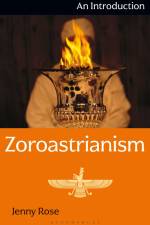
Zoroastrianism is one of the world's great ancient religions. In present-day Iran, significant communities of Zoroastrians (who take their name from the founder of the faith, the remarkable religious reformer Zoroaster) still practise the rituals and teach the moral precepts that once undergirded the officially state-sanctioned faith of the mighty Sasanian empire. Beyond Iran, the Zoroastrian disapora is significant especially in India, where the Gujarati-speaking community of emigrants from post-Sasanian Iran call themselves 'Parsis'. But there are also significant Zoroastrian communities to be found elsewhere, such as in the USA, Britain and Canada, where western cultural contexts have shaped the religion in intriguing ways and directions. This new, thorough and wide-ranging introduction will appeal to anyone interested in discovering more about the faith that bequeathed the contrasting words 'Magi' and 'magic', and whose adherents still live according to the code of 'Good Thoughts, Good Words, Good Deeds.'The central Zoroastrian concept that human beings are continually faced with a choice between the path of 'good' and 'evil', represented by the contrasting figures of Ahura Mazda and Ahriman, inspired thinkers as diverse as Voltaire, Mozart and Nietzsche. Jenny Rose shows why Zoroastrianism remains one of the world's most inspiring and perennially fascinating systems of ethics and belief.
For centuries, the creation of Jacquard cloth required the collaborative efforts of teams of designers and technicians working on vastly complex equipment. In the past three decades, developments in loom technology and CAD systems have made it possible for a single individual to design and produce this most challenging class of textiles. Digital Jacquard Design presents a comprehensive introduction to the creation of weave patterning in the era of digitally piloted looms. It offers both aesthetic and technical training for students of figured weaving, covering the Jacquard medium in fantastic breadth and depth. The book is an essential guide for all who create figured textiles with modern materials and tools, and provides the reader with a 'digital' key to access and employ the great textile traditions of the past.Digital Jacquard Design examines the design process from end to end, progressing from visual analysis, sample analysis and weave-drafting methods, to figuring techniques and the selection and building of weaves. It provides a guide to converting traditional drafts to digital polychrome format, a design terminology and a weave glossary. The book concludes with a rich set of case studies to demonstrate ingenious and effective weave and design solutions.
The fashion media is in the midst of deep social and technological change. Including a broad range of case studies, from fashion plates to fashion films, and from fashion magazines to fashion blogs, this ground-breaking book provides an up-to-date examination of the role and significance of this field.Winner of the PCA/ACA Ray and Pat Browne Award for Best Edited Collection, Fashion Media includes chapters written by international scholars covering topics from historic magazine cultures and contemporary digital innovations to art and film, exploring themes such as gender, ethnicity, design, taste and authorship.Highlighting the complexity of processes that bind design, design, technology, society and identity together, Fashion Media will be of be essential reading for students of fashion studies, cultural studies, visual culture studies, design history, communications and art and design practice and theory.
Abonner på vårt nyhetsbrev og få rabatter og inspirasjon til din neste leseopplevelse.
Ved å abonnere godtar du vår personvernerklæring.