








Gjør som tusenvis av andre bokelskere
Abonner på vårt nyhetsbrev og få rabatter og inspirasjon til din neste leseopplevelse.
Ved å abonnere godtar du vår personvernerklæring.Du kan når som helst melde deg av våre nyhetsbrev.

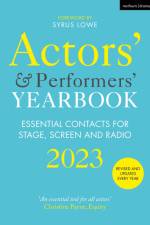
This well-established directory supports individuals in their training and search for work in theatre, film, TV, radio and comedy. It is the only directory to provide detailed information for each listing and specific advice on how to approach companies and individuals. From agents and casting directors to producing theatres, showreel companies, photographers and much more, this essential reference book editorially selects only the most relevant and reputable contacts for the actor. With the listings updated throughout, this year's edition also features a new foreword by actor Syrus Lowe.
How can judicious use of online marketing, social media, video, mobile and in-store technologies help fashion brands reach and engage with their audience?The Fundamentals of Digital Fashion Marketing uses industry examples, including Burberry and creative agency ODD, to demonstrate how creative digital marketing practices can build vibrant, loyal communities. Covering the vital roles of influencers, analytics, pop-up stores and user-generated content, Harris, Edwards and Watt offer a practical guide to building a successful fashion brand online. This revised edition includes two new chapters on reaching underserved markets, including people with disabilities and mature consumers, and a guide to legal issues like managing consumer data & privacy. Each chapter also now concludes with a project to help you build an e-commerce website to start experimenting with your own online marketing campaigns.
This is the first study to examine the Arabic translations of a number of major modern poems in the English language, in particular T. S. Eliot's The Waste Land and Walt Whitman's Song of Myself. With case studies dedicated to the Arab translators who were themselves modernist poets, including Badr Shakir al-Sayyab and Saadi Yusuf, Ghareeb Iskander brings a reading of the translations as literary works in their own right. Revealing why the Arab modernists were drawn to these poems through situational context, Iskander shows that the influence exerted by the English originals stems from the creative manner in which the Arab poet-translators converted them into their own language.
How has the supposedly liberalizing project of police reform in Turkey become central to the increasingly authoritarian regime of Erdogan's AKP Party? Engaging political theory and a gender studies perspective, this book traces the implementation of security sector reform in Turkey, showing how various agents, including Islamist policy-makers, Turkish police and the women's movement in Turkey have contributed to and resisted growing police powers. A critical study which also employs case studies, this is a timely intervention on the ?authoritarian turn' in Turkey and contributes to a growing number of studies of neoliberalism and security in the context of liberal internationalism.Produced in association with the British Institute at Ankara
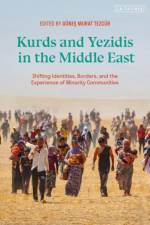
The diversity of Kurdish communities across the Middle East is now recognized as central to understanding both the challenges and opportunities for their representation and politics. This book diversifies the literature on Kurdish Studies by highlighting the Kurds' relationship to the Yezidis. Comprising the perspectives of leading scholars, chapters combine in-depth empirical work with theoretical and conceptual discussions to progress debates in the field. The study is divided into three thematic sections covering political identity, how the Kurds appear to others, and the Yezidis, to capture new insights into the heterogeneous aspects of Kurdish history and identity.
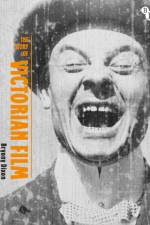
In this vivid and accessible new account of the dawn of film in Britain, internationally respected film historian and curator Bryony Dixon introduces us to Britain's first cinematic pioneers - an eclectic mix of chemists, engineers, photography enthusiasts, fairground showmen and magicians - who in a few short years built a vibrant new industry. As she chronicles the emergence of the first embryonic film forms and genres, she reveals often surprising innovations, from cutting-edge science to ingeniously witty tricks and comedies, with filmmakers reflecting existing entertainment forms as well as advancing editing and cinematography in ways that shaped the art of film for many decades after.Dixon offers fresh insights by focusing on the films themselves - many of them only recently available to view - while building on the work of generations of scholars. In the process, Dixon makes a compelling case for the British filmmakers of the era as inventive and creative figures, every bit as influential as their more celebrated contemporaries in France and the US.
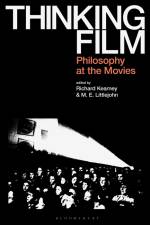
Hailed as one of America's original art forms, film has the distinctive character of crossing high and low art. But film has done more than this. According to American philosopher Stanley Cavell, film was also a place where America in the 1930s and 1940s did its thinking, a tradition that was taken up and enriched throughout world cinema. Can film indeed think? That is, can film do the work of philosophy?Following Cavell's lead to think along the tear of the analytic-continental traditions, this book draws from both sides of the philosophical divide to reflect on this question. Spanning generations and disciplines, pondering everything from art house classics to mainstream blockbusters, Thinking Film: Philosophy at the Movies aims to fling open the doors to this conversation on all sides. Inquiring into both philosophy's word on film and film's word to philosophy, the interdisciplinary dialogue of this book traverses the conceptual and the particular as it considers how film catalyzes our thinking and sets us talking. After viewing the world through film, we find our world--and ourselves--transformed by deeper understanding and new possibilities.This book aims to provide a novel and engaging way in to thinking with and about this enduringly popular art form.
Cultural Threads considers contemporary artists and designers who work at the intersection of cultures and use textiles as their vehicle. Ideas about belonging to multiple cultures, which can result in a sense of connection to everywhere and nowhere, are more pertinent to society today than ever. So too are the layers of history - often overlooked - behind the objects that make up our material world. The roots of postcolonial theory lie in literature and have, in the past, been communicated through dense academic jargon. Cultural Threads breaks with what can read as impenetrable rhetoric to show the rich visual diversity of craft and art that engages with multiple cultural influences. Many of these objects exist in an in-between world of their own, not wholly embraced by the establishments of art, nor functional objects in the conventional sense of craft.Cultural Threads is an exploration of contemporary textiles and their relationship with postcolonial culture. However, the postcolonial thinking examined here shares with craft an interest in the lived, rather than the purely theoretical, giving a very human account of the interactions in between craft and culture.
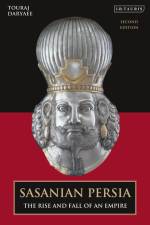
Of profound importance in late antiquity, the Sasanian Empire is virtually unknown today, except as a counterpoint to the Roman Empire. In this highly readable history, Touraj Daryaee fills a significant gap in our knowledge of world history. He examines the Sasanians' complex and colourful narrative and demonstrates their unique significance, not only for development of Iranian civilization but also for Roman and Islamic history. The Sasanians were the last of the ancient Persian dynasties and are best known as the pre-eminent practitioners of the Zoroastrian religion. Founded by Ardashir l in 224 CE, the Sasanian Empire was the dominant force in the Middle East for several centuries until its last king, Yazdgerd lll, was defeated by the Muslim Arabs in the seventh century. In this concise yet comprehensive book, Touraj Daryaee provides an unrivalled account of Sasanian Persia. Drawing on extensive new sources, he paints a vivid portrait of Sasanian life and unravels the divergent strands that contributed to the making of this great empire. This new edition includes updated economic and political histories as well as several inscriptions that have been found in recent years.
Across the globe, memorial and grave sites are being increasingly weaponized in conflicts and politicized by parties to advance agendas. Here, Carol S. Lilly examines ideas of death, politics, memory, ideology and nationalism in the former Yugoslav republics of Bosnia & Hercegovina, Croatia, and Serbia to shine fresh light on cemetery culture in 20th-century Europe. More specifically, Death and Burial in Socialist Yugoslavia argues that while the CPY created its own communities of the dead in postwar Partisan Cemeteries, it failed to do the same for civilian cemeteries in ways that might reinforce its ideals of secularism, pluralism, and brotherhood and unity. Moreover, the communist regime left the previous system of ethno-religious segregation in place, further isolating Catholics, Orthodox, Muslims and Jews who continued to be buried in separate locations. Finally, it explicitly politicized burial rites and grave markers, making cemeteries into legitimate spaces of political discourse. As a result, by the time Yugoslavia disintegrated in the early 1990s, dead bodies and cemeteries had become a concerted weapon of war in the ongoing ethnic conflict. Ultimately, then, this timely study reveals for the first time the extent to which the communist regime not only failed to created their own communities of the dead but also further divided and alienated living communities in Yugoslavia.
Glenn Adamson's last book, Thinking Through Craft, offered an influential account of craft's position within modern and contemporary art. Now, in his engaging sequel, The Invention of Craft, his theoretical discussion of skilled work is extended back in time and across numerous disciplines.Adamson searches out the origins of modern craft, locating its emergence in the period of the industrial revolution. He demonstrates how craft was invented as industry's "other", a necessary counterpart to ideas of progress and upheaval. In the process, the magical and secretive culture of artisans was gradually dominated through division and explication. This left craft with an oppositional stance, a traditional or anti-modern position. The Invention of Craft ranges widely across media, from lock-making, wood-carving and iron-casting to fashion, architecture and design. It also moves back and forth between periods, from the 18th century to the present day, demonstrating how contemporary practice can be informed through the study of modern craft in its moment of invention.
- What is an Apollo knot?- Who wore a Welch wig?- When were Zouave jackets the height of fashion?This new edition of The Dictionary of Fashion History further updates the landmark work of C. Willett Cunnington, Phillis Cunnington and Charles Beard. Featuring over 60 new and revised entries on diverse topics such as the Onesie, Brothel Creepers and the Birkin Bag, this edition is even more comprehensive and brings this costume historian's bible fully up to date. With many more images to accompany the text and illustrate key fashions - including cartoons, prints and lavish color photographs of surviving garments - this version of the dictionary brings dazzling and unusual garments to life for researchers, students, costume designers and everyone interested in the subject. Clear, concise, and meticulous in detail, this essential reference work answers countless questions relating to the history of dress and adornment and will continue to be the definitive guide for many years to come.
Juniper is looking for love, Robert is trying to avoid it, Ollie doesn't know what it is and Meg has resigned herself to never having it. As these four people move through a July day in London, they orbit each other, unaware that they are hurtling towards one moment that could devastate them all.Many Moons opened at groundbreaking Theatre 503 in summer 2011.
Max is a normal-ish kid in a normal-ish town. He spends his days daydreaming and hanging out with his weird wee pal Stevie Nimmo. But when Max is called for his first Square Go, a fight by the school gates, it's his own demons he must wrestle with first. Featuring an original soundtrack by members of Frightened Rabbit, this unmissable collaboration between Fringe First winning writers Kieran Hurley (Heads Up) and Gary McNair (A Gambler's Guide to Dying) is a raucous and hilarious new play about playground violence, myths of masculinity and the decision to step up or run.
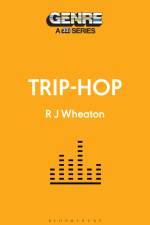
Trip-hop described some of the 1990s' best music, and it was one of the decade's most revealing bad ideas. This book chronicles the music and its leading artists, packed with recommended listening, essential tracks, great remixes, and under-recognized albums."Your playlists will soon be overflowing." - Spectrum CultureThe music itself was an intoxication of beats, bass, and voice. It emerged amid the social tensions of the late 1980s, and as part of hip-hop's rise to global dominance. It carried the innovations of Jamaican soundsystem culture, the sweet refuge of Lovers Rock, the bliss of club jazz dancefloors and post-rave chill-out rooms. It went mainstream with Massive Attack, Portishead, Tricky, DJ Shadow, Kruder & Dorfmeister, and Björk; and with record labels like Ninja Tune and Mo' Wax. To the artists' despair, the music was tagged with a silly label and packaged as music for the boutique and the lounge; made respectable with awards and acclaim.But the music at its best still sounds experimental and dramatic; and its influence lingers through artists like FKA twigs, Sevdaliza, James Blake, Billie Eilish, and Lana Del Rey. This short book is a guide to 'trip-hop' in its context of the weird 1990s: nostalgia and consumerism; pre-millenium angst and lo-fi technology; casual exoticism amid accelerating globalization and gentrification.
Exploring the relationship between theory and practice in Systemic Functional Linguistics (SFL), this volume offers a state-of-the-art overview of Appliable Linguistics. Featuring both internationally-renowned scholars and rising stars from Argentina, Australia, Austria, Brazil, Chile, Denmark, Indonesia, New Zealand, Singapore and the USA, Appliable Linguistics and Social Semiotics examines the theoretical insights, questions, and developments that have emerged from the application of Systemic Functional theory to a range of fields. Beyond simply reporting on the application of SFL to particular sites of communication, both linguistic and semiotic, this volume demonstrates how SFL has critiqued, developed and transformed theory and practice and foregrounds the implications of application for Systemic Functional theory itself. Covering established fields for application, such as education, medicine and media, to relatively uncharted areas, such as software design and extremist propaganda, this volume provides an overview of recent linguistic and semiotic innovations informed by SFL and examines the advances that have been made from many years of productive dialogue between theory and practice.
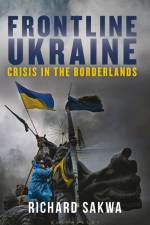
The unfolding crisis in Ukraine has brought the world to the brink of a new Cold War. As Russia and Ukraine tussle for Crimea and the eastern regions, relations between Putin and the West have reached an all-time low. How did we get here? Richard Sakwa here unpicks the context of conflicted Ukrainian identity and of Russo-Ukrainian relations and traces the path to the recent disturbances through the events which have forced Ukraine, a country internally divided between East and West, to choose between closer union with Europe or its historic ties with Russia. In providing the first full account of the ongoing crisis, Sakwa analyses the origins and significance of the Euromaidan Protests, examines the controversial Russian military intervention and annexation of Crimea, reveals the extent of the catastrophe of the MH17 disaster and looks at possible ways forward following the October 2014 parliamentary elections. In doing so, he explains the origins, developments and global significance of the internal and external battle for Ukraine.With all eyes focused on the region, Sakwa unravels the myths and misunderstandings of the situation, providing an essential and highly readable account of the struggle for Europe's contested borderlands.
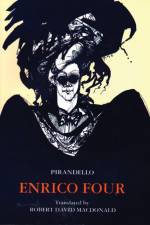
Premiered in this translation by the Citizens Theatre Company, Glasgow. In Enrico Four a man believes he isHenry IV, Holy Roman Emperor. But is he?Pirandello's study of perceptions has become a twentieth-century classic which invites us to consider our personal madness in offering a different face to everyone we meet.
Abonner på vårt nyhetsbrev og få rabatter og inspirasjon til din neste leseopplevelse.
Ved å abonnere godtar du vår personvernerklæring.