













Gjør som tusenvis av andre bokelskere
Abonner på vårt nyhetsbrev og få rabatter og inspirasjon til din neste leseopplevelse.
Ved å abonnere godtar du vår personvernerklæring.Du kan når som helst melde deg av våre nyhetsbrev.

Academic Culture introduces students to the demands of university study in a clear and accessible way, and helps them understand what is expected of them. Chapters equip students with the skills to recognise opinions, positions and bias in academic texts from a range of genres, think critically, develop their own 'voice', and refer to others' ideas in an appropriate way. Having established a foundation for successful university study, the final part provides guidance on approaching different forms of academic writing, including essays, reports, reflective assignments and exam papers. Featuring helpful 'word lists', examples, 'think about this' reflective prompts and 'skills practice' activities in each chapter, this bestselling book is an essential resource for all students new to university-level study.
Few countries have been transformed as rapidly and dramatically as Russia since the end of the Communist regime. Yet the more that certain things change in Russia, the more others remain the same. The result is a political and social system of which almost every aspect is a work in progress, marked by sudden accelerations, slowdowns, turnarounds, and conundrums. This lively and innovative third edition provides a clear and comprehensive picture of Russian politics which does full justice to its changes, challenges, and paradoxes. A distinctive feature throughout is its emphasis on outlining basic facts and developments and setting these in historical contexts before moving on to critical analysis. This is the ideal text for upper-level undergraduate and postgraduate students studying Russian Politics or Comparative Government and Politics more broadly.
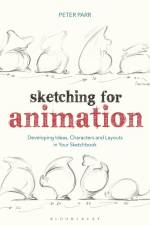
Drawing and sketching are central to the art of animation and can be crucial tools in designing and developing original stories, characters and layouts. Sketching for Animation offers a wealth of examples, exercises and tips from an army of professional animators to help you develop essential sketching, technical drawing and ideation techniques.With interviews and in-depth case studies from some of today's leading animators, including Bill Plympton, Glen Keane, Tori Davis and John Canemaker, this is a unique guide to turning your sketchbook - the world's cheapest, most portable pre-visualisation tool - into your own personal animation armory.
This bestselling introductory textbook provides a truly comprehensive and approachable guide to international affairs. Bringing together decades of combined experience in researching and teaching global politics from three acclaimed scholars, this book introduces you to the key concepts in international relations while equipping you with the tools to successfully analyse the rapidly changing world in which we live. Carefully and pedagogically structured, the book is driven by nuanced enduring questions to support active engagement with the subject matter. It covers everything from war and its causes to the pursuit of peace, the role of non-state actors on the world stage and transnational concerns such as climate change. Thought-provoking boxed features throughout highlight disparities between theory and practice, provide overviews of key research and make use of the influential levels-of-analysis framework. This third edition is completely updated throughout, including extensive coverage of the latest advances in international relations scholarship and supported by a wealth of contemporary case examples. The text is supported by a rich companion website with study guides, instructor resources and interactive exercises to allow you to consider complicated political decisions for yourself. Introduction to International Relations is the ultimate companion for undergraduate students of politics and international relations in need of an exciting and rigorous introduction to the subject.
Join the jury as two of history's most stubborn intellectuals go head-to-head in a highly entertaining battle of reason versus faith. Set in late 1517, this smart, sprightly and audacious comedy centres on a fictitious meeting between university colleagues Dr. Faustus (a man of appetites), Martin Luther (a man of faith), and their student Hamlet (a young Prince struggling not only with his beliefs but also with his tennis game).This sparkling celebration of history, language, academia and religion by award-winning American playwright David Davalos will appeal to anyone looking for the answers to life's big questions.
The second edition of The Fundamentals of Interior Design provides a thorough introduction to the key elements of interior design and the ideas that underpin them. The book describes the entirety of the creative process, from researching initial ideas to realizing them in three-dimensional form. Throughout the text, guidelines are given to provide structure to the interior design process and the reader is encouraged to adapt and initiate methodologies to suit individual project needs. This approach is intended to give designers a belief in their own abilities, and the confidence to tackle different projects with the unique challenges that each one brings. The book features a variety of diagrams and talking points to encourage students and practitioners to think about key issues such as understanding spatial relationships and the use of sustainable materials.This second edition includes new case studies focusing on well-known international interior design studios, such as Conran and Partners, UK, Slade Architecture, US, Gensler, US and award winning architects Chae-Pereira in South Korea.The introduction of interviews with contemporary interior designers allows readers an insight in to the working world of interior design. The new projects allow students to explore what they have learned in each chapter through experimentation and these activities encourage creativity and further learning.
Object Lessons is a series of short, beautifully designed books about the hidden lives of ordinary things.Few clothing items are as ubiquitous or casual as blue jeans. Yet, their simplicity is deceptive. Blue jeans are nothing if not an exercise in opposites. Americans have accepted jeans as a symbol of their culture, but today jeans are a global consumer product category. Levi Strauss made blue jeans in the 1870s to withstand the hard work of mining, but denim has since become the epitome of leisure. In the 1950s, celebrities like Marlon Brando transformed the utilitarian clothing of industrial labor into a glamorous statement of youthful rebellion, and now, you can find jeans on chic fashion runways. For some, indigo blue might be the color of freedom, but for workers who have produced the dye, it has often been a color of oppression and tyranny. Blue Jeans considers the versatility of this iconic garment and investigates what makes denim a universal signifier, ready to fit any context, meaning, and body.Object Lessons is published in partnership with an essay series in The Atlantic.
Across Colonial Lines takes a multi-perspective approach to the study of empire and commodities, and encourages readers to look at commodity histories in alternative spatial and temporal contexts. It offers a comparative understanding of commodities in the Venetian, Portuguese, Dutch, French and British Empires. Highlighting the interwoven character of multiple commodity networks, this book situates commodities like gold, coffee, tea and indigo, to name a few, within pre-existing networks of labour, consumption and knowledge production. It explores the nexus between the local and the global, and highlights the role played by individual producers, petty traders, sailors and even consumers in creating regional circulations within a global political economy. In this volume, commodity networks are not just sites of production and trade, but also of political control, social organisation and consumption choices. They provide the impetus for globalisation from as early as the thirteenth century. Each chapter takes an individual commodity to illustrate the history of commodity transmission within imperial contexts. From early modern Venetian commerce to the trade networks of the Eurasian world; from the trading ambitions of British sailors to Portuguese global imperial ambitions; from the cross-imperial knowledge networks of indigo to the assertion of indigenous agency in Angola; and from the commodification of labour to the experience of tourism in the Caribbean and Indian Ocean World, Across Colonial Lines uses commodity networks as a lens to study empire building across varied yet connected geographies and chronologies.
It is broadly recognized that black style had a clear and profound influence on the history of dress in the twentieth century, with black culture and fashion having long been defined as 'cool'. Yet despite this high profile, in-depth explorations of the culture and history of style and dress in the African diaspora are a relatively recent area of enquiry. The Birth of Cool asserts that 'cool' is seen as an arbiter of presence, and relates how both iconic and 'ordinary' black individuals and groups have marked out their lives through the styling of their bodies.Focusing on counter- and sub-cultural contexts, this book investigates the role of dress in the creation and assertion of black identity. From the gardenia corsage worn by Billie Holiday to the work-wear of female African-Jamaican market traders, through to the home-dressmaking of black Britons in the 1960s, and the meaning of a polo-neck jumper as depicted in a 1934 self-portrait by African-American artist Malvin Gray Johnson, this study looks at the ways in which the diaspora experience is expressed through self-image.Spanning the late nineteenth century to the modern day, the book draws on ready-made and homemade fashion, photographs, paintings and films, published and unpublished biographies and letters from Britain, Jamaica, South Africa, and the United States to consider how personal style statements reflect issues of racial and cultural difference. The Birth of Cool is a powerful exploration of how style and dress both initiate and confirm change, and the ways in which they expresses identity and resistance in black culture.
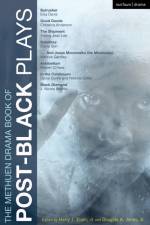
'Post-black' refers to an emerging trend within black arts to find new and multiple expressions of blackness, unburdened by the social and cultural expectations of blackness of the past and moving beyond the conventional binary of black and white. Reflecting this multiplicity of perspectives, the plays in this collection explode the traditional ways of representing black families on the American stage, and create new means to consider the interplay of race, with questions of class, gender, and sexuality. They engage and critique current definitions of black and African-American identity, as well as previous limitations placed on what constitutes blackness and black theatre.Written by the emerging stars of American theatre such as Eisa Davis and Marcus Gardley, the plays explore themes as varied as family and individuality, alienation and gentrification, and reconciliation and belonging. They demonstrate a wide-range of formal and structural innovations for the American theatre, and reflect the important ways in which contemporary playwrights are expanding the American dramatic canon with new and diverse means of representation. Edited by two leading US scholars in black drama, Harry J. Elam Jr (Stanford) and Douglas A. Jones Jr (Princeton), this cutting edge anthology gathers together some of the most exciting new American plays, selected by a rigorous academic backbone and explored in depth by supporting critical material.
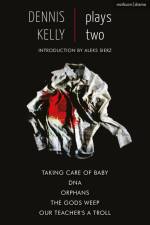
Dennis Kelly is one of the UK's finest contemporary dramatists. This second volume of his work collects together: Our Teacher's a Troll, Orphans, Taking Care of Baby, DNA and The Gods Weep. Also features a foreword by journalist, author and critic, Aleks Sierz."Without doubt, Kelly is one of the most multi-talented British playwrights to emerge in the last decade" - Aleks Sierz (from the foreword)
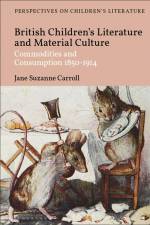
The 'golden age' of children's literature in the late 19th and early 20th century coincided with a boom in the production and trade of commodities. The first book-length study to situate children's literature within the consumer culture of this period, British Children's Literature and Material Culture explores the intersection of children's books, consumerism and the representation of commodities within British children's literature. In tracing the role of objects in key texts from the turn of the century, Jane Suzanne Carroll uncovers the connections between these fictional objects and the real objects that child consumers bought, used, cherished, broke, and threw away. Beginning with the Great Exhibition of 1851, this book takes stock of the changing attitudes towards consumer culture - a movement from celebration to suspicion - to demonstrate that children's literature was a key consumer product, one that influenced young people's views of and relationships with other kinds of commodities. Drawing on a wide spectrum of well-known and less familiar texts from Britain, this book examines works from Lewis Carroll's Through the Looking Glass, and What Alice Found There and E. Nesbit's Five Children & It to Christina Rossetti's Speaking Likenesses and Mary Louisa Molesworth's The Cuckoo Clock. Placing children's fiction alongside historical documents, shop catalogues, lost property records, and advertisements, Carroll provides fresh critical insight into children's relationships with material culture and reveals that even the most fantastic texts had roots in the ordinary, everyday things.
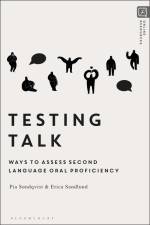
Oral assessments are of vital importance to second language learners, but how can teachers and examiners best test L2 learner talk and interaction? Bringing together theory and research within the field of L2 oral proficiency, with the concept of L2 encompassing any language learned later than the early childhood years, this book provides a state-of-the art overview of what is at stake for L2 learners and examiners, and advice on how to approach testing and assessment. Using data and findings from empirical research to illustrate and discuss key topics, Testing Talk takes the reader step-by-step through the major concepts and issues in the oral assessment of second languages, with a main focus on L2 English. Investigating and explaining the most important educational and interactional issues facing both examiners and test-takers, such as the factors which come into play during speaking tests, the differences between common test formats, and the challenge of ensuring equity in assessment, this book offers research-based advice on ways to design test tasks and in-depth insights into the assessment of L2 speaking. Featuring a glossary of key terms and concepts, discussion questions and further reading for each chapter, and a comprehensive companion website hosting a wealth of additional materials, including authentic test recordings and assessment tasks to be used by researchers and practitioners alike, this is the only book needed in order to understand, design, and assess interactive oral L2 tests.
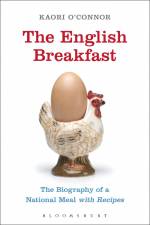
The English breakfast is one of the best-loved national meals in the world, an edible symbol of England and Englishness. But how did breakfast attain this distinction, what can a national meal tell us about the nation that eats it, what are the links between social and culinary change, and is there more to the English breakfast than bacon and eggs? This biography of the English breakfast shows how the renowned meal came into being over many centuries, reaching its height in the Victorian and Edwardian eras when splendid breakfasts were served from silver dishes in grand country houses across the land. Following this historical analysis are three authentic and complete cookbooks devoted entirely to breakfasts from the heyday of this best of all meals, with some 500 recipes by three celebrated culinary figures of the Victorian age - an elite hostess, a thrifty housekeeper, and a pukka colonial colonel - before the narrative continues up to the present. The epilogue, new to this paperback edition, covers 'the devolved breakfast' (Scottish, Welsh and Irish); the renaissance of the full breakfast during financial crises and the working class 'caff'.Mixing anthropology, cultural biography, the invention of tradition and the study of cookbooks as social documents, The English Breakfast is a truly unique work of food history.
What can creativity achieve in an era of ecocide? How are people using creative and artistic practices to engage with (and resist) the destruction of life on earth? What are the relationships between creativity and repair in the face of escalating global environmental crises? Across twelve compelling case studies, this book charts the emergence of diverse forms of artistic practice and brings together accounts of how artists, scholars and activists are creatively responding to environmental destruction.Highlighting alternative approaches to creativity in both conventional art settings and daily life, the book demonstrates the major influence that ecological thought has had on contemporary creative practices. These are often more concerned with subtle processes of feeling, experience and embodiment than they are with charismatic 'eco-art' works. In doing so, this exploratory book develops a conception of creativity as an anti-ecocide endeavour, and provides timely theoretical and practical insights on art in an age of environmental destruction.
Abonner på vårt nyhetsbrev og få rabatter og inspirasjon til din neste leseopplevelse.
Ved å abonnere godtar du vår personvernerklæring.