




Gjør som tusenvis av andre bokelskere
Abonner på vårt nyhetsbrev og få rabatter og inspirasjon til din neste leseopplevelse.
Ved å abonnere godtar du vår personvernerklæring.Du kan når som helst melde deg av våre nyhetsbrev.

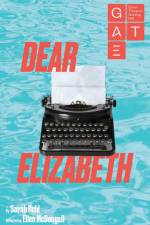
Elizabeth Bishop and Robert Lowell were two of America's most brilliant poets. Throughout their lifetime, they wrote over 400 letters to each other; spanning decades, continents, political eras. Their connection was messy and profound, platonic yet romantic, intense and intangible. A love that resists easy definition.These are their words.Susan Smith Blackburn award winner Sarah Ruhl has crafted a stunning and quietly bold piece of theatre about what it means to love someone, and all the questions we regret never asking.
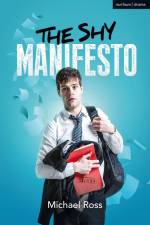
Last night I tried not to be shy, just as an experiment for one night - and with catastrophic results.17 year old Callum is proud to be shy and he thinks you should be too, because what this noisy, crazy world needs right now is a bit more self-restraint. The Shy Manifesto is a bittersweet coming-of-age comedy drama about a shy boy who is fed up of constantly being told to come out of his shell. Tonight he is to address an audience of radical shy comrades and incite the meek to finally rise up and inherit the earth. But memories of the previous night's drunken escapades at a classmate's end-of-term party keep intruding, and threaten to upend the fragile identity he has created for himself.Callum delivers his manifesto, exploring adolescence, isolation, self-loathing and sexuality. His irreverent lightness of touch, and multi- rolling as the other characters in his story endear him to the audience, encouraging us that we, too, can be proud to be shy.The Shy Manifesto is a solo piece that takes the experience of being shy as its central subject- something which has rarely been explored in drama, and yet which touches on many audience members lives.
Illuminating a significant moment in the development of both American and feminist philosophical history, this book explores the pioneering thought of the women in the early American Idealist movement and outgrowths of it in the late-nineteenth century.Dorothy Rogers specifically examines the ideas of women who entered philosophical discourse through education and social activism. She begins by discussing innovative educators, some of whom were members of the influential Idealist movement in St. Louis, Missouri in the eighteen-sixties and seventies. She then looks at the ideas and impact of women who were independent scholars and social and political activists. Throughout the volume, Rogers explores how Idealist thought developed, matured, and was transformed over time - across lines of race, culture, and socio-economic class. Several of the women discussed were ardent feminists and activists: Mary Church Terrell, Anna C. Brackett, Grace C. Bibb, Ana Roqué, Ellen M. Mitchell, Lucia Ames Mead, Jane Addams, Ida B. Wells-Barnett, and Luisa Capetillo. By providing exciting new insights into the work of these early women philosophers and introducing the next generation of women who shared the same ideals and influences, Rogers deftly elucidates the genealogy of women's thought as it developed across North America.
What is it about ancient monsters that popular culture still finds so enthralling? Why do the monsters of antiquity continue to stride across the modern world? In this book, the first in-depth study of how post-classical societies use the creatures from ancient myth, Liz Gloyn reveals the trends behind how we have used monsters since the 1950s to the present day, and considers why they have remained such a powerful presence in our shared cultural imagination. She presents a new model for interpreting the extraordinary vitality that classical monsters have shown, and their enormous adaptability in finding places to dwell in popular culture without sacrificing their connection to the ancient world. Her argument takes her readers through a comprehensive tour of monsters on film and television, from the much-loved creations of Ray Harryhausen in Clash of the Titans to the monster of the week in Hercules: The Legendary Journeys, before looking in detail at the afterlives of the Medusa and the Minotaur. She develops a broad theory of the ancient monster and its life after antiquity, investigating its relation to gender, genre and space to offer a bold and novel exploration of what keeps drawing us back to these mythical beasts. From the siren to the centaur, all monster lovers will find something to enjoy in this stimulating and accessible book.
The subject of the posthuman, of what it means to be or to cease to be human, is emerging as a shared point of debate at large in the natural and social sciences and the humanities. This volume asks what classical learning can bring to the table of posthuman studies, assembling chapters that explore how exactly the human self of Greek and Latin literature understands its own relation to animals, monsters, objects, cyborgs and robotic devices. With its widely diverse habitat of heterogeneous bodies, minds, and selves, classical literature again and again blurs the boundaries between the human and the non-human; not to equate and confound the human with its other, but playfully to highlight difference and hybridity, as an invitation to appraise the animal, monstrous or mechanical/machinic parts lodged within humans. This comprehensive collection unites contributors from across the globe, each delving into a different classical text or narrative and its configuration of human subjectivity-how human selves relate to other entities around them. For students and scholars of classical literature and the posthuman, this book is a first point of reference.
This book is the first in-depth exploration of the revolutionary designers who defined American fashion in its emerging years and helped build an industry with global impact, yet have been largely forgotten. Focusing on female designers, the authors reclaim a place in history for the women who created not only for celebrities and socialites, but for millions of fashion-conscious customers across the United States. From one of America's first couturiers, Jessie Franklin Turner, to Zelda Wynn Valdes, the book captures the lost histories of the luminaries who paved the way in the world of American fashion design. This fully illustrated collection takes us from Hollywood to Broadway, from sportswear to sustainable fashion, and explores important crossovers between film, theater, and fashion. Uncovering fascinating histories of the design pioneers we should know about, the book enlarges the prevailing narrative of fashion history and will be an important reference for fashion students, historians, costume curators, and fashion enthusiasts alike.
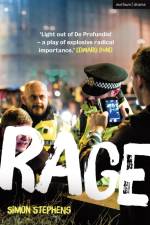
Simon Stephens' explosive play Rage was written as a counterpoint for Elfriede Jelinek's Wut. Composed as 31 high-energy scenes, each one is based on a series of photos by Joel Goodman which captured the excitement and the mayhem of New Year's Eve 2015/16 in Manchester city centre. Published in the Manchester Evening News the photos quickly went viral in capturing a vital cross-section of a country on the edge. As the clock strikes twelve the celebratory mood turns into violence, racism, marriage proposals and the opening of portals. Enter the madness and get whisked into the hedonism of youth.Rage premiered at the Thalia Theatre, Hamburg in Autumn 2016 and had its UK premiere at the Royal Welsh School of Music and Drama in 2018.
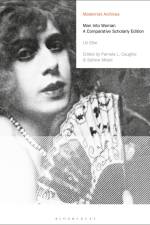
In 1930 Danish artist Einar Wegener underwent a series of surgeries to live as Lili Ilse Elvenes (more commonly known as Lili Elbe). Her life story, Fra Mand til Kvinde (From Man to Woman), published in Copenhagen in 1931, is the first popular full-length (auto)biographical narrative of a subject who undergoes genital transformation surgery (Genitalumwandlung). In Man Into Woman: A Comparative Scholarly Edition, Pamela L. Caughie and Sabine Meyer present the full text of the 1933 American edition of Elbe's work with comprehensive notes on textual and paratextual variants across the four published editions in three languages. This edition also includes a substantial scholarly introduction which situates the historical and intellectual context of Elbe's work, as well as new essays on the work by leading scholars in transgender studies and modernist literature, and critical coverage of the 2015 biopic, The Danish Girl. This print edition has a digital companion: the Lili Elbe Digital Archive (www.lilielbe.org). Launched on July 6, 2019, to commemorate the 100th anniversary of the founding of Magnus Hirschfeld's Institute for Sexual Science (Institut für Sexualwissenschaft) where Lili Elbe was initially examined, the Lili Elbe Digital Archive hosts the German typescript and all four editions of this narrative published in Danish, German, and English between 1931 and 1933, with English translations of the Danish edition and the typescript. Many letters from archives and contemporaneous articles noted in this print edition may be found in the digital archive.
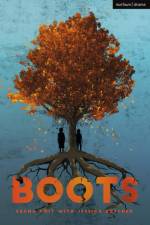
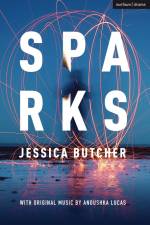
Fifteen years of disconnected sparks to do the damage.To stop her beautiful fantastical brain from working.'Fall in love in my early 20s, get married in my late 20s, have at least one child by the time I'm 30. F*ck!'Life is hard to navigate when you've got so many questions. Can I put this jumper in the washing machine? Do you have my birth certificate? Where did you find love? How did you do it? How do you survive? A story of a kamikaze love affair with unexpected consequences. Hilarious and heartbreaking, written by Jessica Butcher and with original music by Anoushka Lucas. Sparks is a two-hander musical about thebrain's response to grief. This edition was published to coincide with the run at the Edinburgh Festival Fringe in August 2018, ahead of its transfer to the HighTide Festivals 2018 in Aldeburgh, Suffolk and Walthamstow, London.
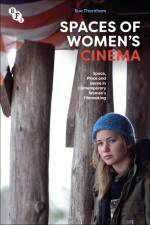
Sue Thornham explores issues of space, place, time and gender in feminist filmmaking through an examination of a wide range of films by contemporary women filmmakers, ranging from the avant-garde to mainstream Hollywood. Beginning from questions about space itself and the way it has been gendered, she asks how representation functions in relation to space and time, and how this, too, is gendered, before moving to an exploration of how such questions might be considered in relation to women's filmmaking. In sections dealing with spaces from wilderness to city, she analyses in detail how these issues have been dealt with by women filmmakers, addressing the work of filmmakers such as Jane Campion, Kathryn Bigelow, Julie Dash, Maggie Greenwald, Patricia Rozema and Carol Morley, and films including 'An Angel at My Table' (1990), 'Daughters of the Dust' (1991) 'The Ballad of Little Jo' (1993), 'Winter's Bone' (2010), 'Zero Dark Thirty' (2012) and 'The Falling' (2014).
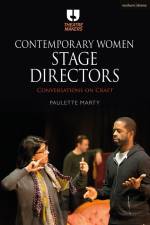
Contemporary Women Stage Directors opens the door into the minds of 27 prolific female theatre directors, allowing you to explore their experience, wisdom and knowledge. Directors give insight into their diverse approaches to the key challenges of directing theatre, including choosing projects, engaging with scripts, conceptualizing visual and acoustic production elements, collaborating with actors and production teams, building their careers, and navigating challenges and opportunities posed by gender, race and ethnicity. The directors featured include Maria Aberg, May Adrales, Sarah Benson, Karin Coonrod, Rachel Chavkin, Lear deBessonet, Nadia Fall, Vicky Featherstone, Polly Findlay, Leah Gardiner, Anne Kauffman, Lucy Kerbel, Young Jean Lee, Patricia McGregor, Blanche McIntyre, Paulette Randall, Diane Rodriguez, Indhu Rubasingham, KJ Sanchez, Tina Satter, Kimberly Senior, Roxana Silbert, Leigh Silverman, Caroline Steinbeis, Liesl Tommy, Lyndsey Turner, and Erica Whyman.These women are making profoundly exciting theatre in some of the most influential organizations across the English-speaking world- from Broadway to the West End, from the National Theatre in London to Center Theatre Group in Los Angeles. As generally mid-career professionals, they are informed by both their hard-earned expertise and their forward-looking energy. They offer astute observations about the current state of the art form, as well as inspiring visions of what theatre can accomplish in the decades to come.
Charles Dickens' London is reimagined for the 21st century.Twenty-four hours in the life of a city that has 371 people in every square kilometer, where every street and square shelters heroes and villains, emotional turmoil, violent allegiances, adventures, the remarkable and the everyday.Olivier Award-winning playwright James Graham forges a uniquely crowd-sourced play, incorporating scenes by emerging writers into his own sweeping narrative. Dickens' panoply of London and Londoners, his big characters and fantastic stories in Sketches by Boz are updated for the modern age, incorporating the broadest range of voices from across the community in a theatrical whirligig of wonder and imagination.
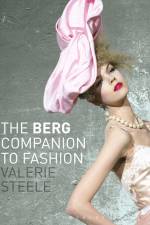
- An essential reference for students, curators and scholars of fashion, cultural studies, and the expanding range of disciplines that see fashion as imbued with meaning far beyond the material. - Over 300 in-depth entries covering designers, articles of clothing, key concepts and styles. - Edited and introduced by Valerie Steele, a scholar who has revolutionized the study of fashion, and who has been described by The Washington Post as one of "fashion's brainiest women." Derided by some as frivolous, even dangerous, and celebrated by others as art, fashion is anything but a neutral topic. Behind the hype and the glamour is an industry that affects all cultures of the world. A potent force in the global economy, fashion is also highly influential in everyday lives, even amongst those who may feel impervious.This handy volume is a one-stop reference for anyone interested in fashion - its meaning, history and theory. From Avedon to Codpiece, Dandyism to the G-String, Japanese Fashion to Subcultures, Trickle down to Zoot Suit, The Berg Companion to Fashion provides a comprehensive overview of this most fascinating of topics and will serve as the benchmark guide to the subject for many years to come.
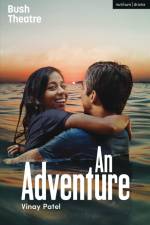
I'm not much now, I know, but I will be. So pick me Jyoti and I swear I will make us the greatest adventure you ever have. On a stormy night in 1954, a woman doomed to marry one of five men discovers the wildcard choice might just be the person she'd been hoping for all along. An Adventure follows headstrong Jyoti and her fumbling suitor Rasik as they ride the crest of the fall of the Empire from the shores of post-Partition India to the forests of Mau Mau Kenya onto the industrial upheaval of 1970s London and the present day.But what happens when youthful ambitions crash hard against reality? When you look back at the story of your time together, can you bear to ask yourself: was it all worth it?Witty, charming and full of fearless historical insight, An Adventure is an epic, technicolour love story from one of the country's most promising young writers about the people who journeyed to British shores in hope and shaped the country we live in today.
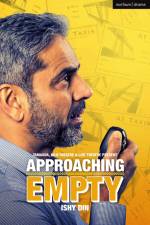
Forget friendship! This is business.In a scruffy minicab office, Mansha decides it's time to create his own destiny and offers to buy the business from his lifelong friend Raf. As the realities of the state of the company slowly come to light, these two best friends must confront the difficulties of going into business with those closest to them.Set in the north of England, in the aftermath of Margaret Thatcher's death, this compelling drama by award-winning playwright Ishy Din lays bare the everyday struggles of a post-industrial generation of British men.
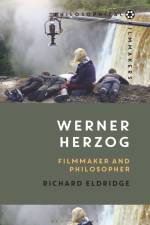
Werner Herzog has produced some of the most powerful, haunting, and memorable images ever captured on film. Both his fiction films and his documentaries address fundamental issues about nature, selfhood, and history in ways that engage with but also criticize and qualify the best philosophical thinking about these topics. In focusing on figures from Aguirre, Kasper Hauser, and Stroszek to Timothy Treadwell, Graham Dorrington, Dieter Dengler, and Walter Steiner, among many others, Herzog investigates the nature of human life in time and the possibilities of meaning that might be available within it. His films demonstrate the importance of the image in coming to terms with the plights of contemporary industrial and commercial culture. Eldridge unpacks and develops Herzog's achievement by bringing his work into engagement with the thinking of Freud, Merleau-Ponty, Nietzsche, Hegel, Cavell, and Benjamin, but more importantly also by attending closely to the logic and development of the films themselves and to Herzog's own extensive writings about filmmaking.
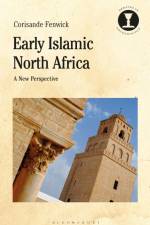
This volume proposes a new approach to the Arab conquests and the spread of Islam in North Africa. In recent years, those studying the Islamic world have shown that the coming of Islam was not marked by devastation or decline, but rather by considerable cultural and economic continuity. In North Africa, with continuity came significant change. Corisande Fenwick argues that the establishment of Muslim rule also coincided with a phase of intense urbanization, the appearance of new architectural forms (mosques, housing, hammams), the spread of Muslim social and cultural practices, the introduction of new crops and manufacturing techniques and the establishment of new trading links with sub-Saharan Africa, Europe and the Middle East. This concise and accessible book offers the first assessment of the archaeology of early Islamic North Africa (7th-9th centuries), drawing on a wide range of new evidence from Morocco, Algeria, Tunisia and Libya. It lays out current debates about its interpretation and suggests new ways of thinking about this crucial period in world history. Essential reading for those interested in understanding the impact of the Arab conquests and the spread of Islam on daily life, it will also challenge students of archaeology and history to think in new ways about North Africa, the earliest Islamic empires and states and the transition from the Roman to the medieval Mediterranean.
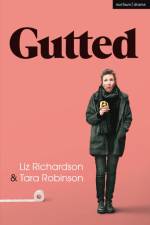
If you're concerned, just talk to a member of our staff or, alternatively, swing your legs over the edge of the bed and walk out, remembering to pull the camera from your bum before leaving the hospital. Liz has got an embarrassing problem, and these yogurts aren't helping. Her body's acting up. Gutted is a bold new journey of frank confessions, colourful characters and too much brown sauce. A shameless tale of love, laughter and lavatories, it is based on solo performer Liz Richardson's real-life experiences as a young woman living with ulcerative colitis (similar to Crohn's Disease).
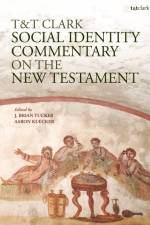
The T & T Clark Social Identity Commentary on the New Testament is a one-of-a-kind comprehensive Bible resource that highlights the way the NT seeks to form the social identity of the members of the earliest Christ-movement. By drawing on the interpretive resources of social-scientific theories-especially those related to the formation of identity-interpreters generate new questions that open fruitful identity-related avenues into the text. It provides helpful introductions to each NT book that focus on various social dimensions of the text as well as a commentary structure that illuminates the text as a work of social influence. The commentary offers methodologically informed discussions of difficult and disputed passages and highlights cultural contexts in theoretically informed ways-drawing on resources from social anthropology, historical sociology, or social identity theory. The innovative but careful scholarship of these writers, most of whom have published monographs on some aspect of social identity within the New Testament, brings to the fore often overlooked social and communal aspects inherent in the NT discourse. The net result is a more concrete articulation of some of the every-day lived experiences of members of the Christ-movement within the Roman Empire, while also offering further insight into the relationship between existing and new identities that produced diverse expressions of the Christ-movement during the first century. The SICNT shows that identity-formation is at the heart of the NT and it offers insights for leaders of faith communities addressing these issues in contemporary contexts.
Thinking Visually for Illustrators features a wide range of work, demonstrating diverse visual languages, context, ideas, techniques and skills. It also looks at the ways in which illustrators develop their own personal visual language. Contemporary illustrators from all over the world engaged in a diverse range of approaches to the discipline have contributed their artwork and commentaries on visual thinking and the working process. The text also features the work of recent graduates, present students and observations from educators past and present. This edition has been updated to include a new chapter on illustration for the digital context and new approaches to working.
Abonner på vårt nyhetsbrev og få rabatter og inspirasjon til din neste leseopplevelse.
Ved å abonnere godtar du vår personvernerklæring.