























Gjør som tusenvis av andre bokelskere
Abonner på vårt nyhetsbrev og få rabatter og inspirasjon til din neste leseopplevelse.
Ved å abonnere godtar du vår personvernerklæring.Du kan når som helst melde deg av våre nyhetsbrev.

In his perceptive and provocative new book, Alastair Hannay contests two prejudices that have dogged the appreciation of Soren Kierkegaard's writings. These are that to grasp their contemporary impact, the religious focus must be referred to his personal background, and that their varied voices mirror a fragmentation in his own relationship to self and society. It was for paying lip-service to their own values that Kierkegaard castigated his society, his diagnosis being that this was one of many ways in which more pressing and disturbing questions of existence were typically evaded. It is in the renowned thinker's own struggle for selfhood that Hannay sees his prescient anticipation of the current focus on issues relating to integration, acceptance and identity. By cultivating a role as the social misfit within his innate exceptionality Kierkegaard deliberately exposed himself to the problems to which an age gripped by 'identity politics' is now responding. By cleverly examining the relation between his richly conceived polemics and Kierkegaard's own preoccupation with identity, Hannay has written an essential new text for Kierkegaard scholars and students of Continental philosophy and existentialism.
In this innovative new book, Alison Bancroft re-examines significant moments in twentieth century fashion history through the focal lens of psychoanalytic theory. Her discussion centres on studies of fashion photography, haute couture, queer dressing, and fashion/art in an attempt to shed new light on these key issues. According to Bancroft, problems of subjectivity are played out through fashion, in the public arena, and not just in the dark, unknowable unconscious mind. The question of what can be said, and what can only be experienced, and how these two issues may be reconciled, become questions that fashion addresses on an almost daily basis. By interpreting fashion within a psychoanalytic frame, Bancroft illustrates how fashion articulates some of the essential, and sometimes frightening, truths about the body, femininity and the self.
The Boer War of 1899-1902 was an epic of heroism and bungling, cunning and barbarism, with an extraordinary cast of characters - including Churchill, Rhodes, Conan Doyle, Smuts, Kipling, Gandhi, Kruger and Kitchener. The war revealed the ineptitude of the British military and unexpectedly exposed the corrupt underside of imperialism in the establishment of the first concentration camps, the shooting of Boer prisoners-of-war and the embezzlement of military supplies by British officers. This acclaimed book provides a complete history of the Boer War - from the first signs of unrest to the eventual peace. In the process, it debunks several of the myths which have grown up around the conflict and explores the deadly legacy it left for southern Africa.
Here is the one-stop handbook to make your studio production shine.The TV Studio Production Handbook explains the production process from beginning to end and covers everything media students need to know to create a successful studio television programme. It is an illuminating read for those starting out in the industry and an invaluable resource for students of media, film and TV.The book is packed with interviews from top TV executives from the UK, USA, Australia and China and includes live case studies from hit international formats covering every genre, from reality, to drama to news, with scripts from Britain's Got Talent, Big Brother, Coronation Street, The Chase, Teletubbies, Channel 4 News and more. The authors, both award-winning TV programme-makers and academic programme leaders, break things down genre by genre and explore pre-production, casting, scripting, as well as all the required paperwork from call sheets to running orders. They also examine the future of studio and the multiplatform opportunities available for programme makers internationally.
What is the place of architecture in the history of art? Why has it been at times central to the discipline, and at other times seemingly so marginal? What is its place now? Many disciplines have a stake in the history of architecture - sociology, anthropology, human geography, to name a few. This book deals with perhaps the most influential tradition of all - art history - examining how the relation between the disciplines of art history and architectural history has waxed and waned over the last one hundred and fifty years. In this highly original study, Mark Crinson and Richard J. Williams point to a decline in the importance attributed to the role of architecture in art history over the last century - which has happened without crisis or self-reflection. The book explores the problem in relation to key art historical approaches, from formalism, to feminism, to the social history of art, and in key institutions from the Museum of Modern Art, to the journal October. Among the key thinkers explored are Banham, Baxandall, Giedion, Panofsky, Pevsner, Pollock, Riegl, Rowe, Steinberg, Wittkower and Wölfflin. The book will provoke debate on the historiography and present state of the discipline of art history, and it makes a powerful case for the reconsideration of architecture.
Solipsism is one of the philosophical thesis or ideas that has generally been regarded as highly implausible, or even crazy. The view that the world is "my world" in the sense that nothing exists independently of my mind, thought, and/or experience is, understandably, frowned up as a genuine philosophical position. For this reason, solipsism might be regarded as an example of a philosophical position that does not "matter" at all. It does not seem to play any role in our serious attempts to understand the world and ourselves. However, by arguing that solipsism does matter, after all, Why Solipsism Matters more generally demonstrates that philosophy, even when dealing with highly counterintuitive and "crazy" ideas, may matter in surprising, unexpected ways. It will be shown that the challenge of solipsism should make us rethink fundamental assumptions concerning subjectivity, objectivity, realism vs. idealism, relativism, as well as key topics such as ethical responsibility - that is, our ethical relations to other human beings - and death and mortality. Why Solipsism Matters is not only an historical review of the origins and development of the concept of solipsism and a exploration of some of its key philosophers (Kant and Wittgenstein to name but a few) but it develops an entirely new account of the idea. One which takes seriously the global, socially networked world in which we live in which the very real ramifications of solipsism - including narcissism - can be felt.
Jean-François Lyotard (1924-1998) was one of the most important French philosophers of the Twentieth Century. His impact has been felt across many disciplines: sociology; cultural studies; art theory and politics. This volume presents a diverse selection of interviews, conversations and debates which relate to the five decades of his working life, both as a political militant, experimental philosopher and teacher. Including hard-to-find interviews and previously untranslated material, this is the first time that interviews with Lyotard have been presented as a collection.Key concepts from Lyotard's thought - the differend, the postmodern, the immaterial - are debated and discussed across different time periods, prompted by specific contexts and provocations. In addition there are debates with other thinkers, including Emmanuel Levinas and Jacques Derrida, which may be less familiar to an Anglophone audience. These debates and interviews help to contextualise Lyotard, highlighting the importance of Marx, Freud, Kant and Wittgenstein, in addition to the Jewish thought which accompanies the questions of silence, justice and presence that pervades Lyotard's thinking.
Long since regarded as an inessential object that simply adds to the beauty, convenience or effectiveness of an outfit, accessories are now considered key items in a fashion collection and as stand-alone pieces worthy of our undivided attention. Basics Fashion Design 09: Designing Accessories is filled with important information that any designer will need to know, examining four key items from concept to production: the bag, footwear, jewellery and millinery. The key accessories are dissected to clearly display the core components, giving a clear view of how each connects. The design process is explored by looking at creative product development, from gathering research to generating ideas into key products, construction techniques and the essential tools of the trade used in modern accessories design. 2D pattern and 3D modelling techniques are described in detail with explanations of traditional and rapid prototyping tools in use today. Bespoke and commercial production is examined and creative solutions to technical challenges are presented.Designing Accessories also explores specialist finishing techniques, such as hand-finishing and machine embellishment and contains descriptions of contemporary techniques that break new boundaries in accessories design. A detailed explanation of small accessories, essential to the accessories designer, will broaden the reader's knowledge and provide them with the dexterity of skills to enter the fashion industry.This title is filled with images of beautiful accessories to inspire young designers. It is essential reading for fashion students and all those interested in accessories design. The book also includes a whole chapter on small accessories (eyewear, scarves, ties, wristwatches, belts and gloves).
The Handbook to the Bloomsbury Group is the most comprehensive available survey of contemporary scholarship on the Bloomsbury Group - the set of influential writers, artists and thinkers whose members included Virginia Woolf, Leonard Woolf, E.M. Forster, John Maynard Keynes, Vanessa Bell, Clive Bell, Duncan Grant and David Garnett. With chapters written by world leading scholars in the field, the book explores novel avenues of thinking about these pivotal figures and how their works are opened up by the new modernist studies. It brings together overview essays with detailed illustrative case studies, and covers topics as diverse as feminism, sexuality, empire, philosophy, class, nature and the arts. Setting the agenda for future study of Bloomsbury, this is an essential resource for scholars of 20th-century modernist culture.
Service design is the activity of planning and organizing people, infrastructure, communication and material components of a service in order to improve its quality and the interaction between service provider and customers. It is now a growing field of both practice and academic research. Designing for Service brings together a wide range of international contributors to map the field of service design and identify key issues for practitioners and researchers such as identity, ethics and accountability. Designing for Service aims to problematize the field in order to inform a more critical debate within service design, thereby supporting its development beyond the pure methodological discussions that currently dominate the field. The contributors to this innovative volume consider the practice of service design, ethical challenges designers may encounter, and the new spaces opened up by the advent of modern digital technologies.
This book provides readers with a systematic and in-depth analysis of the Civil Code of the PRC.Following the Chinese Civil Code: The General Part, this book covers the six specific books of the Code. It designates a separate part for the security law and highlights the significant amendments brought about by the Code and its subsequent judicial interpretation. As contract law makes up nearly a half of the entire Civil Code, this book also puts an emphasis on this area and addresses six major contract types in detail: the sales contract, lease contract, guaranty contract, mandate contract, factoring contract and technology contract.
The Methuen Drama Handbook of Theatre History and Historiography is an authoritative guide to contemporary debates and practices in this field. The book covers the key themes and methods that are current in theatre history research, with a particular focus on expanding the object of study to include engagement with theatre and performance practices and the development of theatre histories around the world. Central to the book are eighteen specially commissioned essays by established and emerging scholars from a wide range of international contexts, whose discussion of individual case studies is predicated on their understanding and experience of their 'local' landscape of theatre history. These essays reveal where important work continues to be done in the field and, most valuably, draws on academic contexts beyond the Western academy to expand our knowledge of the exciting directions that such an approach opens up. Prefaced by an introduction tracing the development of the discipline of theatre history and changing historiographical approaches, the Handbook explores current issues pertaining to theatre and performance history research, as well as providing up to date and robust introductions to the methods and historiographic questions being explored by researchers in the field. Featuring a series of essential research tools, including a detailed list of resources and an annotated bibliography of key texts, this is an indispensable scholarly handbook for anyone working in theatre and performance history and historiography.
Since 1900, the Royal Navy has seen vast changes to the way it operates. This book tells the story, not just of defeats and victories, but also of how the navy has adjusted to over 100 years of rapid technological and social change. The navy has changed almost beyond recognition since the far-reaching reforms made by Admiral Fisher at the turn of the century. Fisher radically overhauled the fleet, replacing the nineteenth-century wooden crafts with the latest in modern naval technology, including battleships (such as the iconic dreadnoughts), aircraft carriers and submarines. In World War I and World War II, the navy played a central role, especially as unrestricted submarine warfare and supply blockades became an integral part of twentieth-century combat. However it was the development of nuclear and missile technology during the Cold War era which drastically changed the face of naval warfare - today the navy can launch sea-based strikes across thousands of miles to reach targets deep inland. This book navigates the cross currents of over 100 years of British naval history.As well as operational issues, the authors also consider the symbolism attached to the navy in popular culture and the way naval personnel have been treated, looking at the changes in on-board life and service during the period, as well as the role of women in the navy. In addition to providing full coverage of the Royal Navy's wartime operations, the authors also consider the functions of the navy in periods of nominal peace - including disaster relief, diplomacy and exercises. Even in peacetime the Royal Navy had a substantial role to play. Covering the whole span of naval history from 1900 to the present, this book places the wars and battles fought by the navy within a wider context, looking at domestic politics, economic issues and international affairs. It will be essential reading for anyone interested in naval history and operations, as well as military history more generally.
French theorist René Girard was one of the major thinkers of the twentieth century. Read by international leaders, quoted by the French media, Girard influenced such writers as J.M. Coetzee and Milan Kundera. Dubbed "the new Darwin of the human sciences" and one of the most compelling thinkers of the age, Girard spent nearly four decades at Stanford exploring what it means to be human and making major contributions to philosophy, literary criticism, psychology and theology with his mimetic theory. This is the first collection of interviews with Girard, one that brings together discussions on Cervantes, Dostoevsky, and Proust alongside the causes of conflict and violence and the role of imitation in human behavior. Granting important insights into Girard's life and thought, these provocative and lively conversations underline Girard's place as leading public intellectual and profound theorist.
In this first English translation of the prize-winning Dutch title Leven is Een Kunst, Paul van Tongeren creates a new kind of virtue ethics, one that centres on how to 'live well' in our contemporary world.While virtue ethics is based on the moral philosophy of Aristotle, it has had many interpretations and iterations throughout history and features prominently in the thinking of the Stoics, Christian narratives and the writings of Nietzsche. The Art of Living Well explores and expands upon these traditions, using them as a basis to form a new interpretation; one that foregrounds art and creativity as paramount to the struggle to act in an authentic and moral way. Acting as both a clear introduction to virtue ethics and moral philosophy and a serious work of original philosophy, this book connects philosophy with real lived experience and tackles, head-on, the perennial philosophical question: 'how do we live well?'
Nationalism and the nation state, globalization and Pan-Africanism are leading international relations concepts which have a particular relevance for Africa as an emerging economic power. This book examines the concept of nationalism, the nationalist mind-set or 'psychology of nationalism' and the role of the nation state in an era of globalism and globalization. The 'new' Pan-Africanism is a growing force, spurred by economic growth and Africa's rising global significance and recent years have seen the establishment of the African Continental Free Trade Area. Michael Amoah here investigates concepts of nationalism and the nation state through case studies of eight countries and discusses the impact of globalism in African states where Pan-Africanism is an increasingly significant factor in both domestic politics and international relations.
The Bloomsbury Handbook of Popular Music and Social Class is the first extensive analysis of the most important themes and concepts in this field. Encompassing contemporary research in ethnomusicology, sociology, cultural studies, history, and race studies, the volume explores the intersections between music and class, and how the meanings of class are asserted and denied, confused and clarified, through music. With chapters on key genres, traditions, and subcultures, as well as fresh and engaging directions for future scholarship, the volume considers how music has thought about and articulated social class. It consists entirely of original contributions written by internationally renowned scholars, and provides an essential reference point for scholars interested in the relationship between popular music and social class.
While the British Empire is long gone, it survives as a recurring flashpoint in heated debates about the present and future of Britain and the nations over which Britain once ruled. Embers of Empire in Brexit Britain turns a critical eye to the widely-held notion that the long shadow of the imperial past has much to answer for, and asks to what extent should the residual after-effects of Britain's colonial empire be taken at face value? From the 'Rhodes must fall' controversy and contested anniversaries to immigration scares and the question of what Britishness is in a post-imperial world, an eclectic mix of expert researchers, writers and commentators consider the legacy of the British empire in the battle over Brexit. As the United Kingdom haggles its way out of the European Union and casts about for an alternative future, this volume shows how the memory of the empire is still as potent a political force as ever.
On 24 October 1964, the Republic of Zambia was formed, replacing the territory which had formerly been known as Northern Rhodesia. Fifty years on, Andrew Sardanis provides a sympathetic but critical insider's account of Zambia, from independence to the present. He paints a stark picture of Northern Rhodesia at decolonisation and the problems of the incoming government, presented with an immense uphill task of rebuilding the infrastructure of government and administration - civil service, law, local government and economic development. As a friend and colleague of many of the most prominent names in post-independence Zambia - from the presidencies of founding leader Kenneth Kaunda to the incumbent Michael Sata - Sardanis uses his unique eyewitness experience to provide an inside view of a country in transition.
Drawing on innovative research into sectarian-political struggle in Beirut, Mohamad Hafeda shows how boundaries in a divided city are much more than simple physical divisions and reveals the ways in which city dwellers both experience them and subvert them in unexpected ways. Through research based on interviews, documentation of various media representations such as maps, visual imagery and gallery installations, Negotiating Conflict in Lebanon exposes the methods through which sectarian narratives are constructed - arguing for the need to question, deconstruct and transform these constructions. Hafeda expands upon the definition of bordering practice by considering artistic research as a critical spatial practice which allows self-reflection and transformation of border positions. This study offers an alternative view to the mainstream narratives of what is meant by a border, and provides insights, methods and lessons that may be applied to other cities around the world affected by conflict and political-sectarian segregation.
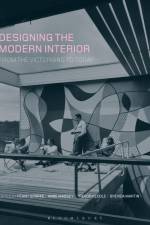
A Choice Outstanding Academic Title 2010.Designing the Modern Interior reveals how the design of the inside spaces of our homes and public buildings is shaped by and shapes our modern culture.The modern interior has often been narrowly defined by the minimalist work of elite, reforming architects. But a shared modernising impulse, expressed in interior design, extends at least as far back as the Victorians and reaches to our own time. And this spirit of modernisation manifested itself in interiors, designed both by professionals and by amateurs, which did not necessarily look modern and often even aimed to imitate the past.Designing the Modern Interior presents a new history of the interior from the late 19th to the 21st century. Particular characteristics are consistent across this period: a progressive attitude towards technology; a hyper-consciousness of what it is to live in the present and the future; an overt relationship with the mass media, mass consumption and the marketplace; an emphasis on individualism, interiority and the 'self'; the construction of identities determined by gender, class, race, sexuality and nationhood; and the experiences of urban and suburban life.
And every so often I find something.Washed up on the shore. Something lost.Something old.Something broken.Something in need of repair. And I'd bring it back here. I'd bring it home.In a house a few miles from the Carmarthenshire coast a mother battles to keep her family together. But when an old acquaintance unexpectedly arrives he awakens her children's need to escape."This one was a great find. It's made of glass look, and amazingly it hadn't smashed when it was lost at sea, even though it's so delicate." A new Welsh play produced by Chippy Lane Productions, a theatre company championing Welsh and Wales-based creatives.
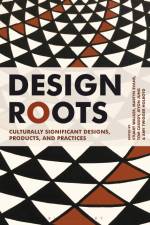
Design Roots provides a comprehensive review of culturally significant designs, products and practices which are rooted to particular communities through making tradition and a sense of place. Many rich traditional practices associated with community, tacit knowledge and culture are being rapidly lost due to globalization and urbanization. Yet they have much to offer for the future in terms of sustainability, identity, wellbeing and new opportunities in design. This book considers the creative roots, the place-based ecologies, and deep understandings of cultural significance, not only in terms of history and tradition but also in terms of locale, social interactions, innovation, and change for the sustainment of culturally significant material productions. Importantly, these are not locked in time by sentimentality and nostalgia but are evolving, innovative, and adaptive to new technologies and changing circumstances. Contributing authors explore the historical roots of culturally significant designs, products and practices, emerging directions, amateur endeavours, enterprise models, business opportunities and the changing role and contribution of design in the creation of material cultures of significance, meaning and value. An international perspective is provided through case studies and research from North and South America, Africa, Europe, Asia and Australasia, with examples including Aran jumper production in Northern Ireland, weaving in Thailand, Iranian housing design, Brazilian street design and digital crafting in the United Kingdom.
Abonner på vårt nyhetsbrev og få rabatter og inspirasjon til din neste leseopplevelse.
Ved å abonnere godtar du vår personvernerklæring.