








Gjør som tusenvis av andre bokelskere
Abonner på vårt nyhetsbrev og få rabatter og inspirasjon til din neste leseopplevelse.
Ved å abonnere godtar du vår personvernerklæring.Du kan når som helst melde deg av våre nyhetsbrev.

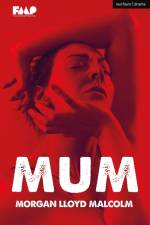
Motherhood. No one can prepare you for it. No matter how much you tell yourself you can do it - can you? Where's the rush of love? When will sleep again?What if the thing you fear most is also the thing you crave? All you wanted was one night of unbroken sleep, what have you done? Mum is a feverish journey through every parent's worst nightmare.A raw and real exploration of early motherhood from the award-winning writer of Emilia, Morgan Lloyd Malcolm. This edition was published to coincide with the world premiere at Theatre Royal, Plymouth and Soho Theatre, London.
You know I'm in pain, you know you can help relieve it, still you actively withhold, you withhold in case it compromises your moral compass?Two strangers meet in a hotel bar for the first time under false pretences. Flattery, adulation and mutual admiration allows their friendship to kindle as the night progresses. As these disparate and opposing characters joust and jostle for the upper-hand, tensions build and the power dynamic continually shifts, resulting in history coming to the forefront and unknown feelings rising to the surface, with surprising consequences. Leopards is Alys Metcalf's debut play and is published to coincide with the world premiere at Rose Theatre, Kingston, in September 2021.
Doris Day was a major star during the 1950s and 60s. Even now, many years after her final film and years since her last regular television appearances, the star's name retains currency: she is often invoked as shorthand for a kind of sexuality now felt outmoded, with virginity firmly maintained until marriage. Although this assumption is widespread, close attention to the facts of Day's own life challenges it, and the majority of her film roles also prove otherwise, with Day most frequently portraying a woman of maturely sexual desires. Redressing a surprisingly meagre body of work on Doris Day, this book investigates why the rigid view of Day's maintained virginity should have arisen and become so fixed to the star, even now. Taking a twofold approach, Tamar Jeffers McDonald both closely examines Day's film roles and performances and explores material from other popular media for the source of the virgin myth. Day featured continuously in public discourse, and media stories were often devoted to her personal life: it was widely known that she had been married three times and had a son.Why then did the pejorative label, 'the-forty-year-old virgin', arise, and why has it stuck so tenaciously to Day until today? Investigating a range of sources in order to discover why this maturely sexual star has become indelibly associated with maintained virginity, Doris Day Confidential analyses in detail Day's characters and performances across her career. By focusing on contemporary popular culture contexts, using newspaper stories, articles from film, fan and lifestyle magazines, reviews and gossip, it charts the developments in Day's screen 'persona', highlighting the changing public perception of the star of Calamity Jane, Love Me Or Leave Me and Pillow Talk, as aided and abetted by the media.
What is home? The answer seems obvious. But Telling Our Stories of Home, an international collection of eleven plays by and about women from Lebanon, Haiti, Venezuela, Uganda, Palestine, Brazil, India, UK, and the US, complicates the answer. The "answer" includes stories as far-ranging as: enslaved women trying to create a home, one by any means necessary, and one in the ocean; siblings wrestling with their differing devotion to home after their mother's death; a family wrestling with the government's refusal to allow the burial of their soldier-son in their hometown; a young scholar attempting to feel at home after studying abroad; a young man fleeing home due to his sexual orientation only to discover the difficulty of creating home elsewhere, and Siddis (Indians of African descent) continuing to struggle for acceptance despite having lived in India for over 600 years. These are voices seldom represented to a larger audience. The plays and performance pieces range from 20 to 90-minute pieces and include a mix of monologue, duologue, and ensemble plays. Short yet powerful, they allow fantastic performance opportunities particularly in an age of social-distancing with flexible casts that together invite the theme of home to be performed and studied on the page. The plays include: The House by Arzâe Khodr (Lebanon), Happy by Kia Corthron (US), The Blue of the Island by âEvelyne Trouillot (Haiti), Nine Lives by Zodwa Nyoni (UK), Leaving, but Can't Let Go by Lupe Gehrenbeck (Venezuela), Questions of Home by Doreen Baingana (Uganda), On the Last Day of Spring by Fidaa Zidan (Palestine) Letting Go and Moving On by Louella Dizon San Juan (US), Antimemories of an Interrupted Trip by Aldri Anunciaðcäao (Brazil), So Goes We by Jacqueline E. Lawton (US), and Those Who Live Here, Those Who Live There by Geeta P. Siddi and Girija P. Siddi (India) --
Design, Ecology, Politics links social and ecological theory to design theory and practice, critiquing the ways in which the design industry perpetuates unsustainable development.Boehnert argues that when design does engage with issues of sustainability, this engagement remains shallow, due to the narrow basis of analysis in design education and theory. The situation is made more severe by design cultures which claim to be apolitical. Where design education fails to recognise the historical roots of unsustainable practice, it reproduces old errors. New ecologically informed design methods and tools hold promise only when incorporated into a larger project of political change. Design, Ecology, Politics describes how ecological literacy challenges many central assumptions in design theory and practice.By bringing design, ecology and socio-political theory together, Boehnert describes how power is constructed, reproduced and obfuscated by design in ways which often cause environmental harms. She uses case studies to illustrate how communication design functions to either conceal or reveal the ecological and social impacts of current modes of production. The transformative potential of design is dependent on deep-reaching analysis of the problems design attempts to address. Ecologically literate and critically engaged design is a practice primed to facilitate the creation of viable, sustainable and just futures. With this approach, designers can make sustainability not only possible, but attractive.
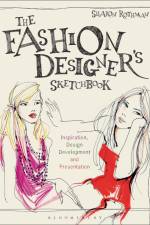
The Fashion Designer's Sketchbook is a must-have resource for both fashion students and practising designers who wish to learn new ways of generating design ideas in order to create successful fashion collections, and who wish to develop their own creative aesthetic. It demonstrates how the fashion design sketchbook serves as a crucial creative tool for professional development - and a valuable portfolio of design work to present to potential employers.This book identifies four distinct types of creative journal, each representing a different phase in the design process: the inspiration diary, the working journal, the presentation journal and the design log; and it explores how one develops out of the other, each stage in the idea generation process moving the process forward organically from discovery, to direction, to design development and delivery.The Fashion Designer's Sketchbook shows readers how to turn their sketchbooks into source books; how to generate design ideas from everyday experience; explores multiple ways of presenting and arranging elements within pages; details digital search and storage techniques as well as bulletin board journalling; and provides exercises to improve readers' illustration skills and enquiry, promoting in-store sketching and visual analysis to focus awareness of design aesthetics, taste levels and design vision. The book also explores the need to address market realities, consumer profiles and trend analysis, and shows how to build design collections based on target customer demographics and different markets.Beautifully illustrated and filled with a vast range of inspirational and full-colour design illustrations, The Fashion Designer's Sketchbook also features interviews with designers and industry experts. With a strong emphasis on exploratory design, this exciting resource provides readers with stimulating exercises designed to enable readers' sketchbook work and their creative vision to shine.
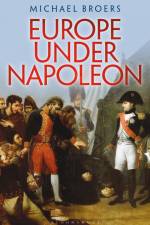
Napoleon Bonaparte dominated the public life of Europe like no other individual before him. Not surprisingly, the story of the man himself has usually swamped the stories of his subjects. This book looks at the history of the Napoleonic Empire from an entirely new perspective- that of the ruled rather than the ruler. Michael Broers concentrates on the experience of the people of Europe- particularly the vast majority of Napoleon's subjects who were neither French, nor willing participants in the great events of the period- during the dynamic but short-lived career of Napoleon, when half the European continent fell under his rule. In a new edition of a highly acclaimed book, Broers weaves together a myriad of regional experiences to produce a social history of the Napoleonic Empire with a truly panoramic scope.
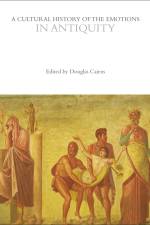
This volume provides an overview of some of the salient aspects of emotions and their role in life and thought of the Greco-Roman world, from the beginnings of Greek literature and history to the height of the Roman Empire. This is a wide remit, dealing with a wide range of sources in two ancient languages, and in the full range of contexts that are covered by the format of this series. The volume's chapters survey the emotional worlds of the ancient Greeks and Romans from multiple perspectives - philosophical, scientific, medical, literary, musical, theatrical, religious, domestic, political, art-historical and historical. All chapters consider both Greek and Roman evidence, ranging from the Homeric poems to the Roman Imperial period and making extensive use of both elite and non-elite texts and documents, including those preserved on stone, papyrus and similar media, and in other forms of material culture. The volume is thus fully reflective of the latest research in the emerging discipline of ancient emotion history.
Abonner på vårt nyhetsbrev og få rabatter og inspirasjon til din neste leseopplevelse.
Ved å abonnere godtar du vår personvernerklæring.