








Gjør som tusenvis av andre bokelskere
Abonner på vårt nyhetsbrev og få rabatter og inspirasjon til din neste leseopplevelse.
Ved å abonnere godtar du vår personvernerklæring.Du kan når som helst melde deg av våre nyhetsbrev.

Poetic and political, Strayed Homes invites architects, interior designers, and urbanists to think again about common concepts in architecture - 'private', 'public' and 'home'. Whereas most writing about the public/private focusses on urban space, this book focusses on the domestic - exploring those overlooked, everyday places where private and intimate activities take place in public. With four chapters set in four small, liminal spaces: the launderette, the greasy spoon, the fire escape, and the sleeper train - the book is part architectural history, part cultural history. It follows a series of allusions and impressions, to explore how films, adverts, books and anecdotes shape experiences of everyday architecture. Making a case for the poetic interpretation of space, the book can be used as a sourcebook for architects, designers, and theorists alike - prompting the reader to rethink the emotional state of leaving home, intimacy in public, and lonely dreaming.
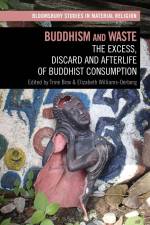
In what ways do Buddhists recognize, define, and sort waste from non-waste? What happens to Buddhist-related waste? How do new practices of Buddhist consumption result in new forms of waste and consequently new ways of dealing with waste? This book explores these questions in a close examination of a religion that is often portrayed as anti-materialist and non-economic. It provides insight into the complexity of Buddhist consumption, conceptions of waste, and waste care. Examples include scripture that has been torn and cannot be read, or an amulet that has disintegrated, as well as garbage left behind on a pilgrimage, or the offerings of food and prayer scarves that create ecological contamination. Chapters cover mass-production and over-consumption, the wastefulness of consumerism, the by-products of Buddhist practices like rituals and festivals, and the impact of increased Buddhist consumption on religious practices and social relations. The book also looks at waste in terms of what is discarded, exploring issues of when and why particular objects and practices are sorted and handled as sacred and disposable. Contributors address how sacred materiality is destined to wear and decay, as well as ideas about redistribution, regeneration or recycling, and the idea of waste as afterlife.
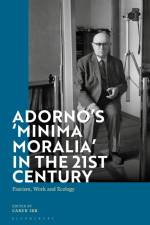
This interdisciplinary volume revisits Adorno's lesser-known work, Minima Moralia, and makes the case for its application to the most urgent concerns of the 21st century. Contributing authors situate Adorno at the heart of contemporary debates on the ecological crisis, the changing nature of work, the idea of utopia, and the rise of fascism. Exploring the role of critical pedagogy in shaping responses to fascistic regimes, alongside discussions of extractive economies and the need for leisure under increasingly precarious working conditions, this volume makes new connections between Minima Moralia and critical theory today. Another line of focus is the aphoristic style of Minima Moralia and its connection to Adorno's wider commitment to small and minor literary forms, which enable capitalist critique to be both subversive and poetic. This critique is further located in Adorno's discussion of a utopia that is reliant on complete rejection of the totalising system of capitalism. The distinctive feature of such a utopia for Adorno is dependent upon individual suffering and subsequent survival, an argument this book connects to the mutually constitutive relationship between ecological destruction and right-wing authoritarianism. These timely readings of Adorno's Minima Moralia teach us to adapt through our survival, and to pursue a utopia based on his central ideas. In the process, opening up theoretical spaces and collapsing the physical borders between us in the spirit of Adorno's lifelong project.
Higher education is vital to India's future, creating democratic citizens and a modern economy, building communities and cities and conducting research the country needs to continue its advance. Yet, with two thirds of people of India living in rural areas and urban incomes below the world average, in a culturally diverse country, the tragic effects of the Covid-19 pandemic and profound problems of regional, social and gender inequalities, higher education faces many challenges. This book brings together experts and emerging researchers from India and the UK to discuss these issues and to explore positive solutions. The team shine the spotlight on financing and funding, governance and regulation, sector organisation and institutional classification, equity and social inclusion, the large and poorly regulated private sector, Union-State relations in higher education, student political activism, and internationalisation.
This collection focuses on 1970s films from a variety of countries, and from the marginal to the mainstream, which, by tackling various 'difficult' subjects, have proved to be controversial in one way or another. It is not an uncritical celebration of the shocking and the subversive but an attempt to understand why this decade produced films which many found shocking, and what it was that made them shocking to certain audiences. To this end it includes not only films that shocked the conventionally minded, such as hard core pornography, but also those that outraged liberal opinion - for example, Death Wish and Dirty Harry. The book does not simply cast a critical light on a series of controversial films which have been variously maligned, misinterpreted or just plain ignored, but also assesses how their production values, narrative features and critical receptions can be linked to the wider historical and social forces that were dominant during this decade. Furthermore, it explores how these films resonate in our own historical moment - replete as it is with shocks of all kinds.
From K-pop to kimchi, Korean culture is becoming increasingly popular on the world stage. This cultural internationalisation is also mirrored linguistically, in the emergence and development of Korean English. Often referred to as 'Konglish', this book describes how the two terms in fact refer to different things and explains how Koreans have made the English language their own.Arguing that languages are no longer codified and legitimised by dictionaries and textbooks but by everyday usage and media, Alex Baratta explores how to reconceptualise the idea of 'codification.' Providing illustrative examples of how Koreans have taken commonly used English expressions and adjusted them, such as doing 'Dutch pay', wearing a 'Burberry' and using 'hand phones', this book explores the implications and opportunities social codification presents to EFL students and teachers. In so doing, The Societal Codification of Korean English offers wider perspectives on English change across the world, seeking to dispel the myth that English only belongs to 'native speakers'.
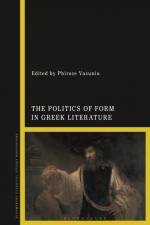
The Politics of Form in Greek Literature explores the relationship between form and political life specifically in Greek textual culture. In the last generation or so, classicists (and their counterparts in other disciplines) have begun to pay greater attention to the socio-historical contexts of literary production and sought to historicize aesthetic practice. However, historicism (and in particular New Historicism) is only one mode of approaching the question of form, which is increasingly brought into dialogue with a number of other issues (e.g. gender). Bringing together contributions from a range of experts, this volume examines these and other related approaches, assessing their limitations and discussing possibilities for the future. Individual chapters discuss an array of ancient authors, including Homer, Sophocles, Euripides, Plato, Aristotle, Callimachus, and more, and sketch out the specifically Greek contribution to the debate, as well as the implications for other disciplines. What emerges from this book are new ways of thinking about form, and indeed about politics, that will be of value to scholars and students across the humanities and social sciences.
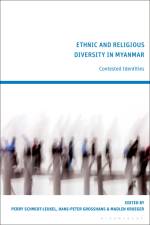
One of the most comprehensive volumes on Myanmar's identity politics to date, this book discusses the entanglement of ethnic and religious identities in Myanmar and the challenges presented by its extensive ethnic-religious diversity. Religious and ethnic conjunctions are treated from historical, political, religious and ethnic minority perspectives through both case studies and overview chapters. The book addresses the thorny issue of Buddhist supremacy, Burmese nationalism and ethnic-religious hierarchy, along with reflections on Buddhist, Christian and Muslim communities. Bringing together international scholars and Burmese scholars, this book combines the perspectives of academic observers with those of political activists and religious leaders from different faiths. Through the breadth of its disciplinary approach, its focus on identity issues and its inclusion of insider and outsider perspectives, this book provides new insights into the complex religious situation of Myanmar.
Rachel Loewen Walker's original study of Deleuze's theory of temporality advances a concept of the living present as a critical juncture through which novel meanings and activisms take flight in relation to new feminist materialisms, queer theory, Indigenous studies, and studies of climate.Drawing on literature, philosophy, popular culture, and community research, Loewen Walker unsettles the fierce linearity of our stories, particularly as they uphold fixed systems of gender, sexuality, and identity. Treading new ground for Deleuzian studies, this book focuses on the non-linearity of the living present to show that everything is within rather than outside of time. Through this critical re-evaluation, which takes in climate change, queer and trans politics, and Indigenous sovereignty, Queer and Deleuzian Temporalities "thickens" the present moment. By opening up multiple pasts and multiple futures we are invited to act with a deepened level of accountability to all possible timelines.
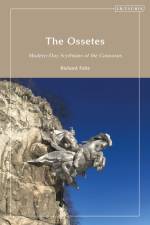
The Ossetes, a small nation inhabiting two adjacent states in the central Caucasus, are the last remaining linguistic and cultural descendants of the ancient nomadic Scythians who dominated the Eurasian steppe from the Balkans to Mongolia for well over one thousand years. A nominally Christian nation speaking a language distantly related to Persian, the Ossetes have inherited much of the culture of the medieval Alans who brought equestrian culture to Europe. They have preserved a rich oral literature through the epic of the Narts, a body of heroic legends that shares much in common with the Persian Book of Kings and other works of Indo-European mythology. This is the first book devoted to the little-known history and culture of the Ossetes to appear in any Western language. Charting Ossetian history from Antiquity to today, it will be a vital contribution to the fields of Iranian, Caucasian, Post-Soviet and Indo-European Studies.
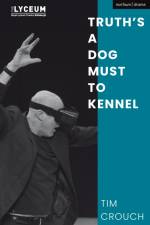
And that's the moment when I leave.The moment when the jokes fail us. When I fail. I fail.This precise moment here, look, see with your ears.The Fool leaves King Lear before the blinding. Before the killing starts. Before the ice-creams in the interval.In his new solo work, playwright Tim Crouch draws on ideas of virtual reality to send the Fool back to the future of the play that he left. Back to a world without moral leadership or integrity; a world where wealth covers vice; where the poor are dehumanised; where the jokes fall flat; where live art has become the privilege of the few.Truth's a Dog Must to Kennel is a daringly unaccommodating piece of theatre that switches between scathingly funny stand-up and an audacious act of collective imagining. King Lear meets stand-up meets the metaverse. Crouch's previous celebrated works include An Oak Tree, The Author, Adler & Gibb, Total Immediate Collective Imminent Terrestrial Salvation, and Beginners.This edition was published to coincide with the production at The Royal Lyceum Theatre Edinburgh in August 2022.
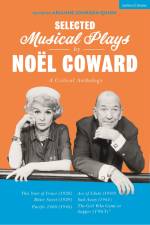
"Although Noèel Coward's work as playwright, songwriter and actor of stage and screen has long been celebrated, his contributions to the British musical have largely been forgotten. This lack of attention is due in part because of the idiosyncratic nature of the works themselves that imitates the creative nature of Coward himself. This new anthology rectifies this omission from the musical theatre landscape and together demonstrates his adaptability, the extent of his creativity, and the myriad of styles and genres that constituted British musicals from the 1920s-1970s. Through flop shows at Drury Lane with Mary Martin through to his Broadway hits with Elaine Stritch, this anthology spans a variety of styles, from revue to musical comedy to operetta. The works in this volume will provide a contemporary critical introduction to the wide range of Coward's musical works, illustrating the breadth and depth of his work, and highlighting the diverse identities of the collaborators and performers with whom he worked. Though the style of these works varies, they are linked together by his creative thread, and his ability to craft barbed and witty observations of his social world. This volume is a timely portrait of Coward's oeuvre and its lasting influence on the wider world of British theatre. This Year of Grace (1928), also known as Cochran's 1928 Revue Bitter Sweet (1929) Words and Music (1932) Pacific 1860 (1946) Ace of Clubs (1949) Sail Away (1961) The Girl Who Came to Supper (1963)"--
Object Lessons is a series of short, beautifully designed books about the hidden lives of ordinary things.In the 1970s, the invention of the home pregnancy test changed what it means to be pregnant. For the first time, women could use a technology in the privacy of their own homes that gave them a yes or no answer. That answer had the power to change the course of their reproductive lives, and it chipped away at a paternalistic culture that gave gynecologists-the majority of whom were men-control over information about women's bodies.However, while science so often promises clear-cut answers, the reality of pregnancy is often much messier. Pregnancy Test explores how the pregnancy test has not always lived up to the fantasy that more information equals more knowledge. Karen Weingarten examines the history and cultural representation of the pregnancy test to show how this object radically changed sex and pregnancy in the late 20th and early 21st centuries. Object Lessons is published in partnership with an essay series in the The Atlantic.
Object Lessons is a series of short, beautifully designed books about the hidden lives of ordinary things. These days the bicycle often appears as an interloper in a world constructed for cars. An almost miraculous 19th-century contraption, the bicycle promises to transform our lives and the world we live in, yet its time seems always yet-to-come or long-gone-by. Jonathan Maskit takes us on an interdisciplinary ride to see what makes the bicycle a magical machine that could yet make the world a safer, greener, and more just place.Object Lessons is published in partnership with an essay series in The Atlantic.
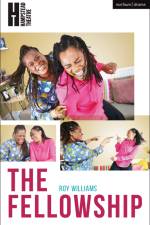
Where's the glory Mum? Where's that perfect world for us, your kids?Children of the Windrush generation, sisters Dawn and Marcia Adams grew up in 1980s London and were activists on the front line against the multiple injustices of that time. Decades on, they find they have little in common beyond family... Dawn struggles to care for their dying mother, whilst her one surviving son is drifting away from her. Meanwhile, high-flying lawyer Marcia's affair with a married politician might be about to explode and destroy her career. Can the Adams sisters navigate the turmoil that lies ahead, leave the past behind, and seize the future with the bond between them still intact?This edition was published to coincide with the world premiere, directed by Paulette Randall at London's Hampstead Theatre, and is, by turns, an electrifying, hilarious, gripping tale set in modern Britain.
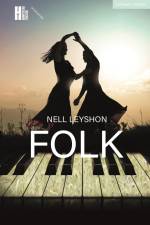
Nominated for an Olivier Award 2022"I'll tell you one more thing. I got more songs in my head than I ever told you. I got enough to sing for days..."1903, Somerset. Rooted in the land where she has lived her entire life, Louie Hooper's mind overflows with its songs - more than 300 of them passed down from her mother. Cecil Sharp, a composer visiting from London, fears England's folk songs will be lost forever and sets out on a mission to transcribe each and every one. He believes Louie's music should speak not just for this place but for the whole of England.Nell Leyshon's Olivier Award-nominated play with songs originally heard on BBC Radio before a sold-out, highly acclaimed run at London's Hampstead Theatre. The production was revived in June 2022 due to popular demand.
From the photographs of Frederick Douglas published with his memoir to the circulation of Twitter hashtags after the murders of Michael Brown and George Floyd, this book argues that African American cultural presence and racial meaning making can be traced along the still-developing arc of visuality. The earliest films of race were notable for their conviction about what the cinematic image and, eventually, the sound film could proffer: an "authentic" account of race and, specifically, Blackness on screen. Against those suasions Black Evanescence posits a vision of, and for, digital technology that sees its intersections with racial imagery very differently. This book argues that digital imagery possesses a salutary evanescence. Produced by a technology that does not purport to the indexical, digital media offers images that convey a greater openness or sense of possibility. A signal implication of this is that the racial imagery or meanings of digital media may be defined as part of a still-unfolding process, one that is part of a history that is transforming. Digital cinema includes a concrete link to its referent-in this context, the Black body. Digital modes allow a less "fixed" rendering of Blackness in the wider (white) understanding of race than we have historically seen or that a range of Hollywood works evince.
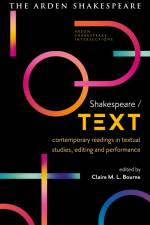
Shakespeare / Text sets new agendas for the study and use of the Shakespearean text. Written by 20 leading experts on textual matters, each chapter challenges a single entrenched binary - such as book/theatre, source/adaptation, text/paratext, canon/apocrypha, sense/nonsense, extant/ephemeral, material/digital and original/copy - that has come to both define and limit the way we read, analyze, teach, perform and edit Shakespeare today. Drawing on methods from book history, bibliography, editorial theory, library science, the digital humanities, theatre studies and literary criticism, the collection as a whole proposes that our understanding of Shakespeare - and early modern drama more broadly - changes radically when 'either/or' approaches to the Shakespearean text are reconfigured. The chapters in Shakespeare / Text make strong cases for challenging received wisdom and offer new, portable methods of treating 'the text', in its myriad instantiations, that will be useful to scholars, editors, theatre practitioners, teachers and librarians.
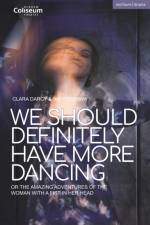
The amazing adventures of a woman with a fist in her head.Clara Darcy is fit! She's also (almost) care-free, (kind of) happily single and joyously dancing through life but, little does she know, her world is about to be turned upside down thanks to the arrival of a fist - slap-bang in the middle of her head.Based on her astonishing real-life story, We Should Definitely Have More Dancing explores the things that define us, that fill us up and make us who we are - a cautionary postcard from the edge of life stuffed full of heart and love and dancing.First produced by Oldham Coliseum Theatre, this edition was published to coincide with the world premiere production at Oldham Coliseum Theatre, followed by a national tour and run at the Assembly Rooms as part of Edinburgh Festival Fringe.
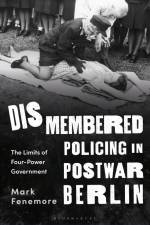
Assessing the impact of Germany's defeat on the policing of Berlin, this book addresses the reconstruction of the police force as a crucial component of four-power government. As Mark Fenemore shows, getting four nationalities to work together to administer a complex major city was a unique undertaking, never before attempted. The situation was made even more difficult by the conditions of hunger and desperation that caused a spike in crime. The stage was a city in ruins, the capital of a defeated, divided, prostrate, occupied country. The audience the administrations were playing to was a population deeply scarred by Nazism, total war, cold, hunger and mass rape.Dismembered Policing explores postwar Berlin from the perspective of all four occupiers and of ordinary Berliners. Fenemore discusses how each occupation government sought to act as an advertisement for its country's respective cultural values, mores and system of governance.As an international, multi-archival study, the book draws on evidence in French and German as well as in English. Using law enforcement as a lens, it examines issues like mass rape, the black market, interracial sex and political violence. With hunger, sexually motivated assault and dismembered body parts featuring prominently, it is reminiscent of Ian McEwen's novel The Innocent, but based on real police files.
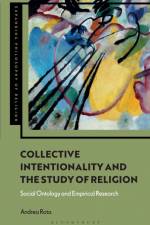
In this open access book, Andrea Rota makes the case for philosophical, theoretical, and empirical approaches to the study of religion, drawing on ongoing debates and challenging individualist perspectives. Rota begins with a survey of the work of Michael Bratman, John Searle, Raimo Tuomela, and Margaret Gilbert exploring the relevance of their insights for the study of religion. He sets out a theoretical framework to operationalize their philosophical ideas in an empirical research setting. Applying this framework in Part Two, Rota analyses the collective agency of Jehovah's Witnesses, focusing on the roles that print and electronic media play in structuring communicative processes that conduce to collective intentions and commitments. He presents extensive fieldwork carried out in Switzerland and Germany, examining both qualitative and quantitative data. By demonstrating the fruitfulness of philosophical perspectives on collective intentionality and social ontology, Rota's study makes a timely contribution to our understanding of the beliefs, emotions, and aesthetic experiences of religious groups. The eBook editions of this book are available open access under a CC BY-NC-ND 4.0 licence on bloomsburycollections.com. Open access was funded by the Swiss National Science Foundation.
This book engages the problem of how, in the 21st century, we are to speak about experiences of the extraordinary/anomalous/extreme which occur on a transhistorical and transcultural basis. Critical re-readings of seminal texts show how 20th-century theoreticians in the humanities sought to erase madness from their irrational subjects. This propensity to sanitize madness in the study of religions was mirrored by the instinct of psychiatrists to degrade religious experiences by reducing mad consciousness to psychosis or dissociation. Richard Saville-Smith introduces explanatory pluralism as a way of recognizing these disciplinary biases and mad studies as a way of negotiating this understanding. The disproportionate significance of madness in shaping the fabric of the human story can then be recovered from both erasure and dismissal to be given the recognition previously denied - as acute religious experiences. Acute Religious Experiences divides into three sections, beginning with re-readings of William James's pathological programme, Rudolf Otto's numinous, T. K. Oesterreich's possession, Mircea Eliade's shamanism, Walter Stace's mysticism, Walter Pahnke's psychedelic experience, and Abraham Maslow's peak experiences. These ideas are shown to constitute the beginnings of a fractured discourse on the irrational. In part two, contemporary psychiatry's Diagnostic and Statistical Manual (DSM) and Foucault's History of Madness are re-read to reposition madness as not necessarily pathological. This opens the way for the identification of acute religious experiences as a new holistic and post-colonial approach through which religious data can be organized and addressed on a comparative basis. In part three, The Gospel of Mark is re-read as a case study to demonstrate the novel insights which flow from the identification of acute religious experiences. Richard Saville-Smith draws on his own experiences of madness and his PhD from the School of Divinity at The University of Edinburgh to elucidate his research.
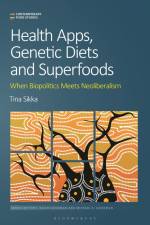
This book critically examines contemporary health and wellness culture through the lens of personalization, genetification and functional foods. These developments have had a significant impact on the intersecting categories of gender, race, and class in light of the increasing adoption of digital health and surveillance technologies like MyFitnessPal, Lifesum, HealthyifyMe, and Fooducate. These three vectors of identity, when analysed in relation to food, diet, health, and technology, reveal significant new ways in which inequality, hierarchy, and injustice become manifest. In the book, Tina Sikka argues that the corporate-led trends associated with health apps, genetic testing, superfoods, and functional foods have produced a kind of dietary-genomic-functional food industrial complex. She makes the positive case for a prosocial, food secure, and biodiverse health and food culture that is rooted in community action, supported by strong public provisioning of health care, and grounded in principles of food justice and sovereignty.
Abonner på vårt nyhetsbrev og få rabatter og inspirasjon til din neste leseopplevelse.
Ved å abonnere godtar du vår personvernerklæring.