







Gjør som tusenvis av andre bokelskere
Abonner på vårt nyhetsbrev og få rabatter og inspirasjon til din neste leseopplevelse.
Ved å abonnere godtar du vår personvernerklæring.Du kan når som helst melde deg av våre nyhetsbrev.

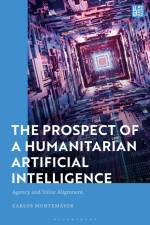
In this open access book, Carlos Montemayor illuminates the development of artificial intelligence (AI) by examining our drive to live a dignified life.He uses the notions of agency and attention to consider our pursuit of what is important. His method shows how the best way to guarantee value alignment between humans and potentially intelligent machines is through attention routines that satisfy similar needs. Setting out a theoretical framework for AI Montemayor acknowledges its legal, moral, and political implications and takes into account how epistemic agency differs from moral agency.Through his insightful comparisons between human and animal intelligence, Montemayor makes it clear why adopting a need-based attention approach justifies a humanitarian framework. This is an urgent, timely argument for developing AI technologies based on international human rights agreements.The ebook editions of this book are available open access under a CC BY-NC-ND 4.0 licence on bloomsburycollections.com. Open access was funded by Carlos Montemayor and San Francisco State University.
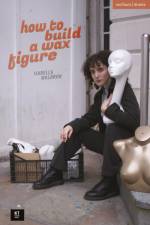
I was the eyes and she was the bodyI mean that sounds poetic but really that's how it workedGirl meets anatomical wax sculptor.Anatomical wax sculptor meets Girl.They fall in love. Or something like that.Bea's older neighbour was her first love, her first cigarette, her first prosthetic eye. When Bea is invited to the Wellcome Collection to speak about her expertise making glass eyes, she finds herself unable to untie Margot from all that she does. As she tries to unpack her mentor's effect on her work, Bea must dissect for herself what love really looks like.Isabella Waldron's electric new play, how to build a wax figure, brings a fresh perspective on queer love, age-gap relationships, and ocularistry.
Siblings Sarah Siddons (1755-1831) and John Philip Kemble (1757-1823) were the most famous British actors of the late-18th and early-19th centuries. Through their powerful acting and meticulous conceptualisation of Shakespeare's characters and their worlds, they created iconic interpretations of Shakespeare's major roles that live on in our theatrical and cultural memory. This book examines the actors' long careers on the London stage, from Siddons's debut in 1782 to Kemble's retirement in 1817, encompassing Kemble's time as theatre manager, when he sought to foreground their strengths as Shakespearean performers in his productions. Over the course of more than thirty years, Siddons and Kemble appeared opposite one another in many Shakespeare plays, including King John, Henry VIII, Coriolanus and Macbeth. The actors had to negotiate two major Shakespeare scandals: the staging of Vortigern - a fake Shakespearean play - in 1796 and the Old Price Riots of 1809, during which the audience challenged Siddons's and Kemble's perceived attempts to control Shakespeare. Fiona Ritchie examines the siblings' careers, focusing on their collaborations, as well as placing Siddons's and Kemble's Shakespeare performances in the context of contemporary 18th- and 19th-century drama. The volume not only offers a detailed consideration of London theatre, but also explores the importance of provincial performance to the actors, notably in the case of Hamlet - a role in which both appeared across Britain and in Ireland.
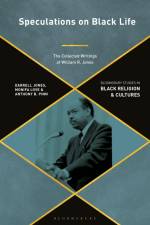
Is God a white racist? Posed by William R. Jones in his ground-breaking book of the same name, this question disrupted the theological assumptions that marked Black religious thought from early writings of the 1800s to the formation of Black theology in the 1960s. This book compiles his key and essential writings related to over three decades of critical reflection on race, religion, secularism, and oppression in the United States. Over the course of 30 years, Jones pushed questions and considerations that refined Black theology and that gave greater shape to and understanding of Black philosophers' intervention into issues of racial and structural inequality. His philosophical work, related to the grid of oppression, fosters an approach to the nature and meaning of oppression in the United States, encouraging rational interrogation of structures of injustice and thought patterns supporting those structures. Still relevant today, the straightforward style of communication used by Jones makes these essays easily accessible to a popular audience, while maintaining intellectual rigor, making the book also suitable for an academy-based audience.
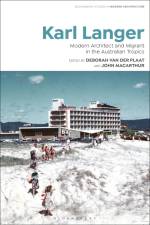
Fleeing Europe in 1939 for the Australian state of Queensland, the architect Karl Langer (1903-1969) found himself positioned at the very edge of both European and Australian modernism. Confronted by tropical heat and glare, the economics of affordable housing, fiercely proud regional architectural practices, and a suspicion of the foreign, Langer moulded the European language of international modernism to the unique climatic and social conditions of tropical Australia.Published as part of the Bloomsbury Studies in Modern Architecture series, which brings to light the work of significant yet overlooked modernist architects, this book is both an examination of Langer's work and international legacy, and also a case study in tropical modernism and the trans-global dissemination of design ideas - revealing how Langer sought to reconcile his training in international modernism with a fascination for the formal and visual languages of a regional culture, context, and climate.
In 1969 Greece withdrew from the Council of Europe (CoE), following pressure exercised by various European countries, organisations, social movements and individuals in response to the brutal conduct of the military junta that had taken power by force on 21 April 1967. This volume brings together an international cast of noted historians, oral historians, political scientists, and legal scholars to investigate the perceptions, policies and roles of the key actors involved. These figures range from international organizations, states, and social movements to NGOs and individuals, critically demonstrating the extent of the legacy and long-term impact of the 'Greek Case' on international human rights. The 1969 'Greek Case' in the Council of Europe reveals how the pressure applied by the Council of Europe proved to be crucial for the international condemnation of the Colonels' regime, setting a precedent in international human rights cases for the significance of the collection of evidence on the use of torture.
The Evolution of Consciousness brings together interdisciplinary insights from philosophy, neuroscience, psychology and cognitive science to explain consciousness in terms of the biological function that grounds it in the physical world. Drawing on the novel analogy of a house of cards, Paula Droege pieces together various conceptual questions and shows how they rest on each other to form a coherent, structured argument. She asserts that the mind is composed of unconscious sensory and cognitive representations, which become conscious when they are selected and coordinated into a representation of the present moment. This temporal representation theory deftly bridges the gap between mind and body by highlighting that physical systems are conscious when they can respond flexibly to actions in the present. With examples from evolution, animal cognition, introspection and the free will debate, this is a compelling and animated account of the possible explanations of consciousness, offering answers to the conceptual question of how consciousness can be considered a cognitive process.
Shortlisted for the ASFLA (Australian Systemic Functional Linguistics Association) Halliday Prize 2023This book is the first comprehensive account of 'body language' as 'paralanguage' informed by Systemic Functional Semiotics (SFS). It brings together the collaborative work of internationally renowned academics and emerging scholars to offer a fresh linguistic perspective on gesture, body orientation, body movement, facial expression and voice quality resources that support all spoken language. The authors create a framework for distinguishing non-semiotic behaviour from paralanguage, and provide a comprehensive modelling of paralanguage in each of the three metafunctions of meaning (ideational, interpersonal and textual). Illustrations of the application of this new model for multimodal discourse analysis draw on a range of contexts, from social media vlogs, to animated children's narratives, to face-to-face teaching. Modelling Paralanguage Using Systemic Functional Semiotics offers an innovative way for dealing with culture-specific and context specific paralanguage.
Based on religious ethnography, in-depth interviews and archival data, Indigeneity in African Religions explores the historical origins, worldviews, cosmologies, ritual symbolism and praxis of the indigenous Oza people in South West Nigeria. The author's locationality and positionality plugs the book within decolonizing knowledges and indigeneity discourses, thus unpacking the complexity of "indigeneity" and contributing to its conceptual understanding within socioreligious change in contemporary Africa. The future of Oza indigeneity in the face of modernity is illuminated against the backlash of encounters, contestations with multiple hegemonies, transmissions of Christianity and Islam and indigenous (re)appropriations. Thus, any theorizations of such encounters must be cognizant of instantiations of indigeneity politics and identity, culture, tradition and power dynamics. Through decolonizing burdens of history, memory and method, Afe Adogame demonstrates a framework of understanding Oza indigenous religious,sociocultural and political imaginaries.
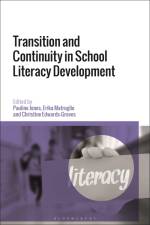
This book addresses a significant gap in the research literature on transitions across the school years: the continuities and discontinuities in school literacy education and their implications for practice. Across different curriculum domains, and using social semiotic, ethnographic, and conversation-analytic approaches, the contributors investigate key transition points for individual students' literacy development, elements of literacy knowledge that are at stake at each of these points, and variability in students' experiences. Grounding its discussion in classroom voices, experiences and texts, this book reveals literacy-specific curriculum demands and considers how teachers and students experience and account for these evolving demands.The contributors include a number of established names (such as Freebody, Derewianka, Myhill, Rowsell, Moje and Lefstein), as well as emerging scholars gaining increasing recognition in the field. They draw out implications for how literacy development is theorized in school curriculum and practice, teacher education, further research and policy formation. In addition, each section of the book features a summary from an international scholar who draws together key ideas from the section and relates these to their current thinking. They deploy a range of different theoretical and methodological approaches in order to bring rich yet complementary perspectives to bear on the issue of literacy transition.
Following Norberg-Schulz examines the life and work of the seminal architectural thinker Christian Norberg-Schulz (1926 - 2000), drawing new attention to his architectural designs and re-examining his acclaimed theoretical work on the phenomenology of architecture and place.Taking an innovative, experimental approach, the book also explores the potential of the essay-film as a new approach to producing architectural history. Written by an architectural historian who is also a film-maker, its ten chapters are each accompanied by a short documentary film, accessed from within each chapter by a QR code, exploring how to use the medium of film to delve deeper into little-known aspects of Norberg-Schulz's theory of genius loci and the phenomenology of architecture.Offering an insightful account of the work and theories of a key architectural thinker, Following Norberg-Schulz is also essential reading for those interested in practice-led and design-led research, showing how scholarly research can bridge the text-film gap.
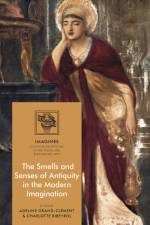
This volume tackles the role of smell, under-explored in relation to the other senses, in the modern rejection, reappraisal and idealisation of antiquity. Among the senses olfaction in particular has often been overlooked in classical reception studies due to its evanescent nature, which makes this sense difficult to apprehend in its past instantiations. And yet, the smells associated with a given figure or social group convey a rich imagery which in turn connotes specific values: perfumes, scents and foul odours both reflect and mould the ways in which a society thinks or acts. Smells also help to distinguish between male and female, citizens and strangers, and play an important role during rituals. The Smells and Senses of Antiquity in the Modern Imagination focuses on the representation of ancient smells - both enticing and repugnant - in the visual and performative arts from the late 18th century up to the 21st century. The individual contributions explore painting, sculpture, literature and film, but also theatrical performance, museum exhibitions, advertising, television series, historical reenactment and graphic novels, which have all played a part in reshaping modern audiences' perceptions and experiences of the antique.
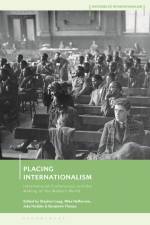
Exploring how modern internationalism emerged as a negotiated process through international conferences, this edited collection studies the spaces and networks through which states, civil society institutions and anti-colonial political networks used these events to realise their visions of the international.Taking an interdisciplinary approach, contributors explore the spatial paradox of two fundamental features of modern internationalism. First, internationalism demanded the overcoming of space, transcending the nation-state in search of the shared interests of humankind. Second, internationalism was geographically contingent on the places in which people came together to conceive and enact their internationalist ideas. From Paris 1919 to Bandung 1955 and beyond, this book explores international conferences as the sites in which different forms of internationalism assumed material and social form. While international 'permanent institutions' such as the League of Nations, UN and Institute of Pacific Relations constantly negotiated national and imperial politics, lesser-resourced political networks also used international conferences to forward their more radical demands.Taken together these conferences radically expand our conception of where and how modern internationalism emerged, and make the case for focusing on internationalism in a contemporary moment when its merits are being called into question.
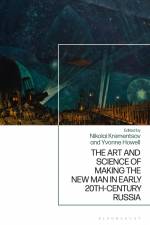
The idea that morally, mentally, and physically superior 'new men' might replace the currently existing mankind has periodically seized the imagination of intellectuals, leaders, and reformers throughout history. This volume offers a multidisciplinary investigation into how the 'new man' was made in Russia and the early Soviet Union in the first third of the 20th century. The traditional narrative of the Soviet 'new man' as a creature forged by propaganda is challenged by the strikingly new and varied case studies presented here. The book focuses on the interplay between the rapidly developing experimental life sciences, such as biology, medicine, and psychology, and countless cultural products, ranging from film and fiction, dolls and museum exhibits to pedagogical projects, sculptures, and exemplary agricultural fairs. With contributions from scholars based in the United States, Canada, the UK, Germany and Russia, the picture that emerges is emphatically more complex, contradictory, and suggestive of strong parallels with other 'new man' visions in Europe and elsewhere. In contrast to previous interpretations that focused largely on the apparent disconnect between utopian 'new man' rhetoric and the harsh realities of everyday life in the Soviet Union, this volume brings to light the surprising historical trajectories of 'new man' visions, their often obscure origins, acclaimed and forgotten champions, unexpected and complicated results, and mutual interrelations. In short, the volume is a timely examination of a recurring theme in modern history, when dramatic advancements in science and technology conjoin with anxieties about the future to fuel dreams of a new and improved mankind.
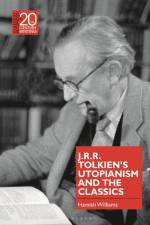
This book opens up new perspectives on the English fantasy writer J.R.R. Tolkien, arguing that he was an influential thinker of utopianism in 20th-century fiction and that his scrutiny of utopias can be assessed through his dialogue with antiquity. Tolkien's engagement with the ancient world often reflects an interest in retrotopianism: his fictional places - cities, forests, homes - draw on a rich (post-)classical narrative imagination of similar spaces. Importantly for Tolkien, such narratives entail 'eutopian' thought experiments: the decline and fall of distinctly 'classical' communities provide an utopian blueprint for future political restorations; the home as oikos becomes a space where an ideal ethical reciprocity between host and guest can be sought; the 'ancient forest' is an ambiguous, unsettling site where characters can experience necessary forms of awakening. From these perspectives, tokens of Platonic moderation, Augustan restoration, Homeric xenophilia, and the Ovidian material sublime are evident in Tolkien's writing. Likewise, his retrotopianism also always entails a rewriting of ancient narratives in post-classical and modern terms. This study then explores how Tolkien's use of the classical past can help us to align classical and utopian studies, and thus to reflect on the ranges and limits of utopianism in classical literature and thought.
Bringing together historians of US foreign relations and scholars of Iranian studies, American-Iranian Dialogues examines the cultural connections between Americans and Iranians from the constitutional period of the 1890s through to the start of the White Revolution in the 1960s.Taking an innovative cultural approach, chapters are centred around major themes in American-Iranian encounters and cultural exchange throughout this period, including stories of origin, cultural representations, nationalism and discourses on development. Expert contributors draw together different strands of US-Iranian relations to discuss a range of path-breaking topics such as the history of education, heritage exchange, oil development and the often-overlooked interactions between American and Iranian non-state actors.Through exploring the understudied cultural dimensions of US-Iranian relations, this book will be essential reading for students and scholars interested in American history, international history, Iranian studies and Middle Eastern studies.
Systemic and political hostility against the 'left', real and contrived, has been a key, yet under-recognized aspect of the history of the modern world for the past two hundred years. By the 1820s, the new, exploitative and destabilizing character of capitalist industrial production and its accompanying market liberalizations began creating necessities among the working classes and their allies for the new, self-protective politics of 'socialism'. But it is evident that, for the new economic system to sustain itself, such oppositional politics that it necessitated had to be undermined, if not destroyed, by whatever means necessary. Through the imperialism of the later 19th century, and with significant variations, this complex and often highly destructive dialectical syndrome expanded worldwide. Liberals, conservatives, extreme nationalists, fascists, racists, and others have all repeatedly come aggressively and violently into play against 'socialist' oppositions. In this book, Philip Minehan traces the patterns of such hostility and presents numerous crucial examples of it: from Britain, France, Germany and the United States; the British in India; European fascism, the United States and Britain as they operated in China and Indochina; from Kenya, Algeria and Iran; and from Central and South America during the Cold War. In the final chapters, Minehan addresses the post-Cold War, US-led triumphalist wars in the Middle East, the ensuing refugee crises, neo-fascism, and anti-environmentalist politics, to show the ways that the syndrome within which anti-leftist antagonism emerges, in its neoliberal phase since the 1970s, remains as self-destructive and dangerous as ever
Spanning over 2 centuries, James Gregory's Mercy and British Culture, 1760 -1960 provides a wide-reaching yet detailed overview of the concept of mercy in British cultural history. While there are many histories of justice and punishment, mercy has been a neglected element despite recognition as an important feature of the 18th-century criminal code. Mercy and British Culture, 1760-1960 looks first at mercy's religious and philosophical aspects, its cultural representations and its embodiment. It then looks at large-scale mobilisation of mercy discourses in Ireland, during the French Revolution, in the British empire, and in warfare from the American war of independence to the First World War. This study concludes by examining mercy's place in a twentieth century shaped by total war, atomic bomb, and decolonisation.
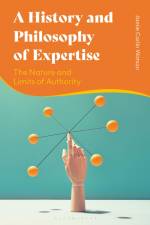
In this comprehensive tour of the long history and philosophy of expertise, from ancient Greece to the 20th century, Jamie Carlin Watson tackles the question of expertise and why we can be skeptical of what experts say, making a valuable contribution to contemporary philosophical debates on authority, testimony, disagreement and trust.His review sketches out the ancient origins of the concept, discussing its early association with cunning, skill and authority and covering the sort of training that ancient thinkers believed was required for expertise. Watson looks at the evolution of the expert in the middle ages into a type of "genius" or "innate talent" , moving to the role of psychological research in 16th-century Germany, the influence of Darwin, the impact of behaviorism and its interest to computer scientists, and its transformation into the largely cognitive concept psychologists study today.
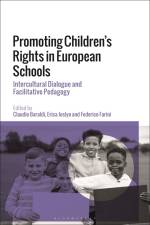
Promoting Children's Rights in European Schools explores how facilitators, teachers and educators can adopt and use a dialogic methodology to solicit children's active participation in classroom communication. The book draws on a research project, funded by the European Commission (Erasmus +, Key-action 3, innovative education), coordinated by the University of Modena and Reggio Emilia, Italy, with the partnership of the University of Suffolk, UK, and the University of Jena, Germany. The author team bring together the analysis of activities in 48 classes involving at least 1000 children across England, Germany and Italy. These activities have been analysed in relation to the sociocultural context of the involved schools and children, a facilitative methodology and the use of visual materials in the classroom, and engaging children in active participation and the production of their own narratives. Each chapter looks at reflection on practice, outcomes, and reaction to facilitation of both teachers and children, drawing out the complex comparative lessons within and between classrooms across the three countries.
What is astro-culture? In The Babylonian Planet it is unfolded as an aesthetic, an idea, a field of study, a position, and a practice. It helps to engineer the shift from a world view that is segregated to one that is integrated - from global to planetary; from distance to intimacy and where closeness and cosmic distance live side-by-side. In this tour de force, Sonja Neef takes her cue from Edouard Glissant's vision of multilingualism and reignites the myth of the Tower of Babel to anticipate new forms of cultural encounter. For her, Babel is an organic construction site at which she fuses theoretical analysis and case studies of artists, writers and thinkers like William Kentridge, Orhan Pamuk and Immanuel Kant. Her skilful interrogations then allow her to paint a portrait of art and culture that abolishes the horizon as a barrier to vision and reclaims it as a place of contact and relation. By combining the Babylonian concept of the encounter and the planetary concept of the whole-earth, Neef creates a space - an astro-culture - in which she can examine topics as varied as language, translation, media, modernity, migration and the moon. In doing so, she instigates a renewed cultural understanding receptive to the kinder forms of cultural encounter and globalisation she hopes will come.
This book is about young people and their transitions throughout their first year of high school, deepening our understanding of how it is to be young and enter new institutional settings, and how to understand the developmental dynamics of youth life. It explores the everyday life of six young people as they enter high school and follows them closely as they encounter and try to make sense of the different standards, values, and demands that are built into the institutional setting of high school. The chapters explore the entanglements of personal motive orientation, interpersonal dynamics, institutional values and demands, as well as societal standards, and how subtle negotiations of who one is and ought to be are interwoven into the fabrics of everyday life. Hence the book explores variations on an institutional level - as different high school environments - along with variations on an interpersonal level, insisting on a person-environment reciprocity in the study of development. Using cultural-historical activity theory and ecological psychology derived from theorists including Bang, Barker & Wright, Gibson, Lewin, Hedegaard, Ilyenkov, Stetsenko, and Vygotsky, Sofie Pedersen argues that developmental dynamics among young people cannot be reduced to individual nor social processes alone but are connected to institutional conditions and to concrete places. By insisting on a wholeness approach to the understanding of youth development, Pedersen reveals the developmental dynamics that unfold in the everyday lives of young people, and sheds new light on youth life dynamics, including the challenges that young people face.
Abonner på vårt nyhetsbrev og få rabatter og inspirasjon til din neste leseopplevelse.
Ved å abonnere godtar du vår personvernerklæring.