
Gjør som tusenvis av andre bokelskere
Abonner på vårt nyhetsbrev og få rabatter og inspirasjon til din neste leseopplevelse.
Ved å abonnere godtar du vår personvernerklæring.Du kan når som helst melde deg av våre nyhetsbrev.

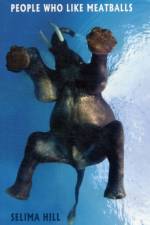
Selima Hill is one of Britain's leading poets, the winner of the Whitbread Poetry Award (the forerunner of the Costa). "People Who Like Meatballs" is her 14th book of poetry - her 11th from Bloodaxe.
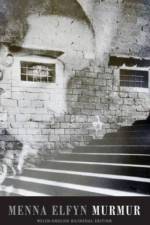
First new collection from Welsh-language poet Menna Elfyn since Perfect Blemish: New & Selected Poems presented in a bilingual format with English translations by leading poets from Wales. Poetry Book Society Recommended Translation.
Book with films on DVD of Benjamin Zephaniah, drawing on both live performances and informal interviews. All the poems featured in the films are included in the book with other material.
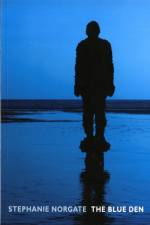
"The Blue Den" is a book of lyrical, sensuous poems which builds on the achievement of Stephanie Norgate's debut collection "Hidden River", which was shortlisted for both the Forward First Collection Prize and the Jerwood Aldeburgh First Collection Prize.
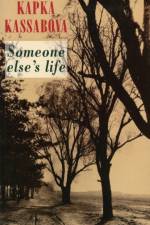
Kapka Kassabova is a young Bulgarian emigre poet who writes in English but with a European imagination. In Someone else's life, her first poetry collection to be published in the UK, she explores the emotional and spiritual territory of the traveller and the dispossessed, the spaces between memory and being, exploration and doubt, desire and loss.
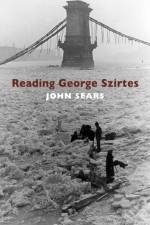
George Szirtes is a leading figure in contemporary poetry in England and in Hungary. A companion volume to George Szirtes' "New and Collected Poems", this book offers a sustained analysis of Szirtes' work, mapping his development chronologically and thematically, and paying close attention to form and technique in its analysis of each poem.
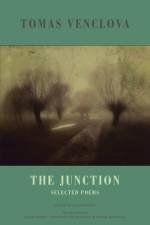
Brings together translations of Tomas Venclova's work and includes a selection of poems from his 1997 volume "Winter Dialogue".
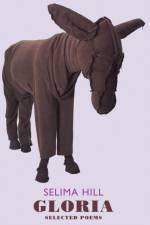
Covers Selima Hill's books from "Saying Hello at the Station" (1984) to "Red Roses" (2006), and "The Hat" (2008). This book is a selection drawn from ten collections, each offering variations on her abiding themes: women's identities, love and loss, repression and abuse, family conflict and mental illness, men, animals and human civilisation.
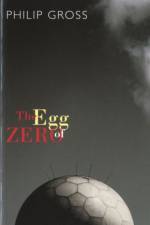
The zero at the heart of these poems is not nothing - not simply absence, forgetting or loss, though there are moving elegies among them. This is a not-quite-definable zero that gives surprising edge to life and language round it.
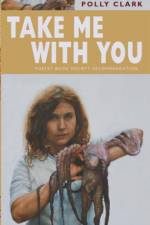
Shortlisted for the T. S. Eliot Prize, Polly Clark's second collection was a Poetry Book Society Choice.
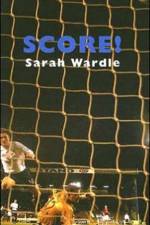
Sarah Wardle was poet-in-residence with Tottenham Hotspur FC. Her Score is a winning commentary on contemporary culture, shooting at the heart of consciousness, family, sport, the female voice and Darwinian science.
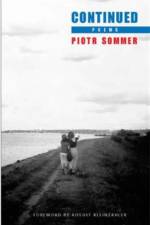
Piotr Sommer is one of Poland's leading poets. Continued extends and enlarges the achievement of his earlier Bloodaxe selection, Things to Translate, and spans his whole career to date.
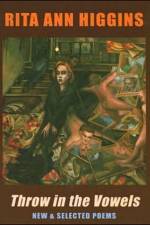
'Throw in the Vowels' is a new retrospective from Rita Ann Higgins including a free audio CD of poems read by the author.
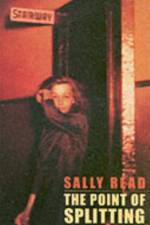
From London's hospital wards to rural Italy and the Great Plains, Sally Read's first collection eulogises the emotional and physical borders we cross, whether in sexual surrender, the squeezing of a trigger, or the point at which skin is pierced by a needle. What results appeals to the thresholds at which we succumb to desire, love, or grief. Yet, ultimately, there is tenderness and acceptance as she considers what breaks us, and what binds.
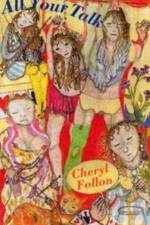
Cheryl Follon is a feisty Scottish writer. The poems of "All Your Talk" are spiced with down-to-earth humour and a lively, often wicked wit.
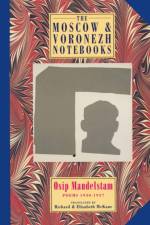
This edition combines two previous separate editions of The Moscow Notebooks and The Voronezh Notebooks published by Bloodaxe. The Moscow Notebooks cover his years of persecution (1930-34), when he was arrested for writing an unflattering poem about Stalin. In Voronezh he broke a silence of 18 months, writing the 90 poems of the Voronezh Notebooks.
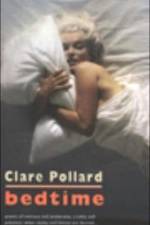
Clare Pollard's second colleciton includes poems from the edge, confronting evil in its manifestations, especially the bondage of sex and cruelty. They address contemporary issues form confessionalism and reality TV to masculinity in crisis, racial politics, and atheism.
Presents a comprehensive selection of poetry, including work for explaining magnetism and kissing a bone.
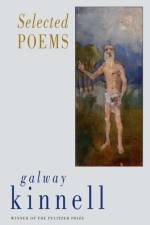
Galway Kinnell was one of America's major modern poets. This new selection - drawing on eight collections from What a Kingdom It Was (1960) to Imperfect Thirst (1994) - updated his 1982 Selected Poems, which won him the Pulitzer Prize and the National Book Award.
Since the heady days of the Beijing Spring in the late 1970s, Yang Lian has forged complex poetry whose themes are the search for a Yeatsian mature wisdom, accommodation of modernity within the ancient and book-haunted Chinese tradition and a rapprochement between the literatures of East and West. Poetry Book Society Recommended Translation.
Blood Wedding by Federico Garcia Lorca is a classic of Spanish literature, the tragedy of a woman loved by two men. Lorca has a searing realization of the power of desire. Brendan Kennelly rises to the challenge of how to convey this in an English translation, in language at once soaring and accurate, wild and precise. His version of Blood Wedding reveals the mysterious, intricate, passionate, and truly astonishing nature of Lorca's masterpiece.
This anthology captures the excitement of one of the most challenging developments in recent French writing, the new metaphysical poetry which has become an influential strand in recent French literature. It is an ontological poetry concerned with the very being of things and with the nature of poetic language. French-English bilingual edition.
Yves Bonnefoy (1923-2016) was a central figure in post-war French culture, with a lifelong fascination with the problems of translation. Language, for him, was a visceral, intensely material element in our existence, and yet the abstract quality of words distorts the immediate, material quality of our contact with the world. This concern with what separates words from an essential truth hidden in objects involved him in wide-ranging philosophical and theological investigations of the spiritual and the sacred. But for all his intellectual drive and rigour, Bonnefoy's poetry is essentially of the concrete and the tangible, and addresses itself to our most familiar and intimate experiences of objects and of each other. In his first book of poetry, published in France in 1953, Bonnefoy reflects on the value and mechanism of language in a series of short variations on the life and death of a much loved woman, Douve. Douve, though, is the French word for a moat, that uncrossable body which separates us from safety and from danger. With this undercurrent at work we read the poems as if they are about the divide between us and death as much as they are about the divide between us and the untouchable reality of text. This is dangerous writing, fulfilling Derrida's "fatal necessity" by making us substitute the textual sign for reality. In his introduction, Timothy Mathews shows how Bonnefoy's poetics are enmeshed with his philosophical, religious and critical thought.
Born in Hampshire in 1918, Martin Bell was the leading member of the 'lost generation' of English poets whose careers were interrupted by the War. He was a prominent member of The Group during the fifties, and a major influence on younger poets like Peter Redgrove and Peter Porter. His poetry reached a wide audience during the sixties through Penguin Modern Poets, and in 1967 he published his Collected Poems,1937-1966, his first and last book. Bell was also a champion and brilliant translator of French Surrealist poets. He died in poverty in Leeds in 1978. Like other 'provincial' working-class contemporaries, Bell wrote fantastical, highly erudite, biting, belligerent poetry. And yet - as Philip Hobsbaum said - he also wrote 'some of the most delicate love poems of our time' as well as 'one of the major war poems in the language'. A. Alvarez called him 'an emotional tightrope walker... He writes a rather bitter, tensely colloquial verse based, it seems, on a radical dislike for both himself and pretty much everything else.'
This collection encompasses a striking variety of subjects. Sail reflects on detail in the natural world, both in micro- and macrocosms, looking, for example, at flowers, birds, the sea, and the earth seen from space; he explores the intricacies and balances of love and family relationships; he finds new resonances in the paintings of David Bomberg, Howard Hodgkin, and Paul Klee, and affinities in his translations of Mallarme, Rilke, and Trakl. His imaginative scope extends into a sequence of prose poems responding powerfully to Gabriel Faur's nine Preludes for piano.
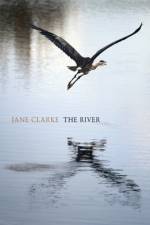
First collection by one of Ireland's most distinctive new lyrical voices, winner of the Listowel Writers' Week Poetry Collection Prize. Her poems are rooted in rural life but universal in their appeal. The River was shortlisted for the RSL Ondaatje Prize 2016.
Abonner på vårt nyhetsbrev og få rabatter og inspirasjon til din neste leseopplevelse.
Ved å abonnere godtar du vår personvernerklæring.