



Gjør som tusenvis av andre bokelskere
Abonner på vårt nyhetsbrev og få rabatter og inspirasjon til din neste leseopplevelse.
Ved å abonnere godtar du vår personvernerklæring.Du kan når som helst melde deg av våre nyhetsbrev.

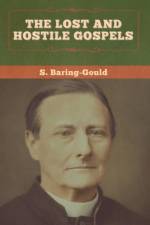
It is advisable, if not necessary, for me, by way of preface, to explain certain topics treated of in this book, which do not come under its title, and which, at first thought, may be taken to have but a remote connection with the ostensible subject of this treatise. These are: 1. The outbreak of Antinomianism which disfigured and distressed primitive Christianity. 2. The opposition of the Nazarene Church to St. Paul. 3. The structure and composition of the Synoptical Gospels. The consideration of these curious and important topics has forced its way into these pages; for the first two throw great light on the history of those Gospels which have disappeared, and which it is not possible to reconstruct without a knowledge of the religious parties to which they belonged. And these parties were determined by the fundamental question of Law or No-law, as represented by the Petrine and ultra-Pauline Christians. And the third of these topics necessarily bound up with the consideration of the structure and origin of the Lost Gospels, as the reader will see if he cares to follow me in the critical examination of their extant fragments.
The Reverend Sabine Baring-Gould (28 January 1834 - 2 January 1924) of Lew Trenchard in Devon, England, was an Anglican priest, hagiographer, antiquarian, novelist, folk song collector and eclectic scholar. His bibliography consists of more than 1240 publications, though this list continues to grow. His family home, the manor house of Lew Trenchard, near Okehampton, Devon, has been preserved as he had it rebuilt and is now a hotel. He is remembered particularly as a writer of hymns, the best-known being "Onward, Christian Soldiers" and "Now the Day Is Over". He also translated the carol "Gabriel's Message" from the Basque language to English. Baring-Gould wrote many novels, including The Broom-Squire set in the Devil's Punch Bowl (1896), Mehalah: a story of the salt marshes (1880), Guavas the Tinner (1897), the 16-volume The Lives of the Saints, and the biography of the eccentric poet-vicar of Morwenstow, Robert Stephen Hawker. He also published nearly 200 short stories in assorted magazines and periodicals. Many of these short stories were collected together and republished as anthologies, such as his Book of Ghosts (1904), Dartmoor Idyllys (1896), and In a Quiet Village (1900). His folkloric studies resulted in The Book of Were-Wolves (1865), one of the most frequently cited studies of lycanthropy. He habitually wrote while standing, and his desk can be seen in the manor.One of his most enduringly popular works was Curious Myths of the Middle Ages, first published in two parts during 1866 and 1868, and republished in many other editions since then. "Each of the book's twenty-four chapters deals with a particular medieval superstition and its variants and antecedents," writes critic Steven J. Mariconda. H. P. Lovecraft termed it "that curious body of medieval lore which the late Mr. Baring-Gould so effectively assembled in book form." ... (wikipedia.org)
Abonner på vårt nyhetsbrev og få rabatter og inspirasjon til din neste leseopplevelse.
Ved å abonnere godtar du vår personvernerklæring.