













Gjør som tusenvis av andre bokelskere
Abonner på vårt nyhetsbrev og få rabatter og inspirasjon til din neste leseopplevelse.
Ved å abonnere godtar du vår personvernerklæring.Du kan når som helst melde deg av våre nyhetsbrev.

It is important to see China's activities in the Pacific Islands, not just in terms of a specific set of interests, but in the context of Beijing's recent efforts to develop a comprehensive and global foreign policy. China's policy towards Oceania is part of a much larger outreach to the developing world...
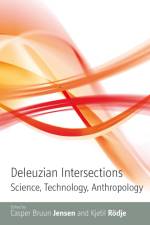
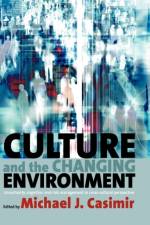
Science and technology studies, cultural anthropology and cultural studies deal with the complex relations between material, symbolic, technical and political practices. In a Deleuzian approach these relations are seen as produced in heterogeneous assemblages, moving across distinctions such as the human and non-human or the material and ideal.
Whereas in English-speaking countries comics are for children or adults who should know better,A" in France and Belgium the form is recognized as the ninth artA" and follows in the path of poetry, architecture, painting, and cinema. The bande dessinee [comic strip] has its own national institutions and regularly obtains front-page coverage.
Based on vivid and colorful case studies about Mafiosi, priests, mothers, and migrants, the author offers new perspectives on the anthropology of religion and magic through categories of landscape, the body, human practice, and material experience.
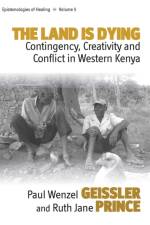
Based on several years of ethnographic fieldwork, the book explores life in and around a Luo-speaking village in western Kenya during a time of death. The epidemic of HIV/AIDS affects every aspect of sociality and pervades villagers' debates about the past, the future and the ethics of everyday life. Central to such debates is a discussion of touch in the broad sense of concrete, material contact between persons. In mundane practices and in ritual acts, touch is considered to be key to the creation of bodily life as well as social continuity. Underlying the significance of material contact is its connection with growth - of persons and groups, animals, plants and the land - and the forward movement of life more generally. Under the pressure of illness and death, economic hardship and land scarcity, as well as bitter struggles about the relevance and application of Christianity and 'Luo tradition' in daily life, people find it difficult to agree about the role of touch in engendering growth, or indeed about the aims of growth itself.
Today's world is one marked by the signs of digital capitalism and global capitalist expansion, and China is increasingly being integrated into this global system of production and consumption. As a result, China's immediate material impact is now felt almost everywhere in the world; however, the significance and process of this integration is far from understood. This study shows how the a priori categories of statistical reasoning came to be re-born and re-lived in the People's Republic - as essential conditions for the possibility of a new mode of knowledge and governance. From the ruins of the Maoist revolution China has risen through a mode of quantitative self-objectification. As the author argues, an epistemological rift has separated the Maoist years from the present age of the People's Republic, which appears on the global stage as a mirage. This study is an ethnographic investigation of concepts - of the conceptual forces that have produced and been produced by - two forms of knowledge, life, and governance. As the author shows, the world of China, contrary to the common view, is not the Chinese world; it is a symptomatic moment of our world at the present time.
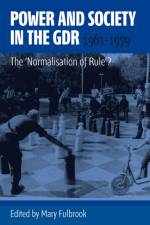
The communist German Democratic Republic, founded in 1949 in the Soviet-occupied zone of post-war Germany is, for many people, epitomized by the Berlin Wall; Soviet tanks and surveillance by the secret security police, the Stasi, appear to be central. But is this really all there is to the GDRs history? How did people come to terms with their situation and make new lives behind the Wall? When the social history of the GDR in the 1960s and 1970s is explored, new patterns become evident. A fragile stability emerged in a period characterized by 'consumer socialism', international recognition and dtente. Growing participation in the micro-structures of power, and conformity to the unwritten rules of an increasingly predictable system, suggest increasing accommodation to dominant norms and conceptions of socialist 'normality'. By exploring the ways in which lower-level functionaries and people at the grass roots contributed to the formation and transformation of the GDR from industry and agriculture, through popular sport and cultural life, to the passage of generations and varieties of social experience the contributors collectively develop a more complex approach to the history of East Germany.
The relationship between anthropologists' ethnographic investigations and the lived social worlds in which these originate is a fundamental issue for anthropology. Where some claim that only native voices may offer authentic accounts of culture and hence that ethnographers are only ever interpreters of it...
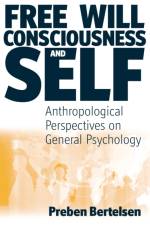
What is it to be human? How do we relate to the world, to each other and to our self in a human - in everyday life and when faced with life's big questions? Here, the author develops a general theoretical model intended to offer a better understanding of the human condition and of the underlying principles of human behaviour.
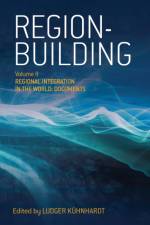
After two centuries of nation-building, the world has entered an era of region-building in search of political stability, cultural cohesion, and socio-economic development. Nations involved in the regional structures and integration schemes that are emerging in most regions of the world are deepening their ambitions, with Europe's integration experience often used as an experimental template or theoretical model. Volume I provides a political-analytical framework for recognizing the central role of the European Union not only as a conceptual model but also a normative engine in the global proliferation of regional integration. It also gives a comprehensive treatment of the focus, motives, and objectives of non-European integration efforts. Volume II offers a unique collection of documents that give the best available overview of the legal and political evolution of region-building based on official documents and stated objectives of the relevant regional groupings across all continents. Together, these volumes are important contributions for understanding the evolution of global affairs in an age when power shifts provide new challenges and opportunities for transatlantic partners and the world community.
The large and sudden influx of missionaries into the former Soviet Union after seventy years of militant secularism has been controversial, and the widespread occurrence of conversion has led to anxiety about social and national disintegration.
German migration policy now stands at a major crossroad, caught between a fifty-year history of missed opportunities and serious new challenges. Focusing on these new challenges that German policy makers face, the authors, both internationally recognized in this field, use historical argument, theoretical analysis, and empirical evaluation to advance a more nuanced understanding of recent initiatives and the implications of these initiatives. Their approach combines both synthesis and original research in a presentation that is not only accessible to the general educated reader but also addresses the concerns of academic scholars and policy analysts. This important volume offers a comprehensive and critical examination of the history of German migration law and policy from the Federal Republic's inception in 1949 to the present.
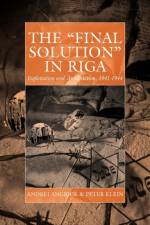
Ghetto, forced labor camp, concentration camp: All of the elements of the National Socialists' policies of annihilation were to be found in Riga. This first analysis of the Riga ghetto and the nearby camps of Salaspils and Jungfernhof addresses all aspects of German occupation policy during the Second World War.
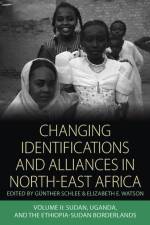
Forms of group identity play a prominent role in everyday lives and politics in north-east Africa. These volumes provide an interdisciplinary account of the nature and significance of ethnic, religious, and national identity in north-east Africa. Case studies from Sudan, Ethiopia, Uganda, and Kenya illustrate the way that identities are formed...
Twenty years after the fall of the Berlin Wall, this important book explores the role of France in the events leading up to the end of the Cold War and German unification. Most accounts concentrate on the role of the United States and look at these events through the bipolar prism of Soviet-American relations.
Today human ecology has split into many different sub-disciplines such as historical ecology, political ecology or the New Ecological Anthropology. The latter in particular has criticised the predominance of the Western view on different ecosystems...
In popular perception cultural differences or ethnic affiliation are factors that cause conflict or political fragmentation although this is not borne out by historical evidence. This book puts forward an alternative conflict theory. The author develops a decision theory which explains the conditions under which differing types of identification are preferred. Group identification is linked to competition for resources like water, territory, oil, political charges, or other advantages. Rivalry for resources can cause conflicts but it does not explain who takes whose side in a conflict situation. This book explores possibilities of reducing violent conflicts and ends with a case study, based on personal experience of the author, of conflict resolution.
During recent years, attempts have been made to move beyond the Eurocentric perspective that characterized the social sciences, especially anthropology, for over 150 years. A debate on the anthropology of anthropologyA" was needed, one that would consider other forms of knowledge, modalities of writing, and political and intellectual practices.
Dealing with some of the major themes in film narratives, this book draws on the theories of French psychoanalyst Julia Kristeva. It looks at how narratives have changed over time, and considers the sources of our variable reactions to themes and representations of horror, strangers, and love. In addition to a selection of contemporary mainstream films, the major films for analysis are New Zealand "e;New Wave"e; films such as Alison Maclean's Kitchen Sink and Crush; Vincent Ward's Vigil; and Jane Campion's Sweety, An Angel at My Table, and The Piano.
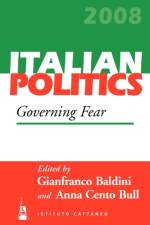
In 2008, Silvio Berlusconi returned to power - thanks to a decisive electoral victory - to head a slimmer coalition whose cabinet consisted of members very close to him. The year began with the garbage crisis in Naples and ended in a climate dominated by economic uncertainty.
As the European Union faces the ongoing challenges of legitimacy, identity, and social cohesion, an understanding of the social purpose and direction of EU citizenship becomes increasingly vital. This book is the first of its kind to map the development of EU citizenship and its relation to various localities of EU governance. From a critical political economy perspective, the authors argue for an integrated analysis of EU citizenship, one that considers the interrelated processes of migration, economic transformation, and social change and the challenges they present.
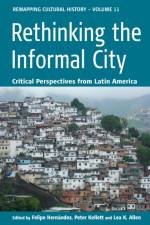
Latin American cities have always been characterized by a strong tension between what is vaguely described as their formal and informal dimensions. However, the terms formal and informal refer not only to the physical aspect of cities but also to their entire socio-political fabric.
Presents Germany as a case study of the impact of American culture throughout a period characterized by a totalitarian system, two unusually destructive wars, massive ethnic cleansing, and economic disaster.
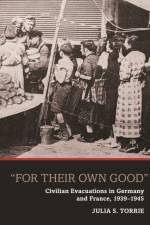
The early twentieth-century advent of aerial bombing made successful evacuations essential to any war effort, but ordinary people resented them deeply. Based on extensive archival research in Germany and France, this is the first broad, comparative study of civilian evacuations in Germany and France during World War II. The evidence uncovered exposes the complexities of an assumed monolithic and all-powerful Nazi state by showing that citizens' objections to evacuations, which were rooted in family concerns, forced changes in policy. Drawing attention to the interaction between the Germans and French throughout World War II, this book shows how policies in each country were shaped by events in the other. A truly cross-national comparison in a field dominated by accounts of one country or the other, this book provides a unique historical context for addressing current concerns about the impact of air raids and military occupations on civilians.
During the four decades of the communist regime in Czechoslovakia a vast literature on working-class movements has been produced but it has hardly any value for today's scholarship. This remarkable study reopens the field. Based on Czech, Slovak, German and other sources, it focuses on the history of the multi-ethnic social democratic labor movement in Slovakia's capital Bratislava during the period 1867-1921, and on the process of national revolution during the years 1918-19 in particular. The study places the historic change of the former Pressburg into the modern Bratislava in the broader context of the development of multinational pre-1918 Hungary, the evolution of social, ethnic, and political relations in multi-ethnic Pressburg (a 'tri-national' city of Germans, Magyars, and Slovaks), and the development of the multinational labor movement in Hungary and the Habsburg Empire as a whole.
Each year thirty-two seniors at American universities are awarded Rhodes Scholarships, which entitle them to spend two or three years studying at the University of Oxford. The program, founded by the British colonialist and entrepreneur Cecil Rhodes and established in 1903, has become the world's most famous academic scholarship and has brought thousands of young Americans to study in England. Many of these later became national leaders in government, law, education, literature, and other fields. Among them were the politicians J. William Fulbright, Bill Bradley, and Bill Clinton; the public policy analysts Robert Reich and George Stephanopoulos; the writer Robert Penn Warren; the entertainer Kris Kristofferson; and the Supreme Court Justices Byron White and David Souter. Based on extensive research in published and unpublished documents and on hundreds of interviews, this book traces the history of the program and the stories of many individuals. In addition it addresses a host of questions such as: how important was the Oxford experience for the individual scholars? To what extent has the program created an old-boy (-girl since 1976) network that propels its members to success? How many Rhodes Scholars have cracked under the strain and failed to live up to expectations? How have the Americans coped with life in Oxford and what have they thought of Britain in general? Beyond the history of the program and the individuals involved, this book also offers a valuable examination of the American-British cultural encounter.
Uncertainty about the future of the government and strong anti-political sentiment dominated Italian politics in 2007. Following a government crisis in February, rooted in the question of Italy's role in Afghanistan, Prime Minister Romano Prodi was able to re-establish his coalition, but in the spring it suffered a clear setback in local elections
"e;Peasants tell tales,"e; one prominent cultural historian tells us (Robert Darnton). Scholars must then determine and analyze what it is they are saying and whether or not to incorporate such tellings into their histories and ethnographies. Challenging the dominant culturalist approach associated with Clifford Geertz and Marshall Sahlins among others, this book presents a critical rethinking of the philosophical anthropologies found in specific histories and ethnographies and thereby bridges the current gap between approaches to studies of peasant society and popular culture. In challenging the methodology and theoretical frameworks currently used by social scientists interested in aspects of popular culture, the author suggests a common discursive ground can be found in an historical anthropology that recognizes how myths, fairytales and histories speak to a universal need for imagining oneself in different timescapes and for linking one's local world with a "e;known"e; larger world.
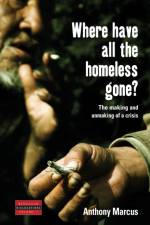
For a decade, from 1983 to 1993, homelessness was a major concern in the United States. In 1994, this public concern suddenly disappeared, without any significant reduction in the number of people without proper housing. By examining the making and unmaking of a homeless crisis, this book explores how public understandings of what constitutes a social crisis are shaped. Drawing on five years of ethnographic research in New York City with African Americans and Latinos living in poverty, Where Have All the Homeless Gone? reveals that the homeless "e;crisis"e; was driven as much by political misrepresentations of poverty, race, and social difference, as the housing, unemployment, and healthcare problems that caused homelessness and continue to plague American cities.
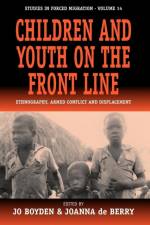
War leads not just to widespread death but also to extensive displacement, overwhelming fear, and economic devastation. It weakens social ties, threatens household survival and undermines the family's capacity to care for its most vulnerable members. Every year it kills and maims countless numbers of young people, undermines thousands of others psychologically and deprives many of the economic, educational, health and social opportunities which most of us consider essential for children's effective growth and well being. Based on detailed ethnographic description and on young people's own accounts, this volume provides insights into children's experiences as both survivors and perpetrators of violence. It focuses on girls who have been exposed to sexual exploitation and abuse, children who head households or are separated from their families, displaced children and young former combatants who are attempting to adjust to their changed circumstances following the cessation of conflict. In this sense, the volume bears witness to the grim effects of warfare and displacement on the young. Nevertheless, despite the abundant evidence of suffering, it maintains that children are not the passive victims of conflict but engage actively with the conditions of war, an outlook that challenges orthodox research perspectives that rely heavily on medicalized notions of 'victim' and 'trauma.'
Abonner på vårt nyhetsbrev og få rabatter og inspirasjon til din neste leseopplevelse.
Ved å abonnere godtar du vår personvernerklæring.