













Gjør som tusenvis av andre bokelskere
Abonner på vårt nyhetsbrev og få rabatter og inspirasjon til din neste leseopplevelse.
Ved å abonnere godtar du vår personvernerklæring.Du kan når som helst melde deg av våre nyhetsbrev.

The collapse of communism and the process of state building that ensued in the 1990s have highlighted the existence of significant minorities in many European states, particularly in Central Europe. In this context, the growing plight of Europe's biggest minority, the Roma (Gypsies), has been particularly salient. Traditionally dispersed, possessing few resources and devoid of a common "e;kin state"e; to protect their interests, the Roma have often suffered from widespread exclusion and institutionalized discrimination. Politically underrepresented and lacking popular support amongst the wider populations of their host countries, the Roma have consequently become one of Europe's greatest "e;losers"e; in the transition towards democracy. Against this background, the author examines the recent attempts of the Roma in Central Europe and their supporters to form a political movement and to influence domestic and international politics. On the basis of first-hand observation and interviews with activists and politicians in the Czech Republic, Hungary and Slovakia, he analyzes connections between the evolving state policies towards the Roma and the recent history of Romani mobilization. In order to reach a better understanding of the movement's dynamics at work, the author explores a number of theories commonly applied to the study of social movements and collective action.
Many scholars, both in Italy and abroad, question the perception of the South as a 'backward' and implicitly inferior society. Starting from this critical tradition, this book provides a systematic, and interdisciplinary approach that aims to re-interpret the premises behind Italy's imagined geography of modernity.
Assuming that women's empowerment would accelerate the pace of social change in rural Nepal, the World Bank urged the Nepali government to undertake a "e;Gender Activities Project"e; within an ongoing long-term water-engineering scheme. The author, an anthropologist specializing in bureaucratic organizations and gender studies, was hired to monitor the project. Analyzing her own experience as a practicing "e;development expert,"e; she demonstrates that the professed goal of "e;women's empowerment"e; is a pretext for promoting economic organizational goals and the interests of local elites. She shows how a project intended to benefit women, through teaching them literary and agricultural skills, fails to provide them with any of the promised resources. Going beyond the conventional analysis that positions aid givers vis-vis powerless victimized recipients, she draws attention to the complexity of the process and the active role played by the Nepalese rural women who pursue their own interests and aspirations within this unequal world. The book makes an important contribution to the growing critique of "e;development"e; projects and of women's development projects in particular.
One of the major historians of prerevolutionary Russia has collected in this volume some of his most important essays. Written over a number of years, these pioneering works have been revised and updated and are complemented by others being published for the first time. Thematically, they cover major subjects in Imperial Russian history and in historical writing, such as ideas and their role in historical change; the intelligentsia, the nobility, and peasant society; and historiography. The twelve essays raise cardinal questions about current scholarship on Russian history before the upheavals of 1917 and offer original interpretations that are of interest to the educated layman as well as the professional historian.
Just as rhetoric is founded in culture, culture is founded in rhetoricA" - the first half of this central statement from the International Rhetoric Culture Project is abundantly evidenced. It is the latter half that this volume explores: how does culture emerge out of rhetorical action, out of seemingly dispersed individual actions and interactions
In 1926/27 the Soviet Central Statistical Administration initiated several year-long expeditions to gather primary data on the whereabouts, economy, and living conditions of all rural peoples living in the Arctic and sub-Arctic at the end of the Russian civil war.
Surprisingly little research has been carried out about how Australian Aboriginal children and teenagers experience life, shape their social world, and imagine the future. This volume presents recent and original studies of life experiences outside the institutional settings of childcare and education...
Disorder and instability are matters of continuing public concern. Terrorism, as a threat to global order, has been added to preoccupations with political unrest, deviance and crime. Such considerations have prompted the return to the classic anthropological issues of order and disorder.
Since 1945 Europe has experienced many periods of turmoil and conflict and as many moments of peace and integration: from the devastation felt in the aftermath of World War II to the recovery in the 1950s and 1960s; to the new challenges in the 1970s and 1980s when neoliberal policies led to fundamental social and economic changes...
The Cold War was not only about the imperial ambitions of the super powers, their military strategies, and antagonistic ideologies. It was also about conflicting worldviews and their correlates in the daily life of the societies involved. The term "Cold War Culture" is often used in a broad sense to describe media influences & social practices...
Despite international congresses and international journals, anthropologies of education differ significantly around the world. Linguistic barriers constrain the flow of ideas, which results in a vast amount of research on educational anthropology that is not published in English or is difficult for international readers to find.
Assessing the impact of fin-de-siecle Jewish culture on subsequent developments in literature and culture, this book is the first to consider the historical trajectory of Austrian-Jewish writing across the 20th century...
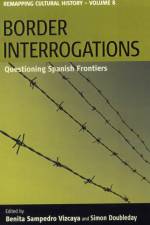
Under the current cartographies of globalism, where frontiers mutate, vacillate, and mark the contiguity of discourse, questioning the Spanish border seems a particularly urgent task. The volume engages a wide spectrum of ambivalent regions - subjects that currently are, or have been seen in the past, as spaces of negotiation and contestation.
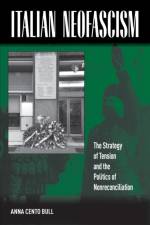
During the Cold War Italy witnessed the existence of an anomalous version of a civil conflict, defined as a 'creeping' or a 'low-intensity' civil war. Political violence escalated, including bomb attacks against civilians, starting with a massacre in Milan, on 12 December 1969, and culminating with the massacre in Bologna, on 2 August 1980. Making use of the literature on national reconciliation and narrative psychology theory, this book examines the fight over the 'judicial' and the 'historical' truth in Italy today, through a contrasting analysis of judicial findings and the 'narratives of victimhood' prevalent among representatives of both the post- and the neo-fascist right.
The Muhammad cartoon crisis of 20056 in Denmark caught the world by surprise as the growing hostilities toward Muslims had not been widely noticed. Through the methodologies of media anthropology, cultural studies, and communication studies, this book brings together more than thirteen years of research on three significant historical media events in order to show the drastic changes and emerging fissures in Danish society and to expose the politicization of Danish news journalism, which has consequences for the political representation and everyday lives of ethnic minorities in Denmark.
Childhood held a special place in Soviet society: seen as the key to a better future, children were imagined as the only privileged class. Therefore, the rapid emergence in post-Soviet Russia of the vast numbers of vulnerable 'social orphans', or children who have living relatives but grow up in residential care institutions, caught the public by surprise, leading to discussions of the role and place of childhood in the new society. Based on an in-depth study the author explores dissonance between new post-Soviet forms of family and economy, and lingering Soviet attitudes, revealing social orphans as an embodiment of a long-standing power struggle between the state and the family. The author uncovers parallels between (post-) Soviet and Western practices in child welfare and attitudes towards 'bad' mothers, and proposes a new way of interpreting kinship where the state is an integral member.
Jewish historiography tends to stress the religious, cultural, and political aspects of the past. By contrast the economyA" has been pushed to the margins of the Jewish discourse and scholarship since the end of the Second World War. This volume takes a fresh look at Jews and the economy, arguing that a broader, cultural approach is needed...
The US invasion of Iraq in 2003 was done mainly, if one is to believe US policy at the time, to liberate the people of Iraq from an oppressive dictator. However, the many protests in London, New York, and other cities imply that the policy of making the world safe for democracyA" was not shared by millions of people in many western countries.
Anthropology is particularly well suited to explore the contemporary predicament in the coming of age of young men. Its grounded and comparative empiricism provides the opportunity to move beyond statistics, moral panics, or gender stereotypes in order to explore specific aspects of life course transitions...
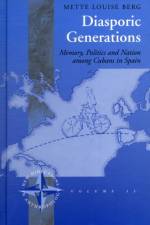
Interpretations of the background to the Cuban diaspora - a political revolution and the subsequent radical transformation of the society and economy towards socialism - are politicised and highly contested. The Miami-based Cuban diaspora has had extraordinary success in putting its case high on the US political agenda and in capturing world media attention, but in the process the multiplicity of experiences within the diaspora has been overshadowed. This book gives voice to diasporic Cubans living in Spain, the former colonial ruler of Cuba. By focusing on their lived experiences of displacement, the book brings to light imaginative, narrative re-creations of the nation from afar. Drawing on extensive ethnographic fieldwork, the book argues that the Cuban diaspora in Spain consists of three diasporic generations, generated through distinct migratory experiences. This constitutes an important step forward in understanding the dynamics of memory-making and social differentiation within diasporas, and in appreciating why people within the same diaspora engage in different modes of transnational practices and homeland relations.
The wave of anti-authoritarian political activity associated with the term 1968A" can by no means be confined under the rubric of protest,A" understood narrowly in terms of street marches and other reactions to state initiatives. Indeed, the actions generated in response to 1968A" frequently involved attempts of elaborate resistance within...
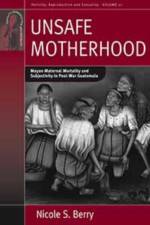
Since 1987, when the global community first recognized the high frequency of women in developing countries dying from pregnancy-related causes, little progress has been made to combat this problem.
Rapid fertility declines and improved longevity shift the overall balance of population towards older ages in many parts of the world. This collection focuses on one such sub-population, the elderly without children. Employing quantitative and qualitative methods, it aims to define and characterize the experience of ageing without children.
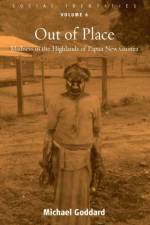
The Kakoli of the Western Highlands of Papua New Guinea (PNG), the focus of this study, did not traditionally have a concept of mental illness. They classified madness according to social behaviour, not mental pathology. Moreover, their conception of the person did not recognise the same physical and mental categories that inform Western medical science, and psychiatry in particular was not officially introduced to PNG until the late 1950s. Its practitioners claimed that it could adequately accommodate the cultural variation among Melanesian societies. This book compares the intent and practice of transcultural psychiatry with Kakoli interpretations of, and responses to, madness, showing the reasons for their occasional recourse to psychiatric services. Episodes involving madness, as defined by the Kakoli themselves, are described in order to offer a context for the historical lifeworld and praxis of the community and raise fundamental questions about whether a culturally sensitive psychiatry is possible in the Melanesian context.
Based on fieldwork conducted among middle-class university students primarily at the national university (UNAM) in Mexico City, this study explores gender relations as reflected in the words macho and machismo. The author concludes that the students use them to denote aspects of their families of origin that they consider unfavorable and aspects of the cultural past that they wish to leave behind in their own lives. In capturing the lively and revealing conversations of these young voices, the author offers a compelling analysis of how gender concepts and identities are changing in contemporary Mexico City.
".an excellent collection.Like any good collection, the articles raise as many questions as they answer.[that] highlight the value of the collection for use in undergraduate courses on Latin American history, inter-American relations or U.S. foreign policy. Liberal use of appropriate political cartoons adds spice to the readings." · Hispanic American Historical Review"..a very interesting collection of nine original essays, plus an extensive introduction by the editor.[whose]concluding remarks leave room for future debates.. [It] could help undergraduate students in many disciplines, from international relations and American Studies to history and geopolitics.[It] must be seen as a fundamental addendum to any bibliography on the study of anti-Americanism." · The Latin Americanist"This volume addresses an important topic and does so very effectively. All of the essays take on a high level of quality. All the essays are well written and well researched. They also show a high level of methodological and conceptual sophistication. They effectively deal with uniformities and differences in manifestations of anti-Americanism from time to time and from place to place." · Mark Gilderhus, Texas Christian University".the collection succeeds in generating a number of stimulating explorations of anti-Americanism, providing an important starting point for further re-examination of a phenomenon that continues to grow in significance in the contemporary global environment." · Journal of Latin American StudiesWhether rising up from fiery leaders such as Venezuela's Hugo Chavez and Cuba's Fidel Castro or from angry masses of Brazilian workers and Mexican peasants, anti U.S. sentiment in Latin America and the Caribbean today is arguably stronger than ever. It is also a threat to U.S. leadership in the hemisphere and the world. Where has this resentment come from? Has it arisen naturally from imperialism and globalization, from economic and social frustrations? Has it served opportunistic politicians? Does Latin America have its own style of anti Americanism? What about national variations? How does cultural anti Americanism affect politics, and vice versa? What roles have religion, literature, or cartoons played in whipping up sentiment against 'el yanqui'? Finally, how has the United States reacted to all this?This book brings leaders in the field of U.S. Latin American relations together with the most promising young scholars to shed historical light on the present implications of hostility to the United States in Latin America and the Caribbean. In essays that carry the reader from Revolutionary Mexico to Peronist Argentina, from Panama in the nineteenth century to the West Indies' mid century independence movement, and from Colombian drug runners to liberation theologists, the authors unearth little known campaigns of resistance and probe deeper into episodes we thought we knew well. They argue that, for well over a century, identifying the United States as the enemy has rung true to Latin Americans and has translated into compelling political strategies. Combining history with political and cultural analysis, this collection breaks the mold of traditional diplomatic history by seeing anti Americanism through the eyes of those who expressed it. It makes clear that anti Americanism, far from being a post 9/11 buzzword, is rather a real force that casts a long shadow over U.S. Latin American relations.Alan McPherson teaches history at Howard University in Washington, D.C. He is the author of Yankee No! Anti Americanism in U.S. Latin American Relations (2003). He is at work on a survey of U.S. Latin American relations since 1945 and on a study of Caribbean anti U.S. movements from 1912 to 1934.
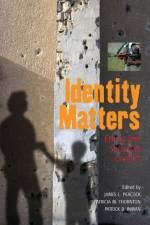
Describes the processes which lead to ethnic and sectarian violence. This book shows how alternative paths through intergroup tension can be made apparent by understanding the patterns of behavior used by groups worldwide to maintain their identities and by appreciating the unique identity of each group involved in a conflict.
Massacres and mass killings have always marked if not shaped the history of the world and as such are subjects of increasing interest among historians, resulting in a growing body of scholarship in recent years. The premise underlying this collection is that massacres were an integral, if not accepted part (until quite recently) of warfare...
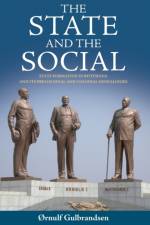
Botswana has been portrayed as a major case of exception in Africa-as an oasis of peace and harmony with an enduring parliamentary democracy, blessed with remarkable diamond-driven economic growth. Whereas the "e;failure"e; of other states on the continent is often attributed to the prevalence of indigenous political ideas and structures, the author argues that Botswana's apparent success is not the result of Western ideas and practices of government having replaced indigenous ideas and structures. Rather, the postcolonial state of Botswana is best understood as a unique, complex formation, one that arose dialectically through the meeting of European ideas and practices with the symbolism and hierarchies of authority, rooted in the cosmologies of indigenous polities, and both have become integral to the formation of a strong state with a stable government. Yet there are destabilizing potentialities in progress due to emerging class conflict between all the poor sections of the population and the privileged modern elites born of the expansion of a beef and diamond-driven political economy, in addition to conflicts between dominant Tswana and vast other ethnic groups. These transformations of the modern state are viewed from the long-term perspectives of precolonial and colonial genealogies and the rise of structures of domination, propelled by changing global forces.
Abonner på vårt nyhetsbrev og få rabatter og inspirasjon til din neste leseopplevelse.
Ved å abonnere godtar du vår personvernerklæring.