



Gjør som tusenvis av andre bokelskere
Abonner på vårt nyhetsbrev og få rabatter og inspirasjon til din neste leseopplevelse.
Ved å abonnere godtar du vår personvernerklæring.Du kan når som helst melde deg av våre nyhetsbrev.

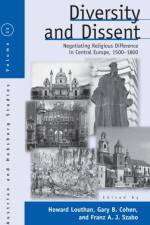
Early modern Central Europe was the continent's most decentralized region politically and its most diverse ethnically and culturally. With the onset of the Reformation, it also became Europe's most religiously divided territory and potentially its most explosive in terms of confessional conflict and war...
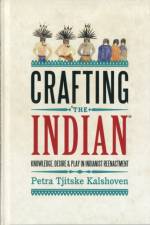
In Europe, Indian hobbyism, or Indianism, has developed out of a strong fascination with Native American life in the 18th and 19th centuries. "e;Indian hobbyists"e; dress in homemade replicas of clothing, craft museum-quality replicas of artifacts, meet in fields dotted with tepees and reenact aspects of North American Indian lifeworlds, using ethnographies, travel diaries, and museum collections as resources. Grounded in fieldwork set among networks of Indian hobbyists in Germany, the Netherlands, Belgium, France, and the Czech Republic, this ethnography analyzes this contemporary practice of serious leisure with respect to the general human desire for play, metaphor, and allusion. It provides insights into the increasing popularity of reenactment practices as they relate to a deeper understanding of human perception, imagination, and creativity.
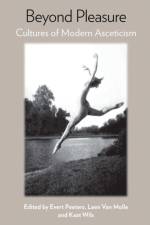
Asceticism, so it is argued in this volume, is a modern category. The ubiquitous cult of the body, of fitness and diet equally evoke the ongoing success of ascetic practices and beliefs. Nostalgic memories of hardship and discipline in the army, youth movements or boarding schools remain as present as the fashionable irritation...
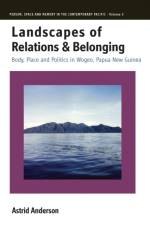
Wogeo Island is well-known to anthropologists of Papua New Guinea through the work of Ian Hogbin. Based on substantial fieldwork, the author builds on and expands previous research by showing how Wogeos establish and maintain social relationships and identities connected to place and movement in the physical landscape. This innovative study demonstrates how Wogeo worldviews and social organization can be described in relation to terms of movements, flows and placements in the landscape while, in turn, the landscape is constituted and made meaningful through people's activities and buildings. The author not only addresses some of the key issues in contemporary anthropology concerning place, gender, kinship, knowledge and power but also fills an important gap in Melanesian ethnography.
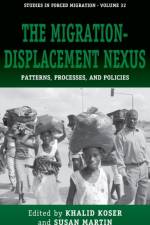
Besides elaborating a new concept, this volume has three main purposes: the first is to focus empirical attention on previously understudied topics, such as internal trafficking, the second is to highlight new challenges, including the effects of climate change; and the third is to explore gaps in current policy responses and elaborate alternatives
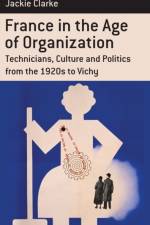
In interwar France, there was a growing sense that organizationA" was the solution to the nation's perceived social, economic and political ills. This book examines the roots of this idea in the industrial rationalization movement and its manifestations in areas as diverse as domestic organization and economic planning.
While the first decade after the fall of the Berlin wall was marked by the challenges of unification and the often difficult process of reconciling East and West German experiences, many Germans expected that the new centuryA" would achieve normalization.A"
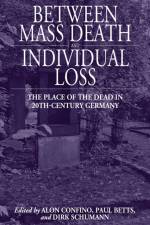
Recent years have witnessed growing scholarly interest in the history of death. Increasing academic attention toward death as a historical subject in its own right is very much linked to its pre-eminent place in 20th-century history, and Germany, predictably, occupies a special place in these inquiries.
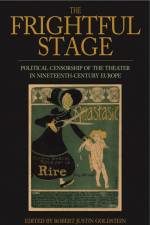
In 19th-century Europe the ruling elites viewed the theater as a form of communication which had enormous importance. The theater provided the most significant form of mass entertainment and was the only arena aside from the church in which regular mass gatherings were possible.
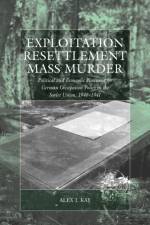
Convinced before the onset of Operation "e;Barbarossa"e; in June 1941 of both the ease, with which the Red Army would be defeated and the likelihood that the Soviet Union would collapse, the Nazi regime envisaged a radical and far-reaching occupation policy which would result in the political, economic and racial reorganization of the occupied Soviet territories and bring about the deaths of 'x million people' through a conscious policy of starvation. This study traces the step-by-step development of high-level planning for the occupation policy in the Soviet territories over a twelve-month period and establishes the extent to which the various political and economic plans were compatible.
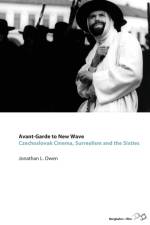
The cultural liberalization of communist Czechoslovakia in the 1960s produced many artistic accomplishments, not least the celebrated films of the Czech New Wave. This movement saw filmmakers use their new freedom to engage with traditions of the avant-garde, especially Surrealism. This book explores the avant-garde's influence over the New Wave and considers the political implications of that influence. The close analysis of selected films, ranging from the Oscar-winning Closely Observed Trains to the aesthetically challenging Daisies, is contextualized by an account of the Czech avant-garde and a discussion of the films' immediate cultural and political background.
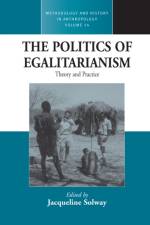
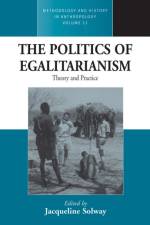
Written in honor of prominent anthropologist Richard B Lee who is concerned with understanding and acting upon issues of indigenous rights, the impact of colonialism and post colonial state formation on local communities and cultures. This book defines persistent problems that deeply affect the majority of the world's cultures.
Written in honor of prominent anthropologist Richard B Lee who is concerned with understanding and acting upon issues of indigenous rights, the impact of colonialism and post colonial state formation on local communities and cultures. This book defines persistent problems that deeply affect the majority of the world's cultures.
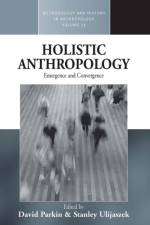
Given the broad reach of anthropology as the science of humankind, there are times when the subject fragments into specialisms and times when there is rapprochement. Rather than just seeing them as reactions to each other, it is perhaps better to say that both tendencies co-exist and that it is very much a matter of perspective...
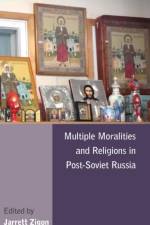
The wide-ranging topics in this ethnographically based volume show the broad religious influence on both discursive and everyday moralities. The contributors reveal that although religion is a significant aspect of the various assemblages of morality, much like in other parts of the world, religion in postsocialist Russia cannot be separated...
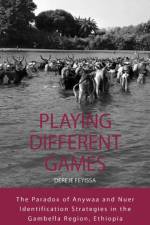
Focusing on ethnicity and its relation to conflict, this book goes beyond sterile debates about whether ethnic identities are 'natural' or 'socially constructed'. Rather, ethnic identity takes different forms. Some ethnic boundaries are perceived by the actors themselves as natural, while others are perceived to be permeable. The argument is substantiated through a comparative analysis of ethnic identity formation and ethnic conflict among the Anywaa and the Nuer in the Gambella region of western Ethiopia. The Anywaa and the Nuer are not just two ethnic groups but two kinds of ethnic groups. Conflicts between the Anywaa and Nuer are explained with reference to three variables: varying modes of identity formation, competition over resources and differential incorporation into the state system.
Abandoning the usual Cold War oriented narrative of postwar European protest and opposition movements, this volume offers an innovative, inter-disciplinary, and comprehensive perspective on two decades of protest and social upheaval in postwar Europe. It examines the mutual influences and interactions among dissenters in Western Europe.
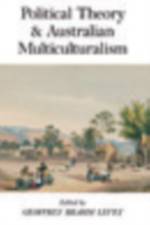
Multiculturalism has been one of the dominant concerns in political theory over the last decade. To date, this inquiry has been mostly informed by, or applied to, the Canadian, American, and increasingly, the European contexts. This volume explores for the first time how the Australian experience both relates and contributes to political thought on multiculturalism. Focusing on whether a multicultural regime undermines political integration, social solidarity, and national identity, the authors draw on the Australian case to critically examine the challenges, possibilities, and limits of multiculturalism as a governing idea in liberal democracies. These essays by distinguished Australian scholars variously treat the relation between liberalism and diversity, democracy and diversity, culture and rights, and evaluate whether Australia's thirty-year experiment in liberal multiculturalism should be viewed as a successful model.
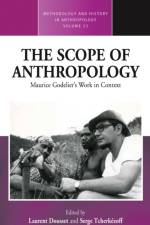
Bringing some of the most prominent social and cultural anthropologists into discussion around the work of Maurice Godelier, this volume explores and revisits some of the most complex practices and structures social scientists have had to elucidate.
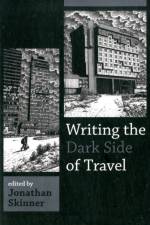
The travel experience filled with personal trauma; the pilgrimage through a war-torn place; the journey with those suffering: these represent the darker sides of travel. What is their allure and how are they represented? This volume takes an ethnographic and interdisciplinary approach to explore the writings and texts of dark journeys and travels.
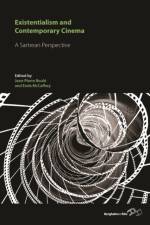
At the heart of this volume is the assertion that Sartrean existentialism, most prominent in the 1940s, particularly in France, is still relevant as a way of interpreting the world today. Film, by reflecting philosophical concerns in the actions and choices of characters, continues and extends a tradition in which art exemplifies the understanding
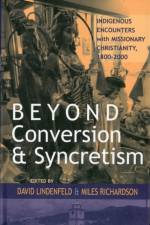
The globalization of Christianity, its spread and appeal to peoples of non-European origin, is by now a well-known phenomenon. Scholars increasingly realize the importance of natives rather than foreign missionaries in the process of evangelization.
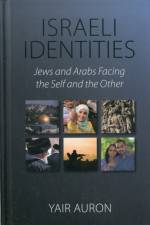
The question of identity is one of present-day Israel's cardinal and most pressing issues. In a comprehensive examination of the identity issue, this study focuses on attitudes toward the Jewish people in Israel and the Diaspora; the Holocaust and its repercussions on identity; attitudes toward the state of Israel and Zionism...
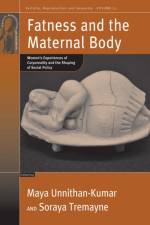
Focusing specifically on the maternal body, contributors to the volume examine how the language and notions of obesity connect with, or stand apart from, wider societal values and moralities to do with the body, fatness, reproduction, and what is considered natural.A"
Due to the demand for flexible working hours and employees who are available around the clock, the time patterns of childcare and schooling have increasingly become a political issue. The book compares the development of different time policiesA" of half-day and all-day provisions in a variety of Eastern and Western European countries...
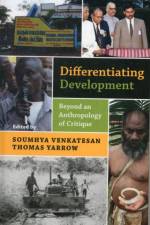
Over the last two decades, anthropological studies have highlighted the problems of "development" as a discursive regime, arguing that such initiatives are paradoxically used to consolidate inequality and perpetuate poverty.
People travel as never before. However, anthropological research has tended to focus primarily on either labor migration or on tourism. In contrast, this collection of essays explores a diversity of circumstances and impetuses towards contemporary mobility. It ranges from expatriates to peripatetic professionals to middle class migrants...
Anthropologists who are employed to change the worlds they are researching find themselves in a potentially contradictory position. Combining the various roles and expectations involved in working with Gypsies and local government at the same time as conducting anthropological research, provides the overall perspective of this study.
Author of Nazi Paris, a Choice Academic Book of the Year in 2009, Allan Mitchell has researched a companion volume concerning the acclaimed and controversial German author Ernst Junger. Spending more than three years in the French capital where his principal duty was to mingle with French intellectuals and with visiting German celebrities.
For almost nine decades, since their mass-resettlement to the Levant in the wake of the Genocide and First World War, the Armenian communities of Lebanon and Syria appear to have successfully maintained a distinct identity as an ethno-culturally diverse group, in spite of representing a small non-Arab and Christian minority within a very different, mostly Arab and Muslim environment. The author shows that, while in Lebanon the state has facilitated the development of an extensive and effective system of Armenian ethno-cultural preservation, in Syria the emergence of centralizing, authoritarian regimes in the 1950s and 1960s has severely damaged the autonomy and cultural diversity of the Armenian community. Since 1970, the coming to power of the Asad family has contributed to a partial recovery of Armenian ethno-cultural diversity, as the community seems to have developed some form of tacit arrangement with the regime. In Lebanon, on the other hand, the Armenian community suffered the consequences of the recurrent breakdown of the consociational arrangement that regulates public life. In both cases the survival of Armenian cultural distinctiveness seems to be connected, rather incidentally, with the continuing 'search for legitimacy' of the state.
Abonner på vårt nyhetsbrev og få rabatter og inspirasjon til din neste leseopplevelse.
Ved å abonnere godtar du vår personvernerklæring.