


Gjør som tusenvis av andre bokelskere
Abonner på vårt nyhetsbrev og få rabatter og inspirasjon til din neste leseopplevelse.
Ved å abonnere godtar du vår personvernerklæring.Du kan når som helst melde deg av våre nyhetsbrev.

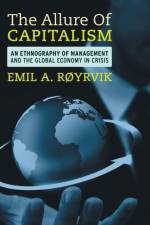
The "e;managerial revolution,"e; or the rise of management as a distinct and vital group in industrial society, might be identified as a major development of the modernization processes, similar to the scientific and industrial revolutions. Studying "e;transnational"e; or "e;global"e; corporate management at the post-millennium moment provides a suitable focal point from which to investigate globalized (post)modernity and capitalism especially, and as such this book offers an anthropology of global capitalism at its moment of crisis. This study provides ethnographically rich descriptions of managerial practices in a set of international corporate investment projects. Drawing also on historical and statistical data, it renders a comprehensive perspective on management, corporations, and capitalism in the late modern globalized economy. Cross-disciplinary in outlook, the book spans the fields of organization, business, and management, and asserts that now, in this period of financial crisis, is the time for anthropology to yet again engage with political economy.
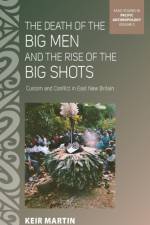
In 1994, the Pacific island village of Matupit was partially destroyed by a volcanic eruption. This study focuses on the subsequent reconstruction and contests over the morality of exchanges that are generative of new forms of social stratification. Such new dynamics of stratification are central to contemporary processes of globalization in the Pacific, and more widely. Through detailed ethnography of the transactions that a displaced people entered into in seeking to rebuild their lives, this book analyses how people re-make sociality in an era of post-colonial neoliberalism without taking either the transformative power of globalization or the resilience of indigenous culture as its starting point. It also contributes to the understanding of the problems of post-disaster reconstruction and development projects.
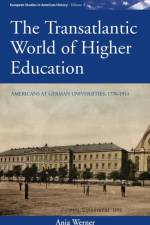
Between the 1760s and 1914, thousands of young Americans crossed the Atlantic to enroll in German-speaking universities, but what was it like to be an American in, for instance, Halle, Heidelberg, Gttingen, or Leipzig? In this book, the author combines a statistical approach with a biographical approach in order to reconstruct the history of these educational pilgrimages and to illustrate the interconnectedness of student migration with educational reforms on both sides of the Atlantic. This detailed account of academic networking in European educational centers highlights the importance of travel for academic and cultural transformations in nineteenth-century America.
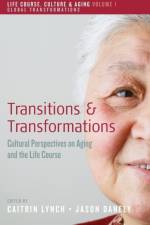
Rapid population aging, once associated with only a select group of modern industrialized nations, has now become a topic of increasing global concern. This volume reframes aging on a global scale by illustrating the multiple ways it is embedded within individual, social, and cultural life courses.
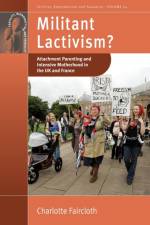
Following networks of mothers in London and Paris, the author profiles the narratives of women who breastfeed their children to full term, typically a period of several years, as part of an 'attachment parenting' philosophy. These mothers talk about their decision to continue breastfeeding as 'the natural thing to do': 'evolutionarily appropriate', 'scientifically best' and 'what feels right in their hearts'. Through a theoretical focus on knowledge claims and accountability, the author frames these accounts within a wider context of 'intensive parenting', arguing that parenting practices - infant feeding in particular - have become a highly moralized affair for mothers, practices which they feel are a critical aspect of their 'identity work'. The book investigates why, how and with what implications some of these mothers describe themselves as 'militant lactivists' and reflects on wider parenting culture in the UK and France. Discussing gender, feminism and activism, this study contributes to kinship and family studies by exploring how relatedness is enacted in conjunction to constructions of the self.
Through the sharing of food, people feel entitled to inquire into one another's lives and ponder one another's states in relation to their foodways. This in-depth study focuses on the Bosmun of Daiden, a Ramu River people in an under-represented area in the ethnography of Papua New Guinea, uncovering the conceptual convergence of local notions of relatedness, foodways, and empathy. In weaving together discussions about paramount values as passed on through myth, the expression of feelings in daily life, and the bodily experience of social and physical environs, a life-world unfolds in which moral, emotional, and embodied foodways contribute notably to the creation of relationships. Concerned with unique processes of "e;making kin,"e; the book adds a distinct case to recent debates about relatedness and empathy and sheds new light onto the conventional anthropological themes of food production, sharing, and exchange.
The year 2010 marked the halfway point for Silvio Berlusconi's fourth government with the solidity of its electoral mandate threatened on a number of occasions by strong clashes with the opposition, ultimately leading to a "divorce" from Gianfranco Fini.
Now that nearly twenty years have passed since the collapse of the Soviet bloc there is a need to understand what has taken place since that historic date and where we are at the moment. Bringing together authors with different historical, cultural, regional and theoretical backgrounds, this volume engages in debates that address new questions...
What is it to be human? What are our specifically human attributes, our capacities and liabilities? Such questions gave birth to anthropology as an Enlightenment science. This book argues that it is again appropriate to bring the humanA" to the fore, to reclaim the singularity of the word as central to the anthropological endeavor...
Since 9/11 ideas of security have focused in part on the development of ungovernable spaces. Important debates are now being had over the nature, impacts, and outcomes of the numerous policy statements made by northern governments, NGOs, and international institutions that view the merging of security with development as both unproblematic...
Focusing on different forms of agency in North Ambrym social life, the author demonstrates the potency of outsiders at different times and in different situations in Ambrym society. This model challenges the premises of much Western thinking about reciprocity, and suggests new directions in the analysis of Melanesian societies.
This collection of ten essays is the latest major work to call for renewed attention to the topic [of kinship], especially with respect to contemporary questions of how cultures relate to nature...[It] is a welcome addition to the ongoing revival of kinship, and will stimulate further debate among its many participants. Ethnobiology LettersThe genealogical model has a long-standing history in Western thought. The contributors to this volume consider the ways in which assumptions about the genealogical model-in particular, ideas concerning sequence, essence, and transmission-structure other modes of practice and knowledge-making in domains well beyond what is normally labeled "kinship." The detailed ethnographic work and analysis included in this text explores how these assumptions have been built into our understandings of race, personhood, ethnicity, property relations, and the relationship between human beings and non-human species. The authors explore the influences of the genealogical model of kinship in wider social theory and examine anthropology's ability to provide a unique framework capable of bridging the "social" and "natural" sciences. In doing so, this volume brings fresh new perspectives to bear on contemporary theories concerning biotechnology and its effect upon social life.Sandra Bamford is an Associate Professor at the University of Toronto. Her research focuses on Papua New Guinea and the West, with an emphasis on kinship, gender, landscape, environmentalism, globalization, and biotechnology. In addition to having authored several journal articles and book chapters, her most recent publications include: Biology Unmoored: Melanesian Reflections on Life and Biotechnology (University of California Press, 2006) and Embodying Modernity and Postmodernity: Ritual, Praxis and Social Change in Melanesia (Carolina Academic Press, 2007).James Leach is Professor of Anthropology at the University of Aberdeen. Published works include Creative Land: Place and Procreation on the Rai Coast of Papua New Guinea (2003), Reite Plants: An Ethnobotanical Study in Tok Pisin and English (2010, with Porer Nombo), and Recognising and Translating Knowledge, 2012 Anthropological Forum Special Issue, ed with R. Davis).
Among both male and female young urban professionals in Nairobi, sexuality is a key to achieving a 'modern' identity. These young men and women see themselves as the avant garde of a new Africa, while they also express the recurring worry of how to combine an 'African' identity with the new lifestyles with which they are experimenting. By focusing on public debates and their preoccupations with issues of African heritage, gerontocratic power relations and conventional morality on the one hand, and personal sexual relationships, intimacy and self-perceptions on the other, this study works out the complexities of sexuality and culture in the context of modernity in an African society. It moves beyond an investigation of a health or development perspective of sexuality and instead examines desire, pleasure and eroticism, revealing new insights into the methodology and theory of the study of sexuality within the social sciences. Sexuality serves as a prism for analysing how social developments generate new notions of self in postcolonial Kenya and is a crucial component towards understanding the way people recognize and deal with modern changes in their personal lives.
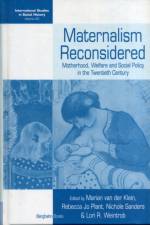
This volume reassesses maternalism by providing critical reflections on prior usages of the concept, and by expanding its meaning to encompass geographical areas, political regimes, and cultural concerns that scholars have rarely addressed.
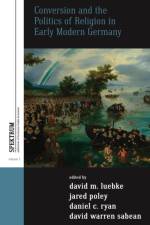
The Protestant and Catholic Reformations thrust the nature of conversion into the center of debate and politicking over religion as authorities and subjects imbued religious confession with novel meanings during the early modern era. The volume offers insights into the historicity of the very concept of "conversion."
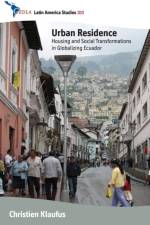
Riobamba and Cuenca, two intermediate cities in Ecuador, have become part of global networks through transnational migration, incoming remittances, tourism, and global economic connections. Their landscape is changing in several significant ways, a reflection of the social and urban transformations occurring in contemporary Ecuadorian society. Exploring the discourses and actions of two contrasting population groups, rarely studied in tandem, within these cities-popular-settlement residents and professionals in the planning and construction sector-this study analyzes how each is involved in house designs and neighborhood consolidation. Ideas, ambitions, and power relations come into play at every stage of the production and use of urban space, and as a result individual decisions about both house designs and the urban layout influence the development of the urban fabric. Knowledge about intermediate cities is crucial in order to understand current trends in the predominantly urban societies of Latin America, and this study is an example of needed interdisciplinary scholarship that contributes to the fields of urban studies, urban anthropology, sociology, and architecture.
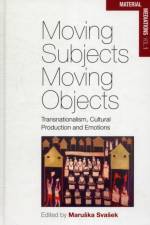
Most theories of material culture, transnationalism, and globalization have failed to incorporate a focus on emotions even though an increasing number of scholars in recent years have explored emotion-dense processes. This book fills the gap and examines how "emotions" can be theorized and serve as a useful analytical tool for understanding...
News stories provide an essential confirmation of our ideas about who we are, what we have to fear, and what to do about it: a marketplace of ideas, shopped by rational citizen decision makers but also a shared resource for grounding our contested narratives of identity in objective reality.
Drawn from various disciplines and a broad spectrum of research interests, these essays reflect on the challenging issues confronting women in Ukraine today. The contributors are an interdisciplinary, transnational group of scholars from gender studies, feminist theory, history, anthropology, sociology, women's studies, and literature.
Over the past decades, Pentecostal-charismatic Christianity has arguably become the fastest growing religious movement in the world. Distinguishing features of this variant of Christianity include formal ritual activities as well as informal, experiential, and ecstatic forms of worship.
Until recently the subject of suffering and evil was neglected in the sociological world and is almost absent in Durkheimian studies as well. This book aims to fill the gap, with particular reference to the Durkheimian tradition.
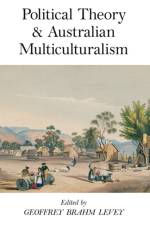
These essays by distinguished Australian scholars variously treat the relation between liberalism and diversity, democracy and diversity, culture and rights, and evaluate whether Australia's thirty-year experiment in liberal multiculturalism should be viewed as a successful model.
Technologies of the allied warfare in Iraq and Afghanistan, such as remote-controlled drones and night vision goggles, allow the user to "virtualize" human targets. This coincides with increased civilian casualties and a perpetuation of the very insecurity these technologies are meant to combat.
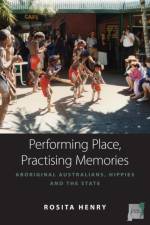
During the 1970s a wave of 'counter-culture' people moved into rural communities in many parts of Australia. This study focuses in particular on the town of Kuranda in North Queensland and the relationship between the settlers and the local Aboriginal population, concentrating on a number of linked social dramas that portrayed the use of both public and private space. Through their public performances and in their everyday spatial encounters, these people resisted the bureaucratic state but, in the process, they also contributed to the cultivation and propagation of state effects.
As bio-capital in the form of medical knowledge, skills, and investments moves with greater frequency from its origin in First World industrialized settings to resource-poor communities with weak or little infrastructure, countries with emerging economies are starting to expand new indigenous science bases of their own.
The phenomenon of national identities, always a key issue in the modern history of Bohemian Jewry, was particularly complex because of the marginal differences that existed between the available choices. Considerable overlap was evident in the programs of the various national movements and it was possible to change one's national identity or even to opt for more than one such identity without necessarily experiencing any far-reaching consequences in everyday life. Based on many hitherto unknown archival sources from the Czech Republic, Israel and Austria, the author's research reveals the inner dynamic of each of the national movements and maps out the three most important constructions of national identity within Bohemian Jewry - the German-Jewish, the Czech-Jewish and the Zionist. This book provides a needed framework for understanding the rich history of German- and Czech-Jewish politics and culture in Bohemia and is a notable contribution to the historiography of Bohemian, Czechoslovak and central European Jewry.
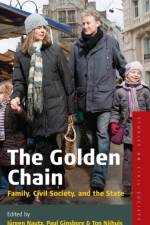
This volume concerns the role of families and their members in the processes of a liberal and democratic civil society, the question of boundaries and intersections of the private and public domains, and the interventions of state institutions. The family has the potential to be an important source of energy for civil society activity...
Colour permeates contemporary visual and material culture and affects our senses beyond the superficial encounter by infiltrating our perceptions and memories and becoming deeply rooted in thought processes that categorize and divide along culturally constructed lines.
This volume offers valuable insights into the constitutions of humanity and personhood characteristic of Siberia and Amazonia. The contributors conducted their ethnographic fieldwork among peoples undergoing transformative processes of their lived environments, such as the depletion of natural resources and migration to urban centers.
This volume presents and analyzes the major trends as well as the scope and the limits of education reform initiatives undertaken in recent years. In curricula and teaching materials, the representations of "Self" and the "Other" offer insights into the contemporary dynamics of identity politics.
Abonner på vårt nyhetsbrev og få rabatter og inspirasjon til din neste leseopplevelse.
Ved å abonnere godtar du vår personvernerklæring.