











Gjør som tusenvis av andre bokelskere
Abonner på vårt nyhetsbrev og få rabatter og inspirasjon til din neste leseopplevelse.
Ved å abonnere godtar du vår personvernerklæring.Du kan når som helst melde deg av våre nyhetsbrev.

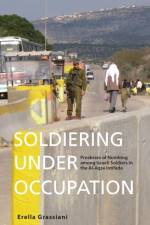
Often, violent behavior or harassment from a soldier is dismissed by the military as unacceptable acts by individuals termed, "e;rotten apples."e; In this study, the author argues that this dismissal is unsatisfactory and that there is an urgent need to look at the (mis)behavior of soldiers from a structural point of view. When soldiers serve as an occupational force, they find themselves in a particular situation influenced by structural circumstances that heavily influence their behavior and moral decision-making. This study focuses on young Israeli men and their experiences as combat soldiers in the Israeli Defense Forces (IDF), particularly those who served in the "e;Occupied Palestinian Territories"e; (OPT) during the "e;Al Aqsa Intifada,"e; which broke out in 2000. In describing the soldiers' circumstances, especially focusing on space, the study shows how processes of numbing on different levels influence the (moral) behavior of these soldiers.
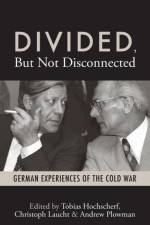
The Allied agreement after the Second World War did not only partition Germany, it divided the nation along the fault-lines of a new bipolar world order. This inner border made Germany a unique place to experience the Cold War, and the "German question" in this post-1945 variant remained inextricably entwined with the vicissitudes of the Cold War..
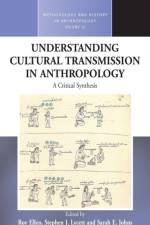
The concept of "cultural transmission" is central to much contemporary anthropological theory, since successful human reproduction through social systems is essential for effective survival and for enhancing the adaptiveness of individual humans and local populations.
The Nazis' persecution of the Jews during the Holocaust included the creation of prisoner hierarchies that forced victims to cooperate with their persecutors. Many in the camps and ghettos came to hold so-called "e;privileged"e; positions, and their behavior has often been judged as self-serving and harmful to fellow inmates. Such controversial figures constitute an intrinsically important, frequently misunderstood, and often taboo aspect of the Holocaust. Drawing on Primo Levi's concept of the "e;grey zone,"e; this study analyzes the passing of moral judgment on "e;privileged"e; Jews as represented by writers, such as Raul Hilberg, and in films, including Claude Lanzmann's Shoah and Steven Spielberg's Schindler's List. Negotiating the problems and potentialities of "e;representing the unrepresentable,"e; this book engages with issues that are fundamental to present-day attempts to understand the Holocaust and deeply relevant to reflections on human nature.
From the late nineteenth century to the post-communist period, Albanian and Georgian political and intellectual elites have attributed hopes to "e;Europe,"e; yet have also exhibited ambivalent attitudes that do not appear likely to vanish any time soon. Albanians and Georgians have evoked, experienced, and continue to speak of "e;Europe"e; according to a tense triadic entity-geopolitics, progress, culture-which has generated aspirations as well as delusions towards it and themselves. This unique dichotomy weaves a nuanced, historical account of a changing Europe, continuously marred by uncertainties that greatly affect these countries' domestic politics as well as foreign policy decisions. A systematic and rich account of how Albanians and Georgians view Europe, this book offers a fresh perspective on the vast East/West literature and, more broadly, on European intellectual, cultural, and political history.
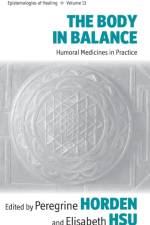
Focusing on practice more than theory, this collection offers new perspectives for studying the so-called "humoral medical traditions," as they have flourished around the globe during the last 2,000 years.
The circumpolar Arctic is at the center of multiple controversies as international competition over resources threatens the places that many people call home. This collection takes the home and the hearth as a central site revealing the ways in which history, cosmology, demography, colonialism, and architecture are intertwined.
This collection is the most up-to-date and comprehensive assessment of the political, social, and intellectual consequences of the efforts to regain German unity.
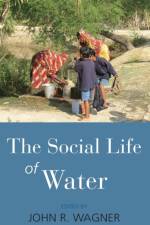
This volume addresses a diverse range of contemporary conflicts and crises including the impacts of commodification, urbanization, and technology on the availability and quality of water supplies. Each case study speaks to a local set of issues but the overall perspective is global with representation from all continents.
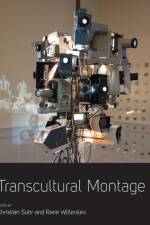
Disruptive montage has often been regarded as a potential threat to the dialogue between scholarly representations and the social world. This volume asserts the opposite: that the destabilization of commonsense perception is the very precondition for transcending social and cultural categories.
In this volume, practitioners from across anthropological disciplines - social and biological anthropology and primatology - come together to question and compare the ethical regulation of fieldwork, what is common to their practices, and what is distinctive to each discipline.
Notions of culture, rituals and their meanings, the workings of ideology in everyday life, public representations of tradition and ethnicity, and the social consequences of economic transition - these are critical issues in the social anthropology of Russia and other post-socialist countries.
The 20th century, declared at its start to be the Century of the ChildA" by Swedish author Ellen Key, saw an unprecedented expansion of state activity in and expert knowledge on child-rearing on both sides of the Atlantic. Children were seen as a crucial national resource whose care could not be left to families alone.
Conflicting and competing claims over the actual and imagined use of land and seascapes are exacerbated on islands with high population density. The management of culture and heritage is particularly tested in island environments where space is finite and the population struggles to preserve cultural and natural assets...
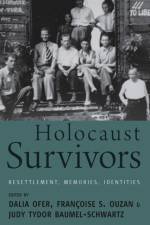
Representing scholars from different countries and different disciplines, this collection explores Holocaust survivors' return to everyday life and how their experience of Nazi persecution and the Holocaust impacted their process of integration into various countries. Thus, it offers a rich mix of perspectives, disciplines, and communities.
Inspired by the Rhetoric Culture Project, this volume focuses on the use of imagery, narrative, and cultural schemes to deal with predicaments that arise during the course of life. The contributors explore how people muster their resources to understand and deal with emergencies such as illness, displacement, or genocide.
Since the emergence of the dissident "parallel polis" in Eastern Europe, civil society has become a "new superpower," influencing democratic transformations, human rights, and international co-operation; co-designing economic trends, security and defense; reshaping the information society; and generating new ideas on the environment, health...
Blood awakens associations with ancient ideas. But we know very little about the historical representations of blood in Western cultures. The contributors attempt to follow the use of blood in mapping family and kinship relations in European culture from the ancient world to the present.
Scholarly approaches to the relationship between literature and film, ranging from the traditional focus upon fidelity to more recent issues of intertextuality, all contain a significant blind spot: a lack of theoretical and methodological attention to adaptation as an historical and transnational phenomenon. This book argues for a historically informed approach to American popular culture that reconfigures the classically defined adaptation phenomenon as a form of transnational reception. Focusing on several case studies- including the films Sense and Sensibility (1995) and The Portrait of a Lady (1997), and the classics The Third Man (1949) and The Bridge on the River Kwai (1957)-the author demonstrates the ways adapted literary works function as social and cultural events in history and how these become important sites of cultural negotiation and struggle.
The essays in this volume examine sites of socialist escapes, such as beaches, camp sites, nightclubs, concerts, castles, cars, and soccer matches. The chapters explore the effectiveness of state efforts to engineer society through leisure, entertainment, and related forms of cultural programming and consumption...
Epistemology poses particular problems for anthropologists whose task it is to understand manifold ways of being human. Through their work, anthropologists often encounter people whose ideas concerning the nature and foundations of knowledge are at odds with their own.
In its assessment of the current "state of play" of ethnographic practice in social anthropology, this volume explores the challenges that changing social forms and changing understandings of "the field" pose to contemporary ethnographic methods.
Prevailing scholarship on migration tends to present migrants as the objects of history, subjected to abstract global forces or to concrete forms of regulation imposed by state and supra state organizations. In this volume, by contrast, the focus is on migrants as the subjects of history who not only react but also act to engage with and transform
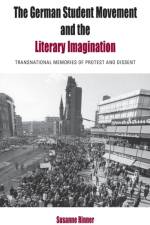
Through a close reading of novels by Ulrike Kolb, Irmtraud Morgner, Emine Sevgi zdamar, Bernhard Schlink, Peter Schneider, and Uwe Timm, this book traces the cultural memory of the 1960s student movement in German fiction, revealing layers of remembering and forgetting that go beyond conventional boundaries of time and space. These novels engage this contestation by constructing a palimpsest of memories that reshape readers' understanding of the 1960s with respect to the end of the Cold War, the legacy of the Third Reich, and the Holocaust. Topographically, these novels refute assertions that East Germans were isolated from the political upheaval that took place in the late 1960s and 1970s. Through their aesthetic appropriations and subversions, these multicultural contributions challenge conventional understandings of German identity and at the same time lay down claims of belonging within a German society that is more openly diverse than ever before.
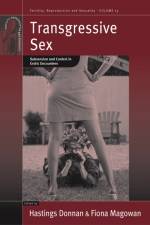
Sex is often regarded as a dangerous business that must be rigorously controlled, regulated, and subjected to rules. Sexual acts that defy acceptable practices may be seen as variously defiling, immoral, and even unnatural. They may challenge and subvert both cultural preconceptions and the social order in a politics of sexual transgression...
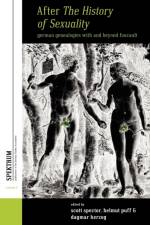
Michel Foucault's seminal The History of Sexuality (1976-1984) has since its publication provided a context for the emergence of critical historical studies of sexuality. This collection reassesses the state of the historiography on sexuality - a field in which the German case has been traditionally central...
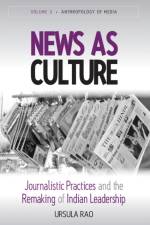
At the turn of the millennium, Indian journalism has undergone significant changes. The rapid commercialization of the press, together with an increase in literacy and political consciousness, has led to swift growth in the newspaper market but also changed the way news makers mediate politics. Positioned at a historical junction where India is clearly feeling the effects of market liberalization, this study demonstrates how journalists and informants interactively create new forms of political action and consciousness. The book explores English and Hindi newsmaking and investigates the creation of news relations during the production process and how they affect political images and leadership traditions. It moves beyond the news-room to outline the role of journalists in urban society, the social lives of news texts and the way citizens bring their ideas and desires to bear on the news discourse. This important volume contributes to an emerging debate about the impact of the media on Indian society. Furthermore, it convincingly demonstrates the inseparable link between media related practices and dynamic cultural repertoires.
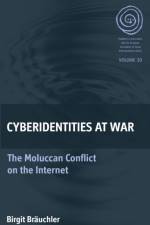
Based on ethnographic research on the online activities of Christian & Muslim actors in the Moluccan conflict, this study investigates processes of identity construction, community building, & evolving conflict dynamics on the internet. An innovative contribution to conflict & internet research, this study paves the way for a new cyber anthropology
The issue of abortion forces a confrontation with the effects of poverty and economic inequalities, local moral worlds, and the cultural and social perceptions of the female body, gender, and reproduction. Based on extensive original field research, this provocative collection presents case studies from Asia.
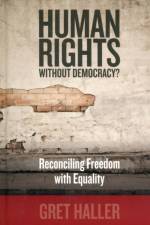
Do Human Rights truly serve the people? Should citizens themselves decide democratically of what those rights consist? Or is it a decision for experts and the courts? Gret Haller argues that Human Rights must be established democratically. Drawing on the works of political philosophers from John Locke to Immanuel Kant, she explains why, from a philosophical point of view, liberty and equality need not be mutually exclusive. She outlines the history of the concept of Human Rights, shedding light on the historical development of factual rights, and compares how Human Rights are understood in the United States in contrast to Great Britain and Continental Europe, uncovering vast differences. The end of the Cold War presented a challenge to reexamine equality as being constitutive of freedom, yet the West has not seized this opportunity and instead allows so-called experts to define Human Rights based on individual cases. Ultimately, the highest courts revise political decisions and thereby discourage participation in the democratic shaping of political will.
Abonner på vårt nyhetsbrev og få rabatter og inspirasjon til din neste leseopplevelse.
Ved å abonnere godtar du vår personvernerklæring.