















Gjør som tusenvis av andre bokelskere
Abonner på vårt nyhetsbrev og få rabatter og inspirasjon til din neste leseopplevelse.
Ved å abonnere godtar du vår personvernerklæring.Du kan når som helst melde deg av våre nyhetsbrev.

Notions of magic and healing have been changing over past years and are now understood as reflecting local ideas of power and agency, as well as structures of self, subjectivity and affect. This study focuses on contemporary urban Russia and, through exploring social conditions, conveys the experience of living that makes magic logical. By following people's own interpretations of the work of magic, the author succeeds in unraveling the logic of local practice and local understanding of affliction, commonly used to diagnose the experiences of illness and misfortune.
There is increasing interest in the way in which white-collar workers engage with institutions and networks which are complex social constructions. Covering a wide variety of countries and types of organization, this volume examines the diverse ways in which individuals' ethnic, gender, corporate and professional identities interact.
Anthropologists and historians have shown us that ''male'' and ''female'' are variously defined historically and cross-culturally. The contributions to this volume focus on the voluntary and involuntary, temporary or permanent transformation of gender identity. Overall, this volume provides powerful and compelling illustrations of how, across a wide range of cultures, processes of gender transformation are shaped within, and ultimately constrained by, social and political context. From medical responses to biological ambiguity, legal responses to cases brought by transsexuals, the historical role of the eunuch in Byzantium, the social transformation of gender in Northern Albania and in the Southern Philippines, to North American ''drag'' shows, English pantomime and Japanese kabuki theatre, this volume offers revealing insights into the ambiguities and limitations of gender transformation.
Looks at how a variety of health providers are perceived - from traditional healers to physicians, from diviners to nursing home providers. This title aims to demonstrate how class, gender, sexuality, ethnicity, or state policy may all play formative roles in shaping the definition of health and wellbeing and how they are delivered.
Most studies on transnational migration either stress assimilation, circulatory migration, or the negative impact of migration. This remarkable study, which covers migrants from one Jordanian village to 17 different countries in Europe, Asia, and North America, emphasizes the resiliency of transnational migrants after long periods of absence, social encapsulation, and stress, and their ability to construct social networks and reinterpret traditions in such a way as to mix the old and the new in a scenario that incorporates both worlds. Focusing on the humanistic aspects of the migration experience, this book examines questions such as birth control, women's work, retention of tribal law, and the changing attitudes of migrants towards themselves, their families, their home communities, and their nation. It ends with placing transnational migration from Jordan in a cross-cultural perspective by comparing it with similar processes elsewhere, and critically reviews a number of theoretical perspectives that have been used to explain migration.
Nowadays a plethora of treatment technologies is available to the consumer, each employing a variety of concepts of the body, self, sickness and healing. This volume explores the options, strategies and consequences that are both relevant and necessary for patients and practitioners who are manoeuvring this medical plurality.
Transgression is the stock in trade of a certain kind of anthropological sensibility that transforms fieldwork from strict social science to something more engaging. It builds on Koepping''s idea that participation transforms perception and investigates how transgressive practices have triggered the re-theorization of conventional forms of thought and life. It focuses on social practices in various cultural fields including the method and politics of anthropology in order to show how transgressive experiences become relevant for the organisation and understanding of social relations. This book brings key authors in anthropology together to debate and transgress anthropological expectations. Through transgression as method, as discussed here, our understanding of the world is transformed, and anthropology as a discipline becomes dangerous and relevant again.
Over the past two decades, "chaos theory" - the perception of order previously hidden in phenomena of apparent randomness and disorder - has fundamentally transformed the natural sciences. In recent years, numerous scholars in the social sciences and humanities have attempted to adapt the insights of chaos theory to their studies of human cultural and social systems. Several of the world''s leading anthropologists, such as Roy Wagner, Marshall Sahlins, Marilyn Strathern, and Arjun Appadurai - have similarly drawn upon particular elements of chaos theory for their inspiration, but as yet there is no focused, comprehensive treatment of the applicability of chaos theory to anthropology''s distinctive ethnographic and cross-cultural materials. This edited volume fills the gap, with both accessible theoretical discussions of chaos theory applications in anthropology and detailed ethnographic and historical illustrations from Africa and Melanesia.
The very institution of the state is widely conceived of as inseparable from war. If it constitutes peace within the borders or order of its sovereignty, this very peace may be the condition for its potential for war with those other states and social formation outside it.
The Third Republic, known as the ''belle époque'', was a period of lively, articulate and surprisingly radical feminist activity in France, borne out of the contradiction between the Republican ideals of liberty, equality and fraternity and the reality of intense and systematic gender discrimination. Yet, it also was a period of intense and varied artistic production, with women disproving the critical nearconsensus that art was a masculine activity by writing, painting, performing, sculpting, and even displaying an interest in the new "seventh art" of cinema. This book explores all these facets of the period, weaving them into a complex, multi-stranded argument about the importance of this rich period of French women''s history.Diana Holmes is Professor of French at the University of Leeds, UK. She has published widely on French women writers, including Colette, Rachilde, Renée Vivien, and bestselling romantic authors of the Belle Epoque. Her recent publications include Rachilde - Decadence Gender and the Woman Writer (Berg, 2001), and she is working on a study of romance in 20th century France.Carrie Tarr is a Research Fellow in the Faculty of Arts and Sciences, Kingston University London. She has published extensively on gender and ethnicity in French cinema. Her recent publications include Cinema and the Second Sex: Women''s Filmmaking in France in the 1980s and1990s (with B. Rollet, 2001) and Reframing Difference: beur and banlieue cinema in France (2005).
The 1950s and 1960s were a key moment in the development of postwar France. This title includes an examination of the development of mass culture in post-war France, which offers an insight into the shifts that took place. It explores stardom from the domain of cinema and other fields.
Classification, as an object of recent anthropological scrutiny came to prominence during the 1960s, exemplified in the British (constructionist) tradition by the writings of Mary Douglas, and in the American ethno-semantics (cognitive) tradition by the likes of Harold Conklin and Brent Berlin. At the time, these approaches seemed by turns to contradict each other, or even to exist in parallel universes. However, over the last 30 years we have witnessed both a renewed interest in classification studies as well as a cross-fertilization of these once antagonistic approaches. These essays by one of leading scholars in this field bring together a body of influential and inter-linked work which attempts to bridge the divide between cultural and cognitive studies of classification, and which develops a more embedded and processual approach. In particular, the essays focus on people's categorization of natural kinds as a means through which to obtain an understanding of how classifying behavior in general works, engaging with the ideas of both anthropologists and psychologists. The theoretical background is set out in an entirely new and substantial introduction, which also provides a comprehensive and systematic review of developments in cognitive and social anthropology since 1960 as these have impacted on classification studies. In short, it constitutes a useful and approachable introduction to its subject.
Palestinian children and young people living both within and outside of refugee camps in the Middle East are the focus of this book. For more than half a century these children and their caregivers have lived a temporary existence in the dramatic and politically volatile landscape that is the Middle East. These children have been captive to various sorts of stereotyping, both academic and popular. They have been objectified, much as their parents and grandparents, as passive victims without the benefit of international protection. And they have become the beneficiaries of numerous humanitarian aid packages which presume the primacy of the Western model of child development as well as the psycho-social approach to intervention. Giving voice to individual children, in the context of their households and their community, this book aims to move beyond the stereotypes and Western-based models to explore the impact that forced migration and prolonged conflict have had, and continue to have, on the lives of these refugee children.
In the 1960s and 1970s, Western Europe's "Golden Age" [Eric Hobsbawm], a new youth consciousness emerged, which gave this period its distinctive character.
The Turkish-Armenian conflict has lasted for nearly a century and still continues in attenuated forms to poison the relationship between these two peoples. The author, Senior Fellow and Deputy Director of the Center for Preventive Action at the Council on Foreign Relations and previously advisor to the United Nations, undertook, as head of the Turkish-Armenian Reconciliation Committee, to bring the two sides together and to work with them towards a peaceful resolution of the enmity that had made any contact between them taboo. His lively account of the difficult negotiations makes fascinating reading; it shows that the newly developed "e;track-two diplomacy"e; is an effective tool for reconciling even intractable foes through fostering dialog, contact and cooperation.
Relatively recent Bantu-speaking migrants to central Cameroon, the Beti have had an eventful history. Based on extensive interviews and traditional Beti (Fang) poetry, in addition to German and French archival sources, the author of this readable study recreates the social structure of the Beti and their self-perceptions in pre-colonial times, their disruptive encounters with first German (1880-1918) and then French (1918-1960) colonialism, until Cameroon's independence.
How does global Christianity relate to processes of globalisation and modernization and what form does it take in different local settings? These questions have lately proved to be of increasing interest to many scholars in the social sciences and humanities.
When the Enron filed the biggest bankruptcy petition in the history of the United States, if not the world, the immediate response by most politicians and financiers was that this scandal was a failure of regulatory institutionsA" that can be corrected and may possibly even be a purely North American problem.
The effects of globalization have led to accentuated social inequality in most first-world countries, above all the U.S. and U.K. International trade and capital flows have tended to redistribute income in ways that aggravate inequality in advanced industrialized nations where relative income levels of the salaried middle class and the working class are being eroded, resulting in a downward mobility of these classes. At the same time, unwaged forms of labor, including forced labor and slavery, in poorer regions more and more replace wage labor in developed countries. Informed by an anthropological, humanistic perspective, the contributors in this provocative volume offer critical analyses and alternative visions.
Numerous humanly caused destructions of just the last hundred years dwarf the World Trade Center disaster, and the attention still addressed to it may over the next few years appear disproportionate. But the significance of events is always determined by the social, political, and cultural forces that are articulated through a particular event.
In continuation of a long-standing national self-image, Switzerland saw itself after 1945 as a "small neutral state," which because of its will to resist and a clever policy managed not to be drawn into the Second World War. However, this self-image has been the subject of an increasingly heated debate since the 1970s. The argument that Switzerland had above all been a "victim of developments in world politics," was increasingly confronted with the counter-argument that this country had aided the perpetrators in important - mainly economic - areas. More recently, dealings in looted gold and the issue of dormant bank accounts and stolen cultural assets have come into focus, in addition to inquiries into the mysterious disappearance of the assets of victims of persecution and extermination. In this situation, the Swiss Parliament and Government set up, at the end of 1996, an internationally composed Independent Commission of Experts whose five-year assignment was to investigate these allegations in their historical and legal context. Thanks to the unique privilege of access to archives, it was possible for the first time to overcome the obstacle of Swiss banking secrecy - believed to be insurmountable until then - and to extend the research to the archives of banks and other companies. A crucial document on 20th-centruy European history, this volume presents the full and final report of the Commission, illustrating Switzerland's predicament as a country not only with strong economic, but also close cultural ties to Germany, the neighbor that threatened the country's very survival. A multifaceted picture emerges of the challenges of those dark years - challenges that Switzerland met with varying degrees of success. Distributed for Pendo Verlag, Switzerland
Recent years have witnessed a significant growth of interest in the consequences of political violence and displacement for the young. However, when speaking of childrenA" commentators have often taken the situation of those in early and middle childhood as representative of all young people under eighteen years of age.
Cultural life in the former German Democratic Republic (GDR) was strictly controlled by the ruling party, the SED, who attempted to dictate how people spent their free time by prohibiting privately organized leisure time pursuits and offering instead cultural activities in state institutions and organizations. By exploring the nature of dictatorial rule in the GDR and analysing the population's engagement with state-organized cultural activity, this book challenges the current assumptions about the GDR's social and institutional history that ignore the interaction and inter-dependence between 'rulers' and 'ruled'. The author argues that the people's cultural life in the GDR developed a dynamic of its own; it was determined by their own interests and by the input of cultural functionaries, who often aimed to satisfy popular demands, even if they were at odds with the SED's cultural policy. Gradually, these developments affected SED cultural policy, which in the 1960s became less focused on educationalist goals and increasingly oriented towards popular interests.
Some of the most exciting and innovative work in the humanities is occurring at the intersection of intellectual history and critical theory. This volume includes work from some of the most prominent contemporary scholars in the humanities.
Bringing together key historical and innovative ethnographic materials on the peoples of the South-West Province of Cameroon and the Nigerian borderlands, this volume presents critical and analytical approaches to the production of ethnic, political, religious, and gendered identities in the region.
In May 2012, French voters rejected the liberalizing policies of Nicholas Sarkozy & elected his opponent, the Socialist Francois Hollande, president. This book analyzes the context & results of the French 2012 presidential & parliamentary elections & sets out the principal challenges facing the new administration & government in their wake.
The conditions for non-EU migrant workers to gain legal entry to Britain, France, and Germany are at the same time similar and quite different. To explain this variation this book compares the fine-grained legal categories for migrant workers in each country, and examines the interaction of economic, social, and cultural rationales in determining migrant legality. Rather than investigating the failure of borders to keep unauthorized migrants out, the author highlights the different policies of each country as "e;border-drawing"e; actions. Policymakers draw lines between different migrant groups, and between migrants and citizens, through considerations of both their economic utility and skills, but also their places of origin and prospects for social integration. Overall, migrant worker legality is arranged against the backdrop of the specific vision each country has of itself in an economically competitive, globalized world with rapidly changing welfare and citizenship models.
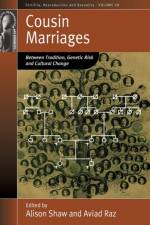
Juxtaposing contributions from geneticists and anthropologists, this volume provides a contemporary overview of cousin marriage and what is happening at the interface of public policy, the management of genetic risk and changing cultural practices in the Middle East and in multi-ethnic Europe.
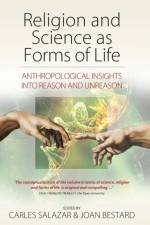
The purpose of this volume is to analyze the relationships, possible articulations and contradictions between religion and science as forms of life: ways of engaging human experience that originate in particular social and cultural formations.
Abonner på vårt nyhetsbrev og få rabatter og inspirasjon til din neste leseopplevelse.
Ved å abonnere godtar du vår personvernerklæring.