












Gjør som tusenvis av andre bokelskere
Abonner på vårt nyhetsbrev og få rabatter og inspirasjon til din neste leseopplevelse.
Ved å abonnere godtar du vår personvernerklæring.Du kan når som helst melde deg av våre nyhetsbrev.

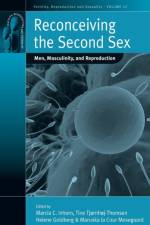
Extensive social science research, particularly by anthropologists, has explored women's reproductive lives, their use of reproductive technologies, and their experiences as mothers and nurturers of children. Meanwhile, few if any volumes have explored men's reproductive concerns or contributions to women's reproductive health...
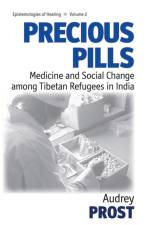
Through an ethnography of the social and medical worlds of a community of Tibetan refugees in India, this book addresses two main questions: first, how has the prolonged displacement of Tibetan refugees affected concepts of health in the exile community? Second, how has exile changed traditional Tibetan medical practices? It explores how social changes linked to exile have influenced concepts of health and illness in the Tibetan refugee community of Dharamsala and by looking at recent changes in the theory and practice of traditional Tibetan medicine investigates the role of traditional Tibetan medicine in sustaining public health in the exile community.
Research on health involves evaluating the disparities that are systematically associated with the experience of risk, including genetic and physiological variation, environmental exposure to poor nutrition and disease, and social marginalization. This volume provides a unique perspective...
"e;This is an exceptional personal testimony and story of achievement - Ahmed Othmani tells of his own appalling treatment when in detention and how it informed and inspired a lifetime vocation to struggle for the rights of all prisoners everywhere. As the story demonstrates, Othmani is one of those rare individuals who moved from passion and conviction to effective action - he was responsible for the establishment of one of the world's most reliable and mature human rights organizations, in the field of penal reform, Penal Reform International (PRI). His untimely death in Morocco in 2004 deprived the cause of a passionate advocate, but the work goes on."e; [From the Preface]
How should we tell the histories of academic disciplines? All too often, the political and institutional dimensions of knowledge production are lost beneath the intellectual debates. This book redresses the balance. Written in a narrative style and drawing on archival sources and oral histories, it depicts the complex pattern of personal and administrative relationships that shape scholarly worlds. Focusing on the field of social anthropology in twentieth-century Britain, this book describes individual, departmental and institutional rivalries over funding and influence. It examines the efforts of scholars such as Bronislaw Malinowski, Edward Evans-Pritchard and Max Gluckman to further their own visions for social anthropology. Did the future lie with the humanities or the social sciences, with addressing social problems or developing scholarly autonomy? This new history situates the discipline's rise within the post-war expansion of British universities and the challenges created by the end of Empire.
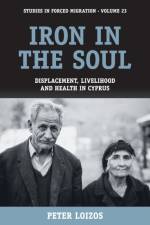
In his vivid, lively account of how Greek Cypriot villagers coped with a thirty-year displacement, Peter Lozos follows a group of people whom he encountered as prosperous farmers in 1968, yet found as disoriented refugees when revisiting in 1975. By providing a forty year in-depth perspective unusual in the social sciences, this study yields unconventional insights into the deeper meanings of displacement. It focuses on reconstruction of livelihoods, conservation of family, community, social capital, health (both physical and mental), religious and political perceptions. The author argues for a closer collaboration between anthropology and the life sciences, particularly medicine and social epidemiology, but suggests that qualitative life-history data have an important role to play in the understanding of how people cope with collective stress.
Through the idea of the "extended field," this volume examines issues in fieldwork and ethnography and provides fresh insights into the problems of ethnographic knowledge construction. It is a key text for new fieldworkers, established researchers and those looking for material to support modules on these issues.
Civil society and civic engagement have increasingly become topics of discussion at the national and international level. The editors of this volume ask, does the concept of civil societyA" include gender equality and gender justice? Or, to frame the question differently, is civil society a feminist concept?
Under the current cartographies of globalism, where frontiers mutate, vacillate, and mark the contiguity of discourse, questioning the Spanish border seems a particularly urgent task. The volume engages a wide spectrum of ambivalent regions-subjects that currently are, or have been seen in the past, as spaces of negotiation and contestation.
This is the ethnography of the Mykoniots d'lection, a 'gang' of romantic adventurers who have been visiting the island of Mykonos for the last thirty-five years and have formed a community of dispersed friends. Their constant return to and insistence on working, acting and creating in a tourist space, offers them an extreme identity, which in turn is aesthetically marked by the transient cultural properties of Mykonos. Drawing semiotically from its ancient counterpart Delos, whose myth of emergence entails a spatial restlessness, contemporary Mykonos also acquires an idiosyncratic fluidity. In mythology Delos, the island of Apollo, was condemned by the gods to be an island in constant movement. Mykonos, as a signifier of a new form of ontological nomadism, semiotically shares such assumptions. The Nomads of Mykonos keep returning to a series of alternative affective groups largely in order to heal a split: between their desire for autonomy, rebellion and aloneness and their need to affectively belong to a collectivity. Mykonos for the Mykoniots d'lection is their permanent 'stopover'; their regular comings and goings discursively project onto Mykonos' space an allegorical (discordant) notion of 'home'.
A sustained and systematic study of the construction, erosion and reconstruction of national histories across a wide variety of states is highly topical and extremely relevant in the context of the accelerating processes of Europeanization and globalization.
How is law mobilized and who has the power and authority to construct its meaning? This important volume examines this question as well as how law is constituted and reconfigured through social processes that frame both its continuity and transformation over time. The volume highlights how power is deployed under conditions of legal pluralism.
Across six generations and two hundred years, this book tells the story of a German-Jewish family who emigrated from Rawicz, Poland, first to Prussian Berlin, and then to America. It is populated by characters, such as Wolfgang, who led urban reform; Ernst who directed an anti-Nazi resistance movement; and Antonie the actress.
Showcases varied and complex disciplinary practices and relationships in a set of ethnographic studies. Interrogating the respective fields of work, religion, governance, leisure, education and child rearing, together the essays in this book explore and offer different ways of thinking about discipline in everyday life.
Features essays that explore how German mourning changed over the 20th century in different contexts, with a particular view to how death was linked to larger issues of social order and cultural self-understanding. This volume contributes to a history of death in 20th-century Germany that does not begin and end with the Third Reich.
Studying how people become religious, this volume offers a perspective for the study of religion, one that examines the works of transmission and innovation through the prism of learning. It argues that religious culture is socially and dynamically constructed by agents who are not mere passive recipients but engaged in active learning processes.
The social scientific study of tourism has emphasized the effects of the post-industrial economy on travel and place. This volume takes these issues into a different area of leisure: the spare-time carved out by people as part of their everyday lives. It focuses on the body as a site of identity formation, and disciplined recreation of the self.
What would happen if border controls were to be suppressed and people granted the right to move freely throughout the world? This volume explores the various dimensions of "Migration Without Borders" scenario and looks at the convergences and contradictions between the different takes on the topic, highlighting both its strengths and weaknesses.
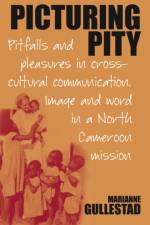
Picturing Pity is the first full length monograph on missionary photography. Empirically, it is based on an in-depth analysis of the published photographs taken by Norwegian evangelical missionaries in Northern Cameroon from the early nineteen twenties, at the beginning of their activities in this region, and until today. Being part of a large international movement, Norway sent out more missionaries per capita than any other country in Europe. Marianne Gullestad's main contention is that the need to continuously justify their activities to donors in Europe has led to the creation and maintenance of specific ways of portraying Africans. The missionary visual rhetoric is both based on earlier visualizations and has over time established its own conventions which can now also be traced within secular fields of activity such as international development agencies, foreign policy, human relief organizations and the mass media. Picturing Pity takes part in the present "e;pictorial turn"e; in academic teaching and research, constituting visual images as an exciting site of conversation across disciplinary lines.
Examines the forces of globalization at different levels, as they manifest themselves and operate across cultural, cognitive and biographical dimensions of human life in the Pacific. This book offers answers through the integration of cultural and psychological methods.
Dieter Senghaas is a leading figure in the field of conflict research, conflict management research, and the study of the prerequisites of lasting peace. The fact that virulent conflict within what Senghaas calls the OECD world, essentially European Union, has become unthinkable makes him optimistic about the prospect for our planet as a whole.
The growing debate over British national identity, and the place of "e;Englishness"e; within it, raises crucial questions about multiculturalism, postimperial culture and identity, and the past and future histories of globalization. However, discussions of Englishness have too often been limited by insular conceptions of national literature, culture, and history, which serve to erase or marginalize the colonial and postcolonial locations in which British national identity has been articulated. This volume breaks new ground by drawing together a range of disciplinary approaches in order to resituate the relationship between British national identity and Englishness within a global framework. Ranging from the literature and history of empire to analyses of contemporary culture, postcolonial writing, political rhetoric, and postimperial memory after 9/11, this collection demonstrates that far from being parochial or self-involved, the question of Englishness offers an important avenue for thinking about the politics of national identity in our postcolonial and globalized world.
Sugar was the single most valuable bulk commodity traded internationally before oil became the world's prime resource. This book questions some major assumptions about the nexus between sugar production and colonial societies in the Caribbean and Southeast Asia, especially in the second (post-1800) colonial era.
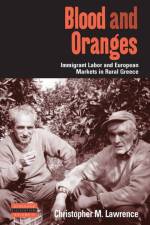
Presenting an account of the intersection of globalization and neo-racism in a rural Greek community, this book describes the contradictory political and economic development of the Greek countryside since its incorporation into the European Union. It addresses key issues of racism, neoliberalism and nationalism in contemporary anthropology.
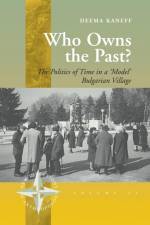
In the decades since the collapse of socialism in eastern Europe, time has been a central resource under negotiation. Focusing on a local community that was considered a "e;model"e; in the socialist period, the author explores a variety of state-sponsored and unofficial pasts - history, folklore, and tradition - and shows how they "e;fit"e; together in everyday life. During the socialist period, the past was a central dimension of local politics and village identity. Post-socialist development has demanded a revaluation of temporality - as well as public and private space. This has led to fundamental changes in social life and political relations, reduced local resources, threatened village identity and transformed political activity through the emergence of new political elites. While the full implications of this process are still being played out, this study underlines some of the fundamental processes prevalent across eastern Europe that help explain widespread ambiguity vis-B-vis post-socialist reform.
The Nordic Atlantic area has seen remarkable examples of social formations in areas that many would perceive as too remote to allow the construction of functioning communities. But through innovations, networking and the formation of identities people have coped with distances, thus continuously rebuilding societies in Northern Norway, Iceland, the Faroes, and Greenland. Living conditions in the Nordic Atlantic are so extreme that one might ask whether the notion of society is applicable under these circumstances. The author argues that, yes, there is a meaningful way of comprehending these social formations, which is through the spatial and temporal practices that produce, reproduce, stabilize, destabilize and change them. He introduces the concept of coping, which means neither mastering nor adapting but relates to in-between strategies and tactics reflected in practices of securing people's way of life under conditions that are never totally under their control.
For more than a decade, West Germany denied Israel the commencement of official diplomatic relations. In a policy-reversal, however, Bonn eventually offered Jerusalem the exchange of ambassadors in 1965. This book interprets the government's change of heart as the result of grassroots intervention in high level politics.
Provides information to help in a better understanding of the specific and the general in wartime. This book examines how people cope and adjust to situations of war, depending upon whether these are low-intensity or high-intensity ones, and on whether they are brief phases of conflict or long enduring periods of violence.
Exploring an ambiguous region between recognized findings and unfettered imagination, this book explores the multifaceted, far-reaching, and often contentious attempts of people with contrasting worldviews to develop convincing and satisfying interpretations of rapidly accumulating discoveries in physics, astronomy, and biology.
Documents the phenomenon of feminised migration by analysing accounts of the lives of women migrants in the 'host' countries. Based on more than 100 interviews with women migrants from Hungary and Bulgaria and with 'host' women in Italy and the Netherlands, this book includes theoretical debates on migration and subjectivity, and more.
Abonner på vårt nyhetsbrev og få rabatter og inspirasjon til din neste leseopplevelse.
Ved å abonnere godtar du vår personvernerklæring.