













Gjør som tusenvis av andre bokelskere
Abonner på vårt nyhetsbrev og få rabatter og inspirasjon til din neste leseopplevelse.
Ved å abonnere godtar du vår personvernerklæring.Du kan når som helst melde deg av våre nyhetsbrev.

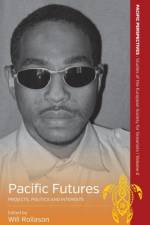
Pacific Futures asks how our understanding of social life in the Pacific would be different if we approached it from the perspective of the futures which Pacific people dream of, predict or struggle to achieve, not the reproduction of cultural tradition.
Integrating theoretical perspectives with carefully grounded ethnographic analyses of everyday interaction and experience, Living Translation examines the worlds of international translators as well as U.S. teachers and students of Chinese medicine, focusing on the transformations that occur as participants engage in a "e;search for resonance"e; with foreign terms and concepts. Based on a close examination of heated international debates as well as specific texts, classroom discussions, and interviews with publishers, authors, teachers, and students, Sonya Pritzker demonstrates the "e;living translation"e; of Chinese medicine as a process unfolding through interaction, inscription, embodied experience, and clinical practice. By documenting the stream of conversations that together constitute this process, the book thus traces the translation of Chinese medicine from text to practice with an eye towards the social, political, historical, moral, and even personal dimensions involved in the transnational production of knowledge about health, illness, and the body.
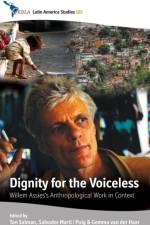
Willem Assies died in 2010 at the age of 55. The various stages of his career as a political anthropologist of Latin American illustrate how astute a researcher he was. This collection brings together some of Willem Assies' best, most fascinating, and still highly relevant writings.
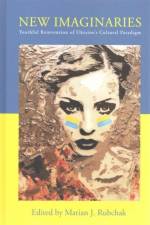
Having been spared the constraints imposed on intellectual discourse by the totalitarian regime of the past, young Ukrainian scholars now engage with many Western ideological theories and practices in an atmosphere of intellectual freedom and uncensored scholarship. Displacing the Soviet legacy of prescribed thought and practices, this volume's female contributors have infused their work with Western elements, although vestiges of Soviet-style ideas, research methodology, and writing linger. The result is the articulation of a "New Imaginaries" -- neither Soviet nor Western -- that offers a unique approach to the study of gender by presenting a portrait of Ukrainian society as seen through the eyes of a new generation of feminist scholars.
European colonial conquest included many instances of indigenous peoples being exterminated. Cases where invading commercial stock farmers clashed with hunter-gatherers were particularly destructive, often resulting in a degree of dispossession and slaughter that destroyed the ability of these societies to reproduce themselves.
In Thailand, infertility remains a source of stigma for those couples that combine a range of religious, traditional and high-tech interventions in their quest for a child. This book explores this experience of infertility and the pursuit and use of assisted reproductive technologies by Thai couples. Though using assisted reproductive technologies is becoming more acceptable in Thai society, access to and choices about such technologies are mediated by differences in class position. These stories of women and men in private and public infertility clinics reveal how local social and moral sensitivities influence the practices and meanings of treatment.
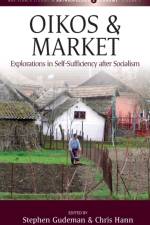
Self-sufficiency of the house is practiced in many parts of the world but ignored in economic theory, just as socialist collectivization is assumed to have brought household self-sufficiency to an end. The ideals of self-sufficiency, however, continue to shape economic activity in many post-socialist areas.
Ideas about health are reinforced by institutions and their corresponding practices, such as donning a patient's gown in a hospital or prostrating before a healing shrine. Even though we are socialized into regarding such ideologies as "natural" and unproblematic, we sometimes seek to bypass, circumvent, or even transcend the dominant ideologies...
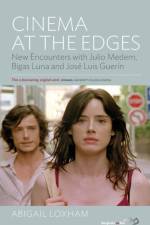
The works of popular Spanish film directors Julio Medem, Juan Jose Bigas Luna, and Jose Luis Guerin are newly appraised in relation to their engagement with alternative national and cinematic subjectivities.
Contemporary forms of capitalism and the state require close analytic attention to reveal the conditions of possibility for effective counter-politics. On the other hand the practice of collective politics needs to be studied through historical ethnography if we are to understand what might make people's actions effective. This book suggests a research agenda designed to maximize the political leverage of ordinary people faced with ever more remote states and technologies that make capitalism increasingly rapacious. Gavin Smith opens and closes this series of interlinked essays by proposing a concise framework for untangling what he calls "e;the society of capital"e; and subsequently a potentially controversial way of seeing its contemporary features. This book tackles the political conundrums of our times and asks what roles intellectuals might play therein.
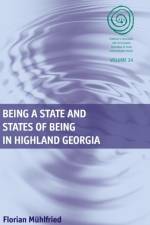
The highland region of the republic of Georgia, one of the former Soviet Socialist Republics, has long been legendary for its beauty. It is often assumed that the state has only made partial inroads into this region, and is mostly perceived as alien. Taking a fresh look at the Georgian highlands allows the author to consider perennial questions of citizenship, belonging, and mobility in a context that has otherwise been known only for its folkloric dimensions. Scrutinizing forms of identification with the state at its margins, as well as local encounters with the erratic Soviet and post-Soviet state, the author argues that citizenship is both a sought-after means of entitlement and a way of guarding against the state. This book not only challenges theories in the study of citizenship but also the axioms of integration in Western social sciences in general.
Bohemia and Moravia, today part of the Czech Republic, was the first territory with a majority of non-German speakers occupied by Hitler's Third Reich on the eve of the World War II. Tens of thousands of Jewish inhabitants in the so called Protectorate of Bohemia and Moravia soon felt the tragic consequences of Nazi racial politics. Not all Czechs, however, remained passive bystanders during the genocide. After the destruction of Czechoslovakia in 1938-39, Slovakia became a formally independent but fully subordinate satellite of Germany. Despite the fact it was not occupied until 1944, Slovakia paid Germany to deport its own Jewish citizens to extermination camps. About 270,000 out of the 360,000 Czech and Slovak casualties of World War II were victims of the Holocaust. Despite these statistics, the Holocaust vanished almost entirely from post-war Czechoslovak, and later Czech and Slovak, historical cultures. The communist dictatorship carried the main responsibility for this disappearance, yet the situation has not changed much since the fall of the communist regime. The main questions of this study are how and why the Holocaust was excluded from the Czech and Slovak history.
Eastern European museums represent traumatic events of World War II, such as the Siege of Leningrad, the Warsaw Uprisings, and the Bombardment of Dresden, in ways that depict the enemy in particular ways. This image results from the interweaving of historical representations, cultural stereotypes and beliefs, political discourses, and the dynamics of exhibition narratives. This book presents a useful methodology for examining museum images and provides a critical analysis of the role historical museums play in the contemporary world. As the catastrophes of World War II still exert an enormous influence on the national identities of Russians, Poles, and Germans, museum exhibits can thus play an important role in this process.
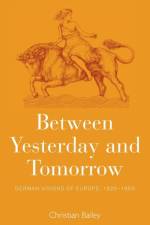
An intellectual and cultural history of mid-twentieth century plans for European integration, this book calls into question the usual pre- and post-war periodizations that have structured approaches to twentieth-century European history. It focuses not simply on the ideas of leading politicians but analyses debates about Europe in "e;civil society"e; and the party-political sphere in Germany, asking if, and how, a "e;permissive consensus"e; was formed around the issue of integration. Taking Germany as its case study, the book offers context to the post-war debates, analysing the continuities that existed between interwar and post-war plans for European integration. It draws attention to the abiding scepticism of democracy displayed by many advocates of integration, indeed suggesting that groups across the ideological spectrum converged around support for European integration as a way of constraining the practice of democracy within nation-states.
In May 2004, after bringing their legislation into accordance with EU regulations, ten more countries joined the European Union. The contributors to this volume assess the impact of this historical development on gender relations in the new and old EU member states.
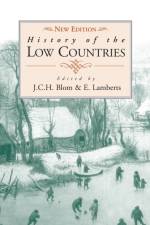
The history of the smaller European countries is rather neglected in the teaching of European history at university level. We are therefore pleased to announce the publication of the first comprehensive history of the Low Countries - in English - from Roman Times to the present.
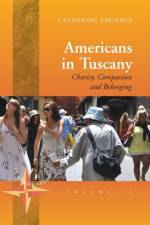
Since the time of the Grand Tour, the Italian region of Tuscany has sustained a highly visible American and Anglo migrant community. Today American women continue to migrate there, many in order to marry Italian men. Confronted with experiences of social exclusion, unfamiliar family relations, and new cultural terrain, many women struggle to build local lives. In the first ethnographic monograph of Americans in Italy, Catherine Trundle argues that charity and philanthropy are the central means by which many American women negotiate a sense of migrant belonging in Italy. This book traces women's daily acts of charity as they gave food to the poor, fundraised among the wealthy, monitored untrustworthy recipients, assessed the needy, and reflected on the emotional work that charity required. In exploring the often-ignored role of charitable action in migrant community formation, Trundle contributes to anthropological theories of gift giving, compassion, and reflexivity.
It is often taken for granted that French cinema is intimately connected to the nation's sense of identity and self-confidence. But what do we really know about that relationship? What are the nuances, insider codes, and hidden history of the alignment between cinema and nationalism? Hugo Frey suggests that the concepts of the 'political myth' and 'the film event' are the essential theoretical reference points for unlocking film history. Nationalism and the Cinema in France offers new arguments regarding those connections in the French case, examining national elitism, neo-colonialism, and other exclusionary discourses, as well as discussing for the first time the subculture of cinema around the extreme right Front National. Key works from directors such as Michel Audiard, Jean-Luc Godard, Jean-Pierre Melville, Marcel Pagnol, Jean Renoir, Jacques Tati, Franois Truffaut, and others provide a rich body of evidence.
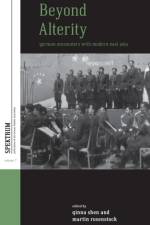
This collection of essays examines German-language cultural production pertaining to modern China and Japan, and explicitly challenges orientalist notions by proposing a conception of East and West not as opposites, but as complementary elements of global culture, thereby urging a move beyond national paradigms in cultural studies.
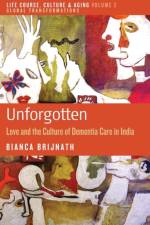
As life expectancy increases in India, the number of people living with dementia will also rise. Yet little is known about how people in India cope with dementia, how relationships and identities change through illness and loss. In addressing this question, this book offers a rich ethnographic account of how middle-class families in urban India care for their relatives with dementia. From the husband who wakes up at 3 am to feed his wife ice-cream to the daughters who gave up employment for seven years to care for their mother with dementia, this book illuminates the local idioms on dementia and aging, the personal experience of care-giving, the functioning of stigma in daily life, and the social and cultural barriers in accessing support.
While the major trends in European integration have been well researched and constitute key elements of narratives about its value and purpose, the crises of integration and their effects have not yet attracted sufficient attention. This volume, with original contributions by leading German scholars, suggests that crises of integration should be seen as engines of progress throughout the history of European integration rather than as expressions of failure and regression, a widely held assumption. It therefore throws new light on the current crises in European integration and provides a fascinating panorama of how challenges and responses were guiding the process during its first five decades.
The changing patterns of Japanese tourism and the views of the Japanese tourist since the Meiji Restoration, in 1868, are given an in-depth historical, geographical, economic and social analysis in this book. As well as providing a case study for the purpose of investigating the changing face of global tourism from the 19th to the 21st Century, this account of Japanese tourism explores both domestic social relations and international geographical, political and economic relations, especially in the northeast Asian context. Socio-cultural and geographical analysis form the research framework for the book, in three ways: first, there is an emphasis on scale as tourism phenomena and their implications are discussed both in a global context and at the national, regional and local levels; second, the discussion is informed by primary data sources such as censuses and surveys; and third, the incorporation of fieldwork and case studies adds concreteness to the overall picture of Japanese tourism.This book is a significant addition to an area of study currently under-represented in the literature.
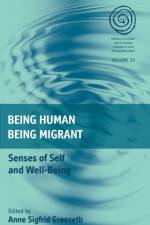
This volume explores migrant's movements not only as geographical movements from here to there but also as movements that constitute an embodied, cognitive, and existential experience of living "in between" or on the "borderlands" between differently figured life-worlds.
Mathematics is as much a part of our humanity as music and art. And it is our mathematics that might be understandable, even familiar, to a distant race and might provide the basis for mutual communication. This book discusses, in a conversational way, the role of mathematics in the search for extraterrestrial intelligence. The author explores the science behind that search, its history, and the many questions associated with it, including those regarding the nature of language and the philosophical/psychological motivation behind this search.
What happens when people "achieve"? Why do reactions to "achievement" vary so profoundly? And how might an anthropological study of achievement and its consequences allow us to develop a more nuanced model of the motivated agency that operates in the social world? These questions lie at the heart of this volume.
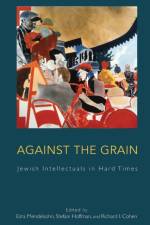
Highlighting the seminal role of German Jewish intellectuals and ideologues in forming and transforming the modern Jewish world, this volume analyzes the political roads taken by German Jewish thinkers; the impact of the Holocaust on the Central and East European Jewish intelligentsia; and the conundrum of modern Jewish identity.
The nature of the currently emerging European society, which includes the economic and social transformation of Eastern and Central European countries, has been hotly debated. At its center is the relationship between markets and civil society within political and social contexts.
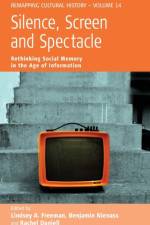
In an age of information and new media the relationships between remembering and forgetting have changed. This volume addresses the tension between loud and often spectacular histories and those forgotten pasts we strain to hear. Employing social and cultural analysis, the essays within examine mnemonic technologies both new and old.
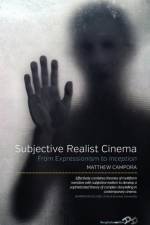
Subjective Realist Cinema looks at the fragmented narratives and multiple realities of a wide range of films that depict subjective experience and employ "e;subjective realist"e; narration, including recent examples such as Mulholland Drive, Memento, and Eternal Sunshine of the Spotless Mind. The author proposes that an understanding of the narrative structures of these films, particularly their use of mixed and multiple realities, enhances viewers' enjoyment and comprehension of such films, and that such comprehension offers a key to understanding contemporary filmmaking.
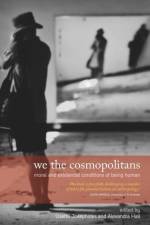
The provocative title of this book is deliberately and challengingly universalist, matching the theoretically experimental essays, where contributors try different ideas to answer distinct concerns regarding cosmopolitanism. Leading anthropologists explore what cosmopolitanism means in the context of everyday life...
Abonner på vårt nyhetsbrev og få rabatter og inspirasjon til din neste leseopplevelse.
Ved å abonnere godtar du vår personvernerklæring.