













Gjør som tusenvis av andre bokelskere
Abonner på vårt nyhetsbrev og få rabatter og inspirasjon til din neste leseopplevelse.
Ved å abonnere godtar du vår personvernerklæring.Du kan når som helst melde deg av våre nyhetsbrev.

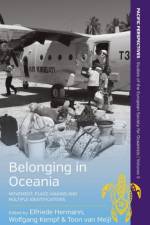
Ethnographic case studies explore what it means to "belong" in Oceania, as contributors consider ongoing formations of place, self and community in connection with travelling, internal and international migration. The chapters apply the multi-dimensional concepts of movement, place-making and cultural identifications to explain contemporary life...
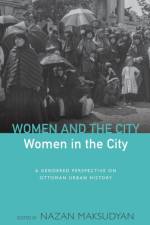
Drawing on diverse theoretical backgrounds and a variety of source materials, the contributors to the volume reconstruct the lives of women within the urban sphere. With a fairly wide geographical span, from Aleppo to Sofia, from Jeddah to Istanbul, the chapters offer a wide panorama of the Ottoman urban geography.
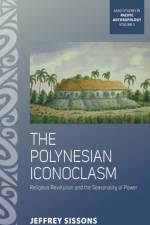
Within little more than ten years in the early nineteenth century, inhabitants of Tahiti, Hawaii and fifteen other closely related societies destroyed or desecrated all of their temples and most of their god-images. In the aftermath of the explosive event, which Sissons terms the Polynesian Iconoclasm, hundreds of architecturally innovative churches - one the size of two football fields - were constructed. At the same time, Christian leaders introduced oppressive laws and courts, which the youth resisted through seasonal displays of revelry and tattooing. Seeking an answer to why this event occurred in the way that it did, this book introduces and demonstrates an alternative "e;practice history"e; that draws on the work of Marshall Sahlins and employs Bourdieu's concepts of habitus, improvisation and practical logic.
The availability of food is an especially significant issue in zones of conflict because conflictnearly always impinges on the production and the distribution of food, and causes increased competition for food, land and resources Controlling the production of and access to food can also be used as a weapon by protagonists in conflict.
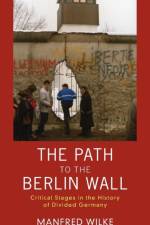
The long path to the Berlin Wall began in 1945, when Josef Stalin instructed the Communist Party to take power in the Soviet occupation zone while the three Western allies secured their areas of influence. When Germany was split into separate states in 1949, Berlin remained divided into four sectors, with West Berlin surrounded by the GDR but lingering as a captivating showcase for Western values and goods. Following a failed Soviet attempt to expel the allies from West Berlin with a blockade in 1948-49, a second crisis ensued from 1958-61, during which the Soviet Union demanded once and for all the withdrawal of the Western powers and the transition of West Berlin to a "e;Free City."e; Ultimately Nikita Khrushchev decided to close the border in hopes of halting the overwhelming exodus of East Germans into the West. Tracing this path from a German perspective, Manfred Wilke draws on recently published conversations between Khrushchev and Walter Ulbricht, head of the East German state, in order to reconstruct the coordination process between these two leaders and the events that led to building the Berlin Wall.
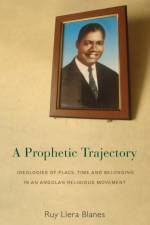
Combining ethnographic and historical research conducted in Angola, Portugal, and the United Kingdom, A Prophetic Trajectory tells the story of Simo Toko, the founder and leader of one of the most important contemporary Angolan religious movements. The book explains the historical, ethnic, spiritual, and identity transformations observed within the movement, and debates the politics of remembrance and heritage left behind after Toko's passing in 1984. Ultimately, it questions the categories of prophetism and charisma, as well as the intersections between mobility, memory, and belonging in the Atlantic Lusophone sphere.
Ranging from the Reformation, through the ages of confessionalization, to the Enlightenment, Mixed Matches addresses the historical complexity of the socio-cultural institution of marriage.
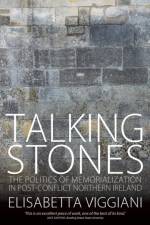
If memory was simply about past events, public authorities would never put their ever-shrinking budgets at its service. Rather, memory is actually about the present moment, as Pierre Nora puts it: "e;Through the past, we venerate above all ourselves."e; This book examines how collective memory and material culture are used to support present political and ideological needs in contemporary society. Using the memorialization of the Troubles in contemporary Northern Ireland as a case study, this book investigates how non-state, often proscribed, organizations have filled a societal vacuum in the creation of public memorials. In particular, these groups have sifted through the past to propose "e;official"e; collective narratives of national identification, historical legitimation, and moral justifications for violence.
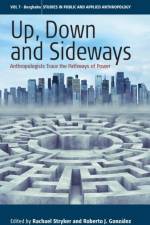
Up, Down, & Sideways is an ethnographic examination of such phenomena as debt culture, global financial crises, food insecurity, indigenous land & resource appropriation, the mismanagement of health care, & corporate surrogacy within family life. Essential reading for anyone seeking solid theories and concrete methods to inform activist scholarship
As living subjects rather than static icons, studio-era Hollywood actresses actively negotiated a balance between their public personas, film roles, and corporeal presence. The contemporary audience's engagement with the experience of these actresses unsettles the traditional model of narcissistic identification, which divides the off-screen spectator from his/her on-screen ideal. Exploring the fan's desire for a material connection to the performer - as well as the star's own dialogue between embodied experience and idealized image - Beyond the Looking Glass traces on- and off-screen representations of narcissistic femininity in classical Hollywood through studies of stars like Greta Garbo, Ava Gardner, and Marilyn Monroe. Merging historical and theoretical concerns, with particular attention to the resonance of golden-age Hollywood in new media, this book explores the movie screen as a medium of shared experience between spectator and star.
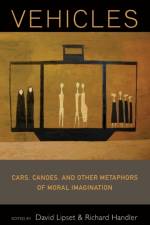
Metaphor, as an act of human fancy, combines ideas in improbable ways to sharpen meanings of life and experience. Theoretically, this arises from an association between a sign - for example, a cattle car - and its referent, the Holocaust. These "sign-vehicles" serve as modes of semiotic transportation through conceptual space.
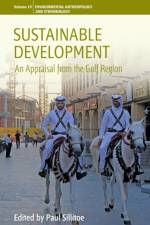
With growing evidence of unsustainable use of the world's resources, such as hydrocarbon reserves, and related environmental pollution, as in alarming climate change predictions, sustainable development is arguably the prominent issue of the 21st century.
Based on long-term fieldwork, six vivid ethnographies from Colombia, India, Poland, Spain and the southern and northern U.S. address the dwindling importance of labor throughout the world. The contributors to this volume highlight the growing disconnect between labor struggles and the advancement of the greater common good...
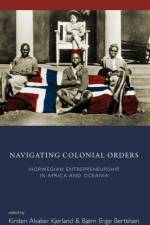
Norwegians in colonial Africa and Oceania had varying aspirations and adapted in different ways to changing social, political and geographical circumstances in foreign, colonial settings. This collection reveals narratives of the colonial era that are often ignored or obscured by the national histories of former colonial powers.
More than two decades of deconstruction, renovation, and reconstruction have left the urban environments in the former German Democratic Republic completely transformed. This volume considers the changing urban landscapes in the former East.
Scholars in this collection show, after the demise of communism in Eastern Europe, property is again a major factor in shaping individual identity and in providing the political order and culture with a foundational institution. This volume analyzes both historical and contemporary forms of land ownership in Poland, Romania, and Yugoslavia.
Mass communication has long been recognized as an important contributor to national identity and nation building. This book examines the relationship between media and nationalism in Israel, arguing that, in comparison to other countries, the Israeli case is unique. It explores the roots and evolution of newspapers, journalism, radio, television, and the debut of the Internet on both the cultural and the institutional levels, and examines milestones in the socio-political development of Hebrew and Israeli mass communication. In evaluating the technological changes in the media, the book shows how such shifts contribute to segmentation and fragmentation in the age of globalization.
John Quincy Adams warned Americans not to search abroad for monsters to destroy, yet such figures have frequently habituated the discourses of U.S. foreign policy. This collection of essays focuses on counter-identities in American consciousness to explain how foreign policies and the discourse surrounding them develop.
Racial and ethnic categories have appeared in recent scientific work in novel ways and in relation to a variety of disciplines: medicine, forensics, population genetics and also developments in popular genealogy. Once again, biology is foregrounded in the discussion of human identity.
While social welfare programs, often inspired by international organizations, are spreading throughout the world, the more far-reaching notion of governmental responsibility for the basic well-being of all members of a political society is not, although it remains a feature of Europe and the former British Commonwealth. The welfare state in the European sense is not simply an administrative arrangement of various measures of social protection but a political project embedded in distinct cultural traditions. Offering the first accessible account in English of the historical development of the European idea of the welfare state, this book reviews the intellectual foundations which underpinned the road towards the European welfare state, formulates some basic concepts for its understanding, and highlights the differences in the underlying structural and philosophical conditions between continental Europe and the English-speaking world.
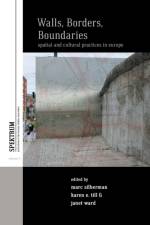
This edited volume explores the crossings, permeations, and constructions of cultural and political borders between peoples and territories, examining how walls, borders, and boundaries signify both interdependence and contact within sites of conflict and separation.
Anything but a detached theorist, Clausewitz was as fully engaged in the intellectual and cultural currents of his time as in its political and military conflicts. Late-eighteenth century thought helped shape the analytic methods he developed for the study of war. The essays in this volume follow his career in a complex military society, together with that of other students of war, both friends and rivals, providing a broad perspective that leads to significant documents so far unknown or ignored. They add to our understanding of Clausewitz's early ideas and their expansion into a comprehensive theory that continues to challenge our thinking about war today.
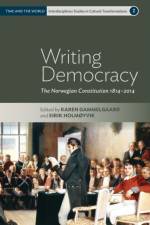
The Norwegian Constitution is the oldest functioning constitution in Europe. Its bicentenary in 2014 has inspired the analyses in this volume, where contributors focus on the Constitution as a text to explore new ways of analyzing democratic development.
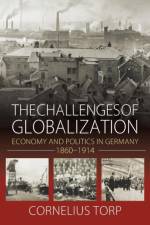
In the mid nineteenth century a process began that appears, from a present-day perspective, to have been the first wave of economic globalization. Within a few decades global economic integration reached a level that equaled, and in some respects surpassed, that of the present day. This book describes the interpenetration of the German economy with an emerging global economy before the First World War, while also demonstrating the huge challenge posed by globalization to the society and politics of the German Empire. The stakes for both the winners and losers of the intensifying world market played a major role in dividing German society into camps with conflicting socio-economic priorities. As foreign trade policy moved into the center stage of political debates, the German government found it increasingly difficult to pursue a successful policy that avoided harming German exports and consumer interests while also seeking to placate a growing protectionist movement.
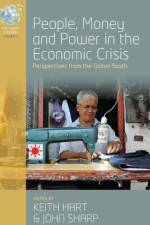
Nine case studies -- from Southern Africa, South Asia, Brazil, and Atlantic Africa - examine economic life from the perspective of ordinary people in places that are normally marginal to global discourse, covering a range of class positions from the bottom to the top of society.
The scholarship of Ulf Hannerz is characterized by its extraordinary breadth and visionary nature. He has contributed to the understanding of urban life and transnational networks, and the role of media, paradoxes of identity and new forms of community, suggesting to see culture in terms of flows rather than as bounded entities.
The "e;forgotten majority"e; of German merchants in London between the end of the Hanseatic League and the end of the Napoleonic Wars became the largest mercantile Christian immigrant group in the eighteenth century. Using previously neglected and little used evidence, this book assesses the causes of their migration, the establishment of their businesses in the capital, and the global reach of the enterprises. As the acquisition of British nationality was the admission ticket to Britain's commercial empire, it investigates the commercial function of British naturalization policy in the early modern period, while also considering the risks of failure and chance for a new beginning in a foreign environment. As more German merchants integrated into British commercial society, they contributed to London becoming the leading place of exchange between the European continent, Russia, and the New World.
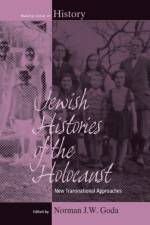
For many years, histories of the Holocaust focused on its perpetrators, & only recently have more scholars begun to consider in detail the experiences of victims & survivors, as well as the documents they left behind. This title provides an introduction and overview of Jewish narratives of the Holocaust.
The social and cultural changes of the last century have transformed death from an everyday fact to something hidden from view. Shifting between the practical and the theoretical, the professional and the intimate, the real and the fictitious, this collection of essays explores the continued power of death over our lives.
Presenting innovative conceptual approaches, this volume advances ethnographic research methods and critical scholarship regarding tourism and the imaginaries that drive it. The various authors contribute methodologically as well as conceptually to anthropology's grasp of the images, forces, and encounters of the contemporary world.
Abonner på vårt nyhetsbrev og få rabatter og inspirasjon til din neste leseopplevelse.
Ved å abonnere godtar du vår personvernerklæring.